
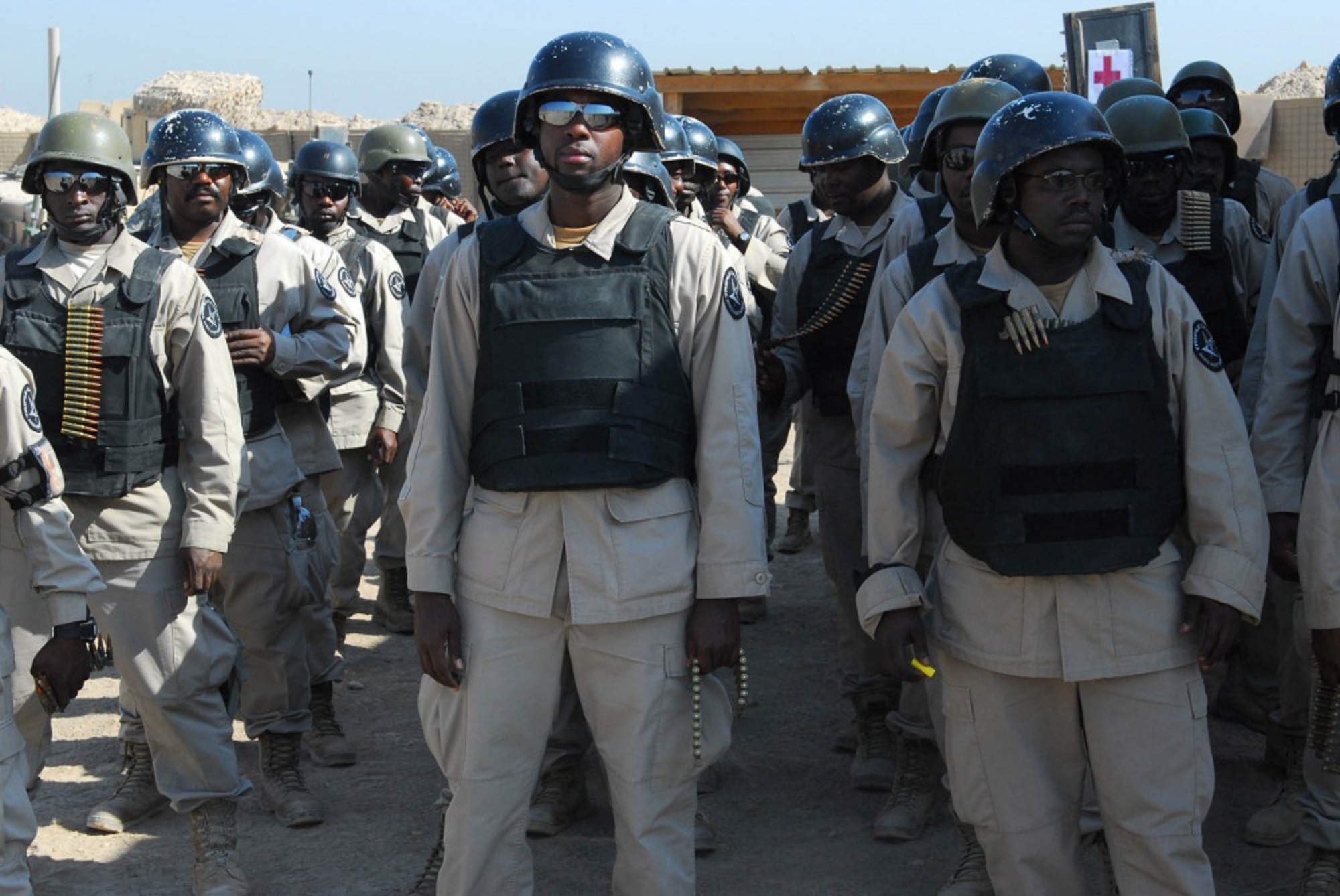
Private military and security sector has always operated in a space that resists rigid boundaries. It is shaped by contracts, but also by conditions on the ground. It is influenced by law, but often tested in environments where legal clarity is limited. Within that context, the International Code of Conduct for Private Security Service Providers represents an attempt to introduce a degree of consistency into a field that has historically evolved faster than frameworks designed to regulate it.

Code did not emerge from abstract discussion alone. It reflects a period in which private actors became increasingly visible in conflict and post-conflict environments, taking on roles that extended beyond traditional security tasks. Companies were not only guarding facilities or escorting personnel, but also supporting logistics, training local forces, and operating in regions where state structures were still developing or under strain. Expansion made it difficult to rely solely on national regulation, as operations often crossed jurisdictions or took place where enforcement capacity was uneven.
In response, Code introduced a set of shared principles intended to apply across different operational environments. It does not replace existing legal systems, nor does it attempt to function as a binding legal instrument. Instead, it provides a consistent reference point that companies can align with, particularly in relation to human rights and international humanitarian law. That consistency remains one of its most practical contributions, as it reduces variation that can arise when companies operate under different national frameworks.
From Principles to Operational Practice
Relevance of Code becomes clearer when it is viewed not just as a document, but as part of a broader structure. Associated institutional framework, built around certification and oversight, transforms it from a set of guidelines into something that can influence how companies organize themselves. Participation involves more than acknowledgment. It requires development of internal systems, engagement with monitoring processes, and a willingness to operate under external scrutiny.
This has gradual but noticeable effects. Companies that align with framework tend to formalize their internal procedures in areas such as training, supervision, and reporting. Over time, this contributes to a more standardized approach across different actors in sector. While differences remain, presence of a shared framework reduces level of fragmentation that once defined much of industry.
Human rights considerations are central within this structure, but they are framed in practical terms. Code addresses how force is applied, how individuals are treated in detention, and how companies are expected to manage conduct of their personnel. These are not abstract principles. They translate directly into operational decisions, shaping how personnel are trained and how incidents are handled. Requirement to establish grievance mechanisms also introduces an additional layer of accountability, extending responsibility beyond immediate contractual obligations.
Overlap, Influence, and Structural Limits
Distinction between private security and private military roles often appears clear in theory, but in practice it becomes less defined. Many companies operate across a spectrum of services, adjusting their roles depending on needs of clients and conditions of environment. This means that a framework formally directed at private security providers can have a wider impact, reaching into areas that are closely aligned with military support functions.
Voluntary nature of Code is frequently highlighted, yet its influence is shaped through other mechanisms. Adherence has become increasingly relevant in procurement processes, particularly when governments or international organizations engage private contractors. In these contexts, alignment with recognized standards can affect access to contracts and partnerships. This creates a form of indirect pressure, where participation is not legally required but becomes strategically significant.
At same time, framework has its limits. Its effectiveness depends on how consistently companies implement its principles and how robust oversight mechanisms are in practice. Operational environments can present challenges that affect monitoring, especially in regions where infrastructure, security conditions, or jurisdictional clarity are limited. Internal compliance systems play a central role in addressing these challenges, but their effectiveness can vary between organizations.
What remains consistent is shift toward internal governance. Code places responsibility not only on external oversight, but also on internal structures of companies. Training programs, reporting channels, and disciplinary procedures become part of a broader effort to align operations with defined standards. This inward focus remains one of more durable aspects of framework, as it embeds expectations directly into organizational practices.
Beyond its regulatory function, Code contributes to how sector is positioned more broadly. It introduces a structured reference point in an industry that has often been associated with ambiguity. This does not eliminate complexity of field, but it changes terms in which it is understood. Companies are increasingly evaluated not only on capability, but also on how they align with established standards and how they manage accountability within their operations.
Understanding this framework provides a clearer view of how sector is evolving. It highlights interaction between private actors, regulatory structures, and operational realities, offering insight into how expectations are being defined in environments where traditional boundaries are less stable.
Access the original document: https://icoca.ch/wp-content/uploads/2022/01/INTERNATIONAL-CODE-OF-CONDUCT_Amended_2021.pdf
Sources
International Code of Conduct Association, The Code
Swiss Federal Department of Foreign Affairs, International Code of Conduct overview
International Committee of the Red Cross, materials on private military and security companies