
Drill & Defense
Advertisement
  • Defense
    • Industry News
    • Weapon & Gear Reviews
    • Defense Technologies
    • Military Market Reports
  • Energy
    • Oil & Gas News
    • Energy Technologies
    • Market Trends & Analysis
  • Cross-Sector Insights
    • Defense & Energy Strategy
    • Global Security & Trade Analysis
    • Tech & Innovation Crossover
  • History & Legacy
    • Turning Points in Conflict
    • Legacy Systems & Structures
    • Resource Wars & Strategy
  • Knowledge Base
    • Defense Know-How
    • Energy Insight
  • About
  • Contact
  • Login
  • Register
No Result
View All Result
  • Defense
    • Industry News
    • Weapon & Gear Reviews
    • Defense Technologies
    • Military Market Reports
  • Energy
    • Oil & Gas News
    • Energy Technologies
    • Market Trends & Analysis
  • Cross-Sector Insights
    • Defense & Energy Strategy
    • Global Security & Trade Analysis
    • Tech & Innovation Crossover
  • History & Legacy
    • Turning Points in Conflict
    • Legacy Systems & Structures
    • Resource Wars & Strategy
  • Knowledge Base
    • Defense Know-How
    • Energy Insight
  • About
  • Contact
  • Login
  • Register
No Result
View All Result
Drill & Defense
No Result
View All Result
Home Knowledge Base

When Do PMCs Enter a War, and Why It Rarely Looks Like “Joining the Fight”

January 9, 2026
in Knowledge Base, Defense Know-How
When Do PMCs Enter a War, and Why It Rarely Looks Like “Joining the Fight”

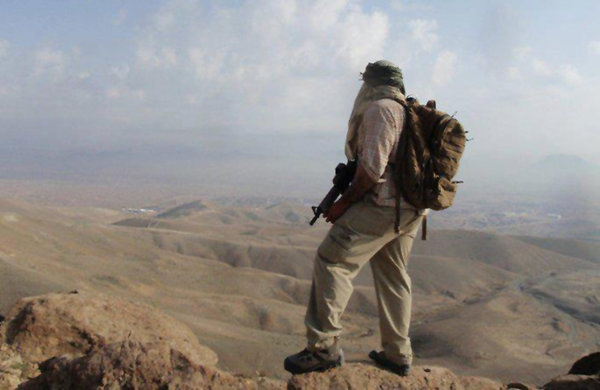
Private Military Contractor, Gunter S., Badakhshan Province, Afghanistan, 2006. Cristopher Smith, CC BY-SA 3.0 https://creativecommons.org/licenses/by-sa/3.0

Share on LinkedInShare on Twitter

In our field, the public question is usually simple: are private military contractors involved or not. The operational question is more precise and, in practice, far more revealing: at what point does a conflict generate the conditions that make a private force package attractive, fundable, and politically manageable.

If you are trying to understand this issue as a reader, it helps to set ideology aside early. PMCs do not appear because of abstract doctrines or moral positions. They appear because incentives align, constraints tighten, and gaps open. Private military and security companies tend to enter environments where states, firms, or international actors cannot achieve specific outcomes quickly enough through conventional instruments, yet still require physical presence and control on the ground. This is why international guidance documents consistently stress that these actors do not operate in a legal vacuum. Their relevance is operational, but the responsibility for their use remains political and legal.

Rather than asking whether PMCs are present, it is more useful to look at the thresholds that make their presence likely. Those thresholds are rarely dramatic. More often, they are cumulative.

State Capacity Gaps and Political Constraints

A state can maintain a formal military structure and still lack what actually matters in prolonged or complex operations. Deployable manpower may be limited, specialized capabilities unevenly distributed, and rotation cycles stretched thin. Equipment degradation and personnel fatigue accumulate quietly long before they become visible in public debate.

At the same time, political constraints exert their own pressure. Casualty sensitivity, parliamentary oversight, budget ceilings, and coalition dynamics all shape what regular forces can realistically be asked to do. In this space, contracting begins to look less like an alternative to military action and more like a way to avoid a hard binary choice between escalation and inaction. Private actors are often introduced not to replace armed forces, but to buy time, flexibility, or deniability while strategic decisions remain unresolved.

A bite dog, from private contractor, Custer Battles K-9 unit tackles a man in a protective suit during a training session at Baghdad International Airport (IAP), Iraq during Operation IRAQI FREEDOM. A bite dog is a dog that tackles a suspect bites and holds him until commanded to release him by the handler.

Distance, Deniability, and Managed Exposure

Some conflicts demand influence without full ownership. This is not a new phenomenon, but privatized security services make it easier to create operational distance between political decision makers and events on the ground.

Governments may seek to support partners, protect interests, or sustain presence while limiting reputational and legal exposure. Framing matters here. Activities described as protection, training, or risk mitigation are easier to defend politically than overt combat roles, even if the operational environment is highly kinetic. This ambiguity is precisely why international frameworks focus so heavily on contracting standards, state oversight, and accountability mechanisms.

For an external observer, a rapid expansion of security assistance contracts can function as an early signal. It often indicates that political leaders want effects on the ground without formally expanding their declared military footprint.
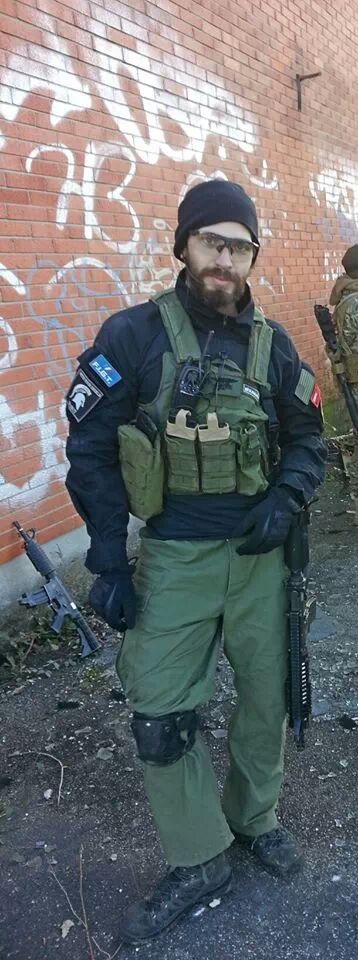
Mission as pmc in Iraq. Cristopher Smith, CC BY-SA 3.0 https://creativecommons.org/licenses/by-sa/3.0

Economic Assets as Operational Anchors

In many contemporary conflicts, the decisive terrain is not measured in kilometers of front line. It is measured in access to assets and continuity of flows.

Energy facilities, mining sites, ports, pipelines, logistics hubs, and transportation corridors frequently become the real centers of gravity. UN reporting and human rights mechanisms have repeatedly drawn attention to the intersection between private armed actors and the protection or exploitation of natural resources. The logic is simple. When an asset generates revenue or strategic leverage, exposure becomes unacceptable. Security is purchased where vulnerability appears, regardless of whether the surrounding conflict is formally resolved.

This is one of the clearest indicators of PMC involvement. When discourse shifts from battlefield dynamics to stabilizing production, securing operations, or maintaining output, private security demand usually follows close behind.
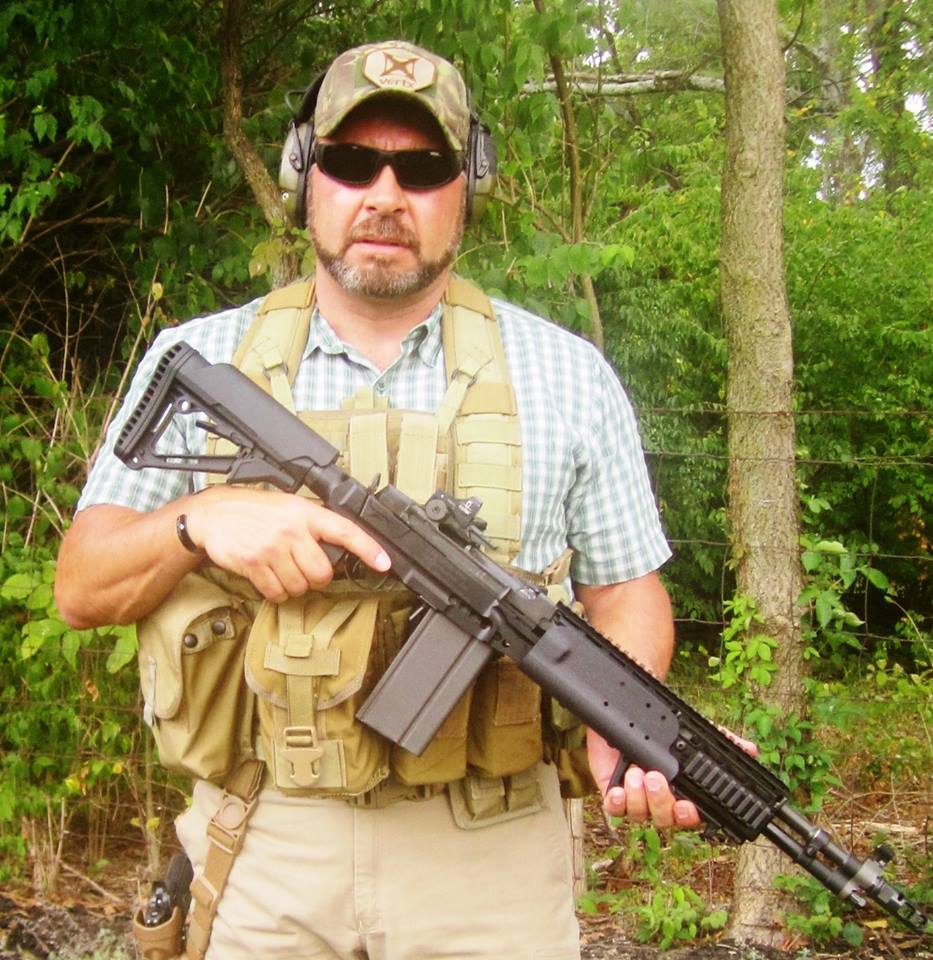
Former Blackwater CEO Joseph Yorio at the OG Training Facility in VA. Deenbill, CC BY-SA 4.0 https://creativecommons.org/licenses/by-sa/4.0, via Wikimedia Commons

Logistics, Endurance, and the Quiet Work of Sustaining War

Tactical success does not guarantee strategic endurance. Long wars are sustained through logistics, maintenance, and continuity rather than headline battles.

Convoy protection, base security, route management, and infrastructure maintenance are all functions that regular forces can perform, but often at significant opportunity cost. Private firms have frequently been contracted to absorb these burdens, allowing military units to concentrate on tasks deemed politically or militarily essential. These support roles may appear secondary, yet they operate inside environments shaped by real violence and risk.

This is also where accountability becomes structurally complex. Oversight must extend across subcontracting chains, jurisdictional boundaries, and hybrid rules of engagement. The emphasis on good practices in documents like the Montreux framework reflects an acknowledgment of this reality rather than an attempt to deny it.

Training, Professionalization, and Influence

Another recurring entry point is the rapid development of local security forces. External sponsors may prefer building partner capacity to deploying their own troops, especially in politically sensitive theaters.

Private firms can scale training and advisory functions quickly, adapt to local operational needs, and provide standardized procedures where institutions are weak. While this is often framed as technical assistance or professionalization, it also shapes command relationships and long term influence. The language used around these programs is revealing. When standards, tactics, facility security, and operational planning appear together, the objective is rarely limited to skills transfer alone.

Gurkha bodyguard in Nangarhar Province in Afghanistan. Some of the best bodyguards are Gurkhas, Nepalese soldiers who work around the world before retiring home. They have a long history, entering into British services around 1817. They currently still serve with the British, Indian, and Singaporean miltiaries.

The Gurkhas were designated by British officials as a “Martial Race”. “Martial Race” was a designation created by officials of British India to describe “races” (peoples) that were thought to be naturally warlike and aggressive in battle, and to possess qualities like courage, loyalty, self sufficiency, physical strength, resilience, orderliness, the ability to work hard for long periods of time, fighting tenacity and military strategy.” Todd Huffman from Phoenix, AZ, CC BY 2.0 https://creativecommons.org/licenses/by/2.0

Security Demand Beyond Combat Roles

Not all PMC involvement is driven by military objectives. In unstable environments, international organizations, diplomatic missions, and humanitarian actors face security risks that persist regardless of battlefield developments.

Compound protection, movement security, and risk assessment are increasingly outsourced in such contexts. Human rights bodies have highlighted the implications of this trend, particularly regarding use of force standards and grievance mechanisms. Even when active hostilities decline, the demand for private security around international presence often remains high, sustained by uncertainty rather than open combat.

Early Positioning for a Post Conflict Environment

Private actors also tend to appear when stakeholders begin planning for what comes next, even before the fighting has fully subsided.

Reconstruction, asset reopening, and governance restoration all require predictable operating conditions. Investors and agencies are rarely willing to wait for political settlements to mature before addressing security concerns. In this sense, private security functions as a bridge, reducing operational risk while institutions remain fragile.

This is why many conflicts exhibit a recognizable shift in tone. Media attention moves away from frontline dynamics toward contracts, corridors, and site security. The conflict has not ended, but it has begun to reorganize itself around administration and economic management.

Reading the Pattern

Taken together, certain signals tend to cluster. States seek presence without expanding official deployments. Economic assets and supply routes become the primary focus. Oversight debates intensify as contracting grows.

When these elements align, PMC involvement is rarely accidental. It does not initiate wars, but it reliably fills the spaces wars create.

Sources:

International Committee of the Red Cross. The Montreux Document on Pertinent International Legal Obligations and Good Practices for States Related to Operations of Private Military and Security Companies during Armed Conflict. Geneva, 2008.

International Committee of the Red Cross. International Humanitarian Law and Private Military or Security Companies. ICRC, official background and legal clarification papers, Geneva.

Swiss Federal Department of Foreign Affairs. The Montreux Document: Overview and State Practice. FDFA, Bern.

United Nations Human Rights Council. Report of the Working Group on the Use of Mercenaries as a Means of Violating Human Rights and Impeding the Exercise of the Right of Peoples to Self-Determination. A/HRC/57/45, United Nations, 2024.

Previous Post

Digital Soldiers of Fortune: How PMCs Are Hacking for Governments

Next Post

Galil vs AK: When Reliability Meets Standardization

Related Posts

Galil vs AK: When Reliability Meets Standardization
Knowledge Base

Galil vs AK: When Reliability Meets Standardization

January 14, 2026
Live firing of the Light Forces Anti-Tank Guided Weapon (LFATGW) Javelin.
Knowledge Base

Common Misconceptions About ITAR: What Organizations Should Actually Know

December 9, 2025
The Invisible Arsenal: How OSINT Is Re-engineering the Global Arms Trade
Knowledge Base

The Invisible Arsenal: How OSINT Is Re-engineering the Global Arms Trade

November 19, 2025
Iraqi Freedom
Knowledge Base

The Iraq War’s Hidden Battle: How Logistics Shaped the Conflict’s Reality

November 17, 2025
Why Blackwater existed: The logic behind outsourcing war and security
Knowledge Base

Why Blackwater existed: The logic behind outsourcing war and security

November 6, 2025
TE_2REI_Afghanistan French Foregin Legion
Knowledge Base

The French Foreign Legion After the Sahel: Where It Fits Now

October 29, 2025
Next Post
Galil vs AK: When Reliability Meets Standardization

Galil vs AK: When Reliability Meets Standardization

  • Trending
  • Comments
  • Latest
Blackwater PMC

After Blackwater: How PMCs Evolved, Professionalized, and Fragmented

September 13, 2025
Blackwater PMC

Inside Iraq’s Security Market: How Private Power Shapes a Fragile State

October 6, 2025
Operation Enduring Freedom

What Exactly Is a Private Military Company (PMC)?

September 6, 2025
Repkon Nammo in Denmark: What This Nordic Ammunition Play Really Signals

Repkon Nammo in Denmark: What This Nordic Ammunition Play Really Signals

August 21, 2025
A Historic $142 Billion Arms Deal: Unpacking the U.S.-Saudi Agreement

A Historic $142 Billion Arms Deal: Unpacking the U.S.-Saudi Agreement

A Silent Revolution on the Battlefield: AI-Enabled Tactical Communication Systems

A Silent Revolution on the Battlefield: AI-Enabled Tactical Communication Systems

Cominf.org, CC BY-SA 3.0 , via Wikimedia Commons

Is Europe Really Reducing Its Dependence on Russian Gas?

What is ITAR? The Invisible Line in Global Defense Trade

What is ITAR? The Invisible Line in Global Defense Trade

Galil vs AK: When Reliability Meets Standardization

Galil vs AK: When Reliability Meets Standardization

January 14, 2026
When Do PMCs Enter a War, and Why It Rarely Looks Like “Joining the Fight”

When Do PMCs Enter a War, and Why It Rarely Looks Like “Joining the Fight”

January 9, 2026
Digital Soldiers of Fortune: How PMCs Are Hacking for Governments

Digital Soldiers of Fortune: How PMCs Are Hacking for Governments

January 6, 2026
Maduro Detained: The Energy and Defense Angles Most Coverage Skims Past

Maduro Detained: The Energy and Defense Angles Most Coverage Skims Past

January 4, 2026

Recent News

Galil vs AK: When Reliability Meets Standardization

Galil vs AK: When Reliability Meets Standardization

January 14, 2026
When Do PMCs Enter a War, and Why It Rarely Looks Like “Joining the Fight”

When Do PMCs Enter a War, and Why It Rarely Looks Like “Joining the Fight”

January 9, 2026
Digital Soldiers of Fortune: How PMCs Are Hacking for Governments

Digital Soldiers of Fortune: How PMCs Are Hacking for Governments

January 6, 2026
Maduro Detained: The Energy and Defense Angles Most Coverage Skims Past

Maduro Detained: The Energy and Defense Angles Most Coverage Skims Past

January 4, 2026
Drill & Defense

Drill & Defense is an independent platform providing insights into firearms, defense technologies, and energy sectors. We deliver clear, practical content for professionals, enthusiasts, and industry followers worldwide.

Follow Us

Browse by Category

  • Cross-Sector Insights
  • Defense
  • Defense & Energy Strategy
  • Defense Know-How
  • Defense Technologies
  • Energy
  • Energy Insight
  • Energy Technologies
  • Global Security & Trade Analysis
  • History & Legacy
  • Industry News
  • Knowledge Base
  • Legacy Systems & Structures
  • Market Trends & Analysis
  • Military Market Reports
  • Oil & Gas News
  • Resource Wars & Strategy
  • Tech & Innovation Crossover
  • Turning Points in Conflict
  • Weapon & Gear Reviews

Recent News

Galil vs AK: When Reliability Meets Standardization

Galil vs AK: When Reliability Meets Standardization

January 14, 2026
When Do PMCs Enter a War, and Why It Rarely Looks Like “Joining the Fight”

When Do PMCs Enter a War, and Why It Rarely Looks Like “Joining the Fight”

January 9, 2026

© 2026 Drill & Defense. All rights reserved. Independent insights on firearms, defense, and energy. For business inquiries: info@drillanddefense.com | PRIVACY POLICY | COOKIE POLICY | TERMS AND CONDITIONS

Manage Consent

We use cookies to improve your experience. You can accept or refuse cookies; however, some features may not function properly without your consent.

Functional Always active
The technical storage or access is strictly necessary for the legitimate purpose of enabling the use of a specific service explicitly requested by the subscriber or user, or for the sole purpose of carrying out the transmission of a communication over an electronic communications network.
Preferences
The technical storage or access is necessary for the legitimate purpose of storing preferences that are not requested by the subscriber or user.
Statistics
The technical storage or access that is used exclusively for statistical purposes. The technical storage or access that is used exclusively for anonymous statistical purposes. Without a subpoena, voluntary compliance on the part of your Internet Service Provider, or additional records from a third party, information stored or retrieved for this purpose alone cannot usually be used to identify you.
Marketing
The technical storage or access is required to create user profiles to send advertising, or to track the user on a website or across several websites for similar marketing purposes.
  • Manage options
  • Manage services
  • Manage {vendor_count} vendors
  • Read more about these purposes
View preferences
  • {title}
  • {title}
  • {title}
No Result
View All Result
  • Defense
    • Industry News
    • Weapon & Gear Reviews
    • Defense Technologies
    • Military Market Reports
  • Energy
    • Oil & Gas News
    • Energy Technologies
    • Market Trends & Analysis
  • Cross-Sector Insights
    • Defense & Energy Strategy
    • Global Security & Trade Analysis
    • Tech & Innovation Crossover
  • History & Legacy
    • Turning Points in Conflict
    • Legacy Systems & Structures
    • Resource Wars & Strategy
  • Knowledge Base
    • Defense Know-How
    • Energy Insight
  • About
  • Contact
  • Login
  • Register

© 2026 Drill & Defense. All rights reserved. Independent insights on firearms, defense, and energy. For business inquiries: info@drillanddefense.com | PRIVACY POLICY | COOKIE POLICY | TERMS AND CONDITIONS