

The modern defense landscape is no longer strictly defined by lines between civilian and military sectors. As innovation in science and technology accelerates, the overlap between commercial and defense applications grows increasingly complex. At the center of this convergence stands the concept of the dual-use item.

But what exactly does “dual-use” mean? How are these items regulated, and why do they matter for governments, exporters, manufacturers, and international security?
Let’s explore the world of dual-use goods, their legal frameworks, real-world examples, and the global challenges they present.
Definition: What Is a Dual-Use Item?
A dual-use item is any product, software, or technology that can be used for both civilian and military purposes. These items are not necessarily weapons, but they may be adapted, modified, or repurposed for military applications — making them sensitive under international law.
Examples include:
- High-performance drones (used for agriculture or battlefield surveillance)
- Satellite communication systems
- Cybersecurity software and encryption tools
- Laser systems or nuclear-related equipment
- Advanced semiconductors or microchips
- High-grade composite materials and alloys
While these technologies are essential in sectors like energy, telecommunications, transportation, and healthcare, they can also pose strategic security risks if exported without regulation.
Legal Frameworks Governing Dual-Use Items
Regulations vary by country, but most dual-use exports are governed by international and national control regimes to prevent misuse and proliferation.
Key Regulatory Bodies & Agreements:
- Wassenaar Arrangement
- Covers conventional arms and dual-use goods
- Members voluntarily control export of sensitive technologies
- Nuclear Suppliers Group (NSG)
- Monitors nuclear-related dual-use items
- Australia Group
- Focuses on chemical and biological weapon precursors
- Missile Technology Control Regime (MTCR)
- Regulates items used in missile development
- European Union Dual-Use Regulation
- EU-wide rules for export of dual-use items
- U.S. Export Administration Regulations (EAR)
- Managed by the Bureau of Industry and Security (BIS) under the Department of Commerce
- Items are listed on the Commerce Control List (CCL)
In the U.S., items specifically designed for military use fall under ITAR (International Traffic in Arms Regulations), while dual-use items fall under the EAR.
Real-World Examples of Dual-Use Technology
Legitimate Use:
- A satellite navigation system used by a logistics company for fleet management.
Military Use:
- The same system repurposed by a foreign military to guide missile systems or coordinate troop movements.
Other notable examples:
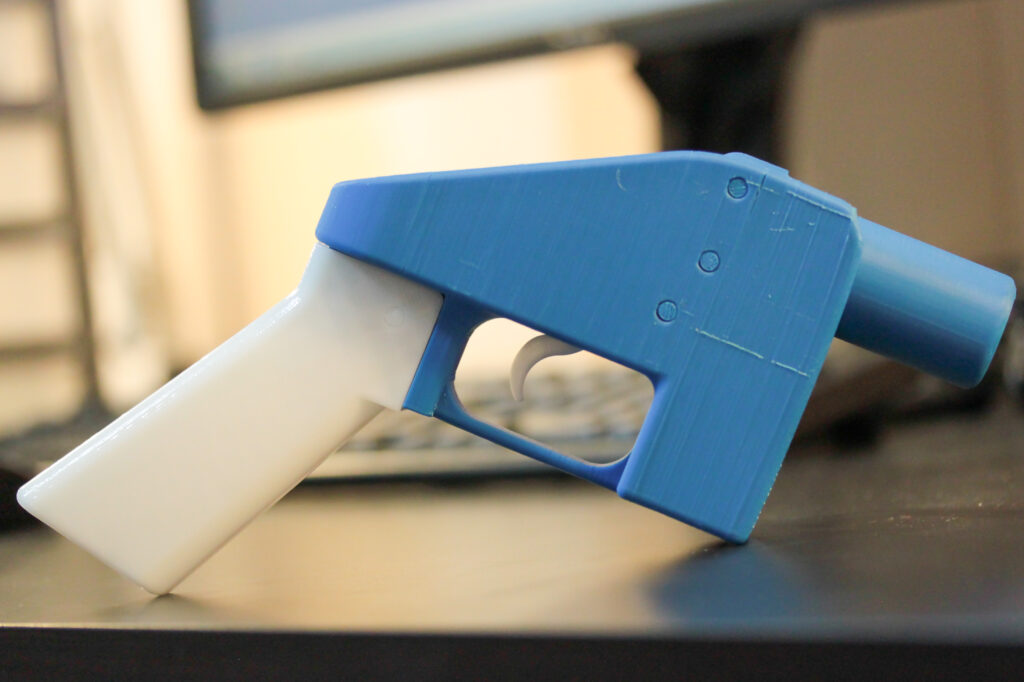
- 3D printers used in aerospace → can also manufacture gun components.
- AI-based facial recognition → used for security or authoritarian surveillance.
- Chemical precursors used in fertilizer → can also be used in explosives.
Why Dual-Use Items Matter
1. National Security
Uncontrolled exports can enable hostile states or terrorist groups to access advanced capabilities.
2. Trade Compliance
Companies can face heavy penalties and blacklisting if they export dual-use items without proper licensing.
3. Geopolitical Influence
Advanced dual-use technologies are a major factor in great power competition, particularly in areas like:
- AI and robotics
- Quantum computing
- Satellite tech
- Hypersonic systems
4. Ethical and Legal Responsibility
Even tech startups and civilian companies must screen customers and destinations to avoid unintentional arms trafficking violations.
Dual-Use Export Licensing Process
Each country has its own licensing mechanism. In the U.S., the process typically involves:
- Classifying the item using the ECCN (Export Control Classification Number)
- Determining the destination country and end-use
- Checking for restricted parties or embargoed nations
- Submitting a license application through SNAP-R (Simplified Network Application Process – Redesign)
- Awaiting BIS decision (which can take weeks or months)
Violating export laws can result in:
- Civil penalties up to $300,000 per violation
- Criminal fines, imprisonment, and permanent bans
Controversies and Challenges
- Emerging Technologies
AI, biotech, and quantum technologies blur traditional definitions of dual-use. - Lack of International Standardization
Export control regimes are voluntary, and not all countries enforce them equally. - Private Sector Blind Spots
Many civilian tech firms are unaware their products require licensing, especially in startup ecosystems. - Digital Goods & Encryption
Controlling software and digital exports across borders has become nearly impossible to monitor manually.
Conclusion
Dual-use items are a critical intersection point between civilian innovation and national defense. As technology advances, the line between peaceful and strategic use continues to fade. For companies, regulators, and governments, staying compliant with dual-use regulations isn’t just about avoiding penalties—it’s about protecting international stability and preserving technological integrity.
Understanding what qualifies as a dual-use item is the first step toward responsible participation in the global tech and defense marketplace.