
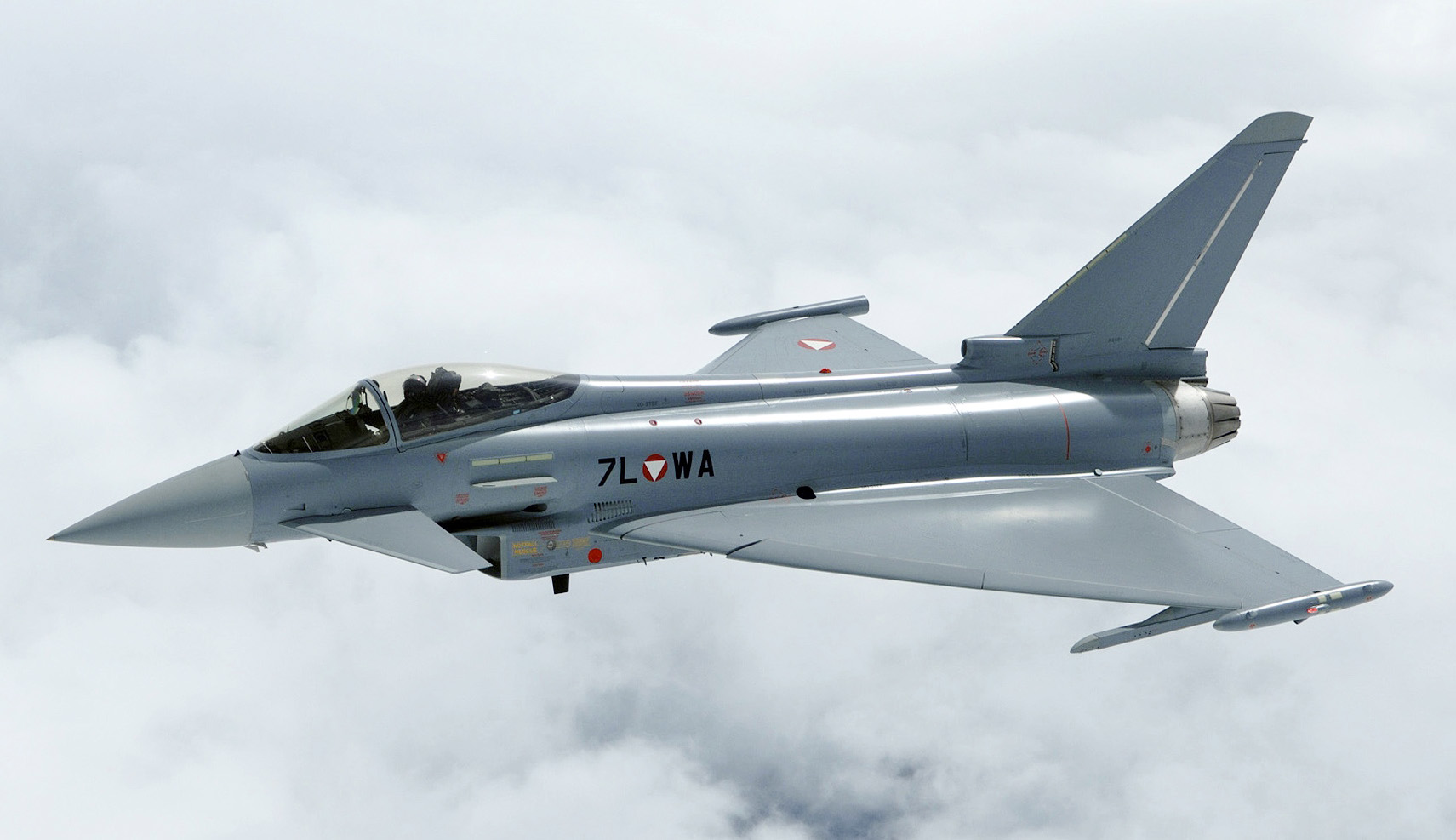
On 23 July 2025, at the International Defence Industry Fair in Istanbul, the governments of Türkiye and the United Kingdom formally signed a Memorandum of Understanding (MoU) concerning the potential procurement of up to 40 Eurofighter Typhoon fighter jets. The signing was witnessed by Türkiye’s Minister of National Defence and the UK’s Defence Secretary, marking a significant diplomatic and industrial milestone. This MoU represents a preliminary but pivotal step toward a larger procurement contract.

This agreement allows Ankara to become an operator of the Eurofighter Typhoon, bringing it closer to joining the exclusive group of nations fielding the aircraft. It is explicitly not a finalized deal, but it signals intent and commitment to progress toward a contract.
Germany Reverses Its Blockade and Grants Export Approval
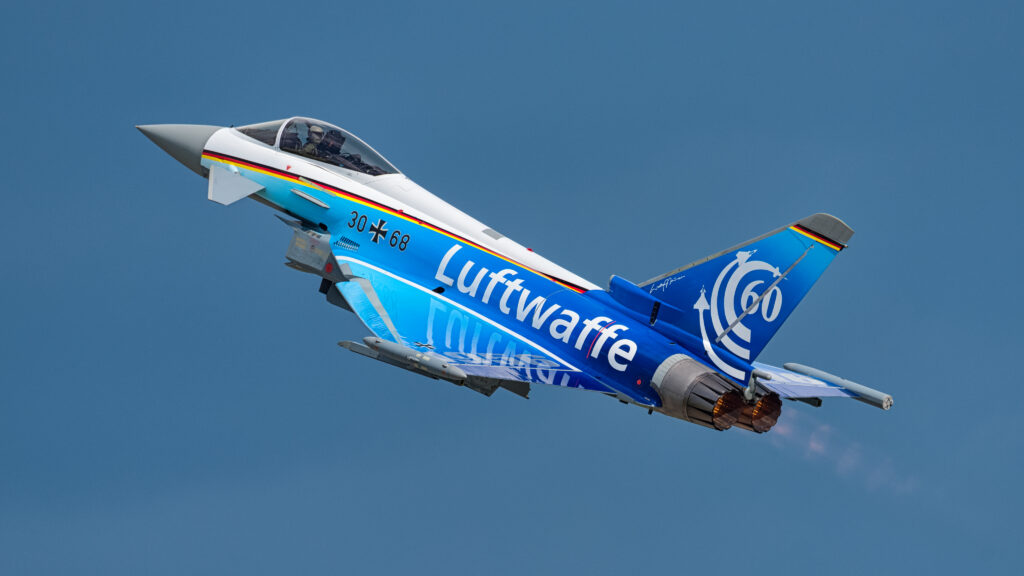
Prior to the MoU, Germany, one of the four consortium nations that build the Eurofighter alongside the UK, Spain, and Italy, had been reluctant to allow exports to Türkiye. This stance reversed when Germany’s federal security council approved the potential sale, lifting its veto and enabling the transaction to proceed.
This change of position followed a broader shift in diplomatic relations. Previous hesitation was tied to political and human rights concerns, but the strategic importance of reinforcing NATO’s southern flank and strengthening defence cooperation appears to have driven Germany to assent.
Strategic Significance for Türkiye’s Air Force Modernization
Türkiye has long pursued the Typhoon program as part of its strategy to modernize the Turkish Air Force. This stems in part from being excluded from the US-led F-35 program in 2019, following its acquisition of the S-400 missile defence system.
The prospect of acquiring 40 Typhoon jets would bolster air capability and serve as a critical stopgap until the country’s indigenous fifth-generation fighter, the TAİ TF-Kaan, becomes operational, expected around 2028.
Procurement of the Typhoon also signals improvement in Türkiye’s defence partnerships with European allies, particularly in NATO contexts, as well as a strategic diversification beyond reliance on US platforms.
Ongoing Negotiations: Price, Technical Specifications, and Industrial Involvement
Although the MoU sets a framework, substantive negotiation continues. Turkish authorities have reportedly received an initial price proposal and are preparing counter-offers based on technical requirements they submitted earlier in 2025.
Topics under discussion include configuration levels such as Tranche versions, weapons systems, logistics support, training packages, and industrial cooperation. There is also interest in integrating advanced missile systems such as Meteor, though access may depend on clearance from other Eurofighter consortium members.
BAE Systems, representing the consortium, confirmed its commitment to working with both governments toward finalising the procurement deal, highlighting the opportunity for industrial collaboration and job creation across the UK and Europe.
Regional and Industrial Context
This deal comes amid evolving regional military dynamics. Greece, for example, has recently upgraded its air force with modern Western platforms including Rafales, prompting Türkiye to respond with parallel enhancements.
From an industrial perspective, the Eurofighter Typhoon consortium comprising Airbus, BAE Systems, and Leonardo views Türkiye as an important customer and potential project partner. This would be the first export contract won by the UK-led side of the programme since Qatar’s orders in recent years.
Final assembly for aircraft destined for Türkiye is expected to take place at the UK’s Warton facility. The manufacturing includes high-value workshare agreements and potential technology transfers that could enhance Türkiye’s defence industrial base.
Key Milestones to Watch
- Final contract negotiation: In the weeks following the MoU, Ankara and the Eurofighter consortium are expected to finalize pricing, delivery schedules, and technical specifications.
- German parliamentary endorsement: While Germany’s export approval is confirmed, any final contract may still require further endorsement from German authorities.
- Integration with other platforms: Türkiye is also in discussions with the United States for 40 new F-16 fighters and continues development of the KAAN programme. How these assets align will shape future force structure.
Türkiye’s agreement with the UK, paired with Germany’s export clearance, places it firmly on the path toward acquiring the Eurofighter Typhoon. The procurement aligns with Ankara’s strategic goal of strengthening NATO-aligned air capability and enhancing national defence self-reliance. Emphasis is shifting toward concluding cost and configuration negotiations, industrial partnership terms, and synchronizing this procurement with broader modernization plans.
Sources:
Reuters
AP News
Financial Times