
Drill & Defense
Advertisement
  • Defense
    • Industry News
    • Weapon & Gear Reviews
    • Defense Technologies
    • Military Market Reports
  • Energy
    • Oil & Gas News
    • Energy Technologies
    • Market Trends & Analysis
  • Cross-Sector Insights
    • Defense & Energy Strategy
    • Global Security & Trade Analysis
    • Tech & Innovation Crossover
  • History & Legacy
    • Turning Points in Conflict
    • Legacy Systems & Structures
    • Resource Wars & Strategy
  • Knowledge Base
    • Defense Know-How
    • Energy Insight
  • About
  • Contact
  • Login
  • Register
No Result
View All Result
  • Defense
    • Industry News
    • Weapon & Gear Reviews
    • Defense Technologies
    • Military Market Reports
  • Energy
    • Oil & Gas News
    • Energy Technologies
    • Market Trends & Analysis
  • Cross-Sector Insights
    • Defense & Energy Strategy
    • Global Security & Trade Analysis
    • Tech & Innovation Crossover
  • History & Legacy
    • Turning Points in Conflict
    • Legacy Systems & Structures
    • Resource Wars & Strategy
  • Knowledge Base
    • Defense Know-How
    • Energy Insight
  • About
  • Contact
  • Login
  • Register
No Result
View All Result
Drill & Defense
No Result
View All Result
Home History & Legacy

The Fragile Alliance: How Culture and Conflict Shaped Cooperation in Afghanistan

October 31, 2025
in History & Legacy, Turning Points in Conflict
U.S.–Afghan cooperation

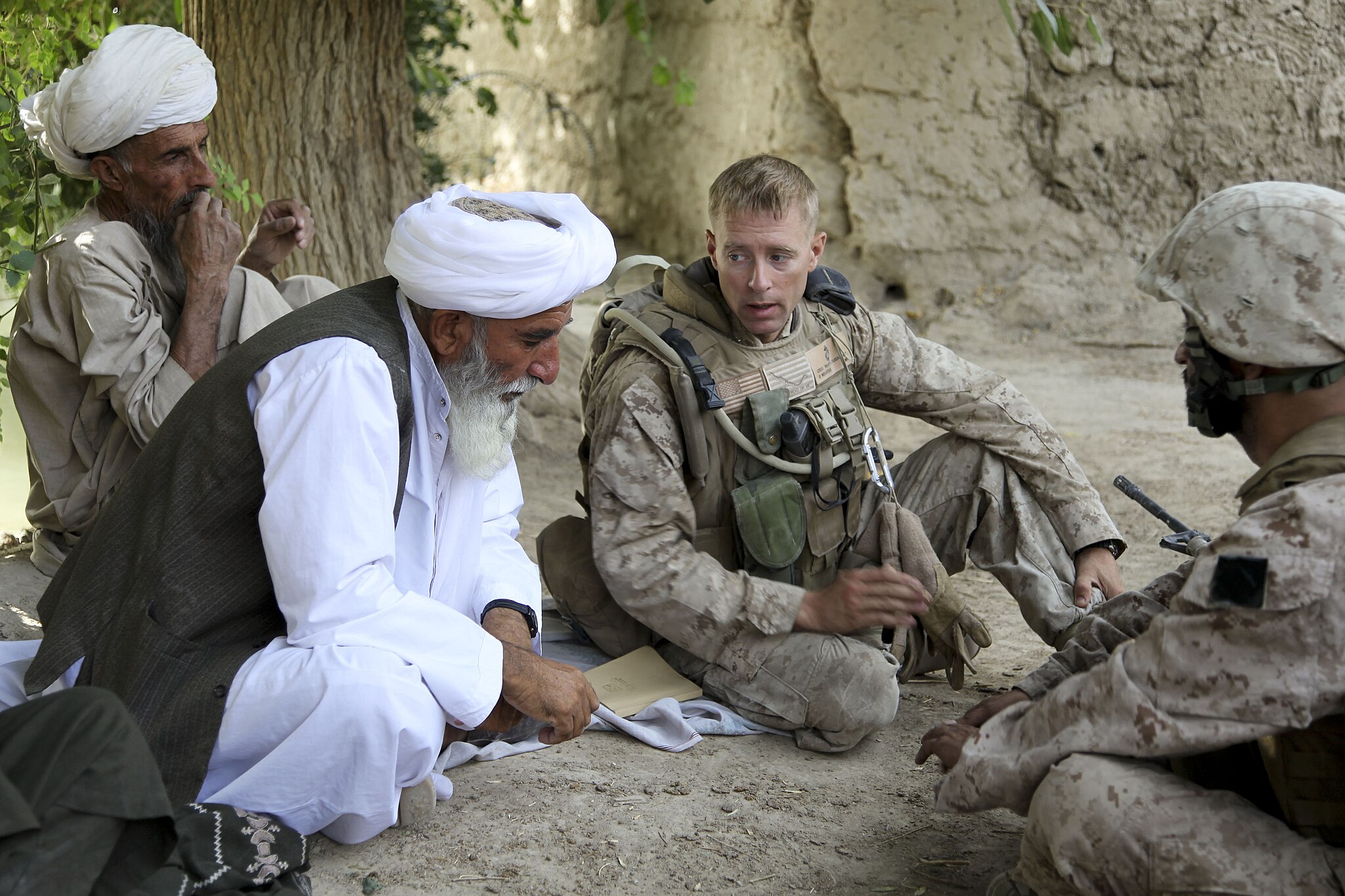
Hamadulha Helmand, a leader in the Barackside tribe, speaks with U.S. Marine Corps Lt. Col. William McCollough, the commander of 1st Battalion, 5th Marine Regiment, about district infrastructure improvements during a civil affairs group patrol in the Nawa District of Helmand province, Afghanistan, on July 30, 2009. Staff Sgt. William Greeson, Public domain, via Wikimedia Commons

Share on LinkedInShare on Twitter

The war in Afghanistan was never fought on a single front. It unfolded across mountain valleys, government offices, training camps, and the fragile space between cultures. For the United States and its coalition partners, victory required more than firepower; it demanded cooperation with Afghan forces whose motivations, traditions, and survival instincts often operated under entirely different rules. This uneasy partnership created moments of genuine trust and devastating misunderstanding. What appeared as unity in official reports often masked a deeper fragility rooted in clashing timelines, cultural assumptions, and political realities. The story of this alliance is not simply about military strategy, it is about the limits of understanding when two worlds must fight the same war for different reasons.

Why the Alliance Felt Strong on Paper but Fragile in Practice

For two decades, U.S.–Afghan cooperation stood side by side in operations, training cycles, and advisory missions. Yet anyone who worked on these partnerships knows the alliance often felt sturdy in briefings and brittle in the field. Culture shaped expectations about authority, loyalty, and risk. Conflict pressed those expectations to the breaking point. When a patrol went well, cooperation felt natural. When a rumor spread, a mentor rotated home, or a local powerbroker shifted sides, trust could evaporate with surprising speed. Understanding why this happened is not about assigning blame. It is about learning how culture and conflict intersected, and how future missions can avoid the same fractures.
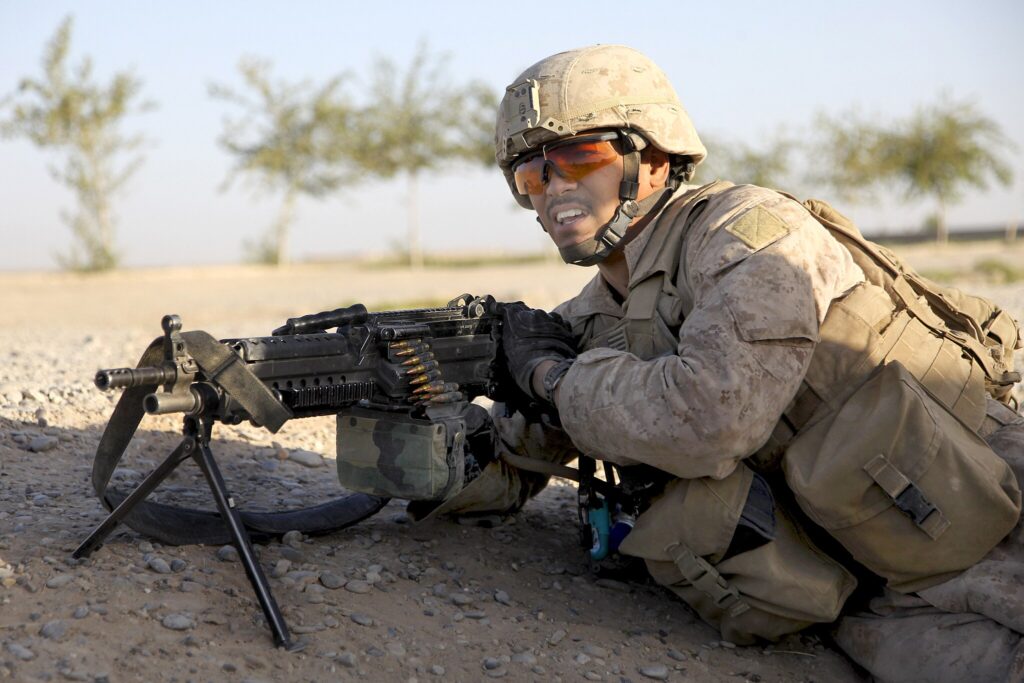
A U.S. Marine mans an automatic weapon while providing security during a road reconnaissance patrol in Helmand province’s Nawa district, Afghanistan Sept. 6, 2009.

Mismatched Timelines, Mismatched Incentives

U.S. units operated on short rotations and quarterly metrics. Afghan partners often navigated multi-year tribal dynamics, patronage networks, and personal survival. These timelines rarely aligned. An advisor might push to certify a battalion by the end of a tour. A commander in that battalion might prioritize a promise owed to a district elder that predates the advisor’s arrival. The disconnect did not mean the sides could not cooperate. It did mean that progress depended on negotiated tradeoffs: what gets done now, what can wait until the next rotation, and what never leaves the local ledger. Research on security sector assistance and reconstruction consistently found that fragmented authorities, fuzzy ownership of outcomes, and turnover among advisors eroded consistency on the U.S. side while local political economies pulled Afghan units in different directions.

HELMAND PROVINCE, Afghanistan (Aug. 21, 2009) Voting ballots organized and arranged for counting by Afghan presidential election workers at a local school in the Nawa District. The school was used as a polling site for the Afghanistan presidential elections. (U.S. Marine Corps photo by Staff Sgt. William Greeson/Released)

Culture Is Not a Soft Variable

Culture is operational. It sets the default mode for command relationships, information sharing, and the social boundaries that shape legitimacy. Programs that tried to bridge gender norms or expand access to local populations were not about public relations. They were tactical pathways into communities that male soldiers could not always reach. These efforts worked when the units were trained, resourced, and integrated into operations, and when leaders understood their limits. They struggled when built ad hoc or rotated without handover. The lesson is simple and hard at the same time. Cultural capability is not a workshop. It is a sustained design choice that affects who you recruit, how you train, and what you measure.
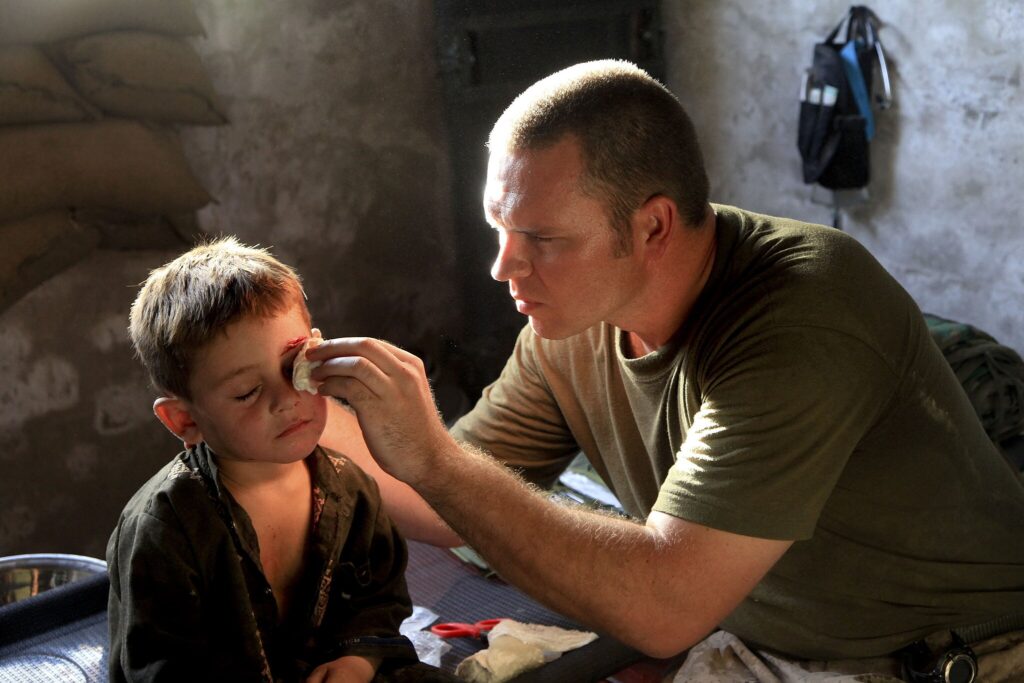
HELMAND PROVINCE, Afghanistan (Aug. 11, 2009) A Navy corpsman assigned to Headquarters Company, 1st Battalion, 5th Marine Regiment, treats an Afghan boy for a head injury from falling into a canal. 1st Battalion, 5th Marine Regiment is deployed with Regimental Combat Team 3 conducting counter insurgency operations in partnership with the Afghan national security forces in southern Afghanistan. (U.S. Marine Corps photo by Staff Sgt. William Greeson/Released)

The Communication Gap Inside a War

Coalition communication aimed to persuade and to inform. It also had to compete with rumor, grievance, and fear. Information operations could amplify successes and correct falsehoods, but they could not by themselves overcome misaligned local incentives or a population’s accumulated trauma. When messages promised security and justice while communities experienced extortion at checkpoints or arbitrary detention, credibility suffered. This gap between narrative and lived experience weakened cooperation more than any single tactical loss. The takeaway is that messages work when they track with people’s daily reality and when security forces behave in ways that communities recognize as fair.
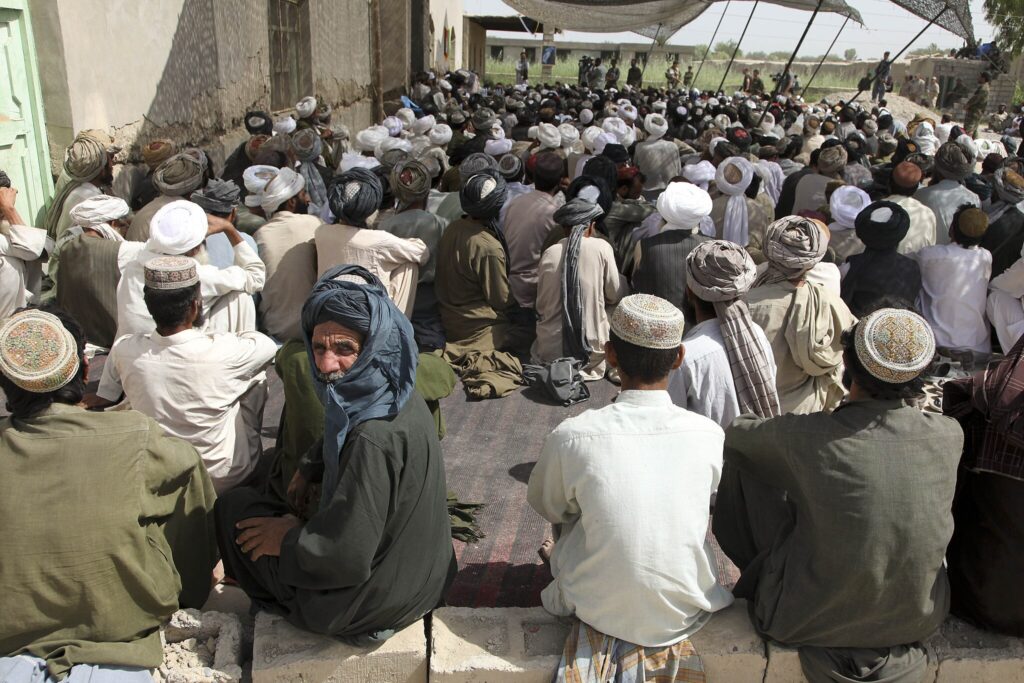
Local Afghan men attend a shura in the Nawa District, Helmand Province, Afghanistan on July 23, 2009. The shura was held by Provincial Governor Gulab Mangal, with hopes of re-establishing the Afghan Government in the Nawa District. Marines with 1st Battalion, 5th Marine Regiment, Regimental Combat Team 3 (-REIN), 2D Marine Expeditionary Brigade – Afghanistan, are deployed in support of NATO’s International Security Assistance Force and will participate in counter insurgency operations and training and mentoring the Afghan National Security Forces to improve security and stability in Afghanistan. (Official USMC photo by: Staff Sgt. William Greeson) (Released)

Insider Attacks and the Slow Erosion of Trust

Insider attacks terrified units because they targeted the heart of cooperation: proximity, shared space, and routine. The numbers were a sliver of total casualties, but the psychological effect was outsized. Every handshake carried risk. Every classroom required new security drills. Analysts noted that motives ranged from personal grievances to coercion by insurgents, and that the strategic harm was cumulative rather than episodic. Each attack undermined interpersonal trust, slowed the training pipeline, and hardened physical and emotional boundaries between partners. Force protection improved, vetting sharpened, and mixed-force procedures evolved, but the trust cost never went back to zero.
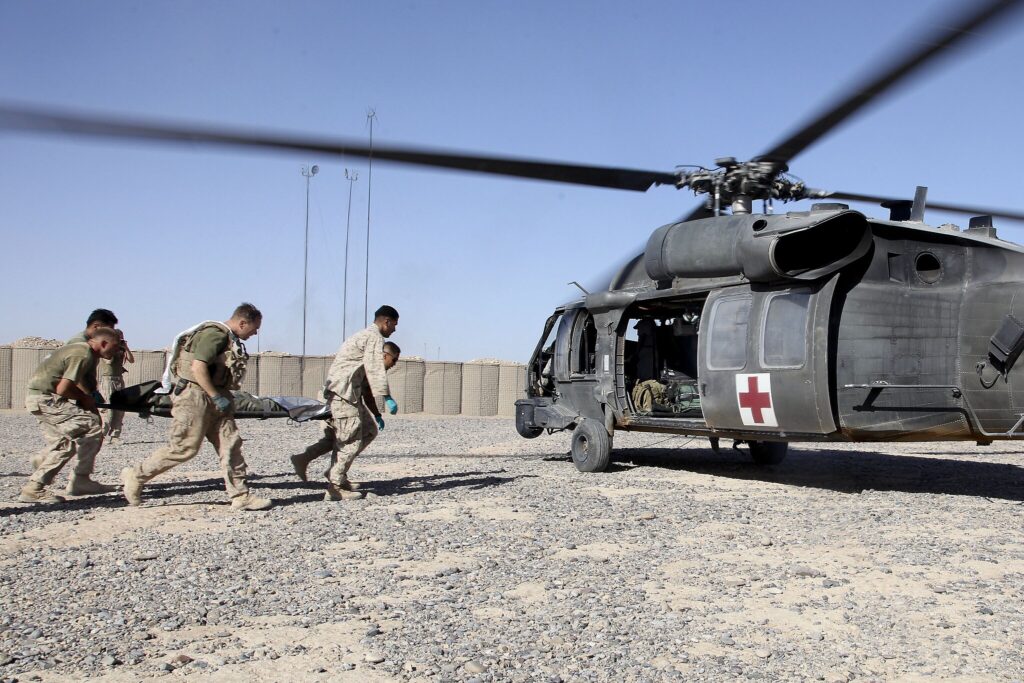
AFGHANISTAN (Sept. 4, 2009) U.S. Navy Hospital Corpsman with 1st Battalion, 5th Marine Regiment (1/5), evacuate an Afghanistan National Army soldier after he was hit with an IED explosion in the road. The explosion seriously injured two Afghanistan National Army soldiers and civilians. The 1/5 is deployed with Regimental Combat Team 3, whose mission is to conduct counter insurgency operations in partnership with the Afghanistan National Security Forces. (U.S. Marine Corps photo by Staff Sgt. William Greeson/Released)

Police, Legitimacy, and the Paradox of Stability

Military advisors learned fast that policing is not a lighter form of combat. It is its own profession with its own social contract. Where police units acted predatory, communities often judged the entire state through that lens. Where police acted procedurally fair, insurgent narratives struggled to take root. U.S. efforts sometimes stabilized streets in the short term while entrenching impunity in the long term. That paradox matters for future missions. Building partner capacity that can fight but cannot earn consent risks tactical wins that degrade strategic legitimacy. Advisory frameworks should therefore integrate rule of law benchmarks into their definitions of progress, not as a side note but as a core outcome.

Special Operations Partnerships and the Problem of Continuity

Afghan special operations units became symbols of capability and resolve. Partnerships with coalition SOF produced elite teams that often outperformed their parent institutions. Field research from the period shows these partnerships thriving on high trust, shared training pipelines, and deep mentorship. Their edge came from continuity and standards that were guarded with care. The systemwide challenge was diffusion. Excellence at the tip did not always translate to reforms in logistics, personnel, or promotions across the broader force. Future advisory designs should bake in plans for horizontal transfer of practices, not just vertical excellence in the units that fight most.
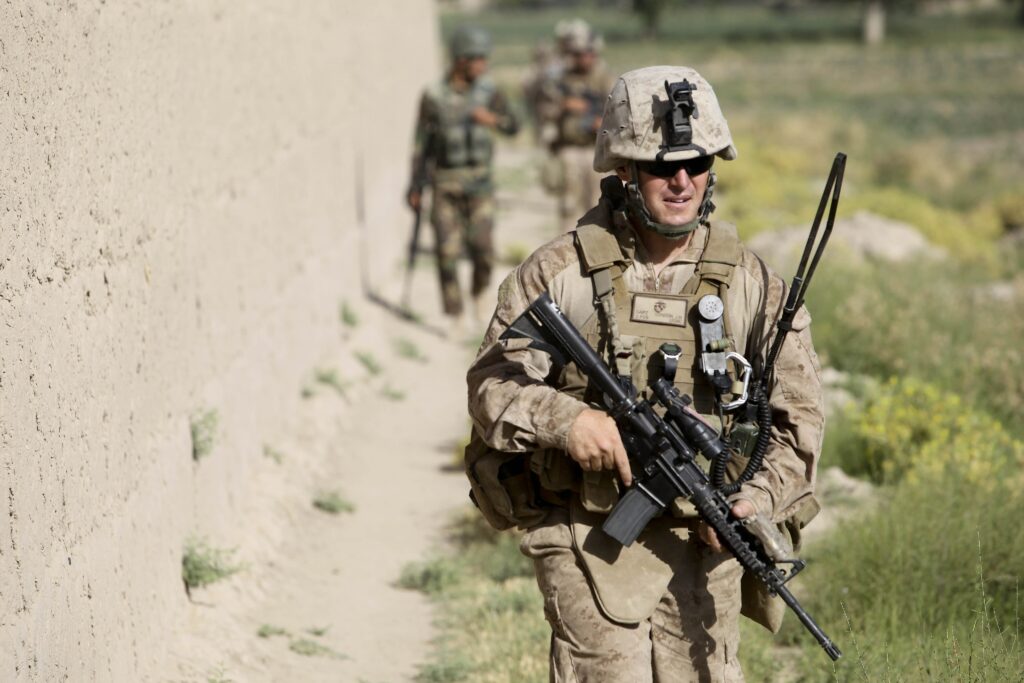
U.S. Marine Corps Capt. Jason Condon, a battalion air officer with 1st Battalion, 5th Marine Regiment, conducts a Civil Affairs Group patrol with Afghan soldiers in the Nawa District of Helmand province, Afghanistan, on July 17, 2009. The Marines with 1st Battalion, 5th Marine Regiment, Regimental Combat Team 3, 2nd Marine Expeditionary Brigade – Afghanistan are deployed in support of NATO’s International Security Assistance Force and will participate in counter insurgency operations and training and the mentoring of Afghan security forces. DoD photo by Staff Sgt. William Greeson, U.S. Marine Corps. (Released)

What NATO and Allies Say They Learned

Allies describe Afghanistan as a stress test for collective action beyond Europe. The mission forced an alliance built for deterrence into a long stabilization campaign with complex local politics. The lessons now cited are straightforward. Share candid assessments early. Align political aims with realistic timelines. Protect institutional memory as rotations change. And when the local partner’s political foundations shift, adjust the mission before the mission adjusts you. These points sound obvious in peacetime. They become hard under pressure. Documenting them matters because memory is short and future crises arrive in new packaging that looks less familiar than it is.

Training For Culture Without Turning Culture Into Stereotype

Cross-cultural training helped many units avoid missteps, but it worked best when it taught sensemaking rather than scripts. Checklists can be useful, yet real interactions defy scripts. The best programs taught troops how to read context, ask better questions, and reflect on their own assumptions. They also helped leaders design operations that left space for local agency. When culture becomes a static portrait of the other, it misleads. When culture becomes a set of tools for framing problems, it empowers decision making under uncertainty. The distinction is not academic. It decides whether a partner’s no is treated as disrespect or as information about risk, reputation, and survival.

Measuring Partner Capability Without Ignoring Political Economy

Dashboards count trained personnel and issued equipment. Communities count whether disputes get settled without bribes and whether sons come home at night. Advisors need both views. Security sector assistance frameworks that ignore political economy invite disappointment. They overstate progress when numbers rise and morale falls. They understate success when a district quietly reduces predation and gains trust. Integrating political economy indicators is difficult but feasible. It means tracking turnover not only as a staffing metric but as a signal of patronage. It means coding incidents for social impact, not just kinetic outcome. It also means asking partners to define success in terms that their communities can recognize as legitimate.

What Readers Should Carry Forward

If you work in planning, advising, or analysis, treat culture as a design variable, not an afterthought. If you run a training pipeline, prioritize continuity, handovers, and institutional memory. If you manage strategic communication, match promises to the lived experiences that communities will test tomorrow morning. And if you measure progress, put legitimacy and behavior at the center rather than the margin. The Afghan experience does not offer a single formula for future missions. It does offer a durable checklist for avoiding fragile alliances that look strong until the first shock. The next partnership will also operate under pressure. The question is whether its cultural architecture will bend or break when it does.

References:

Special Inspector General for Afghanistan Reconstruction. Reconstructing the Afghan National Defense and Security Forces: Lessons from the U.S. Experience in Afghanistan. Executive Summary, 2017.
Special Inspector General for Afghanistan Reconstruction. Lessons From U.S. Security Sector Assistance Efforts in Afghanistan. Executive Summary, 2019.
RAND Corporation. Building Special Operations Partnerships in Afghanistan and Beyond, 2014.
RAND Corporation. U.S. Military Information Operations in Afghanistan, 2012.
National Defense University Press. Cultural Support Teams in Afghanistan, Joint Force Quarterly 75, 2014.

Previous Post

The French Foreign Legion After the Sahel: Where It Fits Now

Next Post

The Fall of El Fasher and the Weaponisation of Darfur’s Conflict

Related Posts

Libya After Gaddafi: Security Fragmentation, Weapons Proliferation, and Energy Challenges
History & Legacy

Libya After Gaddafi: Security Fragmentation, Weapons Proliferation, and Energy Challenges

December 15, 2025
Why Toyota Became The Unofficial Vehicle Of Modern Warzones
History & Legacy

Why Toyota Became The Unofficial Vehicle Of Modern Warzones

November 13, 2025
South_Sudan_022
History & Legacy

The Fall of El Fasher and the Weaponisation of Darfur’s Conflict

November 3, 2025
Saddam Hussein and the Petro-Military Complex: A Strategic Legacy
History & Legacy

Saddam Hussein and the Petro-Military Complex: A Strategic Legacy

October 18, 2025
Monusco-training-22_(9311333487) (1)
Cross-Sector Insights

MONUSCO in 2025: What a Managed Exit Means for Civilians, Security, and the Region

October 13, 2025
Blackwater PMC
History & Legacy

Inside Iraq’s Security Market: How Private Power Shapes a Fragile State

October 6, 2025
Next Post
South_Sudan_022

The Fall of El Fasher and the Weaponisation of Darfur’s Conflict

  • Trending
  • Comments
  • Latest
Blackwater PMC

After Blackwater: How PMCs Evolved, Professionalized, and Fragmented

September 13, 2025
Blackwater PMC

Inside Iraq’s Security Market: How Private Power Shapes a Fragile State

October 6, 2025
Operation Enduring Freedom

What Exactly Is a Private Military Company (PMC)?

September 6, 2025
Repkon Nammo in Denmark: What This Nordic Ammunition Play Really Signals

Repkon Nammo in Denmark: What This Nordic Ammunition Play Really Signals

August 21, 2025
A Historic $142 Billion Arms Deal: Unpacking the U.S.-Saudi Agreement

A Historic $142 Billion Arms Deal: Unpacking the U.S.-Saudi Agreement

A Silent Revolution on the Battlefield: AI-Enabled Tactical Communication Systems

A Silent Revolution on the Battlefield: AI-Enabled Tactical Communication Systems

Cominf.org, CC BY-SA 3.0 , via Wikimedia Commons

Is Europe Really Reducing Its Dependence on Russian Gas?

What is ITAR? The Invisible Line in Global Defense Trade

What is ITAR? The Invisible Line in Global Defense Trade

Israel’s F-15 News: What Actually Happened, and Why It Matters

Israel’s F-15 News: What Actually Happened, and Why It Matters

January 1, 2026
SDF and HTS: Managing Tension Without Open Conflict in Northern Syria

SDF and HTS: Managing Tension Without Open Conflict in Northern Syria

December 26, 2025
What 2025 Taught Us About Defense and Energy: Five Lessons for 2026

What 2025 Taught Us About Defense and Energy: Five Lessons for 2026

December 24, 2025
The New Taiwan Arms Package and China’s “Stop” Message: What Actually Changed

The New Taiwan Arms Package and China’s “Stop” Message: What Actually Changed

December 19, 2025

Recent News

Israel’s F-15 News: What Actually Happened, and Why It Matters

Israel’s F-15 News: What Actually Happened, and Why It Matters

January 1, 2026
SDF and HTS: Managing Tension Without Open Conflict in Northern Syria

SDF and HTS: Managing Tension Without Open Conflict in Northern Syria

December 26, 2025
What 2025 Taught Us About Defense and Energy: Five Lessons for 2026

What 2025 Taught Us About Defense and Energy: Five Lessons for 2026

December 24, 2025
The New Taiwan Arms Package and China’s “Stop” Message: What Actually Changed

The New Taiwan Arms Package and China’s “Stop” Message: What Actually Changed

December 19, 2025
Drill & Defense

Drill & Defense is an independent platform providing insights into firearms, defense technologies, and energy sectors. We deliver clear, practical content for professionals, enthusiasts, and industry followers worldwide.

Follow Us

Browse by Category

  • Cross-Sector Insights
  • Defense
  • Defense & Energy Strategy
  • Defense Know-How
  • Defense Technologies
  • Energy
  • Energy Insight
  • Energy Technologies
  • Global Security & Trade Analysis
  • History & Legacy
  • Industry News
  • Knowledge Base
  • Legacy Systems & Structures
  • Market Trends & Analysis
  • Military Market Reports
  • Oil & Gas News
  • Resource Wars & Strategy
  • Tech & Innovation Crossover
  • Turning Points in Conflict
  • Weapon & Gear Reviews

Recent News

Israel’s F-15 News: What Actually Happened, and Why It Matters

Israel’s F-15 News: What Actually Happened, and Why It Matters

January 1, 2026
SDF and HTS: Managing Tension Without Open Conflict in Northern Syria

SDF and HTS: Managing Tension Without Open Conflict in Northern Syria

December 26, 2025

© 2025 Drill & Defense. All rights reserved. Independent insights on firearms, defense, and energy. For business inquiries: info@drillanddefense.com | PRIVACY POLICY | COOKIE POLICY | TERMS AND CONDITIONS

Manage Consent

We use cookies to improve your experience. You can accept or refuse cookies; however, some features may not function properly without your consent.

Functional Always active
The technical storage or access is strictly necessary for the legitimate purpose of enabling the use of a specific service explicitly requested by the subscriber or user, or for the sole purpose of carrying out the transmission of a communication over an electronic communications network.
Preferences
The technical storage or access is necessary for the legitimate purpose of storing preferences that are not requested by the subscriber or user.
Statistics
The technical storage or access that is used exclusively for statistical purposes. The technical storage or access that is used exclusively for anonymous statistical purposes. Without a subpoena, voluntary compliance on the part of your Internet Service Provider, or additional records from a third party, information stored or retrieved for this purpose alone cannot usually be used to identify you.
Marketing
The technical storage or access is required to create user profiles to send advertising, or to track the user on a website or across several websites for similar marketing purposes.
  • Manage options
  • Manage services
  • Manage {vendor_count} vendors
  • Read more about these purposes
View preferences
  • {title}
  • {title}
  • {title}
No Result
View All Result
  • Defense
    • Industry News
    • Weapon & Gear Reviews
    • Defense Technologies
    • Military Market Reports
  • Energy
    • Oil & Gas News
    • Energy Technologies
    • Market Trends & Analysis
  • Cross-Sector Insights
    • Defense & Energy Strategy
    • Global Security & Trade Analysis
    • Tech & Innovation Crossover
  • History & Legacy
    • Turning Points in Conflict
    • Legacy Systems & Structures
    • Resource Wars & Strategy
  • Knowledge Base
    • Defense Know-How
    • Energy Insight
  • About
  • Contact
  • Login
  • Register

© 2025 Drill & Defense. All rights reserved. Independent insights on firearms, defense, and energy. For business inquiries: info@drillanddefense.com | PRIVACY POLICY | COOKIE POLICY | TERMS AND CONDITIONS