
T. E. Lawrence occupies a distinctive place in the strategic history of the Middle East, positioned at the intersection of culture, conflict, and intellectual engagement. For audiences familiar with modern defense and geopolitical analysis, his story is more than a historical account. It is a case study in how knowledge of terrain, culture, and human motivation can shape broader military outcomes. At Drill & Defense, we often examine figures who merge operational insight with deeper contextual awareness, and Lawrence remains one of the best examples of this synthesis.

A Scholar Before the Uniform
Long before becoming a military officer, Lawrence established himself as an academic voice. His early travels through Ottoman Syria and Palestine were not military reconnaissance but archaeological study. Yet, unintentionally, those years created the intellectual foundation that would later define his strategic value. He mapped fortifications, observed tribal structures, navigated deserts, and learned the region’s rhythms with a level of detail that few Europeans of his era possessed.
From a modern defense perspective, this background resembles what we would now call deep cultural immersion. It aligns closely with contemporary doctrines that stress the importance of understanding local dynamics long before a conflict frame emerges. Readers who follow Drill & Defense will recognize this theme from today’s discussions around energy corridors, cross-border alliances, and informal power structures. Lawrence embodied the idea that intellectual preparation becomes a strategic asset.
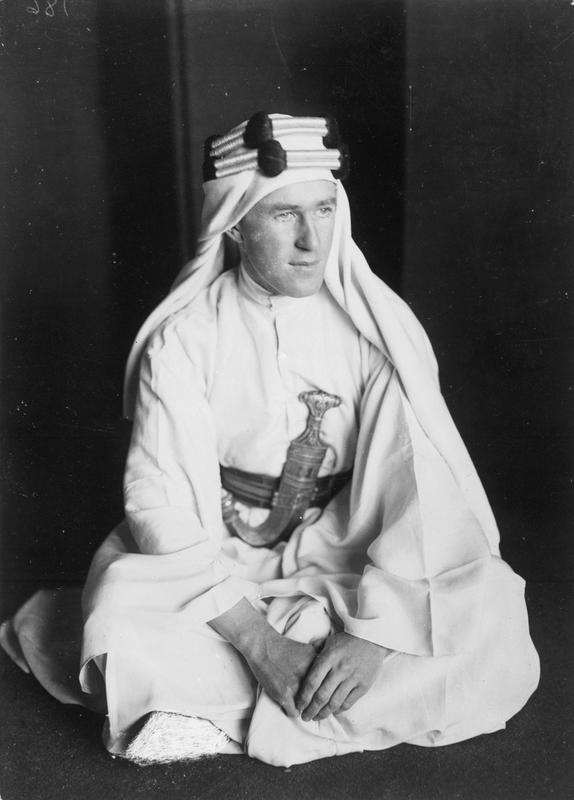
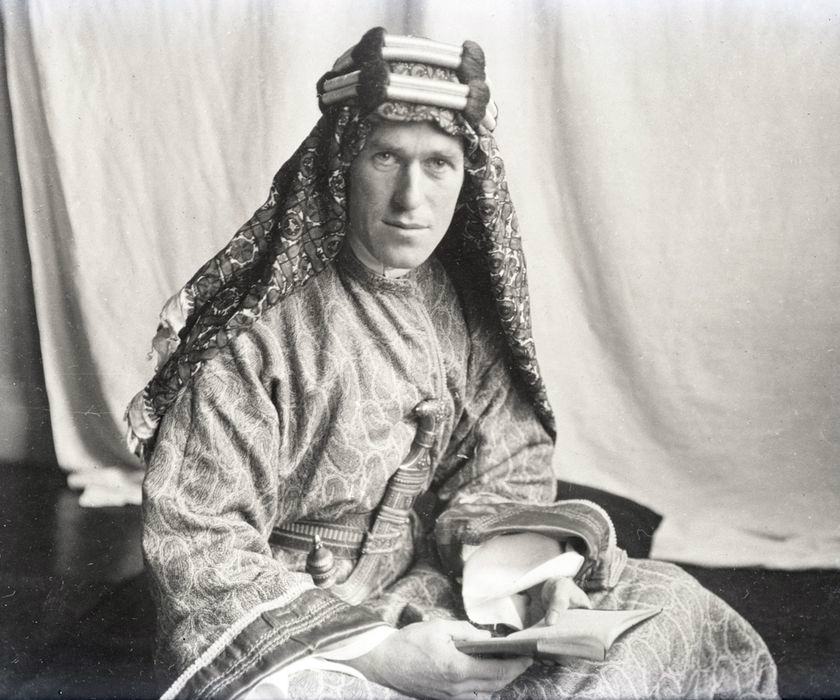
Lawrence in Arab dress seated on the ground.
Operational Role in the Arab Revolt
When World War I extended into the Middle East, Lawrence transitioned naturally into roles requiring both analytical judgement and field coordination. Assigned to British intelligence in Cairo, he became a bridge between Arab leaders and Allied command. His involvement in the Arab Revolt illustrates how relational networks, cultural familiarity, and strategic improvisation can operate together to produce results disproportionate to the size of one’s official mandate.
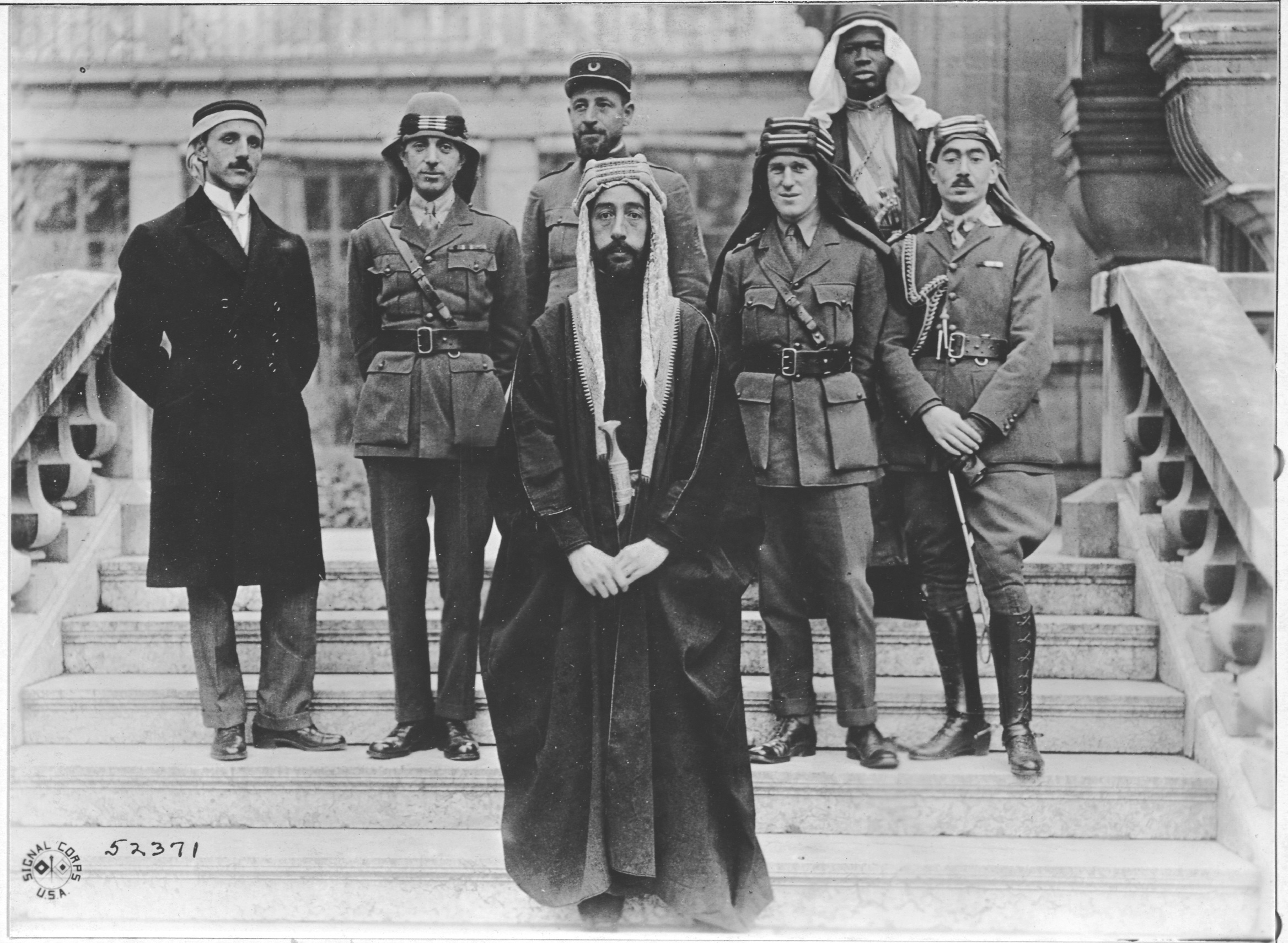
He worked closely with Emir Faisal, helping to organize irregular forces whose mobility and adaptability challenged conventional Ottoman formations. The disruption of the Hejaz Railway stands out as a defining example: coordinated raids, targeted pressure points, and the use of terrain to amplify psychological effect. For today’s observer, this resembles the contemporary logic of asymmetric warfare, where leverage emerges not from mass but from precision, timing, and narrative advantage.
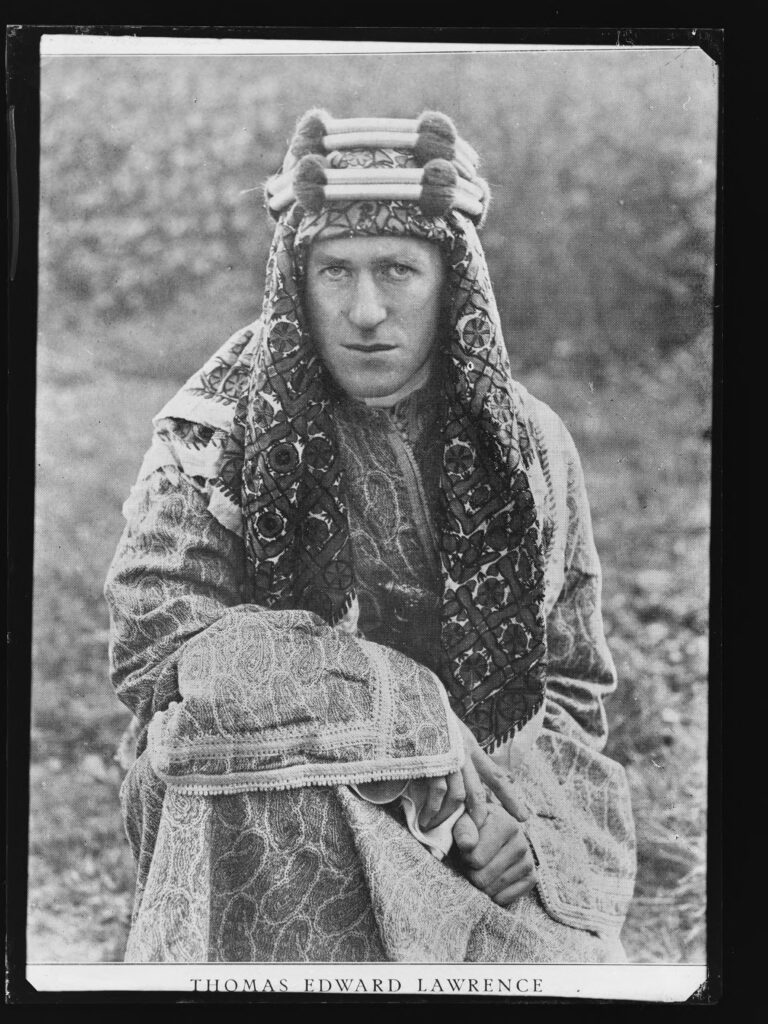
The Aqaba operation in 1917 remains one of the most studied episodes. It succeeded not because of overwhelming firepower but because Lawrence and his counterparts selected an approach the defenders considered geographically impossible. In modern military schools, this is often cited when discussing lateral thinking in operational planning.
Strategic Themes Relevant to Modern Analysis
Lawrence’s campaigns demonstrate principles that remain relevant to today’s defense landscape. Readers will instantly recognize these themes from our coverage of hybrid conflicts and decentralized security structures.
Strategic value is amplified by cultural fluency.
Military outcomes are shaped by the quality of local alliances.
Terrain and mobility remain decisive elements in asymmetric engagements.
Narrative framing influences both morale and international perception.
These themes mirror contemporary realities in regions shaped by fragmented authority, energy corridors, and competing spheres of influence. Lawrence’s career offers historical precedent for the analytical frameworks we use at Drill & Defense when examining similar environments today.
The Power of Narrative and Public Imagination
An important dimension of Lawrence’s influence is the narrative constructed around him. His book Seven Pillars of Wisdom is not simply a memoir; it is a crafted reflection that blends strategy, cultural observation, and personal discipline. While historians note that it is not a perfect chronological record, its value lies in offering a window into the mindset of a strategist navigating layered political and tribal realities.
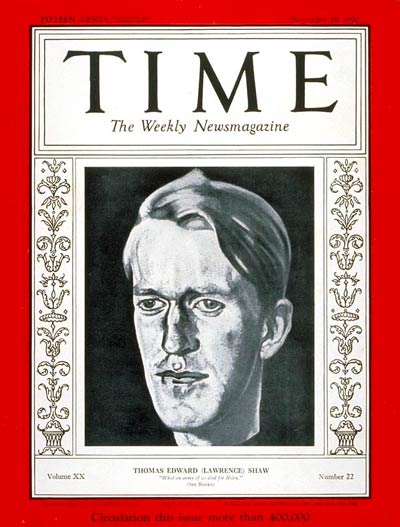
The public dimension of his legacy expanded further when journalists introduced Lawrence of Arabia to a wide Western audience. This elevated him from a capable field officer to a global figure and shifted the conversation from specific operations to a broader examination of leadership, identity, and intercultural cooperation.
For the modern defense community, the lesson is clear. Public perception, shaped by storytelling, reporting, and cultural framing, can influence how military efforts are remembered and how future policies are debated. Lawrence’s experience shows that operational success and narrative resonance are often intertwined.
Postwar Realities and Policy Frameworks
The period following World War I revealed the limits of what individuals could shape within the larger structure of international politics. Lawrence supported the concept of Arab self-determination, yet the diplomatic arrangements that followed the war produced a very different landscape. The European mandate system created new administrative boundaries and new strategic realities. The Sharifian Solution, intended to place Hashemite leadership across several territories, represented an attempt to balance wartime commitments with emerging geopolitical priorities.
This period is significant for today’s geopolitical analysts because it shows the enduring tension between field-level aspirations and state-level decision-making. It reminds us that operational success does not always translate into political outcomes, a dynamic still visible in modern conflict zones where local actors and international powers navigate overlapping agendas.
Lasting Influence on Defense Thinking
Lawrence’s significance today is not based solely on battlefield action. His legacy endures because his reflections continue to influence how militaries and analysts think about irregular warfare, coalition-building, and psychological operations. His integration of cultural analysis with strategic planning mirrors contemporary doctrines that emphasize adaptability and local engagement.
In a modern context, whether examining counterinsurgency doctrines, decentralized militias, or the geopolitical depth of energy routes, Lawrence offers a framework for understanding how the intangible factors of loyalty, identity, and perception interact with the tangible realities of terrain and logistics.
For Drill & Defense, this intersection is particularly relevant. Many of our analyses explore environments where formal structures and informal networks coexist. Lawrence’s life reminds us that expertise in such environments requires both intellectual range and situational sensitivity.
A Legacy Built on Insight, Adaptation, and Context
More than a century after his actions in the Arab Revolt, T. E. Lawrence continues to be studied not because of myth alone but because his experiences illuminate enduring strategic patterns. For professionals in defense, geopolitics, or regional analysis, examining his career is a way to understand how individuals interpret complex systems and act within them.
His legacy bridges scholarship, cultural engagement, military adaptation, and strategic communication. These elements, taken together, have ensured that his story remains relevant to analysts seeking clarity in regions shaped by layered identities and overlapping ambitions, the very landscapes Drill & Defense focuses on today.
References:
- Britannica, Encyclopaedia.
“T. E. Lawrence – Biography, Early Life, Military Role.”
Encyclopaedia Britannica, 2024. - Imperial War Museums (IWM).
“Who Was T. E. Lawrence?”
Imperial War Museums, London. - The History Reader (St. Martin’s Publishing Group).
“T. E. Lawrence and the Art of War in the Twenty-First Century.”
Military History Section, The History Reader. - The National Archives (UK).
“Lawrence and the Arab Revolt: British Military Intelligence Records.”
Kew, London. - The British Library – Middle Eastern Collections.
“T. E. Lawrence: Letters, Maps, and Field Notebooks.”
British Library Archives.