

When one assesses Saddam Hussein’s nearly quarter-century in power (1979–2003), it becomes clear that his regime was shaped not simply by ideology or repression, but by a distinct petro-military complex: the use of oil revenue to build military capacity and project power, and the way strategic choices in arms and energy defined his rise and fall. For security and defense professionals, understanding this dynamic helps shed light on how resource-rich states can attempt to leverage energy wealth into military and geopolitical influence.

The Oil Foundation of Power
Iraq under Saddam was endowed with one of the world’s largest proven oil reserves. According to the Council on Foreign Relations, Iraq held roughly 110–115 billion barrels, though production and infrastructure were underdeveloped. Rather than focusing primarily on expanding production and modernizing the sector, and despite these reserves, the regime often channeled oil income into military and security apparatuses. In the late 1980s, the war economy had drained resources: “oil revenues continued to drop off … while military spending remained high.” For practitioners in defense analysis, this suggests a critical lesson: resource wealth is no guarantee of stability or strategic advantage unless the underlying economy and institutions can support it.
Arms, Ambition and the WMD Anchor
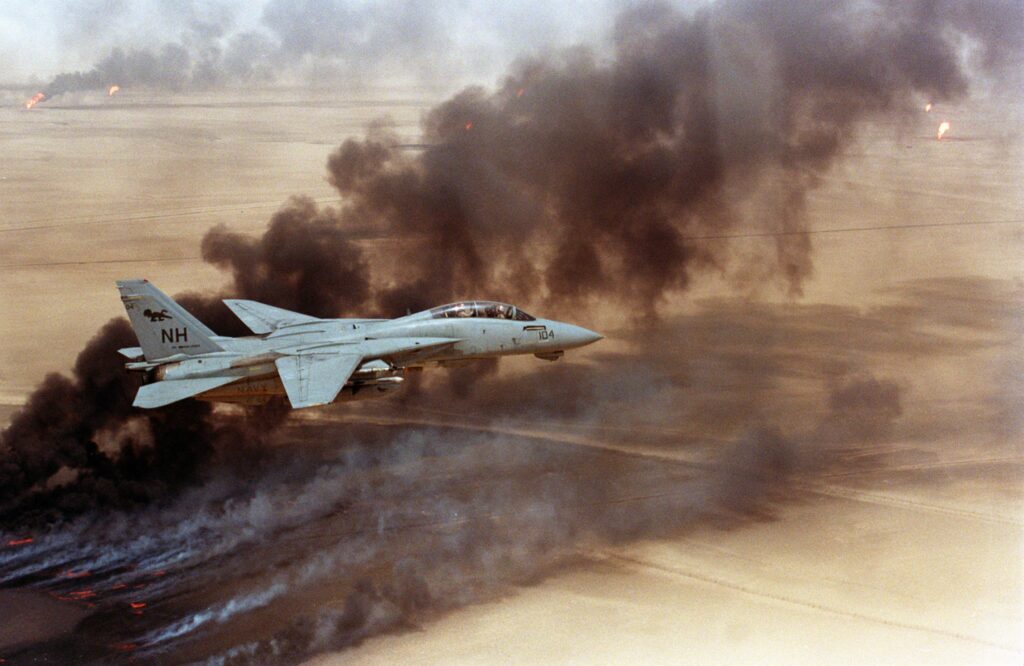
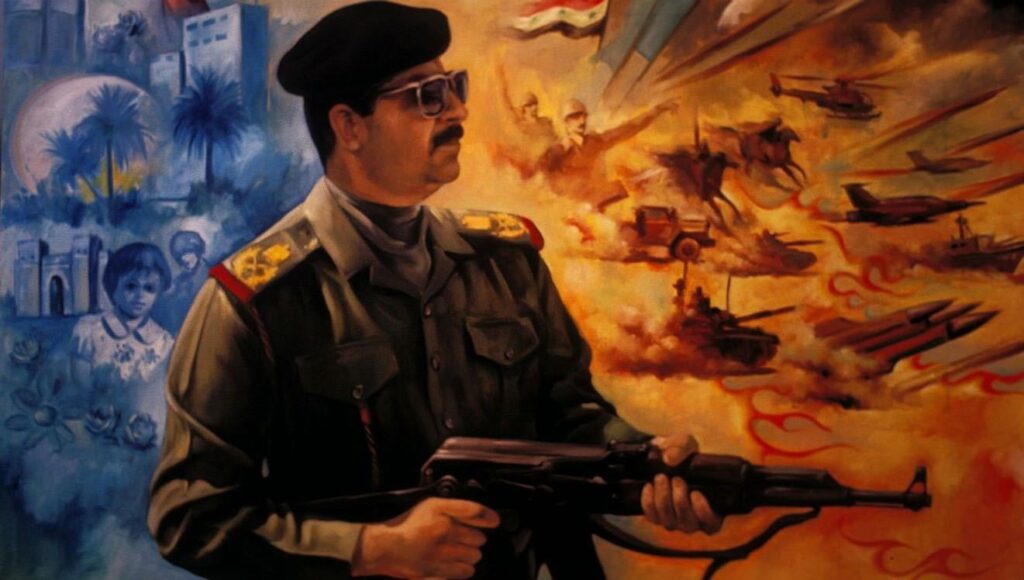
Saddam’s military ambitions were not limited to conventional forces. His regime placed considerable emphasis on weapons of mass destruction (WMD) programs, including chemical, biological, and potentially nuclear capabilities, as a tool of deterrence and regional coercion. A study of Iraqi WMD strategy emphasizes that Iraq viewed such programs “to re-shape the map of the Middle East” rather than merely defend against threats. For the security sector, this underscores how energy revenues, when combined with weak civilian oversight and ambitious military doctrine, can foster extreme strategic risk. In Saddam’s Iraq, oil financed paramilitary organizations, surveillance, and an internal security architecture which supplemented his formal military machine.
The Kuwait Move: Resource Competition Meets Geopolitics
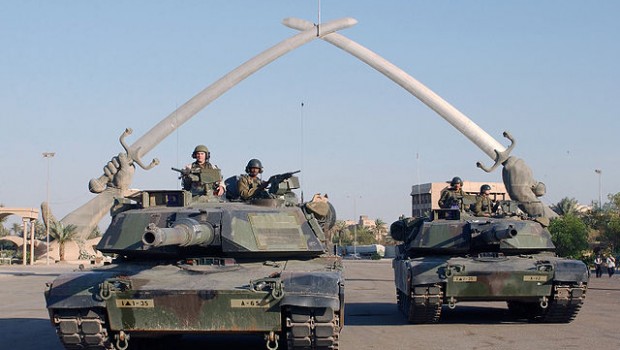
A pivotal moment in Saddam’s strategic trajectory came with the invasion of Kuwait in August 1990. While the narrative often simplifies the motive as “grab the oil,” recent research urges a more nuanced view: Saddam’s decision-making was deeply intertwined with the end of the Cold War, perceptions of regional hegemony, and intra-Arab disputes over production and pricing. Iraq perceived Kuwait’s excess oil production as undercutting its own revenue and as economically offensive. The move into Kuwait was as much about restoring what Saddam saw as Iraq’s rightful role as a dominant oil-producer in the Gulf. This event highlights a broader point for defense analysts: competition over resource policy and energy markets can trigger military operations even when other motivations such as ideology or identity are present.
Sanctions, Diversion, and the Limits of Coercion
Following the Kuwait invasion and the 1990–91 Gulf War, Iraq faced comprehensive UN sanctions. Scholars show that while sanctions significantly reduced trade and oil flows, they often failed to achieve their full political aims: Saddam remained in power until 2003. Meanwhile, the oil-for-food program was designed to allow limited oil sales for humanitarian goods but the regime diverted large amounts of revenue for military and elite use. The program allowed Saddam to maintain his internal security apparatus despite external pressure. For defense and energy professionals, the takeaway is that resource-based authoritarian regimes may be far more resilient than expected under economic pressure, particularly if they retain access to alternate revenue streams, smuggling routes, or internal networks.
Military Investment vs Sustainable Growth
Although oil finance supported a large army and security state, the long-term sustainability of this model was weak. Iraq’s economy-military imbalance persisted: industrial sectors declined, human capital drained, and investment into oil production and infrastructure lagged. The war economy diverted labor and resources into military uses; up to one million Iraqis were employed in the armed forces by the end of the Iran-Iraq war. Post-2003 studies showed that even with regime change, Iraq struggled to rebuild its oil infrastructure, signaling the structural weakness of Saddam’s model of militarized resource dependency. For analysts, that pattern signals a general rule: a strong military posture built on resource revenues can mask deeper structural weakness and may breed vulnerability if shocks such as war, sanctions, or mismanagement coincide.
Strategic Implications for Modern Security and Energy
What does Saddam’s case tell us about present-day defense, energy, and regional power dynamics?
Resource-rich regimes may pursue aggressive military postures if they believe energy revenue grants strategic freedom or leverage. Investment in arms and deterrents may reduce investment in broader economic development, thus increasing long-term strategic risk. External economic pressure may not suffice to overthrow entrenched regimes if alternative revenue or diversion mechanisms exist. Competition over energy production and export markets can become a catalyst for military conflict. Post-authoritarian reconstruction of the energy sector is often more difficult than expected, even when external support is available, due to a legacy of corruption, neglect, and war damage.
Looking Ahead: The Legacy in Context
The legacy of Saddam’s Iraq remains visible in many security discussions: how Gulf states view their militaries, how energy wealth can underwrite regional ambitions, and how sanctions regimes struggle when faced with resource-rich states. For the Drill & Defense reader, the message is clear: when you analyze a state’s defense posture, energy policy cannot be treated as a peripheral detail. It may be the very center of its strategic calculus. When future defense strategies or consultancy briefs evaluate states with similar resource-rich profiles, the Iraq case forces us to ask: are energy revenues being reinvested in sustainable development or diverted into force projection? Are there structural impediments to converting wealth into long-term stability? Understanding that dynamic is crucial for advising clients, mapping regional risk, or preparing defense-planning scenarios.
Further Reading
Baram, Amatzia. An Analysis of Iraqi WMD Strategy. Nonproliferation Review, Summer 2001.
Andrews, John S. Why Sanctions Fell Short of Their Objectives in the First Gulf War. Economic History Blog (LSE), 2023.
Duffield, John S. Oil and the Iraq War: How the United States Could Have Expected to Benefit. Middle East Review of International Affairs, Vol. 9 No. 2 (2005).
Otterman, Sharon. Iraq: Oil-for-Food Scandal. Council on Foreign Relations Backgrounder, 2005.
War Economy of Iraq. Middle East Research and Information Project (MERIP), 2007.
Hegemony and Oil: Factors That Caused Saddam Hussein to Be Removed from Power. University of Exeter, 2022.