

At the 2025 Paris Air Show in Le Bourget, a significant milestone was reached in defense and aerospace collaboration: Lockheed Martin and Korea Aerospace Industries (KAI) formalized an expanded strategic partnership through a comprehensive Memorandum of Understanding (MoU) signed on June 17, 2025.

A Legacy Reinforced
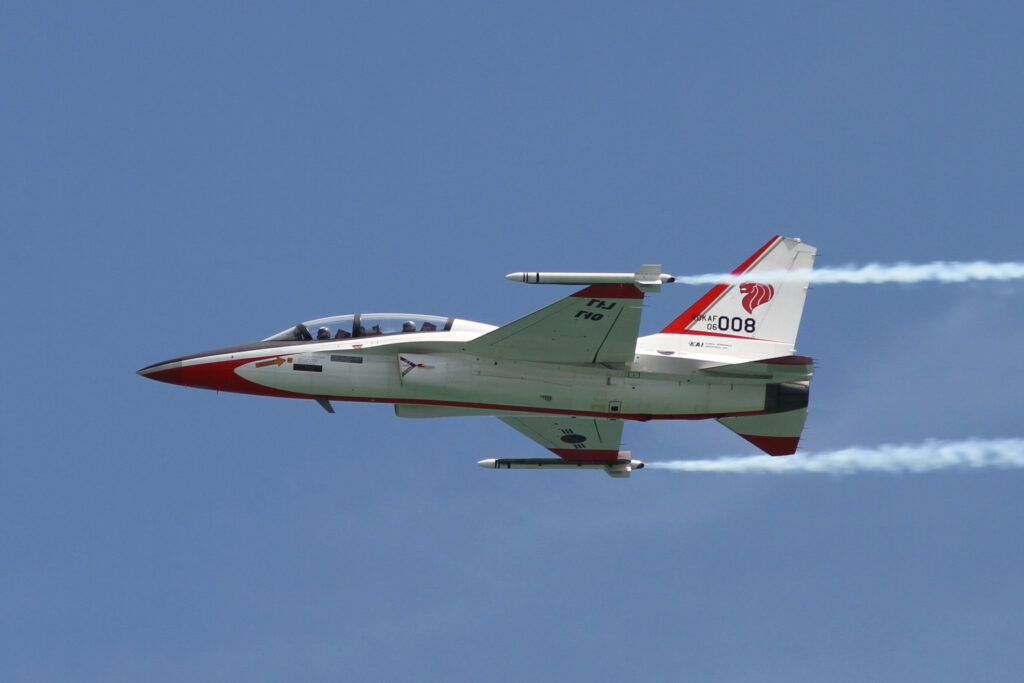
This new agreement builds upon a robust history of joint ventures. From co-developing the T‑50 trainer and FA‑50 light combat aircraft—which paved the way for KAI’s success in international markets—to licensed production of the F‑16 in the 1990s, Lockheed and KAI have steadily woven a tapestry of cooperation. The MoU cements this ongoing legacy and positions both firms for broader technological engagement.
Scope of the Expanded Memorandum
Key domains of collaboration under the MoU include:
- Rotorcraft manufacturing – Joint work on rotary-wing systems
- Uncrewed and crewed-uncrewed teaming – UAVs and autonomous systems development
- Space systems – Satellites, communications, surveillance architecture
- Training devices & sustainment – Advanced simulators and lifecycle logistics
- Next‑gen platform R&D – Exploring emerging defense platforms
Lockheed COO Frank St. John emphasized, “By combining the best skills, expertise, and technologies from the United States and Korea, we aim to boost capacity, sustain jobs, and deliver economic benefits in both countries”. KAI’s CEO, Goo‑young Kang, echoed these sentiments, highlighting the alliance’s role in strengthening KAI’s position in U.S. and allied trainer/fighter programs.
Driving US Market Access
The strategic MoU sets a clear path for KAI’s deeper engagement in U.S. defense initiatives. A key driver is KAI’s planned involvement in the U.S. Navy’s Undergraduate Jet Training System, where the T‑50 and FA‑50 platforms are strong contenders. This synergy opens doors for combined marketing, co-production, and deeper integration into U.S. acquisition frameworks.
Space, Autonomy, and Advanced Systems
Expanding beyond aerial platforms, both companies are set to pursue:
- Space platforms: leveraging Lockheed’s satellite expertise with KAI’s ambitions
- AI-driven autonomy: combining efforts on crewed-uncrewed team dynamics
- Advanced sustainment: integrating digital logistics, training devices, and lifecycle support
This evolution reflects a strategic pivot toward future-ready capabilities designed to serve global defense and commercial markets alike.
Why This Matters for Industry
For stakeholders across defense and aerospace sectors, this collaboration signals:
- Cross-border innovation acceleration – Shared R&D reduces time-to-market
- Market expansion in the U.S. – KAI gains a strategic entry, Lockheed diversifies supply chains
- Holistic technology ecosystems – Synergies across trainers, rotorcraft, UAVs, space, and sustainment
- Economic multilateral benefits – Joint efforts support employment and economic growth in both nations
What to Watch
Key developments may include:
- New rotorcraft or UAV platforms developed jointly
- Expansion of T‑50/FA‑50 involvement in U.S. training initiatives
- Pilots or prototypes combining space systems and autonomous teaming
- Export campaigns targeting allied nations
For aerospace investors, program managers, and governmental agencies, this partnership offers a model of how strategic alliances can drive innovation, scale, and global impact.
References
https://www.kedglobal.com/aerospace-defense/newsView/ked202506190005