

Drill & Defense
Advertisement
  • Defense
    • Industry News
    • Weapon & Gear Reviews
    • Defense Technologies
    • Military Market Reports
  • Energy
    • Oil & Gas News
    • Energy Technologies
    • Market Trends & Analysis
  • Cross-Sector Insights
    • Defense & Energy Strategy
    • Global Security & Trade Analysis
    • Tech & Innovation Crossover
  • History & Legacy
    • Turning Points in Conflict
    • Legacy Systems & Structures
    • Resource Wars & Strategy
  • Knowledge Base
    • Defense Know-How
    • Energy Insight
  • About
  • Contact
  • Login
  • Register
No Result
View All Result
  • Defense
    • Industry News
    • Weapon & Gear Reviews
    • Defense Technologies
    • Military Market Reports
  • Energy
    • Oil & Gas News
    • Energy Technologies
    • Market Trends & Analysis
  • Cross-Sector Insights
    • Defense & Energy Strategy
    • Global Security & Trade Analysis
    • Tech & Innovation Crossover
  • History & Legacy
    • Turning Points in Conflict
    • Legacy Systems & Structures
    • Resource Wars & Strategy
  • Knowledge Base
    • Defense Know-How
    • Energy Insight
  • About
  • Contact
  • Login
  • Register
No Result
View All Result
Drill & Defense
No Result
View All Result
Home Knowledge Base

ITAR and the USML Explained: Weapons, Software, and Dual-Use Boundaries

September 3, 2025
in Knowledge Base, Defense Know-How
Iraqi Freedom

An aircrewman on an HH-60H Black Hawk helicopter scans the ground with night vision lenses during an air assault mission to search for insurgents and weapons caches in Taji, Iraq, July 3, 2006. (U.S. Navy photo by Mass Communication Specialist 1st Class Michael Larson) (Released)

Share on LinkedInShare on Twitter

Picture this: you are building something innovative, maybe a piece of equipment or software. Suddenly, you hear someone ask, “Is this ITAR-controlled?” That question can feel heavy, right? So let’s break it down in plain words.

The United States Munitions List (USML) is basically the U.S. government’s big catalog of military stuff. It tells you which items need strict oversight when leaving the country. The list is managed by the Department of State’s Directorate of Defense Trade Controls (DDTC). If your item sits on that list, you need government approval before exporting it or even showing it to a foreign national.

I once worked with a small team who thought their software was harmless until they realized it included a night-vision algorithm. That moment taught me: the USML reaches much further than guns and tanks.


What Exactly Shows Up on the USML?

You might expect the list to cover only rifles and rockets. But it goes way beyond that.

You will find firearms, assault weapons, and shotguns. Then there are heavy guns and parts, even flash suppressors. Ammunition is there too—cartridges, shells, propellants. Missiles, torpedoes, bombs, and mines also make the cut.

It does not stop at hardware. Military platforms like tanks, warships, fighter jets, and submarines are on it. So are electronics—radar, sensors, optics, and night-vision gear. You will see armor, helmets, and chemical or biological weapons as well.

And here is the tricky part: not only the hardware but also the know-how. Technical drawings, schematics, software code, and even training services tied to those defense items are controlled. Imagine writing a manual for a guided missile system—that text alone would fall under ITAR.
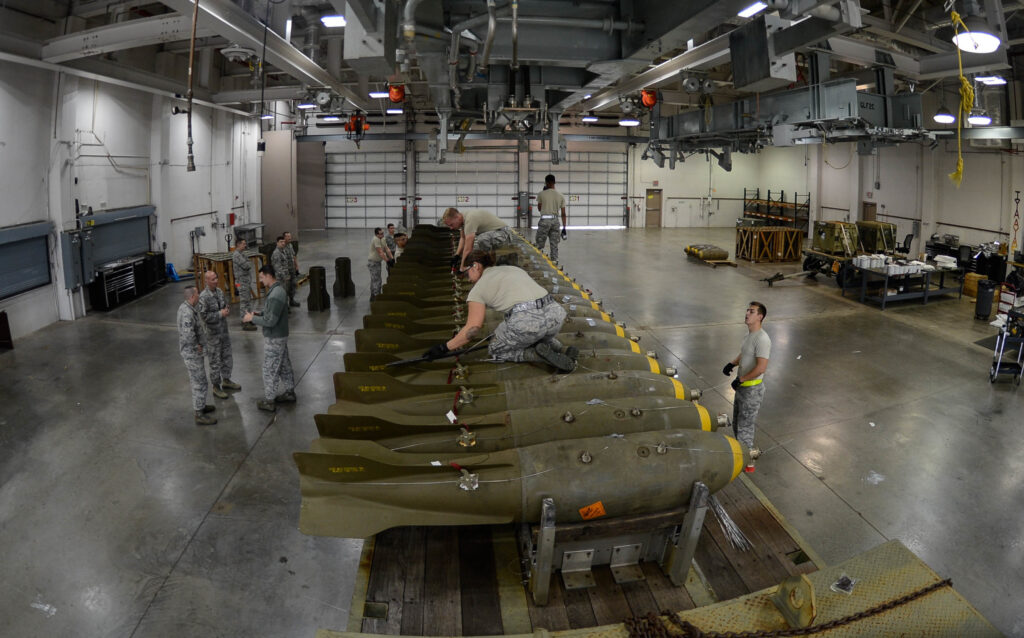
Airmen from the 2nd Munitions Squadron Production Flight assembles M-117 General Purpose Bombs at Barksdale Air Force Base, La., Nov. 8, 2017. The 2nd MUNS Production Flight supports the 2nd Bomb Wing Unit Committed Munitions List and the U.S. Navy Maritime mine-laying operations daily by assembling, disassembling, delivering, and maintaining conventional munitions. (U.S. Air Force Photo by Airman 1st Class Tessa B. Corrick)

ITAR or Dual Use? Where to Draw the Line

Here is a common headache: sometimes an item feels both military and civilian. That is where the line between ITAR and EAR (Export Administration Regulations) comes in.

ITAR covers things designed for military use, full stop. EAR, on the other hand, controls dual-use items—those with civilian plus potential military value. Think advanced chips, encryption software, or certain chemicals. They are not made for war alone, but they can end up in it.

If your product is not on the USML but still sensitive, it probably lands under EAR. Some items fall into a broad basket called EAR99, meaning they usually need no license unless you plan to send them to a restricted place or person.

So, next time you design or sell something, ask: “Is it purely military, or can civilians use it too?” That simple question often points you toward the right rulebook.


How Companies Can Stay on the Safe Side

Compliance sounds like a scary word, but think of it as a seatbelt for your business. It keeps you safe while you move forward.

First, classify your product. Find out if it belongs to the USML or the Commerce Control List under EAR. Then, if you deal with USML items, register with the DDTC and apply for the right license before exporting or even sharing technical data.

Watch out for “deemed exports.” If you store controlled technical drawings on a cloud server and a foreign colleague can access them, you might have already violated ITAR without shipping a single box.

It helps when teams work together—legal experts, engineers, supply chain managers, IT staff. Everyone plays a part in making sure the right safeguards are in place.


Why This Matters to You

Think of compliance like a traffic light. Red means stop—this is clearly ITAR. Green means go—civilian use only. Yellow? That is the tricky zone of dual use. Knowing which light you face lets you move with confidence instead of guessing.

I still remember a small drone startup that thought they were clear of ITAR. Later, they discovered their thermal imaging module put them right back on the USML radar. It was a costly surprise, but also a wake-up call for them to get compliance right early.

So, whether you are building, coding, or shipping, remember: ITAR is not just about weapons, it is about responsibility. Understanding the USML and the dual-use divide makes your work smoother and your business safer.

References

  • United States Munitions List categories and scope, U.S. Government sources.
  • Export Control guidance from the Directorate of Defense Trade Controls (DDTC).
  • Export Administration Regulations overview, Bureau of Industry and Security.

Previous Post

Beijing’s Victory Day Parade: Power, Optics, and the Politics of a Stage-Managed Spectacle

Next Post

Oil and Guns: How Petrodollars Shape Security Markets

Related Posts

When Prevention Fails – What Remains Is You
Knowledge Base

When Prevention Fails – What Remains Is You

February 13, 2026
October 7: Understanding Intelligence and Operational Realities
Knowledge Base

October 7: Understanding Intelligence and Operational Realities

February 3, 2026
Open source search
Knowledge Base

How Modern Intelligence Units Actually Work: The Analyst–Operator Dynamic

January 29, 2026
Galil vs AK: When Reliability Meets Standardization
Knowledge Base

Galil vs AK: When Reliability Meets Standardization

January 14, 2026
When Do PMCs Enter a War, and Why It Rarely Looks Like “Joining the Fight”
Knowledge Base

When Do PMCs Enter a War, and Why It Rarely Looks Like “Joining the Fight”

January 9, 2026
Live firing of the Light Forces Anti-Tank Guided Weapon (LFATGW) Javelin.
Knowledge Base

Common Misconceptions About ITAR: What Organizations Should Actually Know

December 9, 2025
Next Post
Kuwait_DS_oil_fires_and_damaged_tank_-_USACE-p15141coll5-10595

Oil and Guns: How Petrodollars Shape Security Markets

  • Trending
  • Comments
  • Latest
Blackwater PMC

After Blackwater: How PMCs Evolved, Professionalized, and Fragmented

September 13, 2025
Blackwater PMC

Inside Iraq’s Security Market: How Private Power Shapes a Fragile State

October 6, 2025
Operation Enduring Freedom

What Exactly Is a Private Military Company (PMC)?

September 6, 2025
FeisalPartyAtVersaillesCopy

T. E. Lawrence: Strategic Influence, Cultural Depth, and the Enduring Architecture of a Legacy

January 26, 2026
A Historic $142 Billion Arms Deal: Unpacking the U.S.-Saudi Agreement

A Historic $142 Billion Arms Deal: Unpacking the U.S.-Saudi Agreement

A Silent Revolution on the Battlefield: AI-Enabled Tactical Communication Systems

A Silent Revolution on the Battlefield: AI-Enabled Tactical Communication Systems

Cominf.org, CC BY-SA 3.0 , via Wikimedia Commons

Is Europe Really Reducing Its Dependence on Russian Gas?

What is ITAR? The Invisible Line in Global Defense Trade

What is ITAR? The Invisible Line in Global Defense Trade

When Prevention Fails – What Remains Is You

When Prevention Fails – What Remains Is You

February 13, 2026
The Logistics Layer of War: The Power That Decides What Can Be Fought

The Logistics Layer of War: The Power That Decides What Can Be Fought

February 12, 2026
Stealth Technology’s Mathematics: How Low Observability Is Actually Engineered

Stealth Technology’s Mathematics: How Low Observability Is Actually Engineered

February 11, 2026
Dwight D. Eisenhower: Strategic Architecture at the Intersection of Defense and Energy Security

Dwight D. Eisenhower: Strategic Architecture at the Intersection of Defense and Energy Security

February 9, 2026

Recent News

When Prevention Fails – What Remains Is You

When Prevention Fails – What Remains Is You

February 13, 2026
The Logistics Layer of War: The Power That Decides What Can Be Fought

The Logistics Layer of War: The Power That Decides What Can Be Fought

February 12, 2026
Stealth Technology’s Mathematics: How Low Observability Is Actually Engineered

Stealth Technology’s Mathematics: How Low Observability Is Actually Engineered

February 11, 2026
Dwight D. Eisenhower: Strategic Architecture at the Intersection of Defense and Energy Security

Dwight D. Eisenhower: Strategic Architecture at the Intersection of Defense and Energy Security

February 9, 2026
Drill & Defense

Drill & Defense is an independent platform providing insights into firearms, defense technologies, and energy sectors. We deliver clear, practical content for professionals, enthusiasts, and industry followers worldwide.

Follow Us

Browse by Category

  • Cross-Sector Insights
  • Defense
  • Defense & Energy Strategy
  • Defense Know-How
  • Defense Technologies
  • Energy
  • Energy Insight
  • Energy Technologies
  • Global Security & Trade Analysis
  • History & Legacy
  • Industry News
  • Knowledge Base
  • Legacy Systems & Structures
  • Market Trends & Analysis
  • Military Market Reports
  • Oil & Gas News
  • Resource Wars & Strategy
  • Tech & Innovation Crossover
  • Turning Points in Conflict
  • Weapon & Gear Reviews

Recent News

When Prevention Fails – What Remains Is You

When Prevention Fails – What Remains Is You

February 13, 2026
The Logistics Layer of War: The Power That Decides What Can Be Fought

The Logistics Layer of War: The Power That Decides What Can Be Fought

February 12, 2026

© 2026 Drill & Defense. All rights reserved. Independent insights on firearms, defense, and energy. For business inquiries: info@drillanddefense.com | PRIVACY POLICY | COOKIE POLICY | TERMS AND CONDITIONS

Manage Consent

We use cookies to improve your experience. You can accept or refuse cookies; however, some features may not function properly without your consent.

Functional Always active
The technical storage or access is strictly necessary for the legitimate purpose of enabling the use of a specific service explicitly requested by the subscriber or user, or for the sole purpose of carrying out the transmission of a communication over an electronic communications network.
Preferences
The technical storage or access is necessary for the legitimate purpose of storing preferences that are not requested by the subscriber or user.
Statistics
The technical storage or access that is used exclusively for statistical purposes. The technical storage or access that is used exclusively for anonymous statistical purposes. Without a subpoena, voluntary compliance on the part of your Internet Service Provider, or additional records from a third party, information stored or retrieved for this purpose alone cannot usually be used to identify you.
Marketing
The technical storage or access is required to create user profiles to send advertising, or to track the user on a website or across several websites for similar marketing purposes.
  • Manage options
  • Manage services
  • Manage {vendor_count} vendors
  • Read more about these purposes
View preferences
  • {title}
  • {title}
  • {title}
No Result
View All Result
  • Defense
    • Industry News
    • Weapon & Gear Reviews
    • Defense Technologies
    • Military Market Reports
  • Energy
    • Oil & Gas News
    • Energy Technologies
    • Market Trends & Analysis
  • Cross-Sector Insights
    • Defense & Energy Strategy
    • Global Security & Trade Analysis
    • Tech & Innovation Crossover
  • History & Legacy
    • Turning Points in Conflict
    • Legacy Systems & Structures
    • Resource Wars & Strategy
  • Knowledge Base
    • Defense Know-How
    • Energy Insight
  • About
  • Contact
  • Login
  • Register

© 2026 Drill & Defense. All rights reserved. Independent insights on firearms, defense, and energy. For business inquiries: info@drillanddefense.com | PRIVACY POLICY | COOKIE POLICY | TERMS AND CONDITIONS