
Drill & Defense
Advertisement
  • Defense
    • Industry News
    • Weapon & Gear Reviews
    • Defense Technologies
    • Military Market Reports
  • Energy
    • Oil & Gas News
    • Energy Technologies
    • Market Trends & Analysis
  • Cross-Sector Insights
    • Defense & Energy Strategy
    • Global Security & Trade Analysis
    • Tech & Innovation Crossover
  • History & Legacy
    • Turning Points in Conflict
    • Legacy Systems & Structures
    • Resource Wars & Strategy
  • Knowledge Base
    • Defense Know-How
    • Energy Insight
  • About
  • Contact
  • Login
  • Register
No Result
View All Result
  • Defense
    • Industry News
    • Weapon & Gear Reviews
    • Defense Technologies
    • Military Market Reports
  • Energy
    • Oil & Gas News
    • Energy Technologies
    • Market Trends & Analysis
  • Cross-Sector Insights
    • Defense & Energy Strategy
    • Global Security & Trade Analysis
    • Tech & Innovation Crossover
  • History & Legacy
    • Turning Points in Conflict
    • Legacy Systems & Structures
    • Resource Wars & Strategy
  • Knowledge Base
    • Defense Know-How
    • Energy Insight
  • About
  • Contact
  • Login
  • Register
No Result
View All Result
Drill & Defense
No Result
View All Result
Home Knowledge Base

Common Misconceptions About ITAR: What Organizations Should Actually Know

December 9, 2025
in Knowledge Base, Defense Know-How
Live firing of the Light Forces Anti-Tank Guided Weapon (LFATGW) Javelin.

Pictured are elements of the Manoeuvre Support Group MSG from 42 Commando Royal Marines, based at Bickleigh Barracks Plymouth, whilst conducting live firing of the new Light Forces Anti-Tank Guided Weapon (LFATGW) Javelin. 42 Commando Royal Marines were the first UK Armed Force to live fire the new Javelin system. The live fire demonstration was an early opportunity to see the Javelin being live fired in the UK. The future reliance on simulation,rather than live firing will mean that a demonstration such as this will be a rare event in the UK during the service life of the system. Photo: PO (PHOT) Sean Clee/MOD, OGL v1.0OGL v1.0, via Wikimedia Commons

Share on LinkedInShare on Twitter

In an environment where defense trade regulations grow ever more complex, misconceptions around ITAR still persist. Misunderstanding these rules can lead to serious compliance failures, as well as legal and reputational risks. This article aims to clarify what ITAR really governs, highlight frequent misunderstandings, and offer a sober view for defense sector players operating globally.

What ITAR Is and Why It Matters

ITAR is a US regulatory framework administered by the Directorate of Defense Trade Controls. It governs the export, reexport, import and brokering of defense articles, defense services and related technical data listed under the United States Munitions List. These may include weapons systems, components, subsystems, electronics, software and all types of documentation, schematics and blueprints. For any organization, whether a manufacturer, parts supplier or engineering consultant, ITAR compliance requires far more than registration. It demands rigorous internal controls, strict protection of technical data and careful limitation of who can access controlled information. Ignoring or underestimating ITAR can expose firms to serious civil or criminal penalties, including substantial fines and the loss of export privileges.
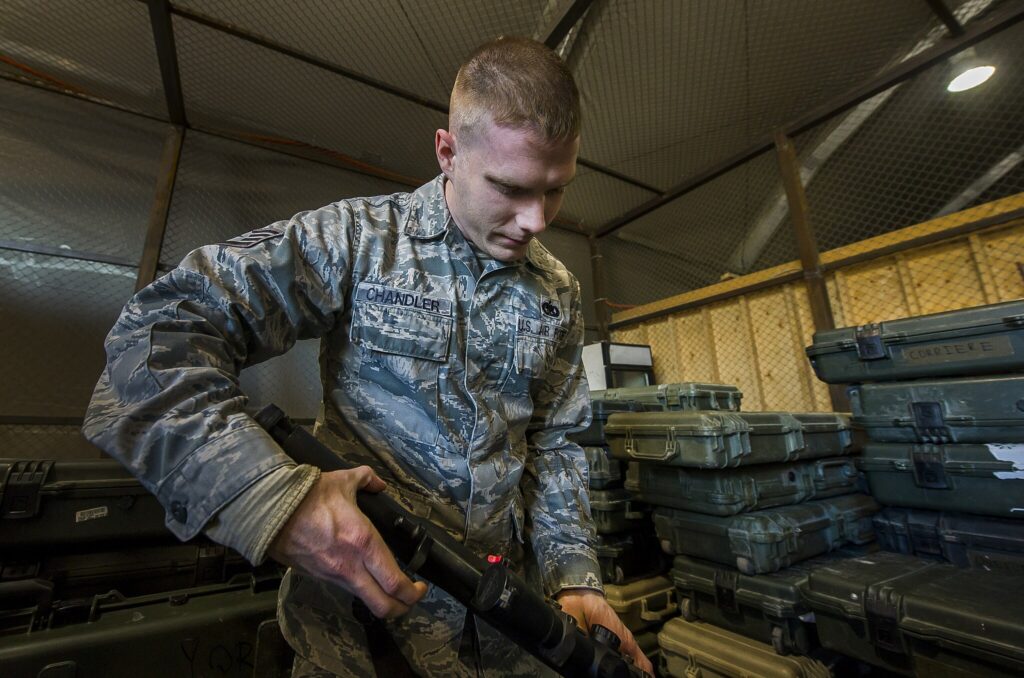
U.S. Air Force Staff Sgt. Jeremy Chandler, a weapons manager with the 376th Expeditionary Logistics Readiness Squadron, checks the serial number on a M24 rifle at Transit Center at Manas, Kyrgyzstan, Dec. 10, 2013. (U.S. Air Force photo by Senior Airman George Goslin/Released)

Misconception 1: ITAR only concerns finished weapons and big name defense manufacturers

A common belief is that ITAR applies exclusively to well known defense contractors or entities producing complete systems such as rifles, missiles or aircraft. In truth, the scope is much wider. Companies producing electronic parts, structural components or sensors, even if these items appear civilian, may fall under ITAR if the components are specially designed or intended for a military purpose. Technical data alone, such as design files, performance specifications or software code, can be ITAR controlled regardless of whether physical hardware has been produced. Even service providers offering design, engineering, maintenance or technical support related to USML items may trigger ITAR responsibilities. As a result, small to mid sized firms or component level suppliers cannot assume that ITAR concerns only large integrators.
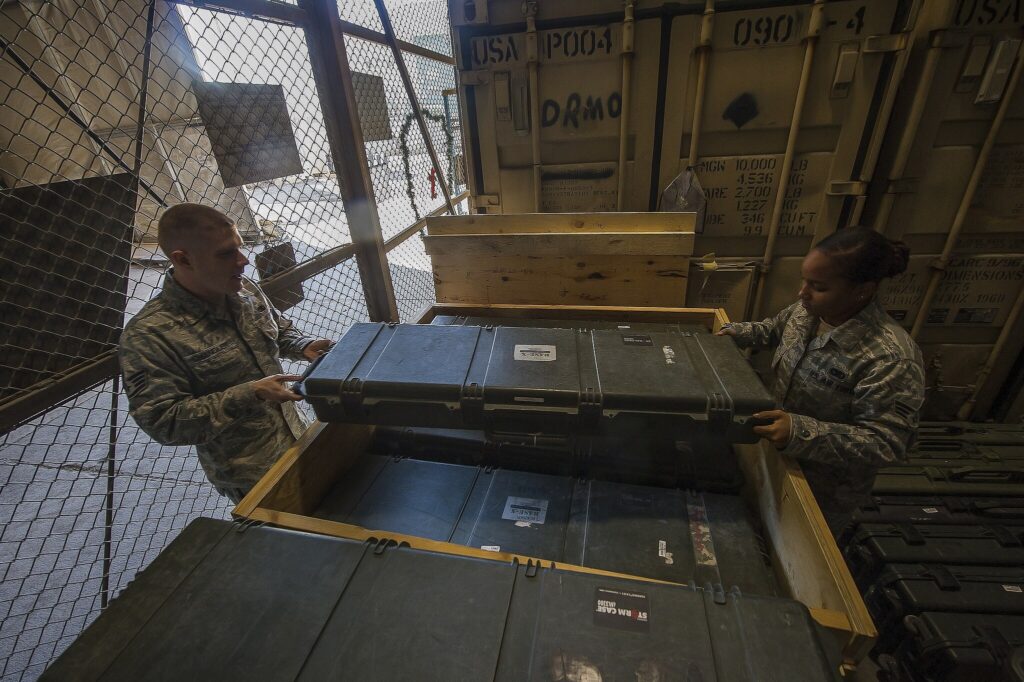
U.S. Air Force Staff Sgt. Jeremy Chandler, left, a weapons manager with the 376th Expeditionary Logistics Readiness Squadron (ELRS), and Senior Airman Marita McCoy, an inbound specialist with the 376th ELRS, pack weapons cases into a crate for shipping at Transit Center at Manas, Kyrgyzstan, Dec. 10, 2013. (U.S. Air Force photo by Senior Airman George Goslin/Released)

Misconception 2: Registering with DDTC is enough

Many organizations believe that once they register with the Directorate of Defense Trade Controls, compliance is effectively complete. This is a misconception. Registration is only the initial administrative step and does not guarantee or confirm comprehensive compliance. A compliant organization must implement an Export Compliance Program, classify its controlled items correctly, manage licensing needs and define clear internal access procedures, especially concerning non US persons. The organization must also secure technical data, maintain consistent documentation and train staff so that every transfer of information is handled correctly. Compliance is not a one time event, as design changes, subcontracting relationships or international collaborations can introduce new obligations at any moment.

Combat Logistics Company 36 Marines and augments picked up their flaks and kevlars to fired crew serve weapons and expand their combat capabilities during Exercise Dragon Fire 2014 at Combined Arms Training Center Camp Fuji, Japan, July 13. The M2 heavy machine gun fires .50 caliber rounds at a rate of 635 rounds per minute.

Misconception 3: ITAR only regulates physical exports or imports

Many assume that ITAR applies only when physical items such as weapons, parts or hardware are shipped internationally. In reality, ITAR regulates technical data just as strictly. Design drawings, diagrams, specifications, manuals and software may all be controlled. Transferring such information to a foreign person or entity, whether by email, conversation, video call or digital file, can legally constitute an export. Providing services such as engineering support, maintenance or training related to a controlled defense item may be regulated under ITAR even when no physical equipment leaves the country. This means compliance is as much about controlling knowledge as it is about controlling physical goods.

U.S. Marines with Combat Logistics Battalion 22, Combat Logistics Regiment 27, 2nd Marine Logistics Group reload an M240B machine gun during a crew served weapons range as part of exercise Swift Response 25 in Setermoen, Norway, May 9, 2025. The Marine Corps is providing direct combat service support to the U.S. Army 82nd Airborne Division to enable sustainment of multi-domain operations. Swift Response 25 is part of the DEFENDER 25 series and allows the rehearsal, deployment, employment, and integration of U.S. forces to focus on the expansion of critical capabilities on the battlefield in the High North and Baltics. (U.S. Marine Corps photo by Lance Cpl. Franco Lewis)

Misconception 4: ITAR applies only to US based companies

There is a widespread belief that ITAR concerns only companies located in the United States. That is not the case. If a non US firm handles controlled US origin items or receives US origin technical data, ITAR obligations may still apply, particularly regarding reexports or transfers to additional foreign parties. Even foreign subcontractors or partners may be required to operate under licensing conditions if they are given access to US origin controlled data or system components. In today’s globally interconnected defense supply environment, compliance responsibilities cross borders.

The Real Risks: What Happens When Organizations Misjudge ITAR

When the complexities of ITAR are underestimated, firms may face an array of consequences. Substantial civil or criminal penalties, including heavy fines or the revocation of export privileges, are among the most direct risks. Compliance failures may result in delays or cancellations within the supply chain, harming operational continuity. Reputational damage can be severe, particularly among government and defense clients who prioritize reliability and regulatory clarity. Legal complications may arise when companies struggle with proper classification, inadvertently share controlled technical data or fail to secure appropriate licensing.

What Organizations Should Do: A Practical Compliance Mindset

Given the risks and the broad reach of ITAR, organizations involved in defense related design, manufacturing or services must think proactively about compliance. The classification of products and data should take place as early as possible, and conservative judgments are often safer than assumptions that an item is non controlled. A robust Export Compliance Program, complete with clearly defined responsibilities, internal controls and data protection standards, should be part of the company’s foundational structure. Technical data must be protected through secure storage, encrypted communication methods and restricted access. Staff must be trained continuously so that they understand what constitutes an export in the context of ITAR, since sending a file or answering a technical question can be just as significant as shipping hardware. Most importantly, organizations must treat compliance as an evolving obligation rather than a completed step, as new designs, partnerships and market opportunities can introduce new requirements at any time.

References

  • US Department of State, Directorate of Defense Trade Controls. “International Traffic in Arms Regulations (ITAR) Overview.”
  • US Government Accountability Office (GAO). “Export Controls: State and Commerce Department Should Improve Guidance on Export Restrictions for Sensitive Technologies.”
  • Congressional Research Service (CRS). “Defense Primer: U.S. Export Controls.”
  • Bureau of Industry and Security (BIS), US Department of Commerce. “Export Administration Regulations (EAR) and ITAR Intersections.”
  • National Institute of Standards and Technology (NIST). “Protecting Controlled Unclassified Information in Nonfederal Systems and Organizations.”
  • Federation of American Scientists (FAS). “Arms Export Controls and Regulatory Framework.”

Previous Post

The Rise of Commercial Drones in Conflict Zones: A New Layer in Modern Warfare

Next Post

The Black Sea’s Evolving Battlespace: Ukraine’s Maritime Operations and Shifting Security Dynamics

Related Posts

The Invisible Arsenal: How OSINT Is Re-engineering the Global Arms Trade
Knowledge Base

The Invisible Arsenal: How OSINT Is Re-engineering the Global Arms Trade

November 19, 2025
Iraqi Freedom
Knowledge Base

The Iraq War’s Hidden Battle: How Logistics Shaped the Conflict’s Reality

November 17, 2025
Why Blackwater existed: The logic behind outsourcing war and security
Knowledge Base

Why Blackwater existed: The logic behind outsourcing war and security

November 6, 2025
TE_2REI_Afghanistan French Foregin Legion
Knowledge Base

The French Foreign Legion After the Sahel: Where It Fits Now

October 29, 2025
The Montreux Document: Why It Still Matters for Security Work
Knowledge Base

The Montreux Document: Why It Still Matters for Security Work

September 26, 2025
Operation Enduring Freedom
Knowledge Base

What Exactly Is a Private Military Company (PMC)?

September 6, 2025
Next Post
The Black Sea’s Evolving Battlespace: Ukraine’s Maritime Operations and Shifting Security Dynamics

The Black Sea’s Evolving Battlespace: Ukraine’s Maritime Operations and Shifting Security Dynamics

  • Trending
  • Comments
  • Latest
Blackwater PMC

After Blackwater: How PMCs Evolved, Professionalized, and Fragmented

September 13, 2025
Blackwater PMC

Inside Iraq’s Security Market: How Private Power Shapes a Fragile State

October 6, 2025
Operation Enduring Freedom

What Exactly Is a Private Military Company (PMC)?

September 6, 2025
Repkon Nammo in Denmark: What This Nordic Ammunition Play Really Signals

Repkon Nammo in Denmark: What This Nordic Ammunition Play Really Signals

August 21, 2025
A Historic $142 Billion Arms Deal: Unpacking the U.S.-Saudi Agreement

A Historic $142 Billion Arms Deal: Unpacking the U.S.-Saudi Agreement

A Silent Revolution on the Battlefield: AI-Enabled Tactical Communication Systems

A Silent Revolution on the Battlefield: AI-Enabled Tactical Communication Systems

Cominf.org, CC BY-SA 3.0 , via Wikimedia Commons

Is Europe Really Reducing Its Dependence on Russian Gas?

What is ITAR? The Invisible Line in Global Defense Trade

What is ITAR? The Invisible Line in Global Defense Trade

Israel’s F-15 News: What Actually Happened, and Why It Matters

Israel’s F-15 News: What Actually Happened, and Why It Matters

January 1, 2026
SDF and HTS: Managing Tension Without Open Conflict in Northern Syria

SDF and HTS: Managing Tension Without Open Conflict in Northern Syria

December 26, 2025
What 2025 Taught Us About Defense and Energy: Five Lessons for 2026

What 2025 Taught Us About Defense and Energy: Five Lessons for 2026

December 24, 2025
The New Taiwan Arms Package and China’s “Stop” Message: What Actually Changed

The New Taiwan Arms Package and China’s “Stop” Message: What Actually Changed

December 19, 2025

Recent News

Israel’s F-15 News: What Actually Happened, and Why It Matters

Israel’s F-15 News: What Actually Happened, and Why It Matters

January 1, 2026
SDF and HTS: Managing Tension Without Open Conflict in Northern Syria

SDF and HTS: Managing Tension Without Open Conflict in Northern Syria

December 26, 2025
What 2025 Taught Us About Defense and Energy: Five Lessons for 2026

What 2025 Taught Us About Defense and Energy: Five Lessons for 2026

December 24, 2025
The New Taiwan Arms Package and China’s “Stop” Message: What Actually Changed

The New Taiwan Arms Package and China’s “Stop” Message: What Actually Changed

December 19, 2025
Drill & Defense

Drill & Defense is an independent platform providing insights into firearms, defense technologies, and energy sectors. We deliver clear, practical content for professionals, enthusiasts, and industry followers worldwide.

Follow Us

Browse by Category

  • Cross-Sector Insights
  • Defense
  • Defense & Energy Strategy
  • Defense Know-How
  • Defense Technologies
  • Energy
  • Energy Insight
  • Energy Technologies
  • Global Security & Trade Analysis
  • History & Legacy
  • Industry News
  • Knowledge Base
  • Legacy Systems & Structures
  • Market Trends & Analysis
  • Military Market Reports
  • Oil & Gas News
  • Resource Wars & Strategy
  • Tech & Innovation Crossover
  • Turning Points in Conflict
  • Weapon & Gear Reviews

Recent News

Israel’s F-15 News: What Actually Happened, and Why It Matters

Israel’s F-15 News: What Actually Happened, and Why It Matters

January 1, 2026
SDF and HTS: Managing Tension Without Open Conflict in Northern Syria

SDF and HTS: Managing Tension Without Open Conflict in Northern Syria

December 26, 2025

© 2025 Drill & Defense. All rights reserved. Independent insights on firearms, defense, and energy. For business inquiries: info@drillanddefense.com | PRIVACY POLICY | COOKIE POLICY | TERMS AND CONDITIONS

Manage Consent

We use cookies to improve your experience. You can accept or refuse cookies; however, some features may not function properly without your consent.

Functional Always active
The technical storage or access is strictly necessary for the legitimate purpose of enabling the use of a specific service explicitly requested by the subscriber or user, or for the sole purpose of carrying out the transmission of a communication over an electronic communications network.
Preferences
The technical storage or access is necessary for the legitimate purpose of storing preferences that are not requested by the subscriber or user.
Statistics
The technical storage or access that is used exclusively for statistical purposes. The technical storage or access that is used exclusively for anonymous statistical purposes. Without a subpoena, voluntary compliance on the part of your Internet Service Provider, or additional records from a third party, information stored or retrieved for this purpose alone cannot usually be used to identify you.
Marketing
The technical storage or access is required to create user profiles to send advertising, or to track the user on a website or across several websites for similar marketing purposes.
  • Manage options
  • Manage services
  • Manage {vendor_count} vendors
  • Read more about these purposes
View preferences
  • {title}
  • {title}
  • {title}
No Result
View All Result
  • Defense
    • Industry News
    • Weapon & Gear Reviews
    • Defense Technologies
    • Military Market Reports
  • Energy
    • Oil & Gas News
    • Energy Technologies
    • Market Trends & Analysis
  • Cross-Sector Insights
    • Defense & Energy Strategy
    • Global Security & Trade Analysis
    • Tech & Innovation Crossover
  • History & Legacy
    • Turning Points in Conflict
    • Legacy Systems & Structures
    • Resource Wars & Strategy
  • Knowledge Base
    • Defense Know-How
    • Energy Insight
  • About
  • Contact
  • Login
  • Register

© 2025 Drill & Defense. All rights reserved. Independent insights on firearms, defense, and energy. For business inquiries: info@drillanddefense.com | PRIVACY POLICY | COOKIE POLICY | TERMS AND CONDITIONS