
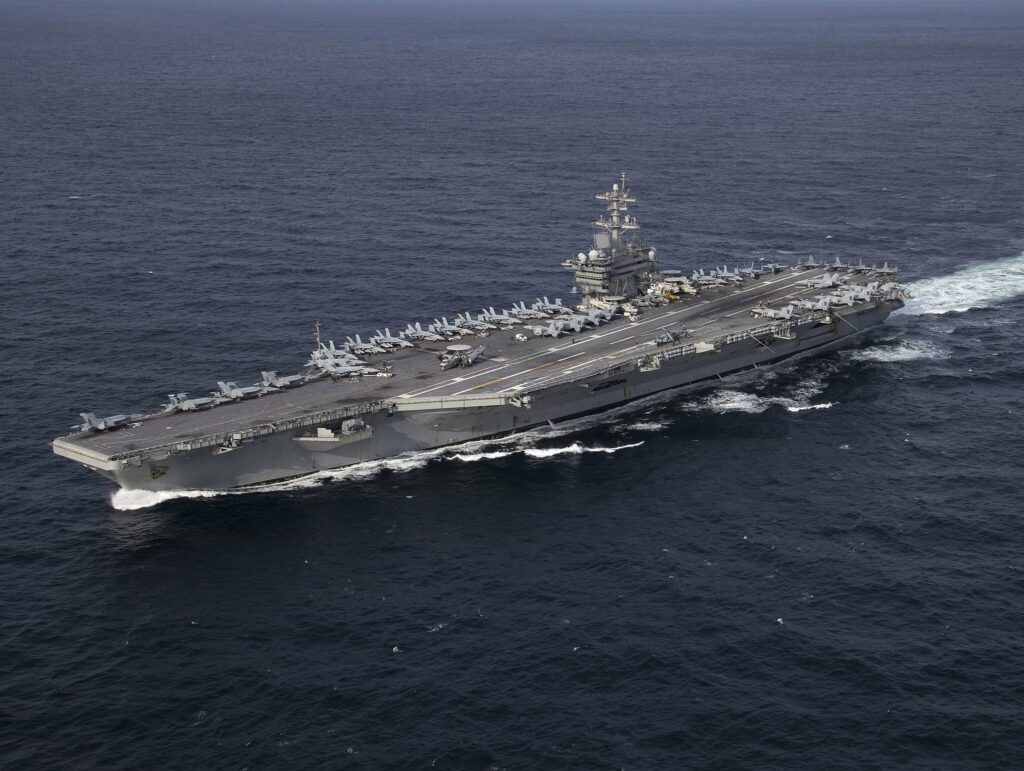
In contemporary naval strategy, aircraft carriers operate as mobile airbases capable of projecting power across entire regions. Their importance lies not only in the aircraft they deploy but also in the strategic flexibility they provide. When a carrier strike group enters a region such as the Persian Gulf or the Eastern Mediterranean, it effectively introduces an independent airpower capability that does not rely on local infrastructure.

A carrier such as the USS Abraham Lincoln is typically deployed as part of a larger strike group that includes destroyers, cruisers, submarines, and logistical support vessels. Each element contributes to the protection and operational capability of the group. Destroyers and cruisers provide layered air defense through advanced radar and missile systems, while submarines offer additional deterrence and intelligence gathering capabilities. Supply ships maintain fuel and ammunition stocks, allowing sustained operations at sea.
The mobility of a carrier strike group offers significant strategic advantages. Commanders can reposition forces based on changing geopolitical conditions while maintaining the ability to launch aircraft sorties within a short timeframe. This capability is particularly relevant in areas where permanent military bases are politically sensitive or geographically distant.
Carriers therefore function less as traditional naval vessels and more as strategic platforms that enable continuous air operations far from home territory.
Strike Aircraft and Networked Combat Operations
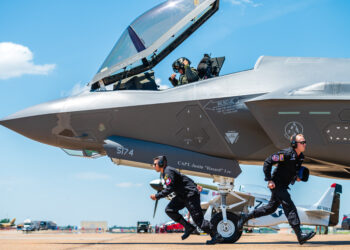
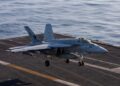
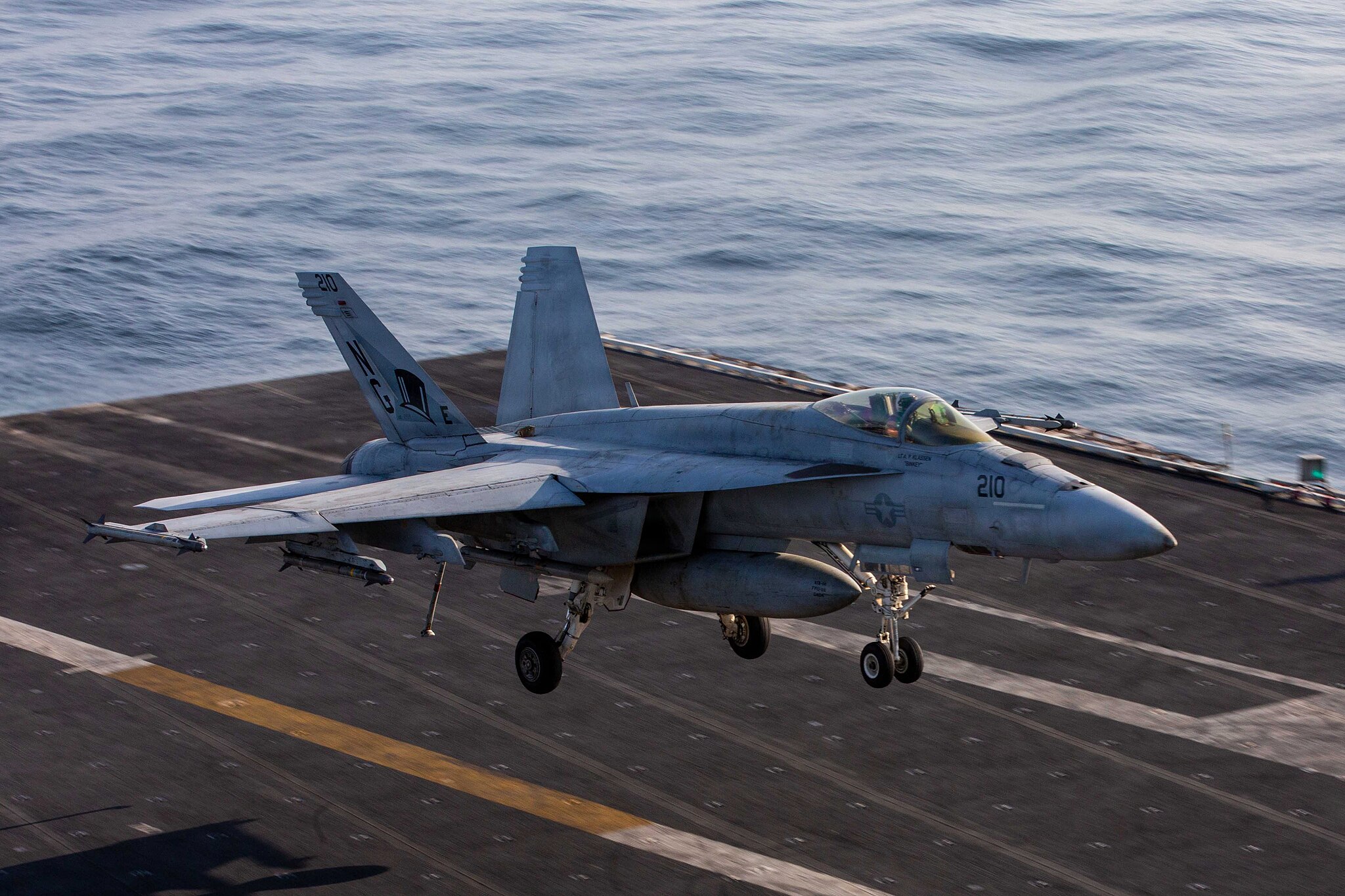
The aircraft operating from carriers form the visible component of naval airpower. Among the most widely used platforms in this role is the F/A-18E Super Hornet, a multirole fighter designed to perform a wide range of missions including air superiority, ground attack, maritime strike, and close air support.
What distinguishes modern strike aircraft is their integration within digital combat networks. Aircraft today are equipped with sensors, communication systems, and data links that allow them to exchange information with other aircraft, ships, and command centers in real time. This networked environment allows multiple aircraft to coordinate their movements, share targeting data, and adapt to evolving operational conditions during a mission.
A strike aircraft may receive targeting information from surveillance platforms hundreds of kilometers away. That information can be processed and transmitted to the pilot’s display within seconds, enabling rapid adjustments to mission parameters. The aircraft itself becomes part of a distributed information system rather than operating as an isolated platform.
This approach allows air operations to be conducted with greater coordination and situational awareness. Pilots operate within a constantly updated operational picture, improving both efficiency and safety in complex environments.
Airborne Radar and Operational Coordination
One of the most critical yet less visible components of modern air operations is airborne early warning aircraft. Platforms such as the E-2D Hawkeye provide radar coverage far beyond the range of ship-based or ground-based systems. Flying at high altitude, these aircraft can detect airborne targets hundreds of kilometers away and track movements across a wide operational area.
The radar systems carried by these aircraft monitor aircraft movements, missile launches, and other aerial activity. This information is transmitted across the operational network, allowing commanders to maintain awareness of the surrounding environment.
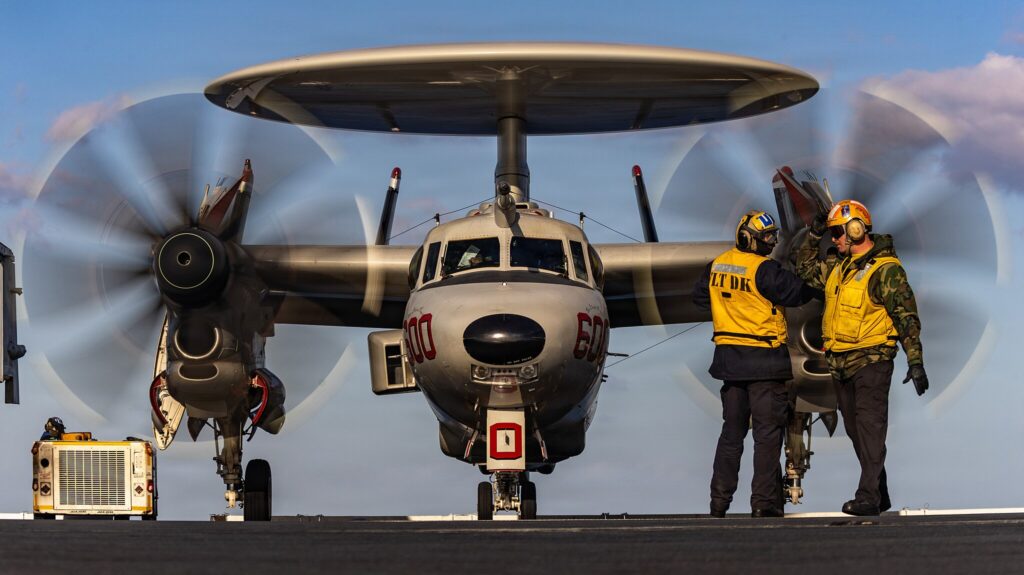
Beyond surveillance, airborne early warning aircraft function as airborne command posts. Controllers onboard manage airspace, coordinate aircraft movements, and relay information between different elements of the strike group. In complex operations involving multiple aircraft types, this coordination becomes essential.
The aircraft essentially serves as a central communication node linking ships, strike fighters, and command centers into a unified operational network.
Precision-Guided Munitions and Targeting Accuracy
While aircraft and radar systems form the operational backbone of modern airpower, the weapons themselves have undergone significant transformation over the past several decades. Precision-guided munitions have become a central element of modern strike doctrine.
One of the most widely used systems is the Joint Direct Attack Munition, commonly referred to as JDAM. Instead of being an entirely new weapon, JDAM is a guidance kit attached to conventional bombs. The kit includes satellite navigation and inertial guidance systems that allow the weapon to steer toward designated coordinates after release.
This technology allows aircraft to strike targets with far greater accuracy than traditional unguided bombs. Pilots no longer need to approach directly over a target in order to achieve precision. Aircraft can release the weapon from altitude or at a distance while the guidance system directs it toward the programmed location.
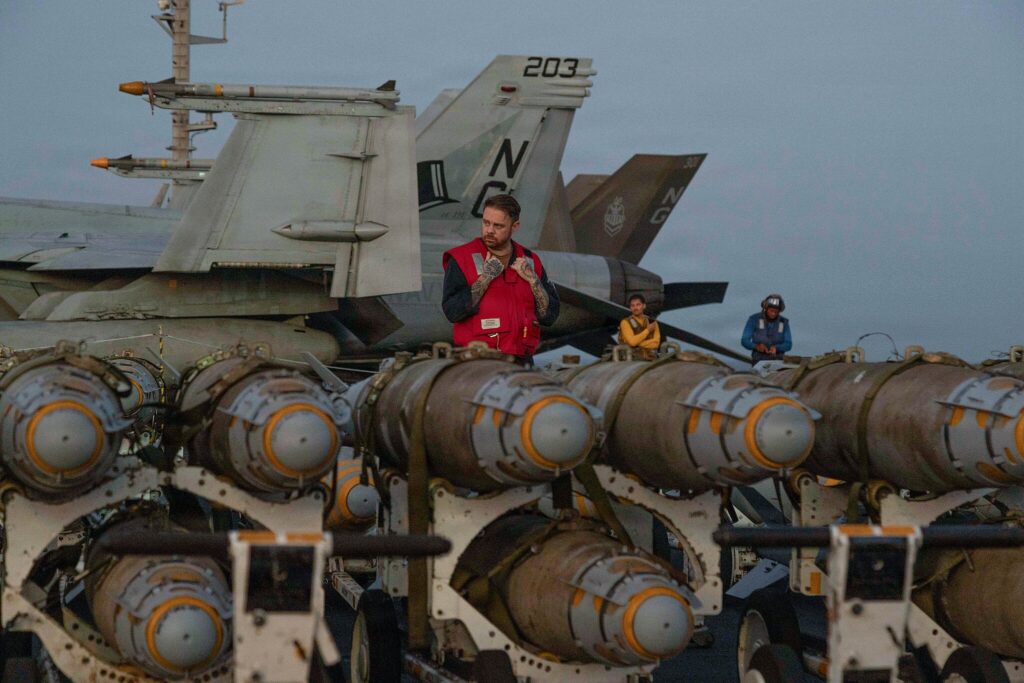
The concept behind JDAM reflects an important trend in military technology: adapting existing equipment to new operational requirements. By converting conventional bombs into guided weapons, military forces can enhance precision while maintaining compatibility with existing aircraft and logistics systems.
Precision guidance has therefore become a defining feature of contemporary air operations.
Stand-Off Weapons and Risk Management
Another important element of modern strike doctrine involves the development of stand-off weapons. These systems allow aircraft to release weapons from outside the effective range of many air defense systems.
Stand-off munitions are designed to travel significant distances after release. Some deploy glide wings that allow them to travel far beyond the point where they were launched. Others use propulsion systems or advanced guidance technologies to extend their range.
The strategic logic behind these weapons is straightforward. Air defense systems have become increasingly sophisticated, particularly in regions with advanced missile networks. By releasing weapons from a greater distance, aircraft reduce their exposure to defensive fire.
This approach allows aircraft to maintain operational effectiveness even in environments where direct penetration of airspace would be risky.
Stand-off capability therefore plays an important role in balancing offensive reach with aircraft survivability.
The Logistics Behind the Flight Deck
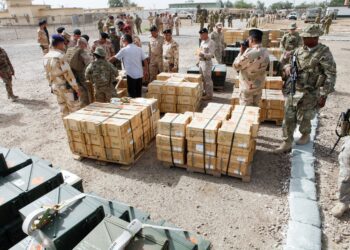
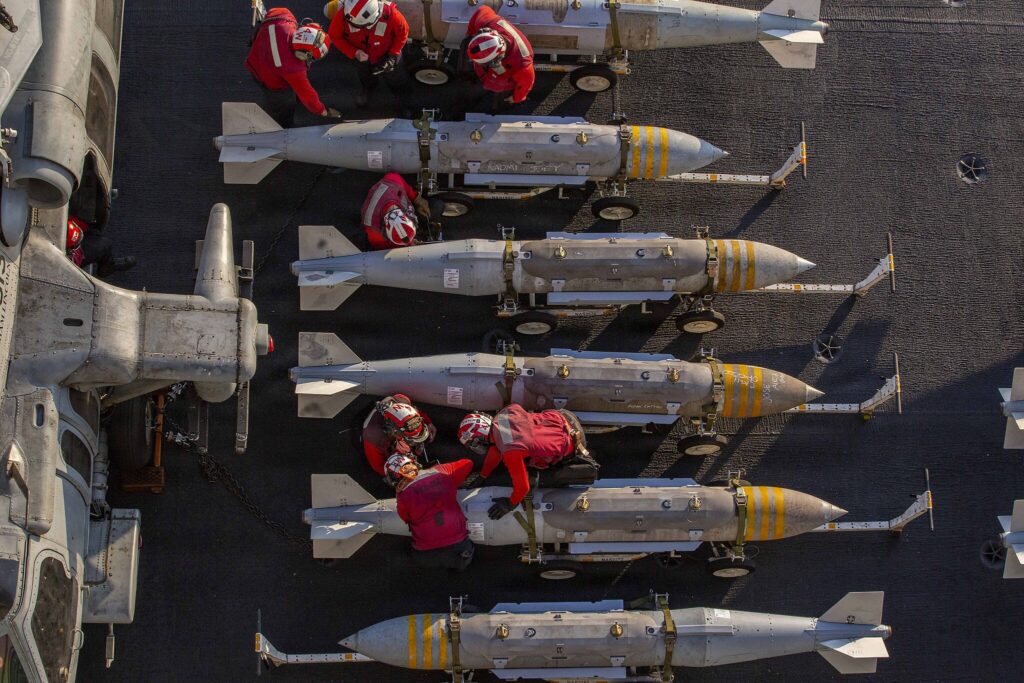
Images of bombs lined up on an aircraft carrier deck often attract attention, yet they represent only one moment within a much larger logistical process. Before any weapon reaches an aircraft, it must pass through several stages of inspection, assembly, and preparation.
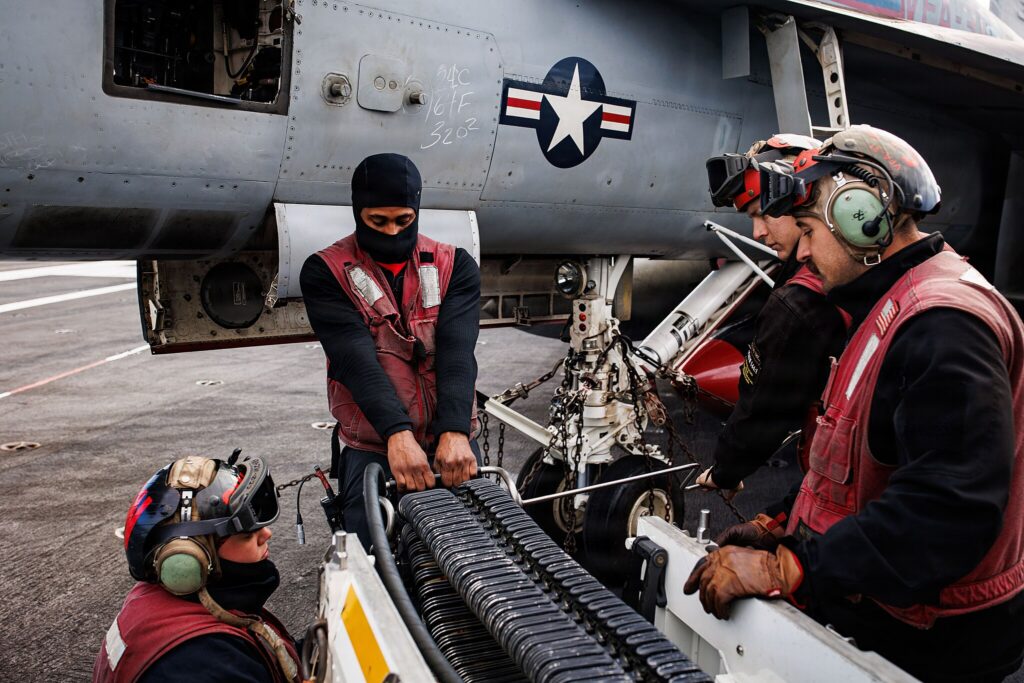
Specialized aviation ordnance crews are responsible for this process. Working under strict safety protocols, these teams handle the storage, transport, and preparation of munitions within the confined environment of a carrier flight deck. Every weapon undergoes verification to ensure it meets operational and safety requirements before being loaded onto an aircraft.
Once cleared for use, bombs and missiles are transported across the deck using specialized carriers and positioned beneath aircraft pylons. Technicians attach the weapons and verify communication between the aircraft’s targeting systems and the weapon’s guidance components.
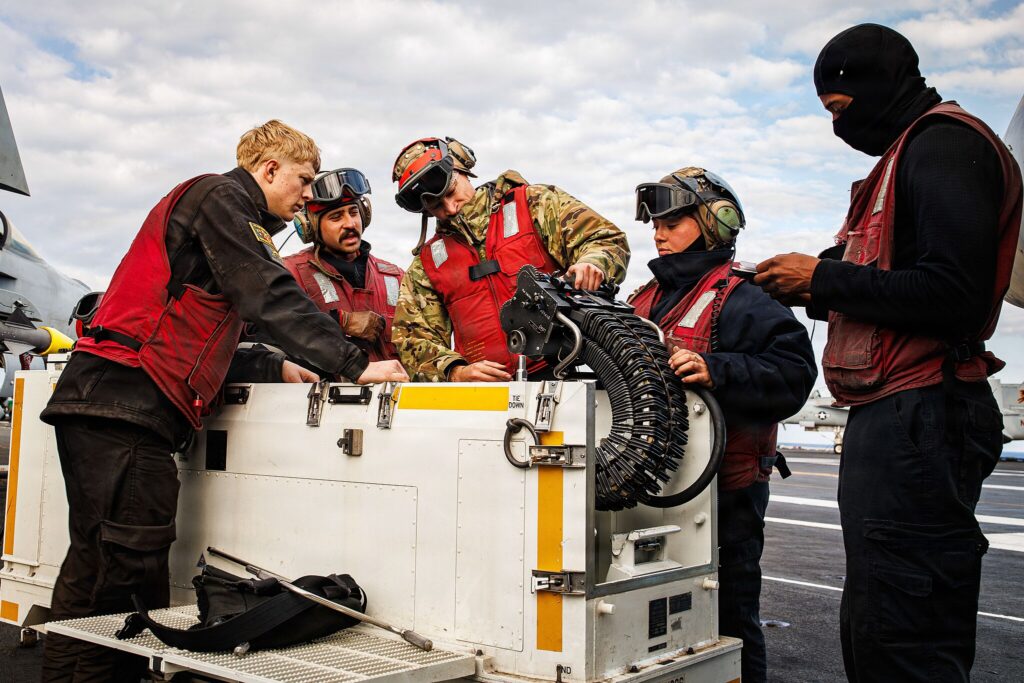
This logistical choreography occurs continuously during flight operations. Aircraft land, refuel, rearm, and launch again in carefully timed cycles. The efficiency of these procedures determines how quickly a carrier can generate additional sorties.
Modern air operations therefore rely not only on advanced technology but also on highly organized logistical processes.
Strategic Significance of Integrated Airpower
When viewed together, aircraft carriers, strike fighters, surveillance platforms, and guided weapons form an integrated system that defines contemporary airpower. Each component contributes to a larger operational structure designed to deliver coordinated military effects.
Carriers provide mobility and sustained deployment capability. Strike aircraft deliver flexible mission options. Surveillance platforms maintain situational awareness across vast areas. Precision munitions translate targeting information into accurate strikes.
These interconnected systems influence how military planners evaluate strategic choices in regions where tensions remain high. The presence of a carrier strike group, combined with advanced surveillance and strike capabilities, can alter the strategic balance even before any operation takes place.
For readers observing developments involving the United States, Israel, and Iran, examining the technologies and operational mechanisms behind these systems offers valuable perspective. Modern military power is rarely defined by a single weapon or aircraft. Instead, it emerges from the interaction of multiple platforms working together within a coordinated framework.
Understanding that framework helps explain how contemporary air operations are planned, executed, and sustained across complex geopolitical environments.
Sources
International Institute for Strategic Studies (IISS)
Center for Strategic and International Studies (CSIS)
U.S. Naval Air Systems Command
Boeing Defense, Space & Security documentation