
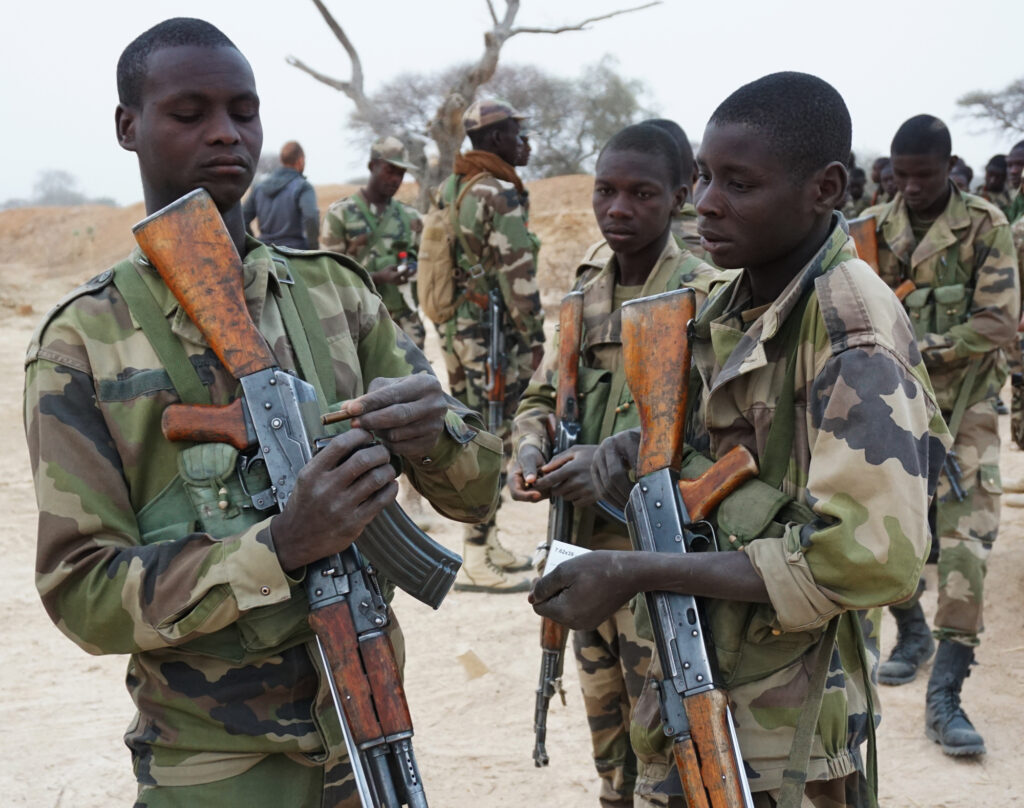
Across Africa, the story of the AK-47 is more than the tale of a weapon. It is the story of endurance, adaptation, and consequence. From the jungles of the Congo to the deserts of the Sahel, the rifle became a constant presence in both rebellion and statehood. Its steel has outlasted regimes, its silhouette has become political language, and its availability continues to shape the balance between order and chaos across the continent.

Why the Kalashnikov Endures
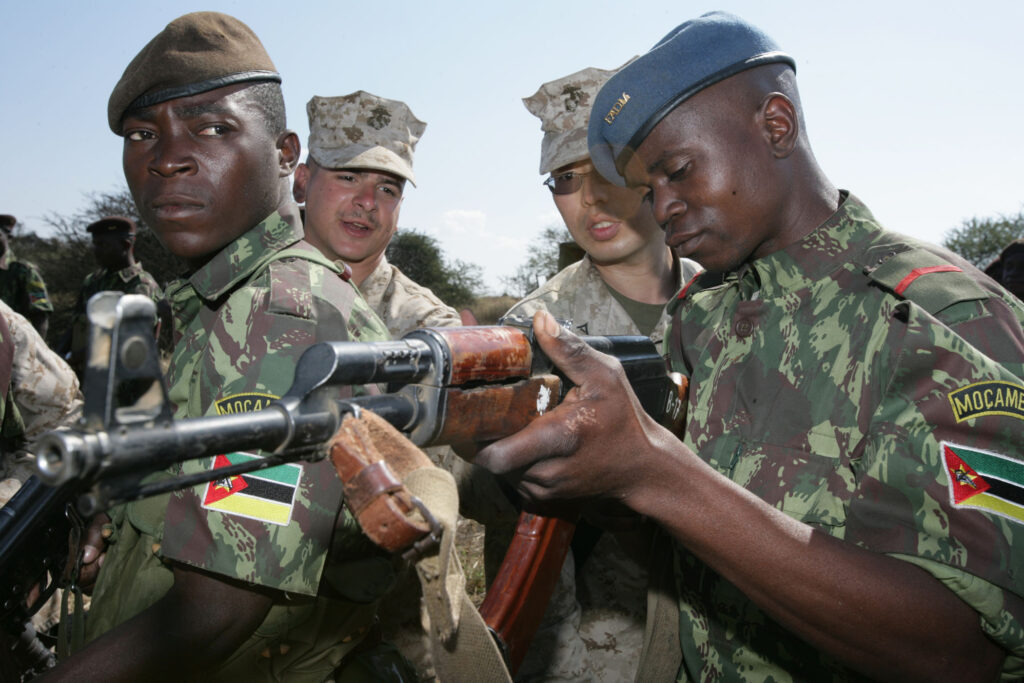
The AK family’s persistence across African conflicts and policing landscapes is not a mystery so much as an engineering and logistics story. The platform’s reputation for reliability in heat, dust, mud, and minimal maintenance conditions is well documented, as is the simplicity of its manual of arms. Combine those qualities with decades of Cold War era distribution to liberation movements and state forces, later followed by extensive licit and illicit recirculation, and you have a rifle family that became both a tool and a symbol. The emblematic status is visible in national iconography and in the political history of several states, while the practical status appears in nearly every conflict dataset that touches small arms availability and misuse across the continent.
Supply Chains Old and New
Africa’s AK footprint was seeded by state-to-state transfers, military aid, and training pipelines during the Cold War, later expanded through porous borders, diversion from state stockpiles, battlefield capture, and peacekeeping losses. Researchers have shown that losses from peace support operations have repeatedly re-entered local illicit markets, compounding diversion from national inventories. Regional patterns also reflect overland trafficking routes that exploit long, lightly governed frontiers. These mechanisms matter more than any single producer because they explain why legacy rifles continue to circulate long after original deliveries.
Local Production and Licensed Lineages
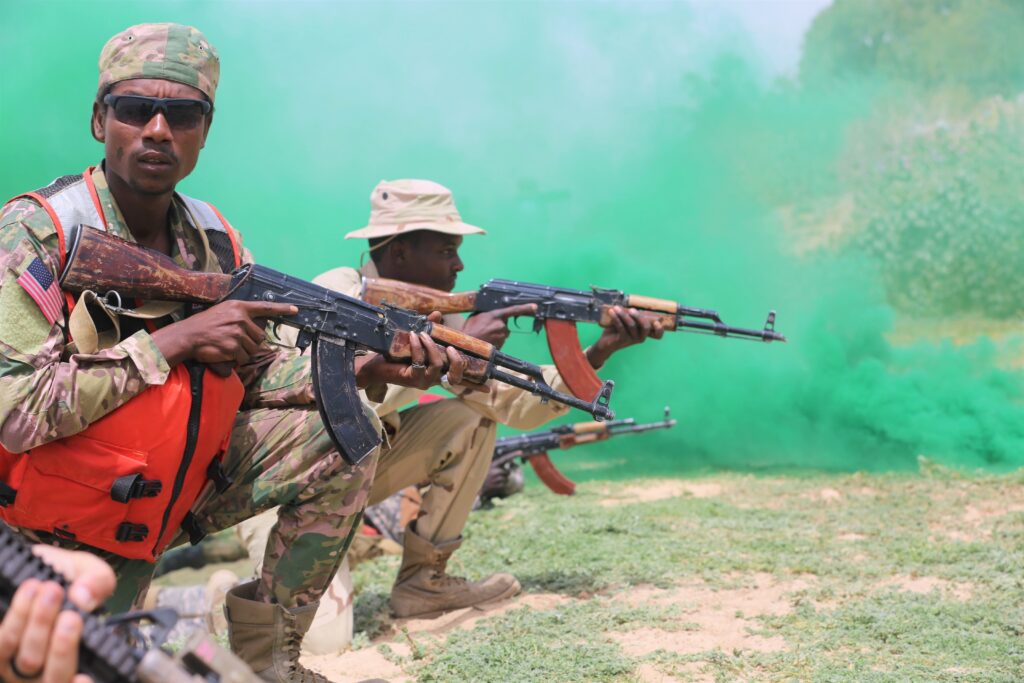
The African AK story is not only about imports. Several states manufacture small arms or assemble rifles from imported parts, and while not all output is AK-pattern, domestic capacity shapes sustainment and parts availability. Public sources identify manufacturing or assembly capacity in countries such as Egypt, Nigeria, Ethiopia, Kenya, Sudan, Algeria, and South Africa, alongside licensed or unlicensed production in other regions that later supply African markets. This mix of legacy licensed output and contemporary industry provides steady access to magazines, springs, and barrels that keep older rifles viable in service.
The Platform’s Practical Advantages
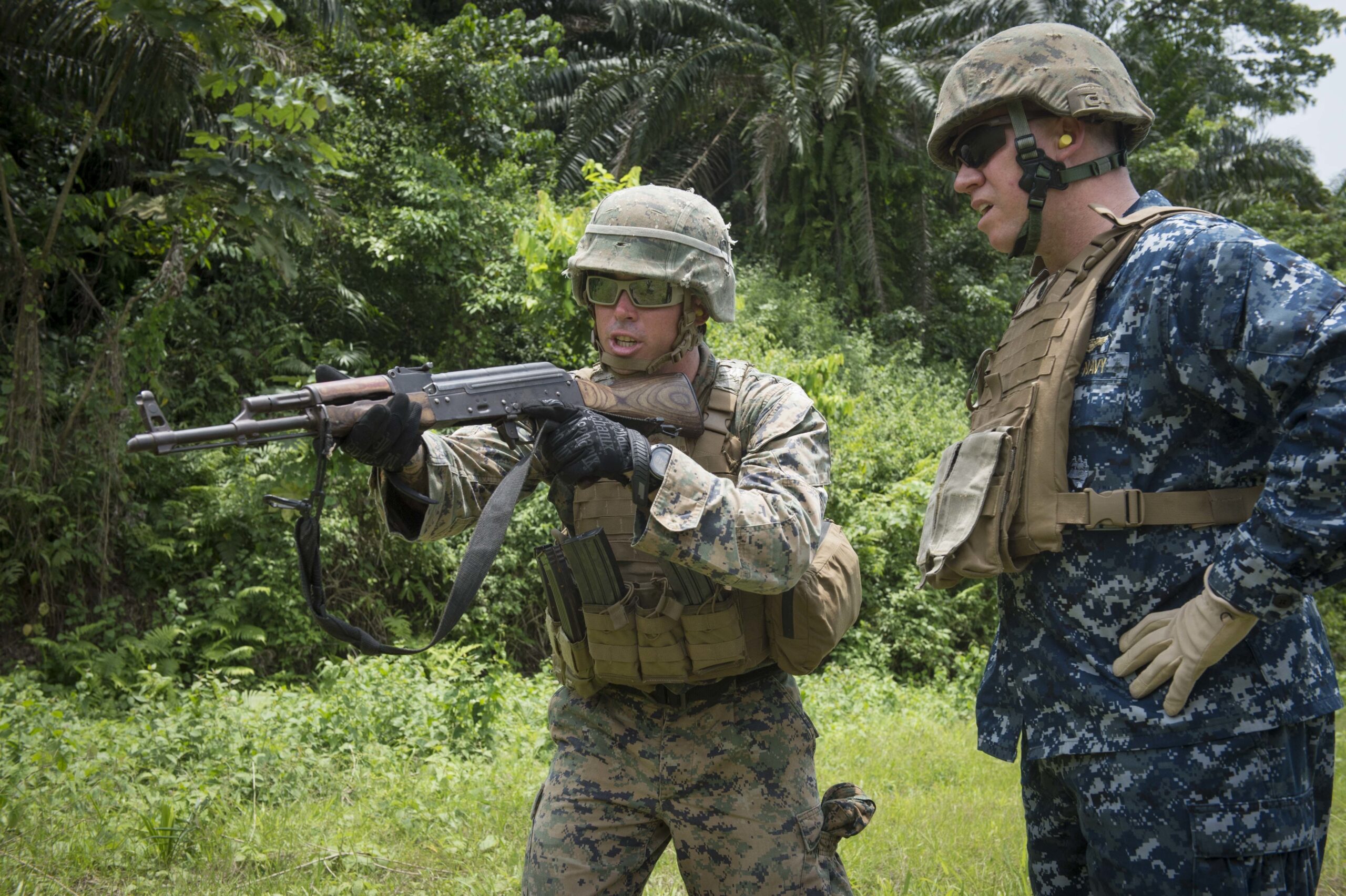
Field researchers and humanitarian organizations working in East and West Africa consistently describe the same on-the-ground calculus. The platform tolerates user error, the controls are intuitive to teach, and the ammunition remains widely available due to historic stockpiles and continued global manufacture. For local forces that face budget constraints, irregular resupply, and harsh environments, these characteristics reduce training time and lifecycle costs. For non-state actors, the same characteristics lower barriers to entry and sustainment. This is not an endorsement of misuse, only a recognition that the AK family’s design decisions line up with realities in fragile security environments.
Symbolism, Politics, and Culture
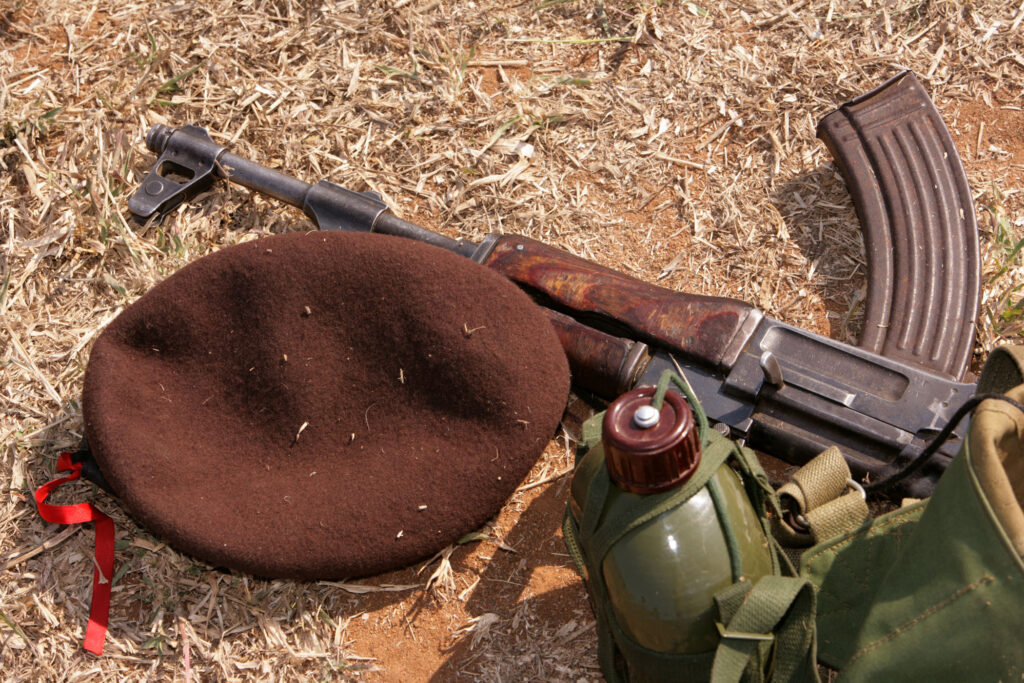
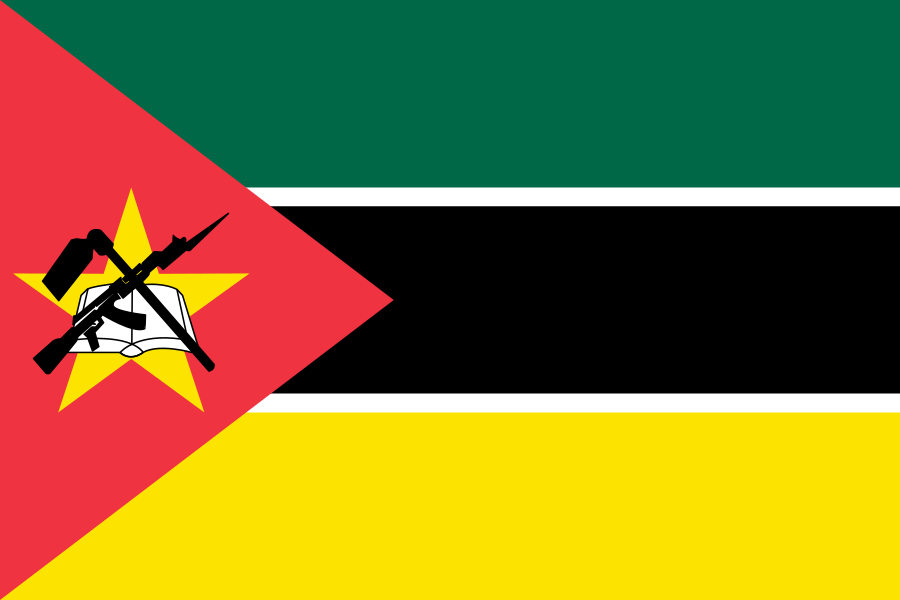
Beyond utility, the rifle acquired symbolic weight during anti-colonial struggles and subsequent state-building. The clearest public symbol is the presence of an AK-pattern rifle on Mozambique’s flag, where it represents defense and the legacy of the independence movement. Whether one views that symbolism as a celebration of struggle or a reminder of unresolved violence, its visibility underscores how a technical object can become a political shorthand for sovereignty, vigilance, and the hard edge of national security.
Data Caveats and What We Actually Know
There is a strong desire to quote a single number for how many AKs circulate in Africa. Responsible analysis avoids that temptation. Data on small arms and light weapons are fragmented by design, with incomplete reporting, inconsistent tracing capacity, and wide variance in national transparency. Several major datasets focus on heavy systems and do not count small arms at all, while small arms studies rely on seizures, fieldwork, and case studies that cannot easily be extrapolated. The bottom line for practitioners and readers is clear. We know enough to map patterns of diversion, trafficking routes, and risk factors, but not enough to claim precise inventories. Policy should be built on what can be verified, not on headline figures.
Peace Operations and Unintended Consequences
One uncomfortable theme in the research is the way international deployments have sometimes, despite good intentions, contributed to local proliferation. Losses and theft from peacekeeping contingents have been documented in multiple theaters, creating a feedback loop where weapons designed to stabilize an area later reappear in the hands of spoilers. This is not unique to any single rifle family, but AK-pattern rifles are both common and resilient, which means a lost rifle is likely to remain serviceable and marketable for years. Robust stockpile management, better record-keeping, and disciplined unit-level controls remain as important as the larger political mandates that send those units into the field.
Governance, Law, and Compliance
On the state side, the legal picture is textured. United Nations Security Council arms embargoes and sanctions regimes, regional agreements, and national export controls create a layered compliance environment. In practice, embargoes can be undermined by timing games, transshipment, and false paperwork, and they depend on national capacity to investigate and enforce. Regional briefings and UN expert group reports repeatedly call for better tracing, harmonized laws, and cross-border cooperation. Where national legislation is clear, resourcing and training determine outcomes. Where law is weak, illicit actors move faster than institutions can respond.
Policing and Public Security
The AK legacy is not confined to battlefields. Police services across multiple countries use the platform as a standard long gun for checkpoints, patrols outside urban cores, and convoy security. That choice is frequently driven by cost, existing stocks, and ammunition availability. It also reflects the reality that many forces operate in environments where the line between counterinsurgency, high-risk policing, and convoy protection can blur. Professional policing requires proportionate use of force and clear doctrine. The presence of a military-pattern rifle in public space amplifies the stakes for training, oversight, and rules of engagement.
What Readers Should Watch Next
For a platform with roots in the mid-twentieth century, the AK remains in the middle of several twenty-first century trends. First, the spread of commercial drones and low-cost optics is altering the way small units employ legacy rifles, with accuracy and observation improving even when the underlying weapon remains unchanged. Second, regional craft production of firearms and parts is increasing in sophistication, which affects both supply and tracing. Third, the political economy of security in resource-rich regions keeps demand high for reliable small arms platforms to protect infrastructure, convoys, and personnel. Monitoring these trends is more meaningful than tracking model years or cosmetic upgrades.
If you are reading this as a policymaker, practitioner, or interested observer, the takeaways are practical. Stockpile management and loss prevention are not paperwork chores, they are the front line of harm reduction. Cross-border cooperation matters more than ever, because trafficking networks ignore boundaries that bureaucracies cannot. And when security institutions choose platforms for frontline use, lifecycle cost, training burden, and accountability frameworks should weigh as much as initial purchase price.
Editorial Note to Our Readers
At Drill & Defense we approach legacy platforms without nostalgia. The AK story in Africa is, at its core, a story about institutions, incentives, and logistics under pressure. The rifle’s endurance is a mirror that reflects how states, companies, and communities manage risk and scarcity. That mirror is not flattering or damning by itself. It is simply clear. If you work in policy or compliance, use that clarity to ask better questions about record-keeping and cross-border cooperation. If you work in industry or security management, invest in training and controls that keep rifles from leaking out of armories and into illicit markets. And if you are a reader who cares about the region, keep your attention on institutions, not on the mythology of a single piece of steel and wood.
Further Reading:
Small Arms Survey, Illicit Small Arms and Light Weapons in Sub-Saharan Africa (Dec 2022)
UNODC, Global Study on Firearms Trafficking 2020 and Annex
Small Arms Survey and African Union, Mapping Illicit Small Arms Flows in Africa (2019)
Interpol and ENACT, Firearms Trafficking in Central and Western Africa (2024)
UN Security Council, Group of Experts reports on the DRC, sanctions documentation index
SIPRI, United Nations Arms Embargoes: Their Impact on Arms Flows and Target Behaviour (DRC case material)