
Drill & Defense
Advertisement
  • Defense Industry
    • Industry News
    • Defense Companies
    • Defense Technologies
    • Market Analysis
  • Military Systems
    • Land Systems
    • Air Systems
    • Naval Systems
    • Electronic & Cyber Systems
  • Firearms
    • Pistols
    • Rifles
    • SMGs & Machine Guns
    • Ammunition
    • Optics & Accessories
  • Geopolitics
    • Global Security
    • Defense & Energy Strategy
    • Tech & Innovation Crossover
    • Trade & Export Controls
  • Energy & Security
    • Oil & Gas News
    • Energy Technologies
    • Market Trends & Analysis
  • History
    • Military History
    • Doctrines & Concepts
    • Strategic Turning Points
    • Legacy Systems & Structures
  • Knowledge Base
    • Firearms Basics
    • Defense Know-How
    • Energy Fundamentals
    • Regulations & Frameworks
  • About
  • Contact
  • Login
  • Register
No Result
View All Result
  • Defense Industry
    • Industry News
    • Defense Companies
    • Defense Technologies
    • Market Analysis
  • Military Systems
    • Land Systems
    • Air Systems
    • Naval Systems
    • Electronic & Cyber Systems
  • Firearms
    • Pistols
    • Rifles
    • SMGs & Machine Guns
    • Ammunition
    • Optics & Accessories
  • Geopolitics
    • Global Security
    • Defense & Energy Strategy
    • Tech & Innovation Crossover
    • Trade & Export Controls
  • Energy & Security
    • Oil & Gas News
    • Energy Technologies
    • Market Trends & Analysis
  • History
    • Military History
    • Doctrines & Concepts
    • Strategic Turning Points
    • Legacy Systems & Structures
  • Knowledge Base
    • Firearms Basics
    • Defense Know-How
    • Energy Fundamentals
    • Regulations & Frameworks
  • About
  • Contact
  • Login
  • Register
No Result
View All Result
Drill & Defense
No Result
View All Result
Home Firearms

MG42 Machine Gun: WWII History, Specifications and Battlefield Impact

April 21, 2026
in Firearms, SMGs & Machine Guns
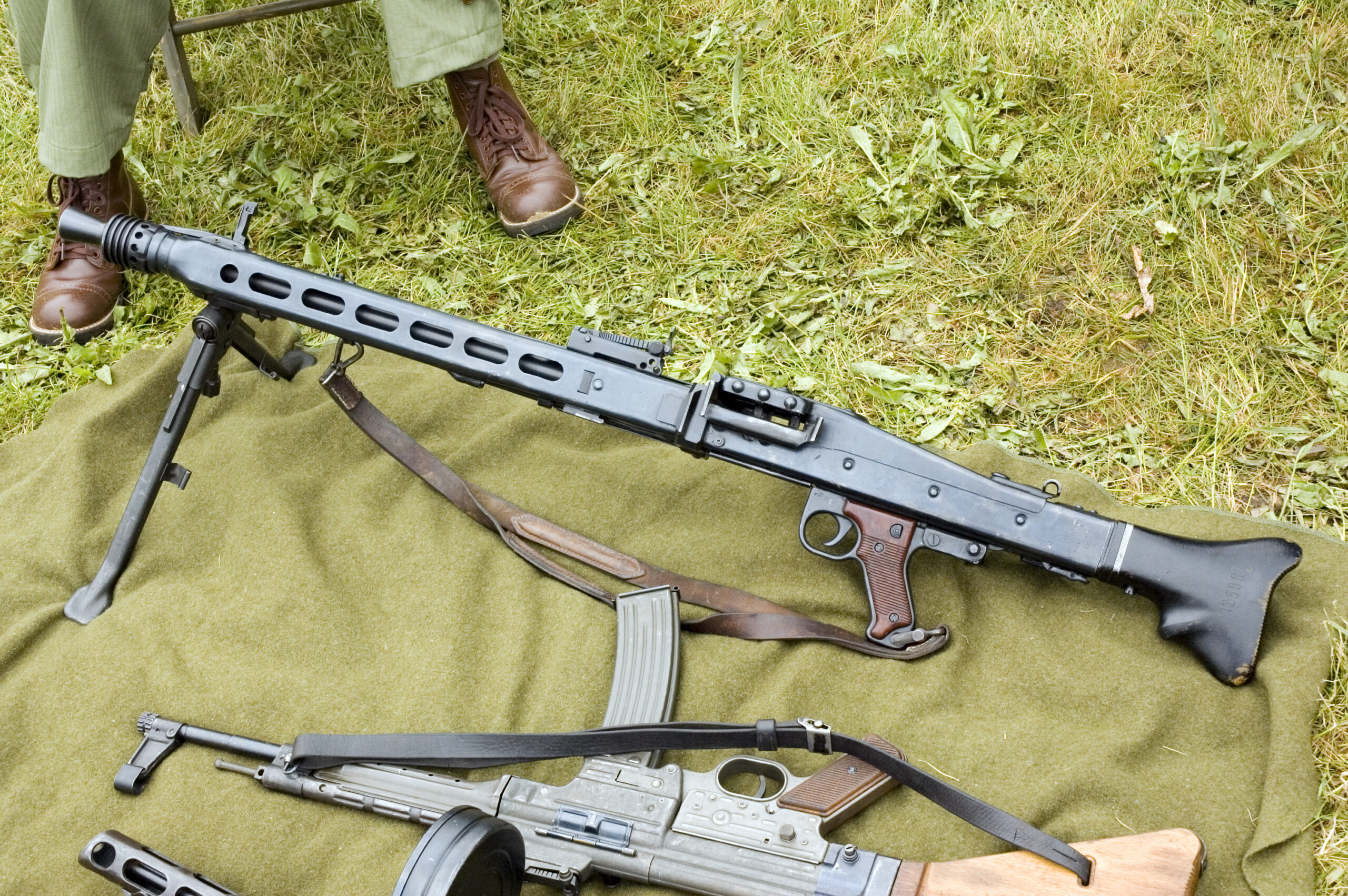
MG42-1

Maschinengewehr MG 42. Phanatic, CC BY-SA 2.0 .

Share on LinkedInShare on Twitter

The story of the MG42 does not begin with innovation for its own sake, but with a constraint. By the time the Second World War was fully underway, Germany faced a clear industrial bottleneck with the MG34. It was an advanced and versatile weapon, but it required extensive machining, tight tolerances, and skilled labor, all of which slowed production and increased cost. In a prolonged conflict, those factors become liabilities. The MG42 emerged as a deliberate correction to that problem, designed to maintain battlefield effectiveness while dramatically simplifying how it was built.

Development was led by Werner Gruner, working with companies such as Metall- und Lackierwarenfabrik Johannes Großfuß. What makes this transition significant is not just that a new weapon replaced an older one, but that the underlying philosophy changed. Instead of precision-first engineering, the MG42 embraced industrial efficiency. Stamped steel replaced milled components wherever possible, and the number of machining operations was reduced to a minimum. This allowed faster production cycles without sacrificing reliability under combat conditions.

Engineering for Scale, Not Perfection

The MG42’s construction is often described in simple terms, but its implications are more complex. Stamped sheet metal components could be produced in significantly less time compared to machined parts, but they also required careful design to ensure structural integrity under stress. The receiver, for example, had to withstand repeated recoil forces generated by a high cyclic rate while remaining lightweight enough for field use. Engineers solved this by balancing material thickness, reinforcement points, and tolerances in a way that did not depend on precision machining.
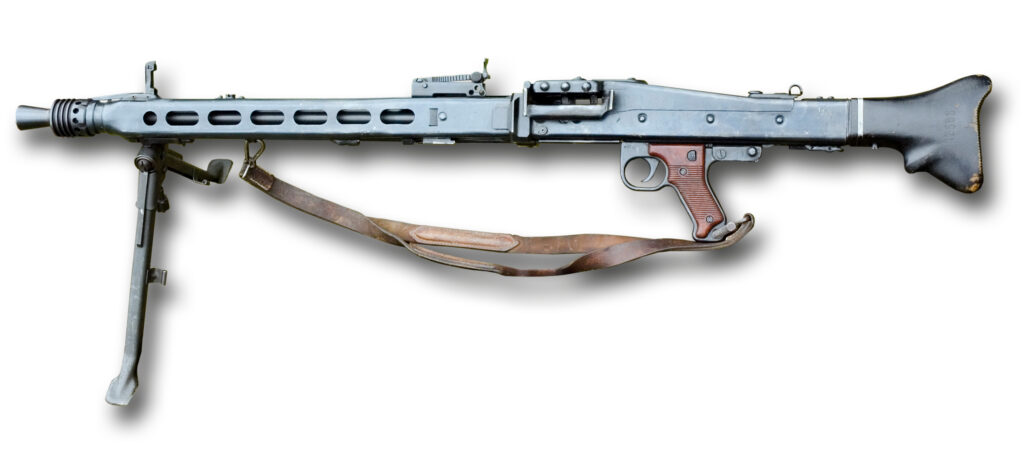
Maschinengewehr MG 42. Urheber: Phanatic, CC BY-SA 4.0 https://creativecommons.org/licenses/by-sa/4.0.

The result was a weapon that could be manufactured in large quantities without the same dependency on highly skilled labor. Production costs were reduced by nearly 30 to 50 percent compared to the MG34, depending on the factory and period. This mattered at scale. Germany produced over 400,000 MG42 units during the war, a figure that would not have been achievable with the previous manufacturing approach. What you see here is not just a firearm, but a reflection of industrial adaptation under pressure.

Rate of Fire and Its Tactical Meaning

One of the defining characteristics of the MG42 is its extremely high cyclic rate, typically ranging between 1,200 and 1,500 rounds per minute. At that speed, the interval between shots becomes almost indistinguishable to the human ear, creating the continuous tearing sound that Allied soldiers described as a “buzz.” However, focusing only on the sound risks missing the tactical importance of this rate of fire.

A higher cyclic rate increases the probability of hitting moving targets within a short exposure window. It also enhances suppression by saturating a given area with projectiles in a very short time. In practical terms, this means that even brief bursts could deny movement across open ground. The MG42 did not need prolonged firing to achieve its effect. Instead, short, controlled bursts could dominate a sector, forcing opposing forces to remain under cover and disrupting coordinated advances.
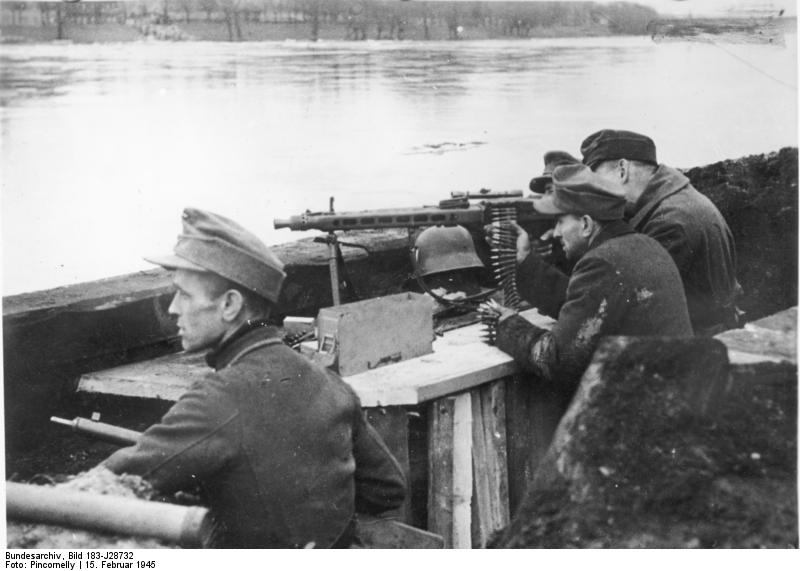
Bundesarchiv, Bild 183-J28732 / Pincornelly / CC-BY-SA 3.0, CC BY-SA 3.0 DE https://creativecommons.org/licenses/by-sa/3.0/de/deed.en.

This approach had consequences for ammunition consumption and barrel wear, both of which required logistical planning. The weapon was not designed to fire continuously at maximum rate, but to deliver rapid bursts with deliberate control. In trained hands, this balance between rate of fire and fire discipline became a defining feature of its effectiveness.

Mechanical System and Operation

At its core, the MG42 operates using a recoil-operated system with roller locking. When a round is fired, the barrel and bolt recoil together for a short distance before the locking rollers are forced inward, allowing the bolt to continue rearward. This system provided a strong locking mechanism while reducing the complexity found in earlier designs. It also contributed to the weapon’s ability to function reliably under adverse conditions.

The feeding system used non-disintegrating metal belts, typically in 50-round segments that could be linked into longer belts of 250 rounds. The feed mechanism itself was designed to operate efficiently at high speeds, ensuring consistent chambering even at extreme cyclic rates. The barrel could be changed quickly through a side-mounted hatch, allowing crews to replace overheated barrels in a matter of seconds without disassembling the weapon.
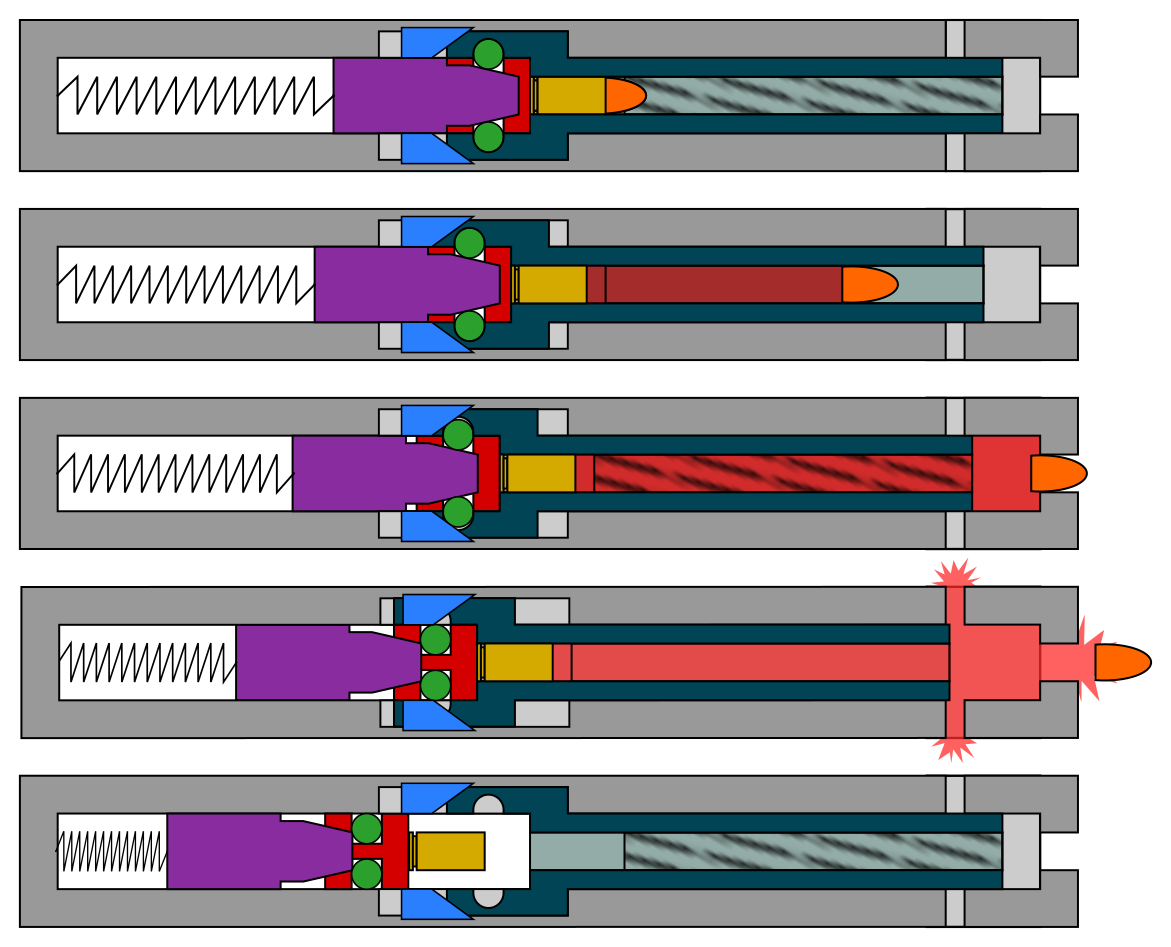
Roller locked short recoil action with muzzle booster (MG42, MG3). Grasyl, CC BY-SA 4.0 https://creativecommons.org/licenses/by-sa/4.0.

From a technical standpoint, the MG42 balanced speed, durability, and maintainability. The tolerances were intentionally looser than those of the MG34, which made the weapon less sensitive to dirt and debris. This trade-off slightly reduced precision under ideal conditions but significantly improved reliability in real-world environments, which is ultimately what matters in combat.

The Weapon as a System

Understanding the MG42 requires looking beyond the weapon itself. It was not intended to function as an isolated tool, but as the core of an infantry squad’s firepower. German doctrine placed the machine gun at the center of tactical planning, with riflemen supporting its operation by carrying ammunition, protecting its position, and assisting with barrel changes.

This approach effectively reversed the relationship seen in many other armies, where the machine gun supported the infantry. In the German model, the infantry supported the machine gun. The MG42’s high rate of fire and sustained capability made it the primary source of suppressive fire, shaping how engagements were conducted at the squad level.

Such integration required training and coordination. Crews had to manage ammunition supply, monitor barrel temperature, and maintain firing discipline. The weapon’s effectiveness depended not only on its design, but on how it was employed within a structured system.
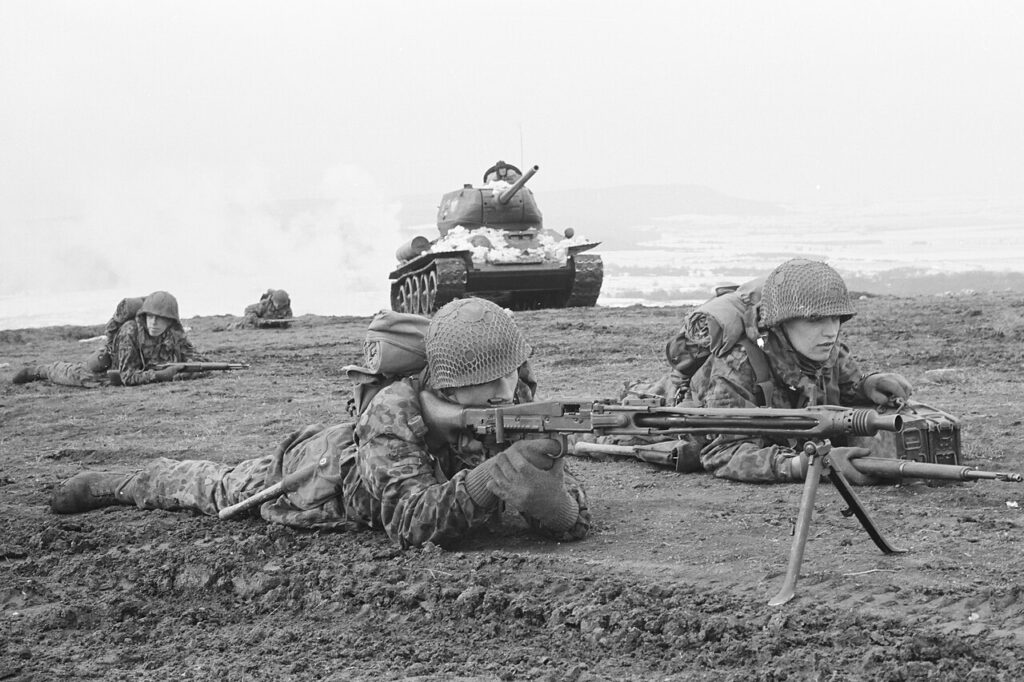
Infantrymen with machine guns, in the background a T34 of the Austrian Army, Combat demonstration, 1958, Bruck an der Leitha. Bundesheer Fotos, CC BY-SA 2.0 https://creativecommons.org/licenses/by-sa/2.0.

Battles Where Its Presence Was Felt

It would be an overstatement to claim that a single weapon changed the outcome of entire campaigns, but it would be equally inaccurate to ignore how the MG42 influenced specific engagements. Its impact becomes clearer when you look at how it shaped battlefield tempo and infantry movement.

During the Battle of Normandy, especially in the initial landings on Omaha Beach, German defensive positions equipped with MG42s created zones of intense suppressive fire that slowed advancing Allied forces. The weapon’s high cyclic rate allowed defenders to cover wide arcs with minimal repositioning, forcing attackers to rely heavily on artillery and armored support to break through fortified lines.
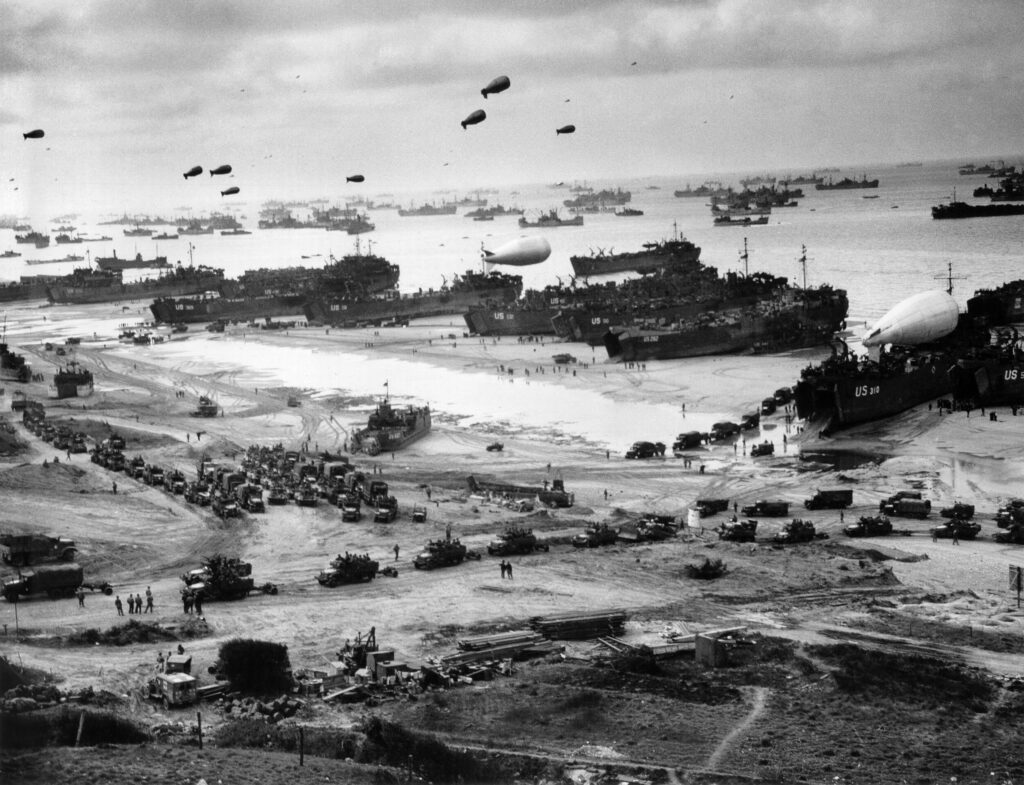
Landing ships putting cargo ashore on Omaha Beach at low tide during the early days of the Allied invasion, mid-June 1944.Among identifiable ships present are LST-532 (in the center of the view); USS LST-262 (3rd LST from right); USS LST-310 (2nd LST from right); USS LST-533 (partially visible at far right); and USS LST-524. Note barrage balloons overhead and U.S. Army “half-track” convoy forming up on the beach. The LST-262 was one of 10 Coast Guard-manned LSTs that participated in the invasion of Normandy, France.

On the Eastern Front, in operations such as Battle of Kursk, the MG42 played a different role. Rather than static defense alone, it contributed to layered defensive systems where overlapping fields of fire disrupted Soviet advances. In these environments, the weapon’s reliability in harsh conditions and its ability to sustain fire made it a consistent element in German defensive doctrine.

In urban combat scenarios like the Battle of Stalingrad, its effectiveness was shaped by confined spaces and short engagement distances. Here, the MG42’s rapid bursts could dominate narrow corridors and streets, although its high rate of fire also required disciplined ammunition management. These examples do not suggest that the MG42 alone determined outcomes, but they do show how it influenced the way battles were fought and experienced at the tactical level.
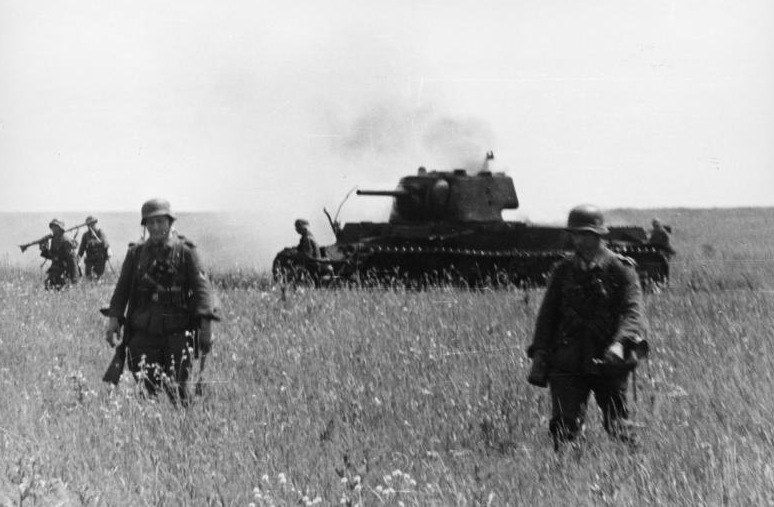
Soviet Union, Kursk. – German infantry advancing, passing a destroyed Soviet KV-1A tank; PK 670. Bundesarchiv, Bild 101I-078-3080-38 / Koch / CC-BY-SA 3.0, CC BY-SA 3.0 DE https://creativecommons.org/licenses/by-sa/3.0/de/deed.en.

Performance in Diverse Environments

The MG42 saw service across a wide range of environments, from the Eastern Front’s sub-zero temperatures to the deserts of North Africa. Its simplified construction and robust operating system contributed to consistent performance under these conditions. Unlike more finely tuned weapons, it was less prone to malfunction due to dirt, sand, or ice.

Field reports and post-war evaluations consistently noted its reliability. The ability to function with minimal maintenance was a critical advantage, particularly in prolonged engagements where cleaning and servicing opportunities were limited. This reliability reinforced its reputation among both users and opponents.
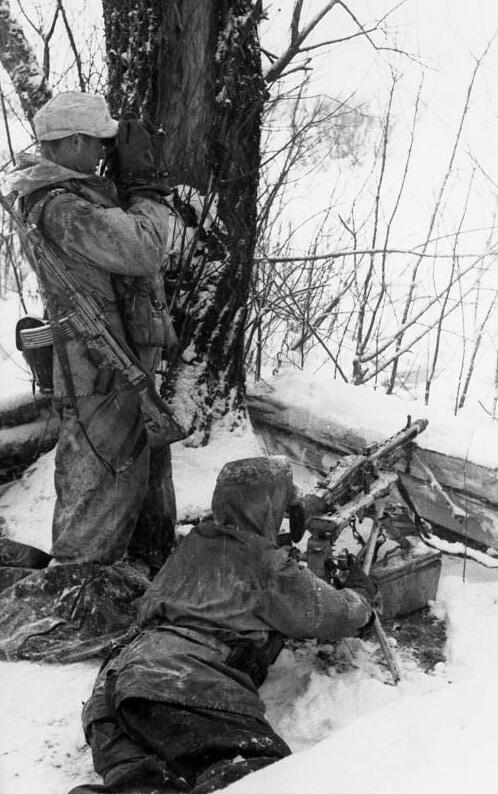
Soviet Union – Soldier (from the Ski Jäger Brigade?) in winter camouflage with MG42 in a snowy forest, the soldier on the left carries an MP 43 over his shoulder; KBZ HG Mitte. Bundesarchiv, Bild 101I-691-0244-11 / Leher / CC-BY-SA 3.0, CC BY-SA 3.0 DE https://creativecommons.org/licenses/by-sa/3.0/de/deed.en.

Influence on Post-War Designs

The impact of the MG42 did not end in 1945. Its design principles carried forward into post-war machine guns, most notably the MG3, which adapted the original system to fire the 7.62×51mm NATO cartridge. The MG3 retained the high cyclic rate and quick-change barrel system, demonstrating the durability of the original concept.
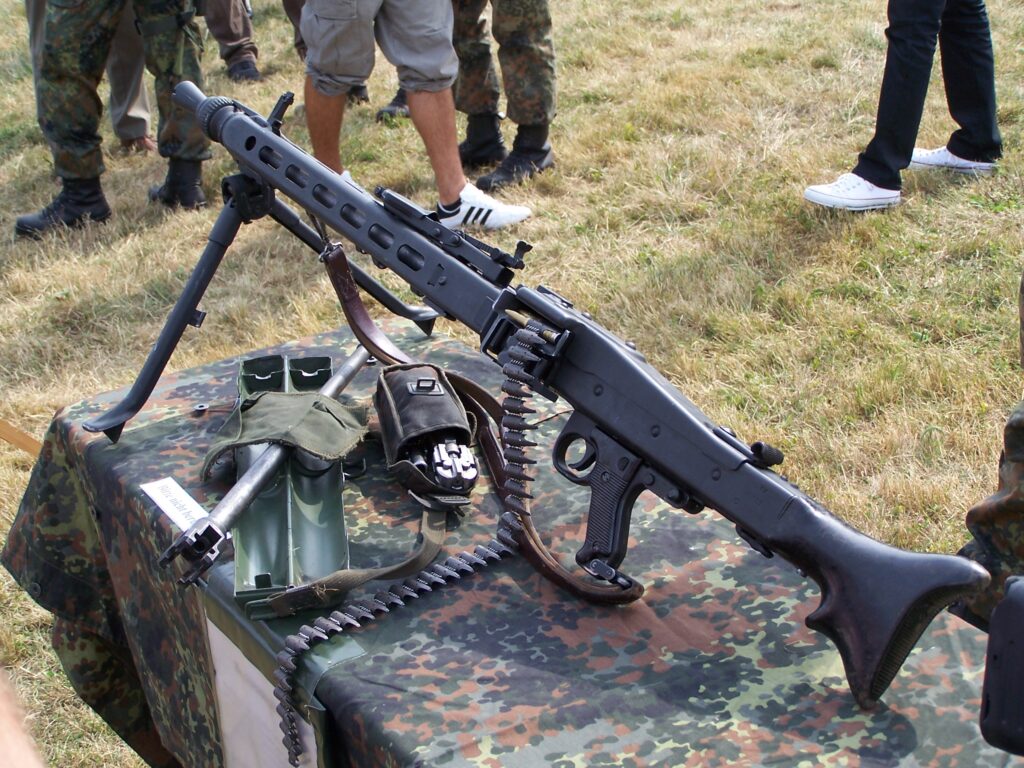
An MG3 of the German Army. A non-disintegrating metal DM1 ammunition belt with some inert rounds is inserted in the MG3.

Beyond Germany, elements of the MG42 influenced other designs. The American M60 and the Belgian FN MAG incorporated aspects of its feed mechanism and operational philosophy, even though their internal systems differed. This cross-influence highlights how effective engineering solutions tend to propagate across different platforms and doctrines.
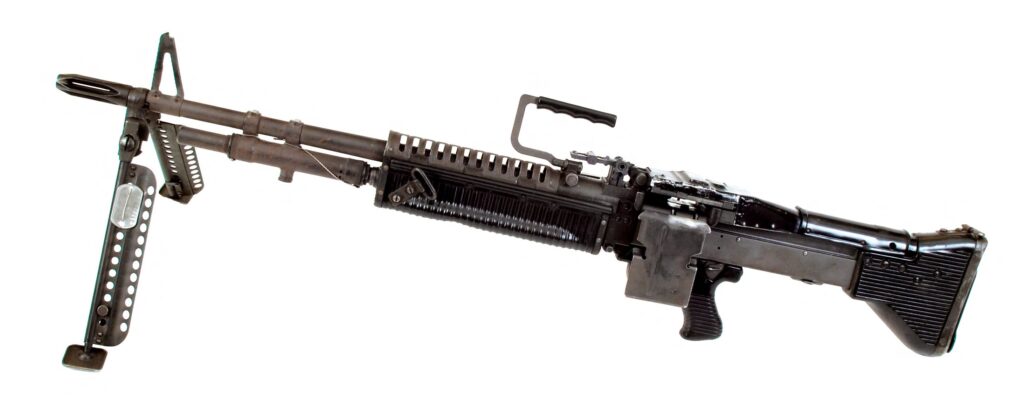
M60 Medium Machine Gun Primary function: Anti-personnel, aerial defense and light materiel targets. Length: 43.5 in. Weight: 23 lbs. Caliber: 7.62 mm NATO. Maximum effective range: 1,100 meters. Cyclic rate of fire: 550 rounds per minute.

Technical Overview in Context

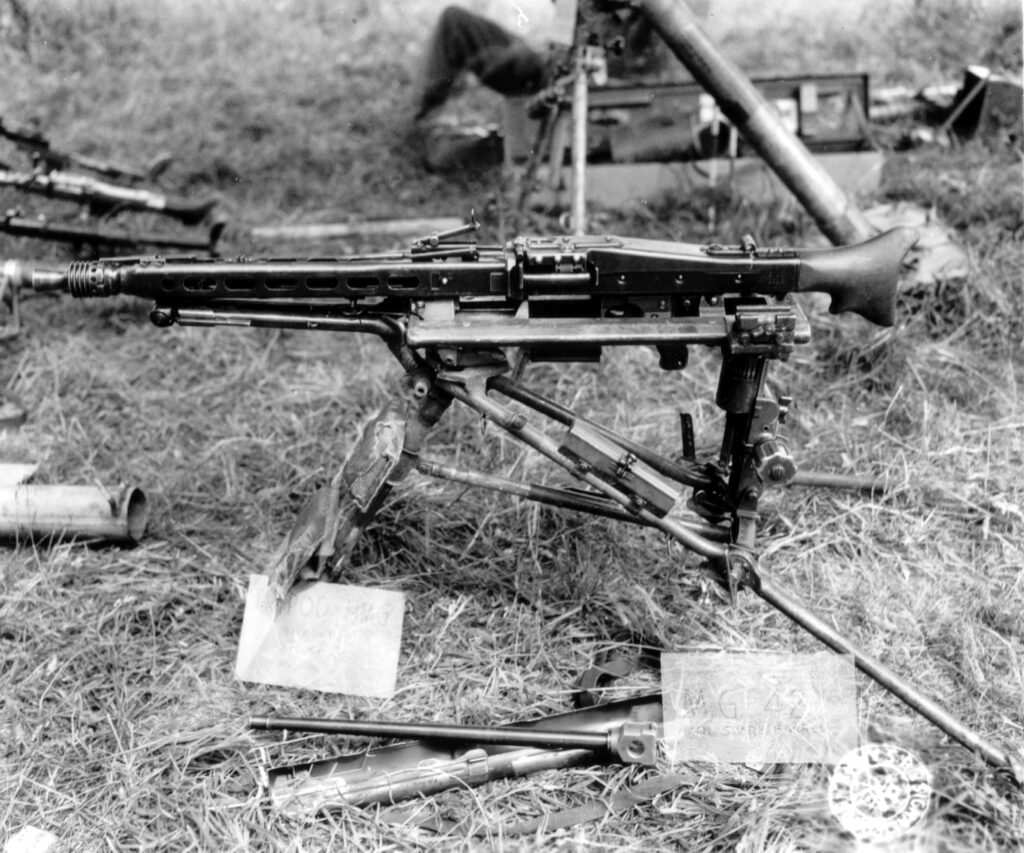
The MG42 was chambered for the 7.92×57mm Mauser cartridge, a full-power rifle round capable of effective engagement at distances approaching 1,000 meters. The weapon weighed approximately 11.5 kilograms and measured around 1,220 millimeters in length. These dimensions placed it within the range of what would later be classified as general-purpose machine guns.

Its effective range varied depending on mounting. When used with a bipod, it functioned as a mobile support weapon with a practical range of several hundred meters. Mounted on a tripod, it could deliver sustained fire at longer distances with improved stability and accuracy. This adaptability reinforced its role as a multi-purpose system rather than a single-role weapon.
Enduring Significance

Looking at the MG42 today, what stands out is not just its performance, but the clarity of its design logic. Every major feature reflects a specific requirement, whether industrial, tactical, or operational. There is very little excess in the system. It does what it was designed to do, and it does it efficiently.

That efficiency is what allowed it to leave a lasting mark. Not through mythology, but through measurable impact on both production and battlefield dynamics. Even now, decades later, its influence remains visible in modern machine gun design and doctrine.

Sources

  • Encyclopaedia Britannica – “MG42”
  • NRA National Firearms Museum – “MG42 Machine Gun”
  • The National WWII Museum – German Infantry Weapons (MG42 overview)

Previous Post

SR-71A Blackbird: Speed as Strategy, Not Just Performance

Related Posts

FN FAL: The Right Arm of the Free World
Firearms

FN FAL: The Right Arm of the Free World

March 31, 2026
Galil vs AK: When Reliability Meets Standardization
Firearms

Galil vs AK: When Reliability Meets Standardization

January 14, 2026
Africa Partnership Station AK 47
Firearms

The AK-47 Legacy in Africa

October 20, 2025
M4 carbine training
Firearms

The Most Common US and European Small Arms in the Middle East

August 19, 2025
Pistol_used_by__Squeaky__Fromme
Firearms

Colt 1911: Why This Century-Old Pistol Still Turns Heads

August 13, 2025
Beretta 92FS vs Beretta M9: Is There a Real Difference?
Firearms

Beretta 92FS vs Beretta M9: Is There a Real Difference?

July 19, 2025
  • Trending
  • Comments
  • Latest
Operation Enduring Freedom

What Exactly Is a Private Military Company (PMC)?

September 6, 2025
Blackwater PMC

After Blackwater: How PMCs Evolved, Professionalized, and Fragmented

September 13, 2025
Blackwater PMC

Inside Iraq’s Security Market: How Private Power Shapes a Fragile State

October 6, 2025
Beretta 92FS vs Beretta M9: Is There a Real Difference?

Beretta 92FS vs Beretta M9: Is There a Real Difference?

July 19, 2025
A Historic $142 Billion Arms Deal: Unpacking the U.S.-Saudi Agreement

A Historic $142 Billion Arms Deal: Unpacking the U.S.-Saudi Agreement

A Silent Revolution on the Battlefield: AI-Enabled Tactical Communication Systems

A Silent Revolution on the Battlefield: AI-Enabled Tactical Communication Systems

Cominf.org, CC BY-SA 3.0 , via Wikimedia Commons

Is Europe Really Reducing Its Dependence on Russian Gas?

What is ITAR? The Invisible Line in Global Defense Trade

What is ITAR? The Invisible Line in Global Defense Trade

MG42-1

MG42 Machine Gun: WWII History, Specifications and Battlefield Impact

April 21, 2026
SR-71B_trainer_on_1000th_flight_1983

SR-71A Blackbird: Speed as Strategy, Not Just Performance

April 20, 2026
1280px-The_HL-10,_seen_here_parked_on_the_ramp_at_NASA's_Flight_Research_Center_in_1966,_had_a_radically_different_shape_from_that_of_the_M2-F2-F3_(ECN-1289)

HL-10: When Shape Replaced Wings

April 15, 2026
T-80U_ROKA_제3기갑여단

Brown Bear Project : How Republic of Korea added Russian weapons into its inventory?

April 14, 2026

Recent News

MG42-1

MG42 Machine Gun: WWII History, Specifications and Battlefield Impact

April 21, 2026
SR-71B_trainer_on_1000th_flight_1983

SR-71A Blackbird: Speed as Strategy, Not Just Performance

April 20, 2026
1280px-The_HL-10,_seen_here_parked_on_the_ramp_at_NASA's_Flight_Research_Center_in_1966,_had_a_radically_different_shape_from_that_of_the_M2-F2-F3_(ECN-1289)

HL-10: When Shape Replaced Wings

April 15, 2026
T-80U_ROKA_제3기갑여단

Brown Bear Project : How Republic of Korea added Russian weapons into its inventory?

April 14, 2026
Drill & Defense

Drill & Defense is an independent platform providing insights into firearms, defense technologies, and energy sectors. We deliver clear, practical content for professionals, enthusiasts, and industry followers worldwide.

Follow Us

Browse by Category

  • Air Systems
  • Defense & Energy Strategy
  • Defense Industry
  • Defense Know-How
  • Defense Technologies
  • Energy & Security
  • Energy Fundamentals
  • Energy Technologies
  • Firearms
  • Geopolitics
  • Global Security
  • History
  • Industry News
  • Knowledge Base
  • Land Systems
  • Legacy Systems & Structures
  • Market Analysis
  • Market Trends & Analysis
  • Military History
  • Military Systems
  • Naval Systems
  • Oil & Gas News
  • Pistols
  • Regulations & Frameworks
  • Rifles
  • SMGs & Machine Guns
  • Strategic Turning Points
  • Tech & Innovation Crossover

Recent News

MG42-1

MG42 Machine Gun: WWII History, Specifications and Battlefield Impact

April 21, 2026
SR-71B_trainer_on_1000th_flight_1983

SR-71A Blackbird: Speed as Strategy, Not Just Performance

April 20, 2026

© 2026 Drill & Defense. All rights reserved. Independent insights on firearms, defense, and energy. For business inquiries: info@drillanddefense.com | PRIVACY POLICY | COOKIE POLICY | TERMS AND CONDITIONS

Manage Consent

We use cookies to improve your experience. You can accept or refuse cookies; however, some features may not function properly without your consent.

Functional Always active
The technical storage or access is strictly necessary for the legitimate purpose of enabling the use of a specific service explicitly requested by the subscriber or user, or for the sole purpose of carrying out the transmission of a communication over an electronic communications network.
Preferences
The technical storage or access is necessary for the legitimate purpose of storing preferences that are not requested by the subscriber or user.
Statistics
The technical storage or access that is used exclusively for statistical purposes. The technical storage or access that is used exclusively for anonymous statistical purposes. Without a subpoena, voluntary compliance on the part of your Internet Service Provider, or additional records from a third party, information stored or retrieved for this purpose alone cannot usually be used to identify you.
Marketing
The technical storage or access is required to create user profiles to send advertising, or to track the user on a website or across several websites for similar marketing purposes.
  • Manage options
  • Manage services
  • Manage {vendor_count} vendors
  • Read more about these purposes
View preferences
  • {title}
  • {title}
  • {title}
No Result
View All Result
  • Defense Industry
    • Industry News
    • Defense Companies
    • Defense Technologies
    • Market Analysis
  • Military Systems
    • Land Systems
    • Air Systems
    • Naval Systems
    • Electronic & Cyber Systems
  • Firearms
    • Pistols
    • Rifles
    • SMGs & Machine Guns
    • Ammunition
    • Optics & Accessories
  • Geopolitics
    • Global Security
    • Defense & Energy Strategy
    • Tech & Innovation Crossover
    • Trade & Export Controls
  • Energy & Security
    • Oil & Gas News
    • Energy Technologies
    • Market Trends & Analysis
  • History
    • Military History
    • Doctrines & Concepts
    • Strategic Turning Points
    • Legacy Systems & Structures
  • Knowledge Base
    • Firearms Basics
    • Defense Know-How
    • Energy Fundamentals
    • Regulations & Frameworks
  • About
  • Contact
  • Login
  • Register

© 2026 Drill & Defense. All rights reserved. Independent insights on firearms, defense, and energy. For business inquiries: info@drillanddefense.com | PRIVACY POLICY | COOKIE POLICY | TERMS AND CONDITIONS