
Drill & Defense
Advertisement
  • Defense Industry
    • Industry News
    • Defense Companies
    • Defense Technologies
    • Market Analysis
  • Military Systems
    • Land Systems
    • Air Systems
    • Naval Systems
    • Electronic & Cyber Systems
  • Firearms
    • Pistols
    • Rifles
    • SMGs & Machine Guns
    • Ammunition
    • Optics & Accessories
  • Geopolitics
    • Global Security
    • Defense & Energy Strategy
    • Tech & Innovation Crossover
    • Trade & Export Controls
  • Energy & Security
    • Oil & Gas News
    • Energy Technologies
    • Market Trends & Analysis
  • History
    • Military History
    • Doctrines & Concepts
    • Strategic Turning Points
    • Legacy Systems & Structures
  • Knowledge Base
    • Firearms Basics
    • Defense Know-How
    • Energy Fundamentals
    • Regulations & Frameworks
  • About
  • Contact
  • Login
  • Register
No Result
View All Result
  • Defense Industry
    • Industry News
    • Defense Companies
    • Defense Technologies
    • Market Analysis
  • Military Systems
    • Land Systems
    • Air Systems
    • Naval Systems
    • Electronic & Cyber Systems
  • Firearms
    • Pistols
    • Rifles
    • SMGs & Machine Guns
    • Ammunition
    • Optics & Accessories
  • Geopolitics
    • Global Security
    • Defense & Energy Strategy
    • Tech & Innovation Crossover
    • Trade & Export Controls
  • Energy & Security
    • Oil & Gas News
    • Energy Technologies
    • Market Trends & Analysis
  • History
    • Military History
    • Doctrines & Concepts
    • Strategic Turning Points
    • Legacy Systems & Structures
  • Knowledge Base
    • Firearms Basics
    • Defense Know-How
    • Energy Fundamentals
    • Regulations & Frameworks
  • About
  • Contact
  • Login
  • Register
No Result
View All Result
Drill & Defense
No Result
View All Result
Home Military Systems

SR-71A Blackbird: Speed as Strategy, Not Just Performance

April 20, 2026
in Military Systems, Air Systems
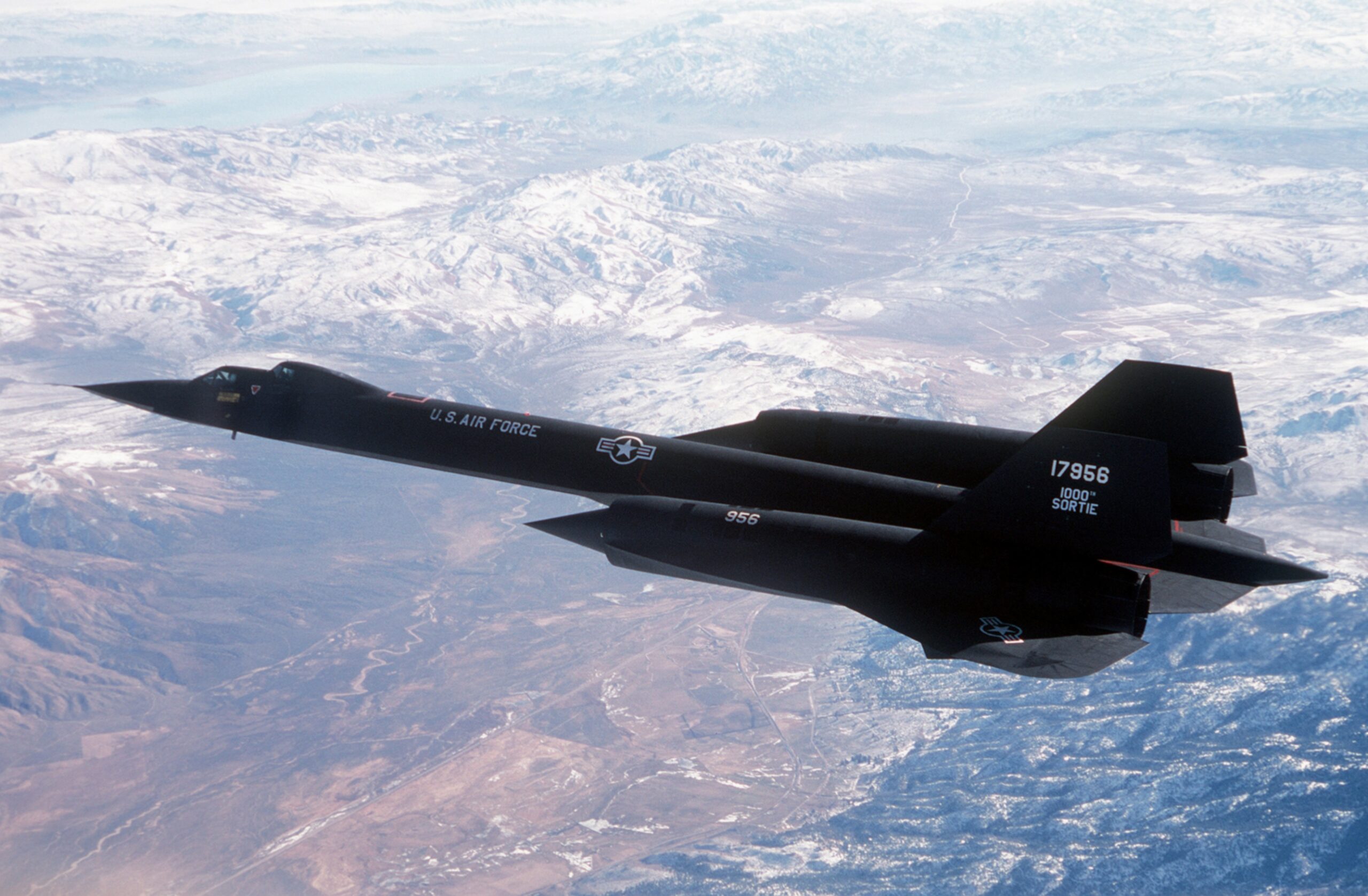
SR-71B_trainer_on_1000th_flight_1983

A U.S. Air Force Lockheed SR-71B Blackbird (s/n 61-7956) during its 1,000th sortie near Beale Air Force Base, California (USA). This aircraft was one of two SR-71B trainers built. The other one crashed in 1968. 61-7956 is on display at Kalamazoo Aviation History Museum, Michigan (USA), since 2007.

Share on LinkedInShare on Twitter

There is a point in Cold War aviation where the logic of survival quietly changes, and the Lockheed SR-71 Blackbird sits right there. Most aircraft were designed to defend themselves when challenged. The SR-71A removed that expectation altogether. It was built on a far more direct idea: operate where interception becomes structurally difficult, and the entire engagement equation shifts in your favor.

That concept did not stay theoretical. During operational missions, when radar systems detected the aircraft and surface-to-air missiles were launched, the response was not aggressive maneuvering. It was acceleration. The aircraft would increase speed, climb within its envelope, and effectively outrun the threat. This is where the SR-71A separates itself from almost every other aircraft of its era. It did not rely on layered protection. It relied on physics.

Engineering for sustained Mach 3 flight

Once you push an aircraft beyond Mach 3 and expect it to stay there, every engineering decision becomes constrained by heat. The SR-71A was built primarily from titanium because aluminum alloys would lose structural integrity at those temperatures. At cruising speed, parts of the airframe exceeded 300 degrees Celsius. That is not a stress scenario. That is a normal operating condition.

The implications of that are easy to underestimate. The aircraft expanded in flight. Panel gaps that looked like imperfections on the ground were intentional, allowing the structure to seal properly once heated. Fuel systems had to account for thermal expansion, and the fuel itself, JP-7, was engineered with a high flash point and used as a coolant before combustion. Even starting the engines required a separate chemical ignition system because standard methods were insufficient.
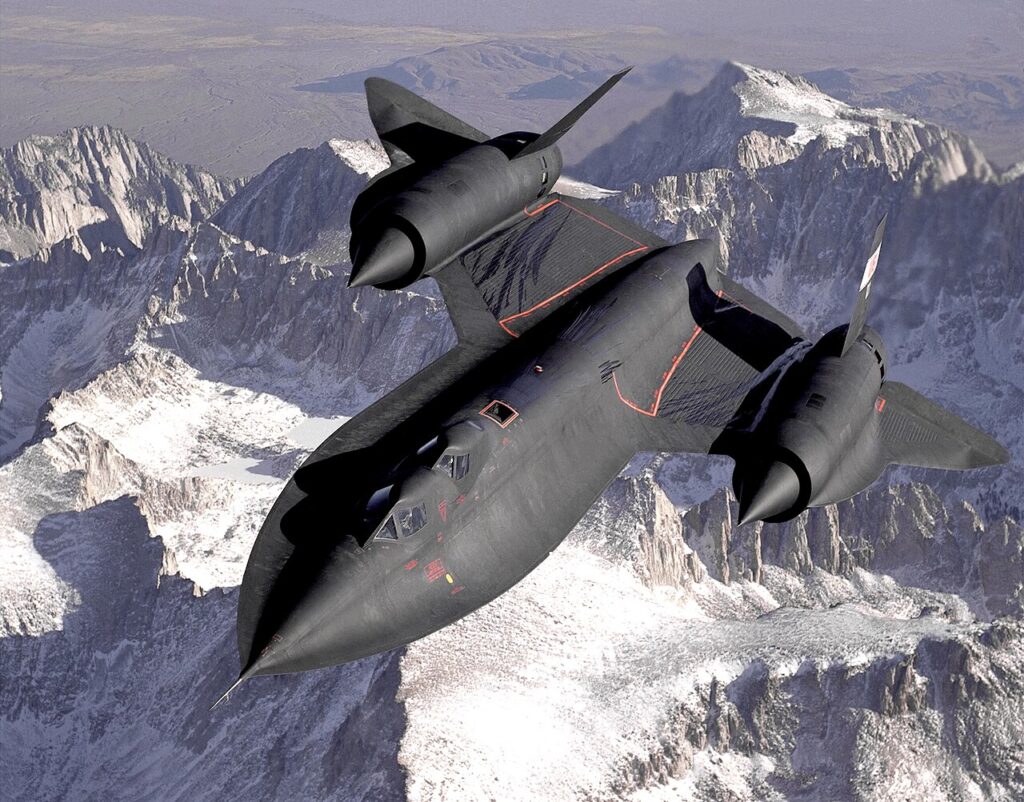
The SR-71B Blackbird, flown by the Dryden Flight Research Center as NASA 831, slices across the snow-covered southern Sierra Nevada Mountains of California after being refueled by an Air Force tanker during a 1994 flight. SR-71B was the trainer version of the SR-71. Notice the dual cockpit to allow the instructor to fly the airplane.

The engines, Pratt & Whitney J58s, were not conventional turbojets in the usual sense. At high speeds, a significant portion of thrust came from bypass airflow, effectively turning the engine into a hybrid between a turbojet and a ramjet. That transition did not happen passively. It required precise control of inlet spikes that managed shockwaves entering the engine. If those shockwaves destabilized, the result could be an inlet unstart, which created asymmetric thrust and demanded immediate correction.
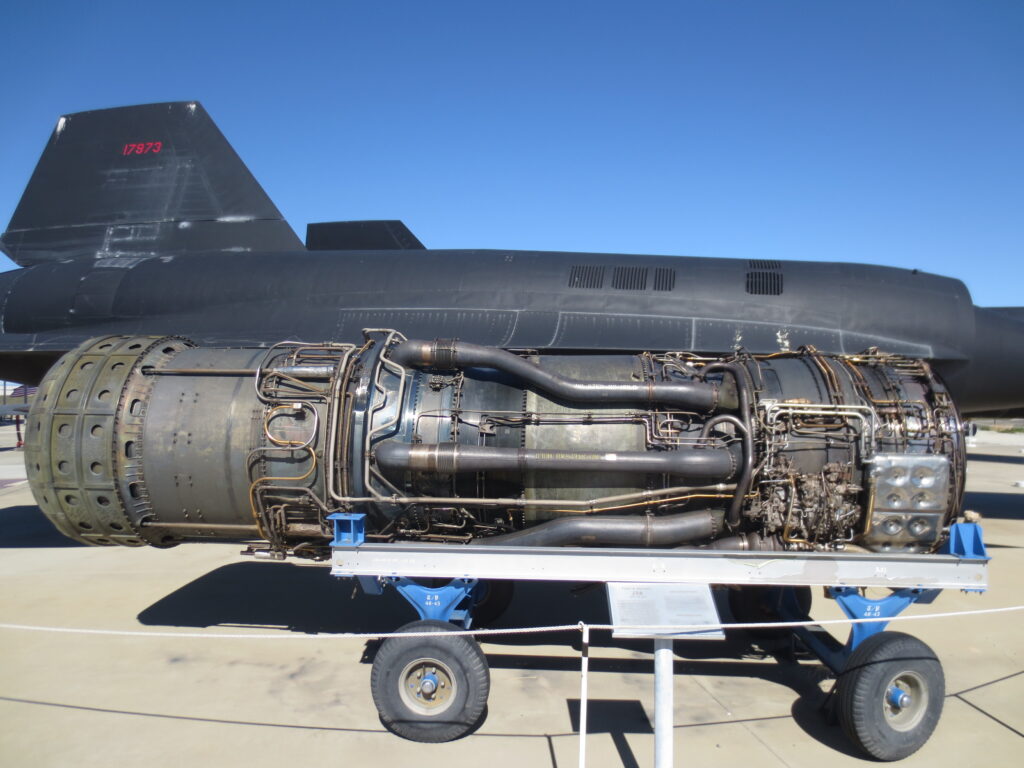
Lockheed SR-71A SN 17973 Blackbird Airpark, Plant 42, Palmdale, CA – Pratt & Whitney J58 Jet Engine. Steve Riggins, CC BY 3.0 https://creativecommons.org/licenses/by/3.0.

The role of the A-12 and program evolution

Before the SR-71A entered service, there was the A-12, developed under the CIA as part of the Oxcart program. The A-12 was a single-seat reconnaissance aircraft, faster and slightly higher-flying than the later SR-71, but more limited in operational flexibility. The transition from A-12 to SR-71A introduced a second crew member and expanded sensor capabilities, reflecting a shift toward more complex intelligence missions.

This evolution is worth noting because it shows that the SR-71A was not an isolated design. It was part of a broader development effort that refined high-speed reconnaissance over time. The lessons learned from the A-12 informed not just the aircraft itself, but also maintenance procedures, materials handling, and mission planning.
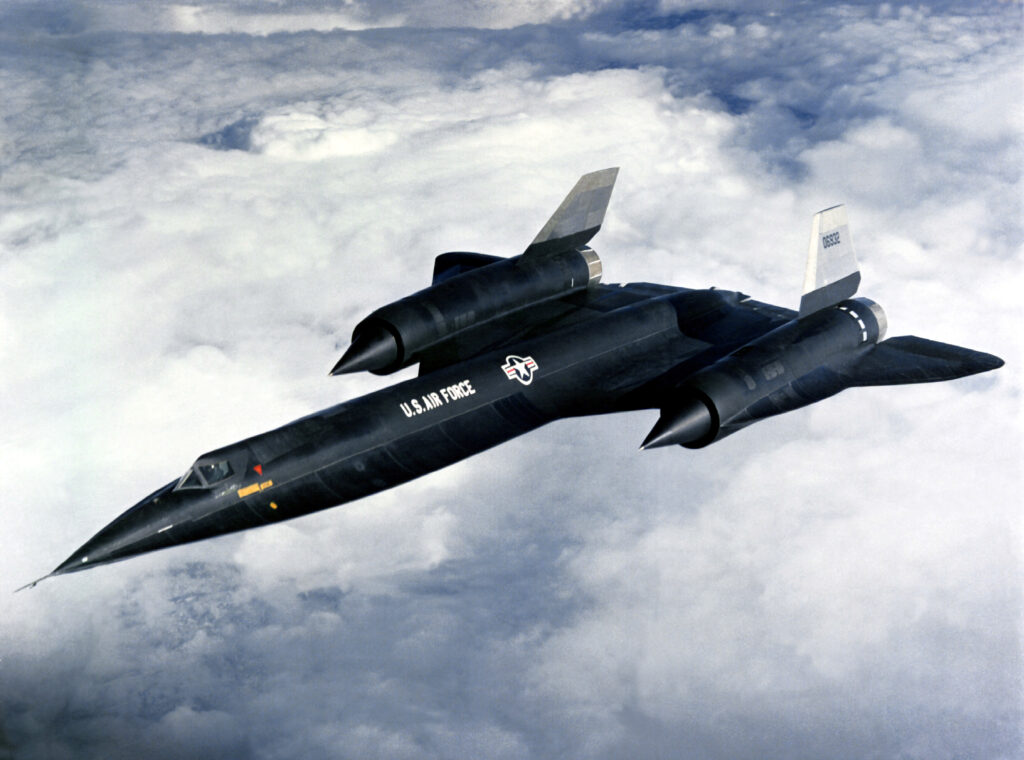
An air-to-air left front view of a A-12 aircraft. Erroneously identified as Y-12 in the source, but Serial Number 06932 is a A-12. This aircraft was lost over South China Sea on June 6, 1968

Intelligence collection beyond speed

It is easy to focus on performance figures, but the SR-71A’s value came from what it could collect and how quickly it could do it. The aircraft carried advanced optical cameras capable of high-resolution imaging from extreme altitudes, side-looking airborne radar for wide-area mapping, and signals intelligence systems that captured electronic emissions.

A single mission could gather data across multiple domains in a relatively short timeframe. That meant fewer flights were needed to build a comprehensive picture of a target area. It also reduced exposure to hostile environments. In practical terms, the aircraft compressed reconnaissance timelines while maintaining data quality.
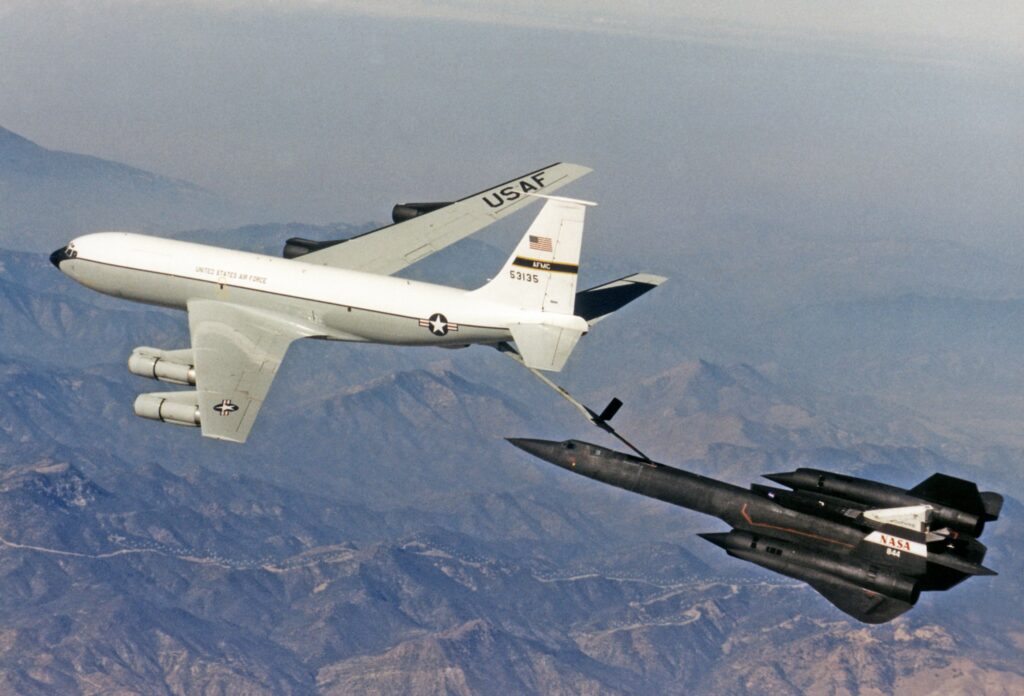
The NASA Lockheed SR-71A (USAF s/n 61-7980), refuels from an USAF Lockheed NKC-135E Stratotanker (s/n 54-3135) from Edwards Air Force Base during the first flight of the NASA/Rocketdyne/Lockheed Martin Linear Aerospike SR-71 Experiment (LASRE). The flight took place on 31 October 1997 at NASA’s Dryden Flight Research Center, Edwards, California. The SR-71 took off at 08:31 hrs (local time). The aircraft flew for one hour and fifty minutes, reaching a maximum speed of Mach 1.2 before landing at Edwards at 10:21 hrs, successfully validating the SR-71/linear aerospike experiment configuration. The goal of the first flight was to evaluate the aerodynamic characteristics and the handling of the SR-71/linear aerospike experiment configuration. The engine was not fired during the flight.

There is also a strategic flexibility that emerges here. Unlike satellites, which follow predictable orbits, the SR-71A could be deployed in response to specific events. That responsiveness gave it a role that complemented space-based systems rather than competing with them.

Operational realities and logistical demands

Operating the SR-71A was never simple. Each mission required a coordinated effort that extended far beyond the aircraft itself. Specialized KC-135Q tanker aircraft were needed because the SR-71A used a unique fuel. Missions often began with aerial refueling shortly after takeoff, as the aircraft would launch with partially filled tanks due to thermal expansion considerations.

Maintenance demands were equally significant. The high temperatures and stresses experienced during flight meant that components required careful inspection and frequent servicing. Turnaround times were not measured in hours, but in days. This was not a platform designed for high sortie rates. It was designed for precision missions where the value of the intelligence justified the effort.
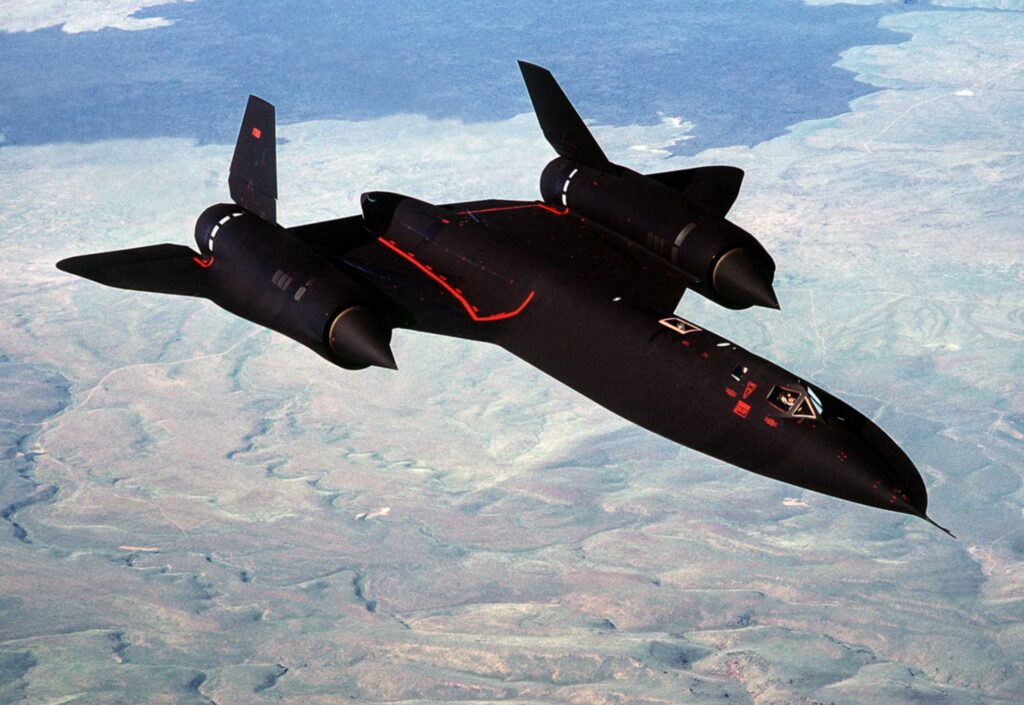
A U.S. Air Force Lockheed SR-71A Blackbird from the 9th Strategic Reconnaissance Wing near Beale Air Force Base, California (USA).

The human factor at extreme altitude

The crew environment inside the SR-71A was closer to spaceflight than conventional aviation. Pilots and reconnaissance systems officers wore full pressure suits similar to those used by astronauts. At operational altitude, the margin between a controlled cockpit environment and a fatal decompression scenario was extremely small.

The workload was demanding in a different way than fighter aviation. Instead of rapid maneuvering and visual engagement, the focus was on precision, timing, and system management. Navigation had to be exact, sensor operation had to align with mission objectives, and communication between crew members had to remain clear under high workload conditions.
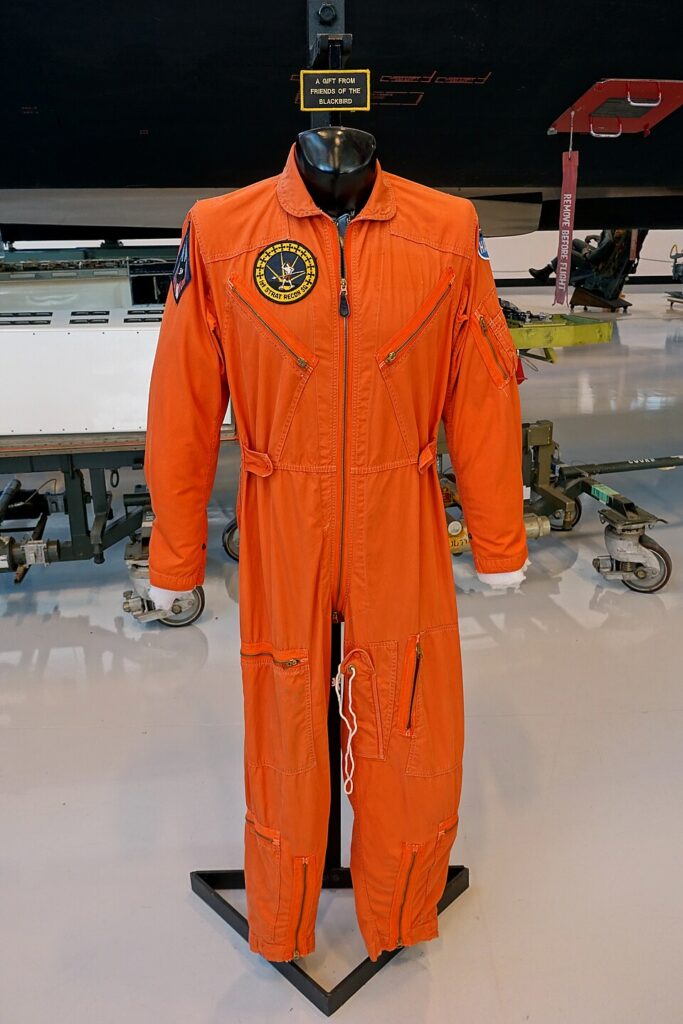
Exhibit at the Evergreen Aviation & Space Museum – McMinnville, Oregon, USA

Despite these challenges, the aircraft maintained a remarkable operational record. No SR-71 was ever lost to enemy action. That outcome reflects not just the aircraft’s performance, but the discipline and preparation of the crews who operated it.

Why it was retired despite unmatched performance

Looking at the SR-71A purely from a performance standpoint, its retirement can seem counterintuitive. It remained faster and higher-flying than any comparable platform. However, the decision was shaped by broader changes in intelligence collection.

Satellite systems improved in resolution, coverage, and reliability. They offered persistent observation without the need for complex deployment or refueling operations. At the same time, the cost of operating the SR-71A remained high due to its specialized requirements.

When those factors were evaluated together, the balance shifted. The aircraft was not replaced because it was ineffective. It was retired because the intelligence landscape evolved toward systems that provided continuous coverage with lower operational overhead.
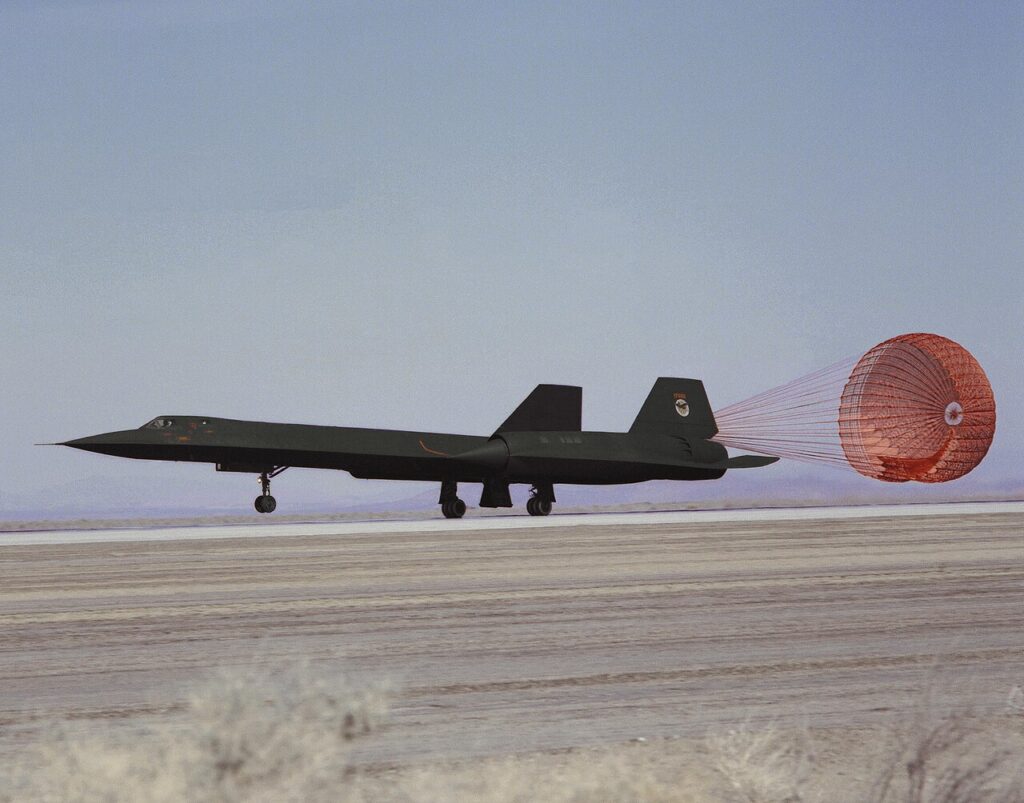
One of two initial U.S. Air Force SR-71A reconnaissance aircraft that was retired from operational service and loaned to NASA for high-speed research programs arrives at NASA’s Dryden Flight Research Center, Edwards, California. The aircraft deployed its drag chute even before its nose gear touches the runway at the end of a 1990 research flight. Dryden flew three YF-12 aircraft, prototypes of the triple-sonic SR-71s, in an earlier supersonic research program between 1969 and 1979.

A design philosophy that still stands apart

Modern aerospace development has largely moved toward stealth, networked systems, and unmanned platforms. The SR-71A represents a different philosophy. It did not attempt to minimize detection in the traditional sense. Instead, it operated in a regime where detection did not lead to successful interception.

That distinction is important. It shows that survivability can be achieved through different approaches, not all of which rely on concealment. In certain scenarios, speed and altitude remain viable tools, even if they are less emphasized in current programs.

A platform that reshaped its operational environment

What ultimately defines the SR-71A is not just its technical capability, but the way it altered the conditions under which threats operated. Instead of adapting to existing systems, it forced those systems to operate at the edge of their capabilities.

That dynamic is still relevant when thinking about modern defense systems. Changing the environment can be just as effective as countering a threat directly. The SR-71A demonstrated that clearly, and its influence continues to appear in discussions about high-speed and high-altitude platforms.


Sources

  • NASA – SR-71 Blackbird Fact Sheet
  • Smithsonian National Air and Space Museum
  • U.S. Air Force National Museum
  • CIA Oxcart Program Archives
Previous Post

HL-10: When Shape Replaced Wings

Related Posts

1280px-The_HL-10,_seen_here_parked_on_the_ramp_at_NASA's_Flight_Research_Center_in_1966,_had_a_radically_different_shape_from_that_of_the_M2-F2-F3_(ECN-1289)
Military Systems

HL-10: When Shape Replaced Wings

April 15, 2026
US_Navy_Sea_Shadow_stealth_craft-scaled.jpg
Military Systems

Sea Shadow (IX-529): When Stealth Quietly Moved Below the Horizon

April 13, 2026
X-47B_operating_in_the_Atlantic_Test_Range_(modified)
Military Systems

Northrop Grumman X-47B: When Autonomy Reached the Flight Deck

April 8, 2026
A-10 Thunderbolt II: A Platform Built Around Purpose
Military Systems

A-10 Thunderbolt II: A Platform Built Around Purpose

March 24, 2026
Merkava Barak: The Evolution of Armored Warfare
Military Systems

Merkava Barak: The Evolution of Armored Warfare

March 17, 2026
M1278_JLTV_Heavy_Guns_Carrier_(JLTV-HGC)
Military Systems

What Mattered in Defense Today: JLTVs to Canada and an ISREW Boost for Australia

August 11, 2025
  • Trending
  • Comments
  • Latest
Operation Enduring Freedom

What Exactly Is a Private Military Company (PMC)?

September 6, 2025
Blackwater PMC

After Blackwater: How PMCs Evolved, Professionalized, and Fragmented

September 13, 2025
Blackwater PMC

Inside Iraq’s Security Market: How Private Power Shapes a Fragile State

October 6, 2025
Beretta 92FS vs Beretta M9: Is There a Real Difference?

Beretta 92FS vs Beretta M9: Is There a Real Difference?

July 19, 2025
A Historic $142 Billion Arms Deal: Unpacking the U.S.-Saudi Agreement

A Historic $142 Billion Arms Deal: Unpacking the U.S.-Saudi Agreement

A Silent Revolution on the Battlefield: AI-Enabled Tactical Communication Systems

A Silent Revolution on the Battlefield: AI-Enabled Tactical Communication Systems

Cominf.org, CC BY-SA 3.0 , via Wikimedia Commons

Is Europe Really Reducing Its Dependence on Russian Gas?

What is ITAR? The Invisible Line in Global Defense Trade

What is ITAR? The Invisible Line in Global Defense Trade

SR-71B_trainer_on_1000th_flight_1983

SR-71A Blackbird: Speed as Strategy, Not Just Performance

April 20, 2026
1280px-The_HL-10,_seen_here_parked_on_the_ramp_at_NASA's_Flight_Research_Center_in_1966,_had_a_radically_different_shape_from_that_of_the_M2-F2-F3_(ECN-1289)

HL-10: When Shape Replaced Wings

April 15, 2026
T-80U_ROKA_제3기갑여단

Brown Bear Project : How Republic of Korea added Russian weapons into its inventory?

April 14, 2026
US_Navy_Sea_Shadow_stealth_craft-scaled.jpg

Sea Shadow (IX-529): When Stealth Quietly Moved Below the Horizon

April 13, 2026

Recent News

SR-71B_trainer_on_1000th_flight_1983

SR-71A Blackbird: Speed as Strategy, Not Just Performance

April 20, 2026
1280px-The_HL-10,_seen_here_parked_on_the_ramp_at_NASA's_Flight_Research_Center_in_1966,_had_a_radically_different_shape_from_that_of_the_M2-F2-F3_(ECN-1289)

HL-10: When Shape Replaced Wings

April 15, 2026
T-80U_ROKA_제3기갑여단

Brown Bear Project : How Republic of Korea added Russian weapons into its inventory?

April 14, 2026
US_Navy_Sea_Shadow_stealth_craft-scaled.jpg

Sea Shadow (IX-529): When Stealth Quietly Moved Below the Horizon

April 13, 2026
Drill & Defense

Drill & Defense is an independent platform providing insights into firearms, defense technologies, and energy sectors. We deliver clear, practical content for professionals, enthusiasts, and industry followers worldwide.

Follow Us

Browse by Category

  • Air Systems
  • Defense & Energy Strategy
  • Defense Industry
  • Defense Know-How
  • Defense Technologies
  • Energy & Security
  • Energy Fundamentals
  • Energy Technologies
  • Firearms
  • Geopolitics
  • Global Security
  • History
  • Industry News
  • Knowledge Base
  • Land Systems
  • Legacy Systems & Structures
  • Market Analysis
  • Market Trends & Analysis
  • Military History
  • Military Systems
  • Naval Systems
  • Oil & Gas News
  • Pistols
  • Regulations & Frameworks
  • Rifles
  • Strategic Turning Points
  • Tech & Innovation Crossover

Recent News

SR-71B_trainer_on_1000th_flight_1983

SR-71A Blackbird: Speed as Strategy, Not Just Performance

April 20, 2026
1280px-The_HL-10,_seen_here_parked_on_the_ramp_at_NASA's_Flight_Research_Center_in_1966,_had_a_radically_different_shape_from_that_of_the_M2-F2-F3_(ECN-1289)

HL-10: When Shape Replaced Wings

April 15, 2026

© 2026 Drill & Defense. All rights reserved. Independent insights on firearms, defense, and energy. For business inquiries: info@drillanddefense.com | PRIVACY POLICY | COOKIE POLICY | TERMS AND CONDITIONS

Manage Consent

We use cookies to improve your experience. You can accept or refuse cookies; however, some features may not function properly without your consent.

Functional Always active
The technical storage or access is strictly necessary for the legitimate purpose of enabling the use of a specific service explicitly requested by the subscriber or user, or for the sole purpose of carrying out the transmission of a communication over an electronic communications network.
Preferences
The technical storage or access is necessary for the legitimate purpose of storing preferences that are not requested by the subscriber or user.
Statistics
The technical storage or access that is used exclusively for statistical purposes. The technical storage or access that is used exclusively for anonymous statistical purposes. Without a subpoena, voluntary compliance on the part of your Internet Service Provider, or additional records from a third party, information stored or retrieved for this purpose alone cannot usually be used to identify you.
Marketing
The technical storage or access is required to create user profiles to send advertising, or to track the user on a website or across several websites for similar marketing purposes.
  • Manage options
  • Manage services
  • Manage {vendor_count} vendors
  • Read more about these purposes
View preferences
  • {title}
  • {title}
  • {title}
No Result
View All Result
  • Defense Industry
    • Industry News
    • Defense Companies
    • Defense Technologies
    • Market Analysis
  • Military Systems
    • Land Systems
    • Air Systems
    • Naval Systems
    • Electronic & Cyber Systems
  • Firearms
    • Pistols
    • Rifles
    • SMGs & Machine Guns
    • Ammunition
    • Optics & Accessories
  • Geopolitics
    • Global Security
    • Defense & Energy Strategy
    • Tech & Innovation Crossover
    • Trade & Export Controls
  • Energy & Security
    • Oil & Gas News
    • Energy Technologies
    • Market Trends & Analysis
  • History
    • Military History
    • Doctrines & Concepts
    • Strategic Turning Points
    • Legacy Systems & Structures
  • Knowledge Base
    • Firearms Basics
    • Defense Know-How
    • Energy Fundamentals
    • Regulations & Frameworks
  • About
  • Contact
  • Login
  • Register

© 2026 Drill & Defense. All rights reserved. Independent insights on firearms, defense, and energy. For business inquiries: info@drillanddefense.com | PRIVACY POLICY | COOKIE POLICY | TERMS AND CONDITIONS