
Drill & Defense
Advertisement
  • Defense
    • Industry News
    • Weapon & Gear Reviews
    • Defense Technologies
    • Military Market Reports
  • Energy
    • Oil & Gas News
    • Energy Technologies
    • Market Trends & Analysis
  • Cross-Sector Insights
    • Defense & Energy Strategy
    • Global Security & Trade Analysis
    • Tech & Innovation Crossover
  • History & Legacy
    • Turning Points in Conflict
    • Legacy Systems & Structures
    • Resource Wars & Strategy
  • Knowledge Base
    • Defense Know-How
    • Energy Insight
  • About
  • Contact
  • Login
  • Register
No Result
View All Result
  • Defense
    • Industry News
    • Weapon & Gear Reviews
    • Defense Technologies
    • Military Market Reports
  • Energy
    • Oil & Gas News
    • Energy Technologies
    • Market Trends & Analysis
  • Cross-Sector Insights
    • Defense & Energy Strategy
    • Global Security & Trade Analysis
    • Tech & Innovation Crossover
  • History & Legacy
    • Turning Points in Conflict
    • Legacy Systems & Structures
    • Resource Wars & Strategy
  • Knowledge Base
    • Defense Know-How
    • Energy Insight
  • About
  • Contact
  • Login
  • Register
No Result
View All Result
Drill & Defense
No Result
View All Result
Home History & Legacy

Yalta: The Conference That Divided the Post-War World

March 25, 2026
in History & Legacy, Turning Points in Conflict
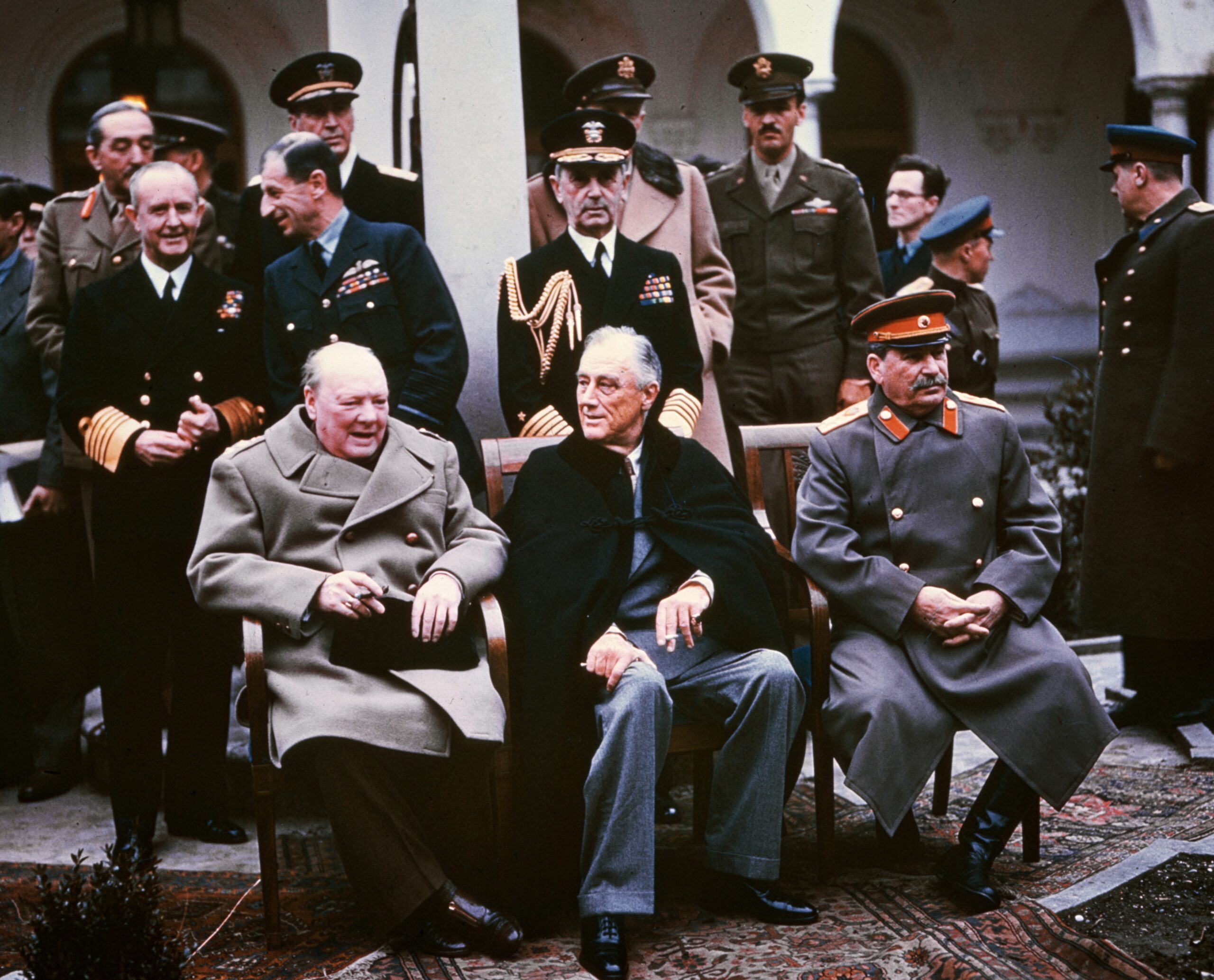
Yalta_summit_1945_with_Churchill,_Roosevelt,_Stalin

Yalta summit in February 1945 with (from left to right) Winston Churchill, Franklin Roosevelt and Joseph Stalin. Also present are USSR Foreign Minister Vyacheslav Molotov (far right); Field Marshal Alan Brooke, Admiral of the Fleet Sir Andrew Cunningham, RN, Marshal of the RAF Sir Charles Portal, (standing behind Churchill); George Marshall, Army Chief of Staff and Fleet Admiral William D. Leahy, USN, (standing behind Roosevelt).

Share on LinkedInShare on Twitter

In February 1945, as the Second World War in Europe approached its final phase, the leaders of the United States, the United Kingdom, and the Soviet Union gathered in Yalta with the stated aim of shaping the post-war order. At first glance, the conference appears as a moment of alignment, a strategic meeting between allies who had fought a common enemy and were now preparing to secure peace. Yet the appearance of unity at Yalta was far more fragile than it seemed, because beneath the formal agreements and diplomatic language, each side was already positioning itself for what would follow the war rather than how to end it.

Roosevelt arrived with a vision of institutional stability and long-term cooperation, Churchill focused on preserving a balance of power in Europe, and Stalin approached the negotiations with a much more immediate and tangible priority: security through control. These priorities were not inherently incompatible, but they were not equal either. By the time the conference began, Soviet forces had already established a dominant presence across Eastern Europe, and that reality quietly defined the limits of what could actually be negotiated. The discussions at Yalta, therefore, were not taking place on neutral ground in strategic terms; they were taking place within a framework already shaped by military outcomes.

Power on the Ground and the Limits of Diplomacy

One of the most critical aspects of Yalta is that it demonstrates a recurring pattern in international relations: diplomatic agreements rarely override military realities. By early 1945, the Red Army had not only pushed German forces back but had also secured physical control over key territories that would later become central to the Cold War divide.

The Western Allies advocated for democratic processes and representative governments in liberated countries, and these ideas were formally incorporated into the agreements reached at the conference. However, the structure of those agreements left significant room for interpretation, particularly when it came to implementation. The assumption that political outcomes could be shaped independently of military presence proved to be overly optimistic.

This imbalance did not necessarily mean that the Western leaders were unaware of the situation. On the contrary, there was a recognition that pressing too hard against Soviet interests could destabilize the fragile alliance before the war had even ended. The challenge was not simply about defending principles, but about managing risk in a moment where strategic miscalculation could have immediate consequences.
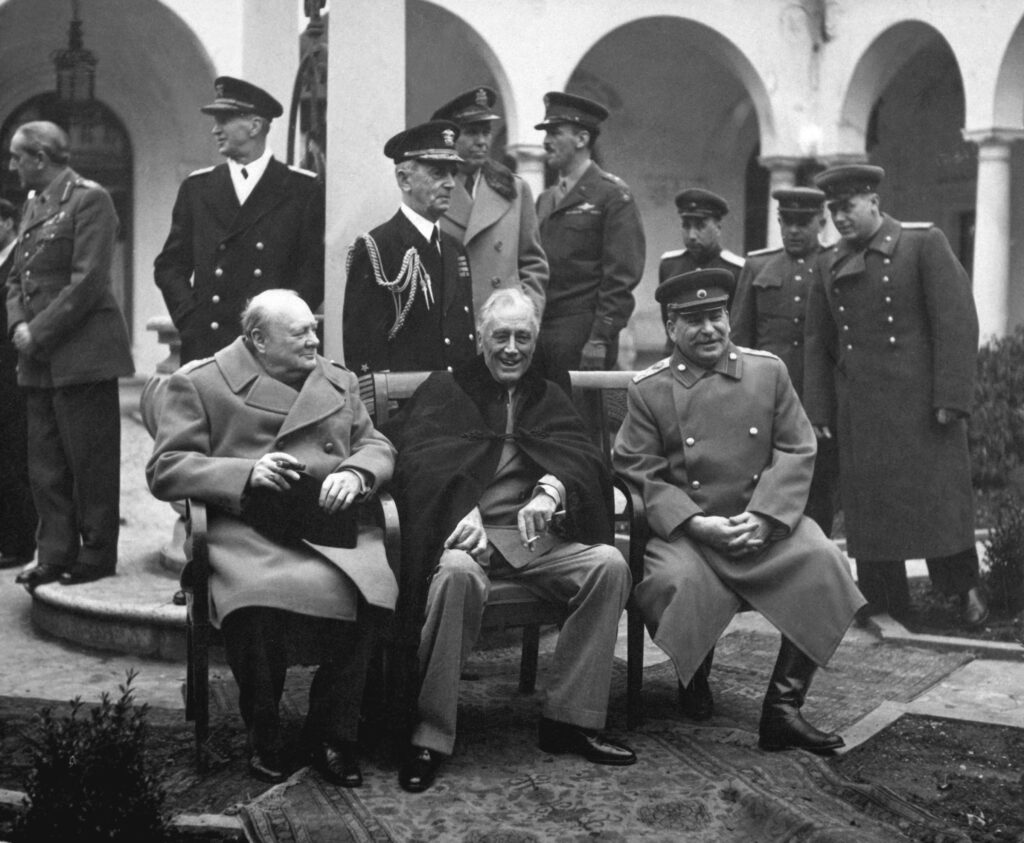
British Prime Minister Winston Churchill, U.S. President Franklin Roosevelt, and Soviet leader Joseph Stalin met at Yalta in February 1945 to discuss their joint occupation of Germany and plans for postwar Europe. Behind them stand, from the left, Field Marshal Sir Alan Brooke, Fleet Admiral Ernest King, Fleet Admiral William D. Leahy, General of the Army George Marshall, Major General Laurence S. Kuter. February 1945.

Eastern Europe and the Logic of Strategic Depth

The most contentious and consequential issue discussed at Yalta was the future of Eastern Europe, particularly Poland. For the Western Allies, Poland represented a matter of political legitimacy and credibility, especially given that the war had, in many ways, begun with the defense of Polish sovereignty.

For the Soviet Union, however, Poland was not primarily a political question. It was a geographic and strategic one. Historically, Russia had experienced repeated invasions from the west, and the creation of a buffer zone was seen as essential to preventing future threats. This perspective fundamentally shaped Stalin’s approach to negotiations.
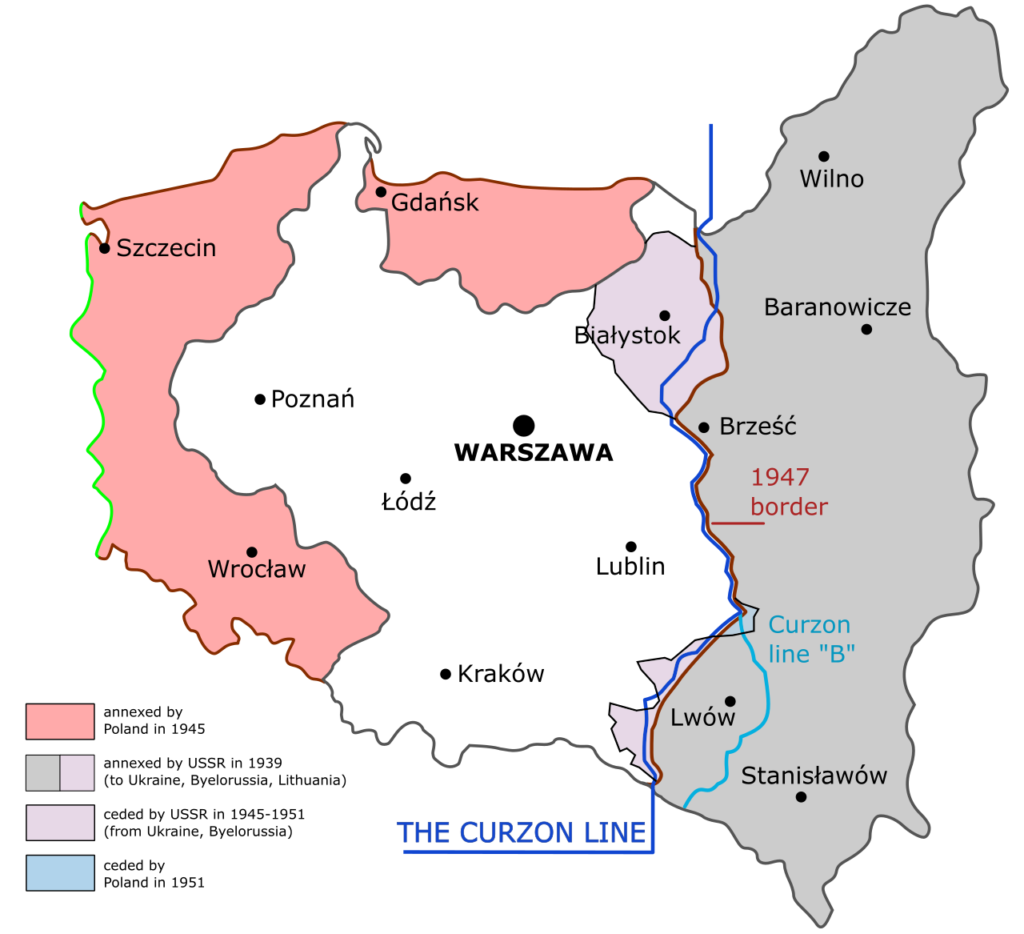
A map presenting Poland and the Curzon Line (World War II). radek.s, CC BY-SA 3.0 https://creativecommons.org/licenses/by-sa/3.0

While the agreements reached at Yalta included provisions for broader political participation and eventual elections, the underlying priority for the Soviet leadership remained unchanged: maintaining influence over the region as a security necessity. The tension between these perspectives was never fully resolved at the conference, and in practice, the side with physical control over the territory held the advantage, which became increasingly evident in the years that followed.

Germany and the Structure of Division

Another major outcome of the Yalta Conference was the agreement to divide Germany into occupation zones, a decision that was initially framed as a temporary administrative measure but would later take on far greater significance. The division of Germany reflected both practical concerns about managing a defeated state and broader strategic considerations about preventing any single power from dominating the region.

Berlin, despite being located deep within the Soviet zone, was also divided among the Allied powers, creating a unique and complex arrangement that would later become one of the most visible symbols of geopolitical tension.
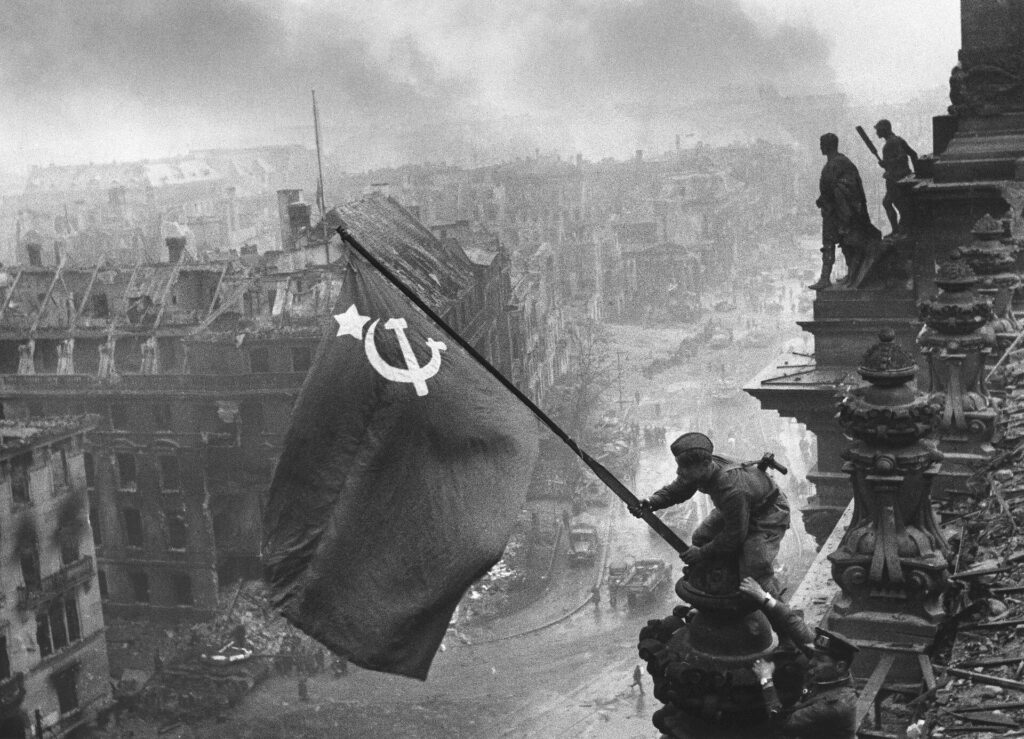
The iconic “Raising a flag over the Reichstag” photo by Yevgeny Khaldei. Published: Ogoniok magazine (No 19, 1945)

At the time, however, the focus was on ensuring control, stability, and the dismantling of Germany’s military capabilities. Yet even here, the logic of influence was already present. The occupation zones were not merely administrative boundaries; they were early indicators of a broader division that would extend beyond Germany and shape the political landscape of Europe for decades.

The United Nations and the Management of Power

While much of the attention surrounding Yalta focuses on division, the conference also played a key role in advancing the creation of the United Nations. This initiative is often interpreted as a reflection of idealism, an effort to build a system that could prevent future conflicts through cooperation and collective security.

However, the structure of the United Nations suggests a more pragmatic approach. The inclusion of veto power for the permanent members of the Security Council ensured that major powers would retain control over critical decisions, effectively preventing the organization from acting against their core interests.

This design was not accidental. It was a recognition that any international system that ignored the realities of power would struggle to function effectively. In this sense, the United Nations can be seen as an attempt to institutionalize balance rather than eliminate competition, providing a platform for coordination while acknowledging that rivalry would continue to exist.
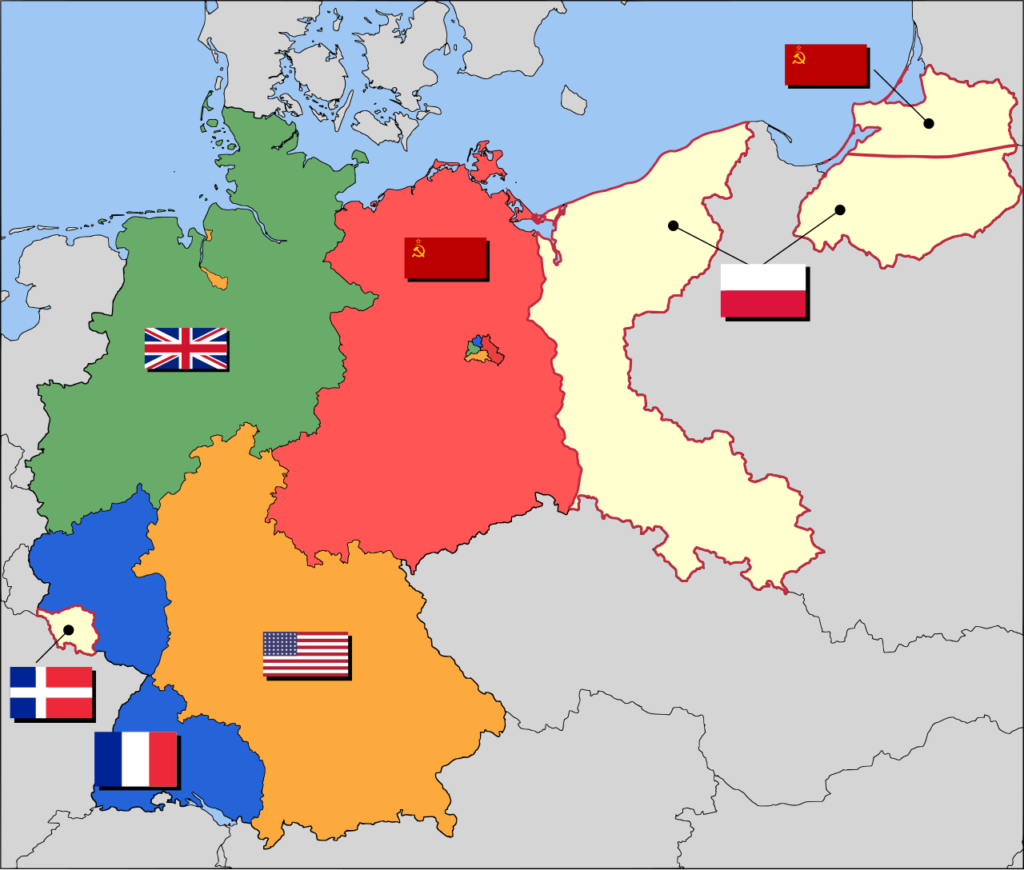
Occupation zone borders in Germany, 1947. The territories east of the Oder-Neisse line, under Polish and Soviet administration/annexation, are shown as cream as is the likewise detached Saar protectorate. Berlin is the multinational area within the Soviet zone. User:52 Pickup, CC BY-SA 2.5 https://creativecommons.org/licenses/by-sa/2.5

The Pacific Dimension and Strategic Trade-Offs

Although Europe was the primary focus of Yalta, the conference also addressed the ongoing war in the Pacific. The United States sought Soviet involvement in the campaign against Japan, recognizing that such participation could accelerate the end of the conflict and reduce the potential cost of invasion.

Stalin agreed to enter the war against Japan, but this agreement came with conditions, including territorial and strategic concessions in East Asia. This reflects a broader pattern in which immediate military objectives were linked to long-term geopolitical gains.

The Pacific agreements illustrate that Yalta was not limited to resolving European issues. It was also a platform for negotiating influence in other regions, reinforcing the idea that the post-war order was being shaped across multiple fronts simultaneously.
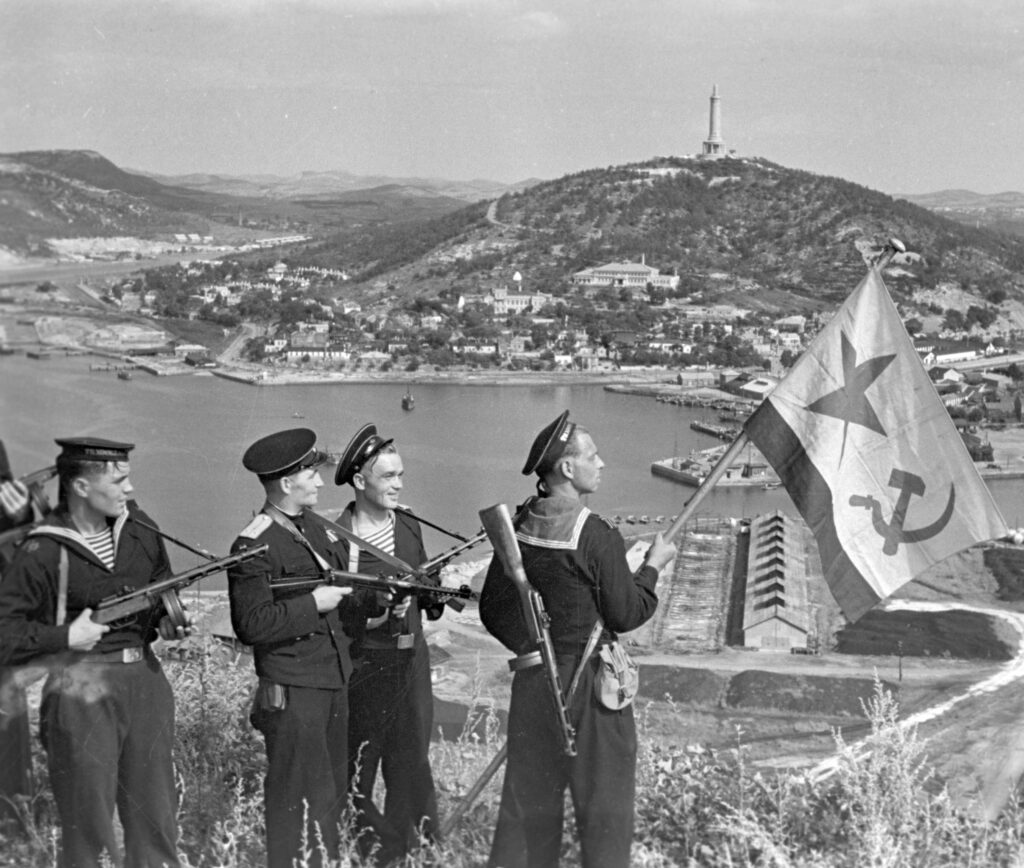
“Hoisting the banner in Port-Artur. WWII (1941-1945)”. Pacific Fleet marines are hoisting the banner in Port-Artur. WWII (1941-1945). Photo made on August 25, 1945. RIA Novosti archive, image #834147 / Haldei / CC-BY-SA 3.0, CC BY-SA 3.0 https://creativecommons.org/licenses/by-sa/3.0, via Wikimedia Commons

A Conference Between War and Rivalry

Looking back, Yalta occupies a unique position between cooperation and competition. It was a conference held by allies, but it revealed the early contours of a post-war rivalry that would soon define international relations.

Rather than viewing Yalta as a moment that simply divided the world, it may be more accurate to see it as a point where existing divisions became structured and formalized. The agreements reached were significant, but they were also constrained by the realities of power, geography, and timing. What emerged from Yalta was not a stable equilibrium, but a managed transition from one form of conflict to another.

For anyone examining modern geopolitics, Yalta remains relevant not because of its specific outcomes, but because of what it demonstrates about how global systems are shaped. When wars end, the transition to peace is defined by who holds influence, how that influence is negotiated, and what compromises are accepted in the moment.

Sources

  • Encyclopaedia Britannica – Yalta Conference
  • U.S. Department of State, Office of the Historian – The Yalta Conference, 1945
  • Encyclopaedia Britannica – Eastern Bloc and Post-War Europe

Previous Post

A-10 Thunderbolt II: A Platform Built Around Purpose

Related Posts

Desert Storm and the War Within the War
History & Legacy

Desert Storm and the War Within the War

March 23, 2026
WAR & CONFLICT BOOKERA: KOREAN WAR/PERSONALITIES & POLITICS
History & Legacy

Douglas MacArthur: Power, Command, and the Boundaries of Strategy

March 19, 2026
Türkei, Dardanellen, MG-Stellung
History & Legacy

Gallipoli Campaign: When Strategy Met Reality

March 18, 2026
The SAS Legacy: The Hidden Brotherhood of Special Forces
History & Legacy

The SAS Legacy: The Hidden Brotherhood of Special Forces

March 16, 2026
Kalashnikov and Stoner: Two Designers, Two Philosophies, One Global Debate
History & Legacy

Kalashnikov and Stoner: Two Designers, Two Philosophies, One Global Debate

March 11, 2026
Operation Urgent Fury: The 1983 Grenada Intervention and the Lessons of a Rapid Military Intervention
History & Legacy

Operation Urgent Fury: The 1983 Grenada Intervention and the Lessons of a Rapid Military Intervention

March 6, 2026
  • Trending
  • Comments
  • Latest
Blackwater PMC

After Blackwater: How PMCs Evolved, Professionalized, and Fragmented

September 13, 2025
Blackwater PMC

Inside Iraq’s Security Market: How Private Power Shapes a Fragile State

October 6, 2025
Operation Enduring Freedom

What Exactly Is a Private Military Company (PMC)?

September 6, 2025
FeisalPartyAtVersaillesCopy

T. E. Lawrence: Strategic Influence, Cultural Depth, and the Enduring Architecture of a Legacy

January 26, 2026
A Historic $142 Billion Arms Deal: Unpacking the U.S.-Saudi Agreement

A Historic $142 Billion Arms Deal: Unpacking the U.S.-Saudi Agreement

A Silent Revolution on the Battlefield: AI-Enabled Tactical Communication Systems

A Silent Revolution on the Battlefield: AI-Enabled Tactical Communication Systems

Cominf.org, CC BY-SA 3.0 , via Wikimedia Commons

Is Europe Really Reducing Its Dependence on Russian Gas?

What is ITAR? The Invisible Line in Global Defense Trade

What is ITAR? The Invisible Line in Global Defense Trade

Yalta_summit_1945_with_Churchill,_Roosevelt,_Stalin

Yalta: The Conference That Divided the Post-War World

March 25, 2026
A-10 Thunderbolt II: A Platform Built Around Purpose

A-10 Thunderbolt II: A Platform Built Around Purpose

March 24, 2026
Desert Storm and the War Within the War

Desert Storm and the War Within the War

March 23, 2026
WAR & CONFLICT BOOKERA: KOREAN WAR/PERSONALITIES & POLITICS

Douglas MacArthur: Power, Command, and the Boundaries of Strategy

March 19, 2026

Recent News

Yalta_summit_1945_with_Churchill,_Roosevelt,_Stalin

Yalta: The Conference That Divided the Post-War World

March 25, 2026
A-10 Thunderbolt II: A Platform Built Around Purpose

A-10 Thunderbolt II: A Platform Built Around Purpose

March 24, 2026
Desert Storm and the War Within the War

Desert Storm and the War Within the War

March 23, 2026
WAR & CONFLICT BOOKERA: KOREAN WAR/PERSONALITIES & POLITICS

Douglas MacArthur: Power, Command, and the Boundaries of Strategy

March 19, 2026
Drill & Defense

Drill & Defense is an independent platform providing insights into firearms, defense technologies, and energy sectors. We deliver clear, practical content for professionals, enthusiasts, and industry followers worldwide.

Follow Us

Browse by Category

  • Cross-Sector Insights
  • Defense
  • Defense & Energy Strategy
  • Defense Know-How
  • Defense Technologies
  • Energy
  • Energy Insight
  • Energy Technologies
  • Global Security & Trade Analysis
  • History & Legacy
  • Industry News
  • Knowledge Base
  • Legacy Systems & Structures
  • Market Trends & Analysis
  • Military Market Reports
  • Oil & Gas News
  • Resource Wars & Strategy
  • Tech & Innovation Crossover
  • Turning Points in Conflict
  • Weapon & Gear Reviews

Recent News

Yalta_summit_1945_with_Churchill,_Roosevelt,_Stalin

Yalta: The Conference That Divided the Post-War World

March 25, 2026
A-10 Thunderbolt II: A Platform Built Around Purpose

A-10 Thunderbolt II: A Platform Built Around Purpose

March 24, 2026

© 2026 Drill & Defense. All rights reserved. Independent insights on firearms, defense, and energy. For business inquiries: info@drillanddefense.com | PRIVACY POLICY | COOKIE POLICY | TERMS AND CONDITIONS

Manage Consent

We use cookies to improve your experience. You can accept or refuse cookies; however, some features may not function properly without your consent.

Functional Always active
The technical storage or access is strictly necessary for the legitimate purpose of enabling the use of a specific service explicitly requested by the subscriber or user, or for the sole purpose of carrying out the transmission of a communication over an electronic communications network.
Preferences
The technical storage or access is necessary for the legitimate purpose of storing preferences that are not requested by the subscriber or user.
Statistics
The technical storage or access that is used exclusively for statistical purposes. The technical storage or access that is used exclusively for anonymous statistical purposes. Without a subpoena, voluntary compliance on the part of your Internet Service Provider, or additional records from a third party, information stored or retrieved for this purpose alone cannot usually be used to identify you.
Marketing
The technical storage or access is required to create user profiles to send advertising, or to track the user on a website or across several websites for similar marketing purposes.
  • Manage options
  • Manage services
  • Manage {vendor_count} vendors
  • Read more about these purposes
View preferences
  • {title}
  • {title}
  • {title}
No Result
View All Result
  • Defense
    • Industry News
    • Weapon & Gear Reviews
    • Defense Technologies
    • Military Market Reports
  • Energy
    • Oil & Gas News
    • Energy Technologies
    • Market Trends & Analysis
  • Cross-Sector Insights
    • Defense & Energy Strategy
    • Global Security & Trade Analysis
    • Tech & Innovation Crossover
  • History & Legacy
    • Turning Points in Conflict
    • Legacy Systems & Structures
    • Resource Wars & Strategy
  • Knowledge Base
    • Defense Know-How
    • Energy Insight
  • About
  • Contact
  • Login
  • Register

© 2026 Drill & Defense. All rights reserved. Independent insights on firearms, defense, and energy. For business inquiries: info@drillanddefense.com | PRIVACY POLICY | COOKIE POLICY | TERMS AND CONDITIONS