

Written by Ido Kalev.

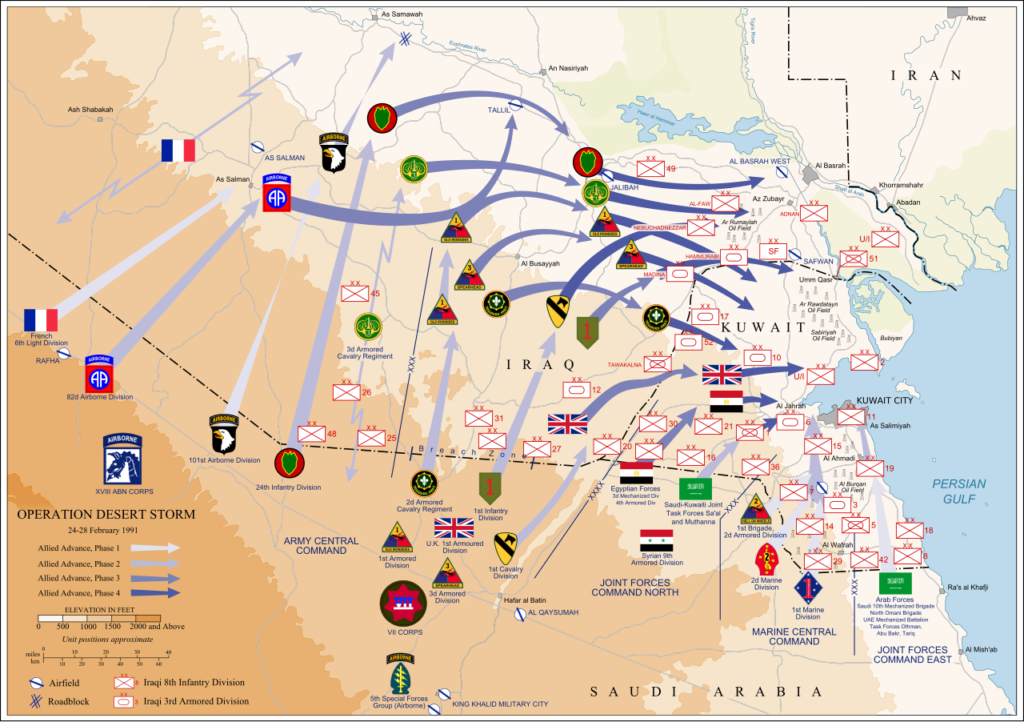
Desert Storm is often remembered as a model of modern warfare: overwhelming force, coalition unity, technological superiority, and a rapid military outcome that seemed to confirm the promise of a new era in war. But that memory is too clean.
Beneath the air campaign, the ground offensive, and the liberation of Kuwait, another struggle was unfolding, one that revealed far more about the political limits of military power, the difficulty of suppressing mobile missile threats, and the strategic weight of restraint under pressure. Saddam Hussein understood something essential from the start. He was unlikely to defeat the U.S.-led coalition militarily in conventional terms. Yet a battlefield victory was not necessary to alter the course of the war. What he needed was a political fracture.
Israel was central to that logic. By launching Scud missiles at Israeli cities, Saddam was not simply trying to inflict damage. His aim was to pull Israel into the war, fracture the Arab component of the coalition, and transform a campaign to reverse aggression against Kuwait into a broader regional conflict with a different political character.
In that sense, Desert Storm was never only a war about Kuwait. It was also a war about coalition durability, escalation control, and whether military success could survive sustained political pressure.
The war is remembered for its speed, but it should also be remembered for its friction. Because Desert Storm exposed something that still matters today: coalition warfare is rarely tested only by the enemy’s strength. The real test often lies in the enemy’s ability to strike where political tolerance, alliance cohesion, and public pressure are weakest. And Saddam aimed directly at that fault line.
Coalition Strength and Political Fragility
The coalition itself was one of the war’s greatest achievements. It brought together the United States, Britain, France, Arab states, and others under a shared objective that was strategically clear and politically disciplined: reverse Iraq’s invasion of Kuwait and restore the regional order Saddam had violated.
That unity mattered as much politically as militarily. It provided legitimacy, broadened regional support, reduced the appearance of a purely Western intervention, and gave the campaign a structure far more powerful than a simple bilateral confrontation between Iraq and the United States.
But the strength of a coalition is also its vulnerability. The broader and more diverse the alliance, the more it depends on narrative control, common political purpose, and the ability to contain side effects that could splinter the whole arrangement. Saddam understood this. He knew that if Israel entered the war directly, the coalition might not collapse completely, but its Arab component would face enormous strain. Public pressure, ideological pressure, and regional optics would all shift immediately.
The Scud campaign was therefore not only a missile campaign. It was a coalition-fracture strategy. This is what made it so dangerous. The missiles themselves were imprecise, and their military value in conventional battlefield terms remained limited. Their purpose, however, was never purely military. They were directed at the coalition’s political architecture.
That remains one of the clearest lessons of Desert Storm. States and non-state actors alike often recognize that defeating a stronger enemy symmetrically is not required. Instead, targeting the structure that holds that power together can be enough. In some cases, that structure is logistics; in others, public legitimacy or alliance cohesion. Saddam targeted all three, but Israel was the most politically sensitive lever available.
The Scud Hunt and the Limits of Technology
The search for the Scud launchers quickly revealed another truth: mobile missile threats are among the most frustrating targets in modern war.
On paper, the problem seemed manageable. Iraq’s launchers would be identified, tracked, and destroyed from the air or by special operations teams operating deep in the desert. In practice, the reality proved far more complex.
Mobile launchers do not behave like fixed infrastructure. They move, disperse, hide, relocate, and exploit terrain, timing, deception, and the natural limitations of real-time intelligence. Detection windows remain short, confirmation is difficult, and battle damage assessment is often ambiguous. Decoys complicate targeting, and vast terrain magnifies uncertainty.
This is where Desert Storm collided with one of the enduring illusions of modern warfare: the belief that technological superiority automatically resolves the problem of elusive targets. That assumption does not hold.
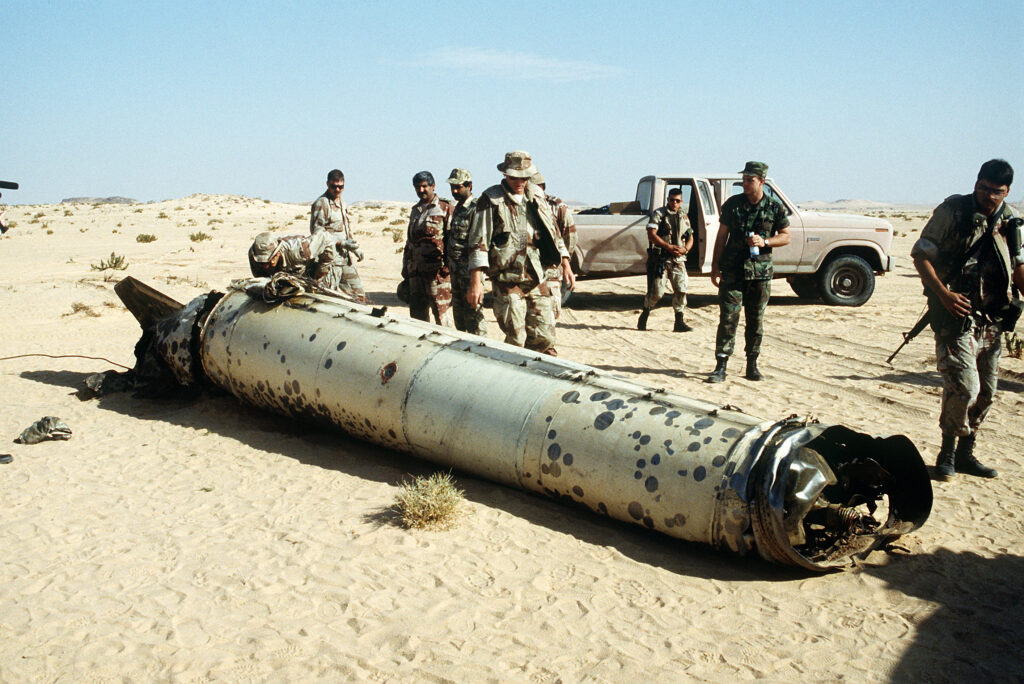
Technology can compress time, improve sensing, accelerate strike cycles, and increase reach. Yet it cannot remove the fundamental friction of war. Uncertainty remains, and there is no guarantee that a target will stay in place long enough for the chain of detection, decision, and destruction to function cleanly.
The Scud hunt exposed that gap with clarity. It also revealed the limits of air power when confronted with fleeting targets in difficult environments. Air power was decisive in Desert Storm overall, but even decisive tools have boundaries. The coalition could dominate the skies and still struggle to suppress a mobile missile threat quickly enough to satisfy the political pressure created by each new launch.
That distinction matters. A campaign may be operationally successful while remaining strategically uncomfortable. It can dominate most of the battlefield and still face pressure from a secondary threat with disproportionate political impact.
Special Operations and the Reality Behind the Myth
This is where special operations forces entered the picture in a way that has often been remembered more romantically than accurately.
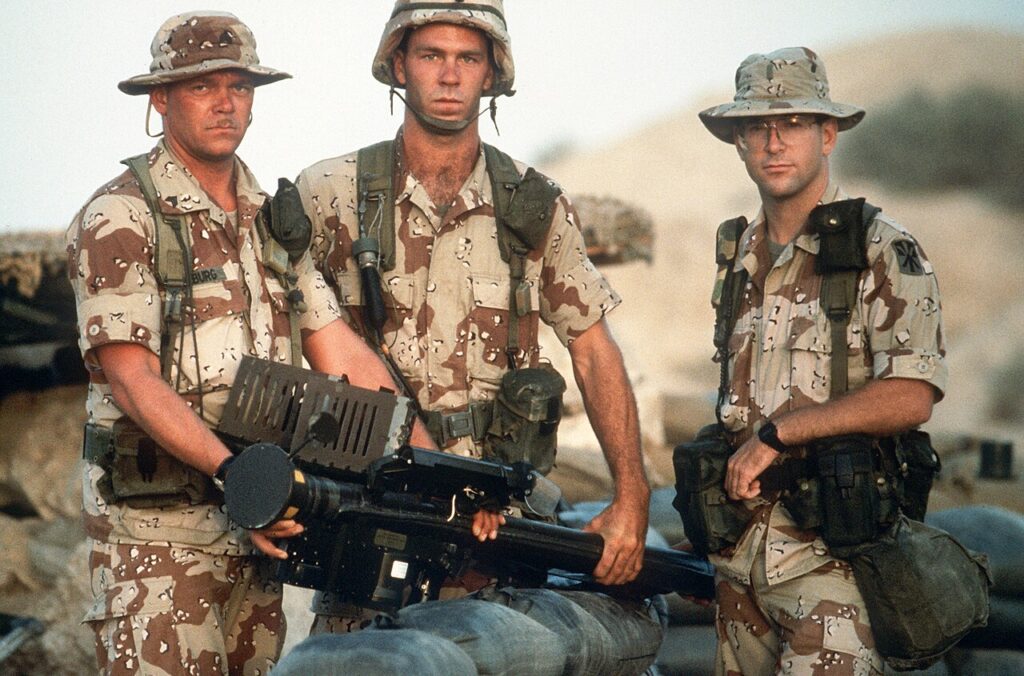
British SAS patrols and American teams were sent into western Iraq to locate launchers, observe movement, direct strikes, and pressure the Scud network. Their courage, endurance, and professionalism were real. Their presence reflected the logic of the mission: when mobile launchers are too elusive for remote targeting alone, proximity becomes necessary.
But Desert Storm also revealed the mythology that often surrounds elite units. Special operations forces are not a substitute for intelligence certainty, nor can they eliminate the constraints of distance, concealment, deception, and time. They extend reach, sharpen awareness, create opportunities, and impose pressure. They can make a difficult problem more manageable, but they do not turn an elusive threat into a simple one.
Public perception often focuses on the strike, the raid, and the visible moments of heroism. What remains unseen is the uncertainty, the dead time, the failed leads, the incomplete picture, the false sightings, and the slow, methodical effort required to deal with a problem that resists clarity.
That is what makes the Scud hunt so instructive. It was not a story of easy suppression. It was a story of friction within superiority.
Israeli Restraint as Strategic Action
And this is where the Israeli dimension becomes especially important.
Israel was under direct attack. Civilians were threatened. The pressure to respond was not theoretical. It was emotional, political, and strategic. A sovereign state was being hit and effectively asked to absorb it.
That is not a small request.
Israel’s restraint during Desert Storm is often remembered too passively, as if it simply stayed out of the war. That interpretation misses the point. This was not passivity. It was a costly strategic decision.
It meant accepting direct attacks without immediate retaliation in order to preserve a wider coalition whose value extended beyond immediate emotional or political logic. It required carrying a public burden while trusting that broader interests were better served through patience.
Such restraint is difficult for any country. It is particularly difficult for one whose deterrence is central to its security culture and whose population expects a response when attacked.
In that sense, Israeli restraint was not the absence of power. It was a disciplined expression of it.
But restraint always carries a cost. One of the deeper lessons that remained in Israel long after Desert Storm ended was clear: when dealing with missile threats, external assurances have limits.
The coalition hunted the launchers. American efforts were intensive. British and American special operations units operated deep inside western Iraq. Yet suppression was not achieved as cleanly as many might have expected.
That experience reinforced something foundational in Israeli strategic thinking: in matters of missile suppression and direct strategic threat, sovereign capability cannot rely entirely on external guarantees.
For Israel, the lesson endured: no external guarantee can fully replace sovereign capability.
Enduring Lessons of Strategic Friction
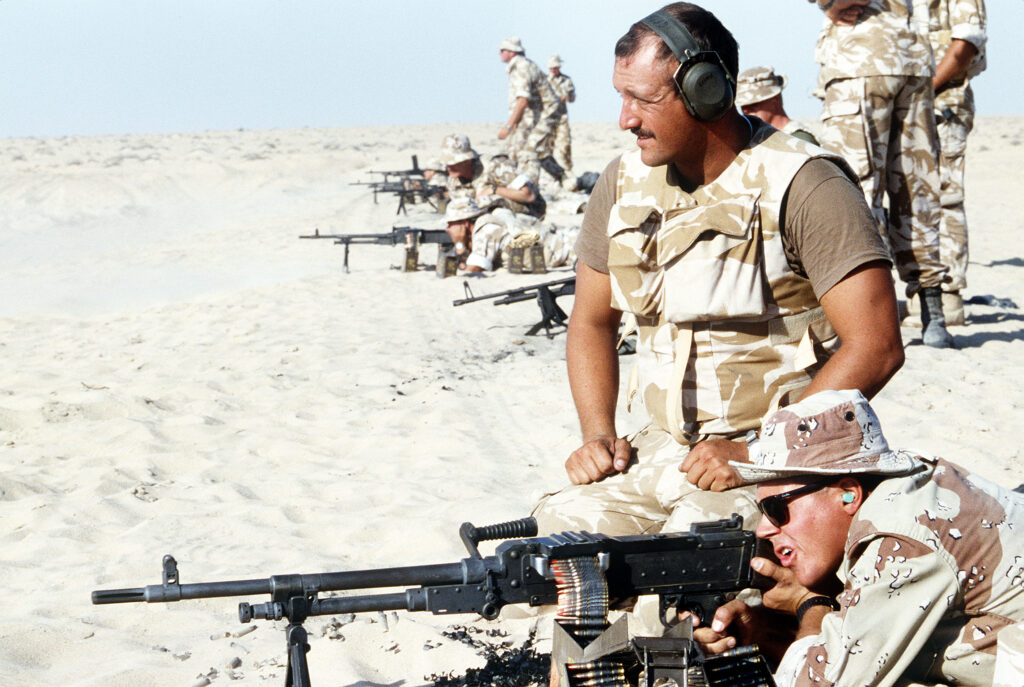
Alliances still matter. Intelligence sharing matters. Joint exercises and operational cooperation remain critical.
At the tactical level, close partners may share trust, training, and a common professional language. But politics operates differently. Even the closest partners are constrained by distinct interests, domestic pressures, coalition sensitivities, and national red lines.
Desert Storm exposed that gap with unusual clarity. The men on the ground may understand one another perfectly. Governments rarely have that luxury.
This is one of the reasons the campaign remains relevant. It warns against simplistic readings of coalition warfare, missile defense, and escalation management. It shows that wars are shaped not only by force ratios and operational plans, but also by the political fragility beneath them.
Missile campaigns are rarely only about physical damage. They shape psychology, influence timing, force decisions, and alter the structure of a conflict by targeting its most sensitive seams.
That logic did not disappear with Saddam Hussein. If anything, it has become more refined.
Iran, Hezbollah, and other actors have all understood that missile and rocket attacks on civilian centers do more than create risk. They generate pressure on leadership, alliances, public tolerance, and the balance between military logic and political patience.
The true target is not only infrastructure. It is the decision-making architecture of the enemy.
That is why Desert Storm should not be remembered simply as a technological triumph or a clean coalition success. It should be understood as an early modern lesson in the complexity of integrated war.
A war can be militarily dominant and still strategically constrained. A coalition can be powerful and still politically delicate. A state can exercise restraint and still pay a real price. Elite units can perform at a high level and still confront unresolved complexity. A missile threat can remain operationally limited while producing significant strategic effects.
These are not contradictions. They are the normal condition of serious war.
There is another reason the campaign still matters. It reveals the recurring temptation to view war as clean and controlled.
Desert Storm is often associated with precision, control, and rapid success. Yet that image can distort understanding. It can lead observers to assume that quick victory at the macro level means internal friction was minor.
It was not.
The Scud campaign, the effort to preserve coalition cohesion, the pressure on Israel, the limits of suppression, and the tension between political necessity and operational reality were central to the war’s meaning.
People rarely engage with the past unless its cost feels present. Misreading Desert Storm today would mean assuming that coalition warfare is inherently stable, that missile threats are easily suppressed, that elite units can resolve strategic problems alone, or that restraint is easier than response.
None of those assumptions hold under closer examination.
Desert Storm succeeded. But that success should not obscure what it revealed.
Modern war is not only about destroying enemy forces. It is also about preserving the political structure of one’s own side.
Mobile missile threats can generate effects far beyond their technical sophistication.
The most difficult problems in war are often not those that dominate the map, but those that shape perception and decision-making.
And one final lesson remains: an adversary that cannot win conventionally may still shape the conflict by targeting points where restraint, alliance cohesion, and public tolerance are hardest to maintain.
Saddam did not need to win the main battle to create a dangerous secondary one.
That secondary struggle is one of the main reasons Desert Storm still deserves close study.
Not as nostalgia.
Not as clean victory mythology.
But as a warning.
Because names, maps, and technologies change. The underlying temptation does not: to believe that battlefield superiority resolves political vulnerability.
It does not.
And Desert Storm, beneath its image of speed and dominance, made that reality unmistakably clear.