
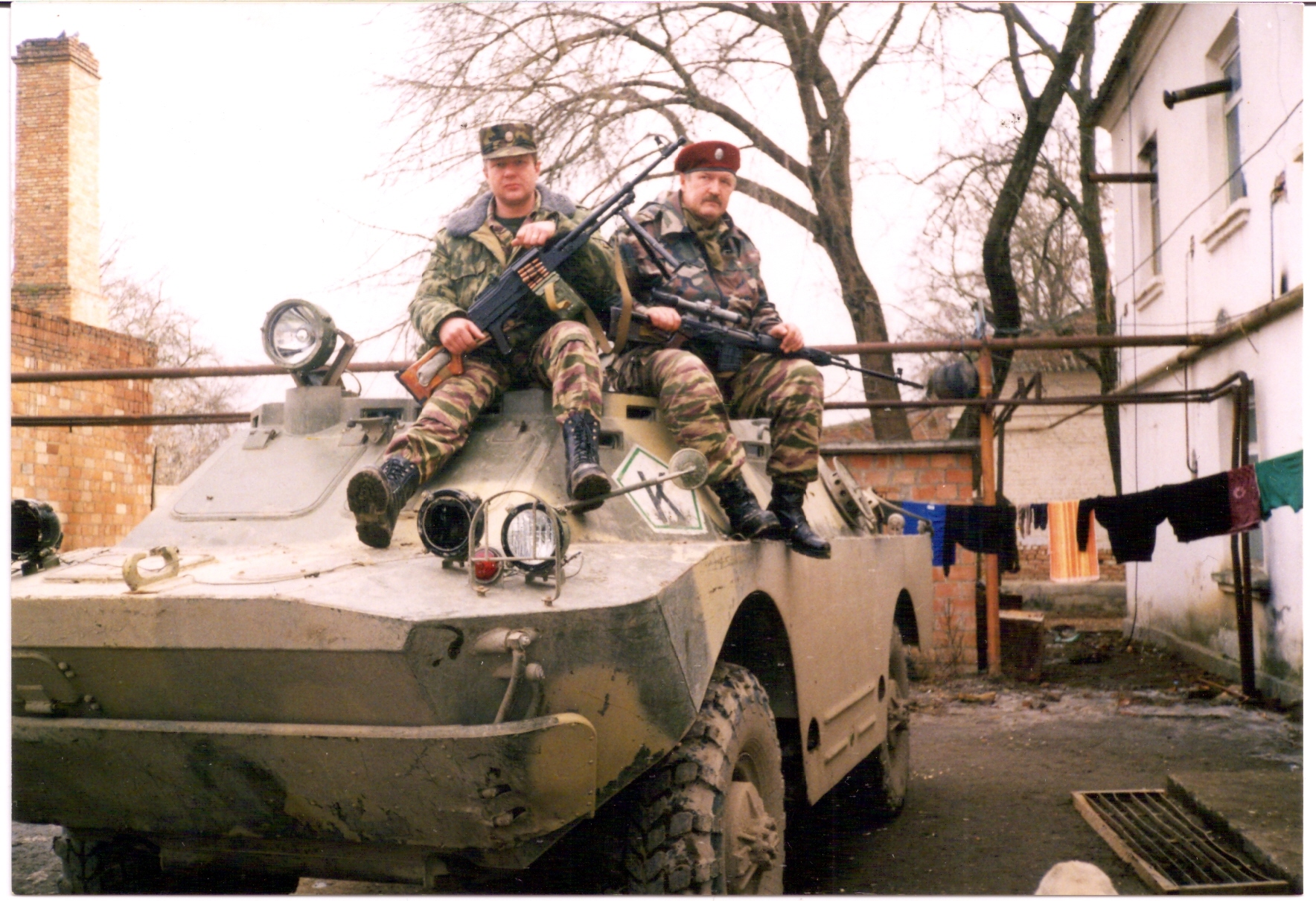
Grozny is one of those names that quietly sits in the background of contemporary conflict debates. We reference it when we talk about Mariupol, Aleppo or Gaza, yet we often do so in shorthand, as if everyone already remembers what happened. For a defense and security audience, going back to Grozny is not about nostalgia for a 90s conflict. It is about understanding what happens when a modern state brings heavy firepower into a dense city and meets an enemy that understands every corner, every stairwell, every blind spot of that environment.

A Capital That Absorbed Two Wars
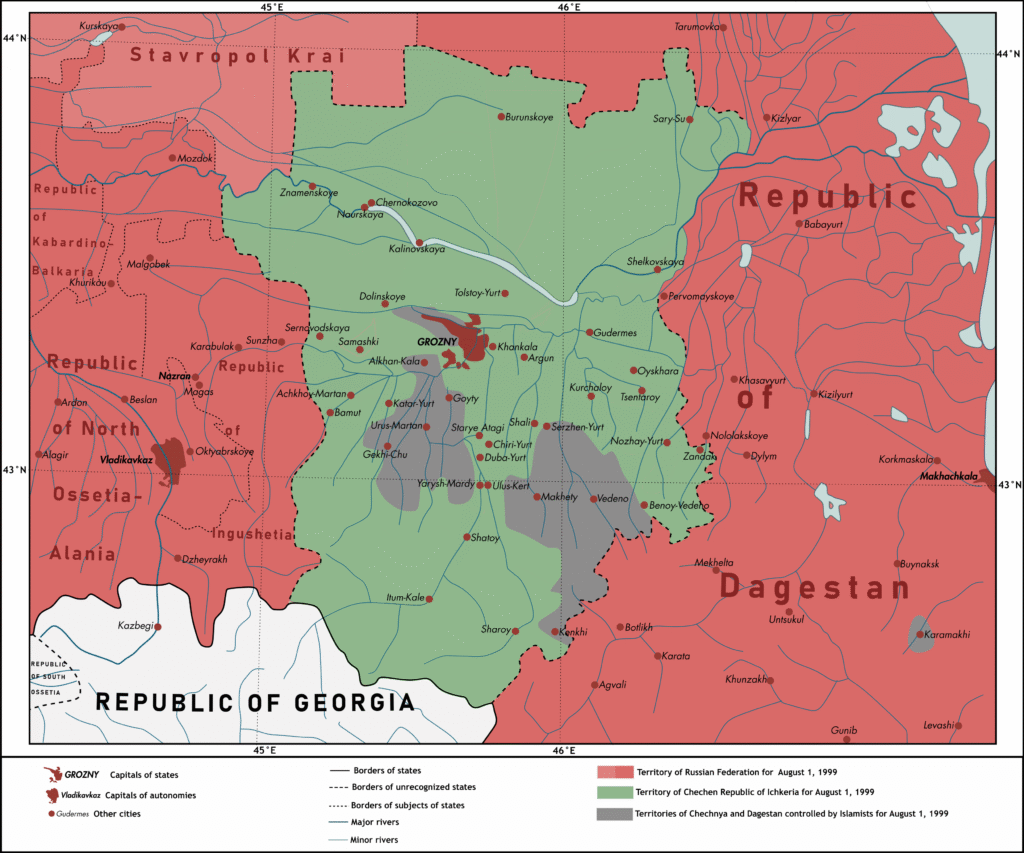
The Battle of Grozny was not a single event. It unfolded in phases, across two Chechen wars between 1994 and 2000. The first war saw Russian forces enter Chechnya in late 1994 and encounter far stronger resistance than anticipated. In roughly twenty months of fighting, estimates for civilian deaths range between about 18,500 and 80,000, a staggering figure for a republic whose pre war population was around 1.1 million.
These numbers are approximate and contested, which is important to remember. They point to orders of magnitude, not precise tallies. Still, even the conservative end of the range tells us that the cost of trying to retake a breakaway republic through high intensity operations was immense, and Grozny was at the center of that cost.
The Most Destroyed City On Earth
By the time the second war rolled through, Grozny had already been badly damaged. The renewed campaign that began in 1999 brought another prolonged siege, extensive shelling and air strikes. In 2003, the United Nations described Grozny as the most destroyed city on earth, a phrase that has been repeated in many assessments of urban warfare ever since.
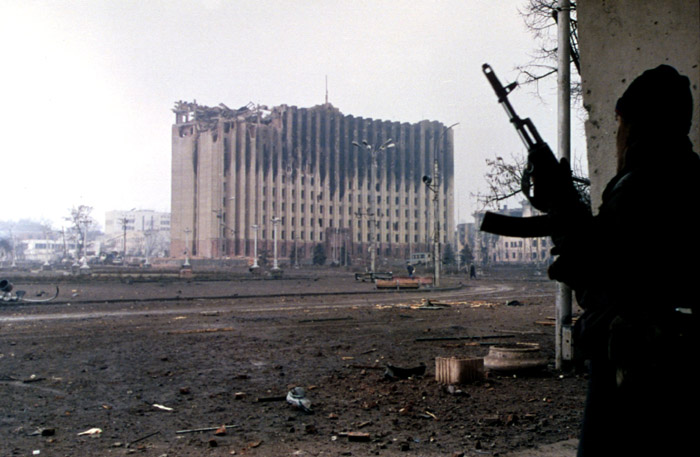
From a purely physical perspective, the urban fabric did not just experience collateral damage. It was systematically degraded. Residential districts, public infrastructure, hospitals and administrative buildings were hit in ways that fundamentally altered the city’s ability to function. For any modern planner or analyst, Grozny is an example of what happens when the line between supporting fire and shaping the entire environment through fire is effectively crossed.
Civilians In The Middle Of Firepower
Behind the statistics lies something even more operationally important. It is the pattern of displacement and civilian exposure. Humanitarian organizations reported hundreds of thousands of people displaced from Chechnya during the height of the fighting, with many fleeing Grozny and its surroundings as intense bombardments and street fighting made normal life impossible.
In parallel, human rights reporting highlighted widespread violations of humanitarian law, including indiscriminate attacks and abuses during sweep operations. One analysis estimated that around 50,000 civilians were killed during the first war alone. For defense professionals, these are not only moral or legal questions. They also shape local perceptions for decades, influence recruitment patterns for insurgent groups and affect the credibility of state institutions long after the last shell has landed.
How The Russian Military Met The City
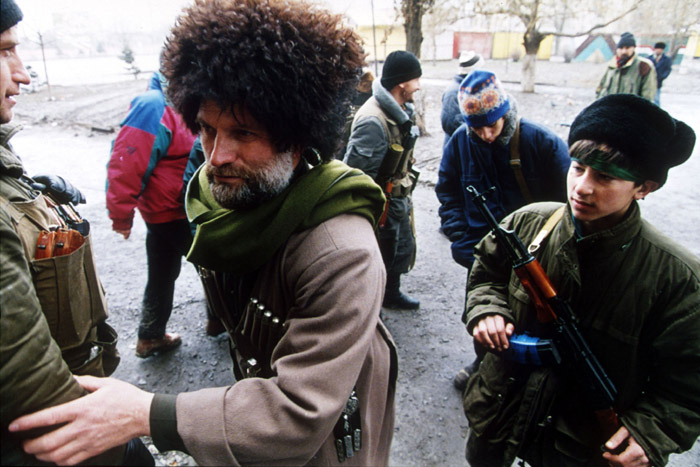
From a military standpoint, the Grozny experience is often described as a lesson in what happens when conventional forces enter a city without adequate preparation. The initial Russian assault in 1994 relied heavily on armored columns and assumed limited resistance. Instead, those columns were canalized into narrow streets, engaged from multiple angles and subjected to sustained anti armor fire by small, mobile Chechen units operating from upper floors and basements.
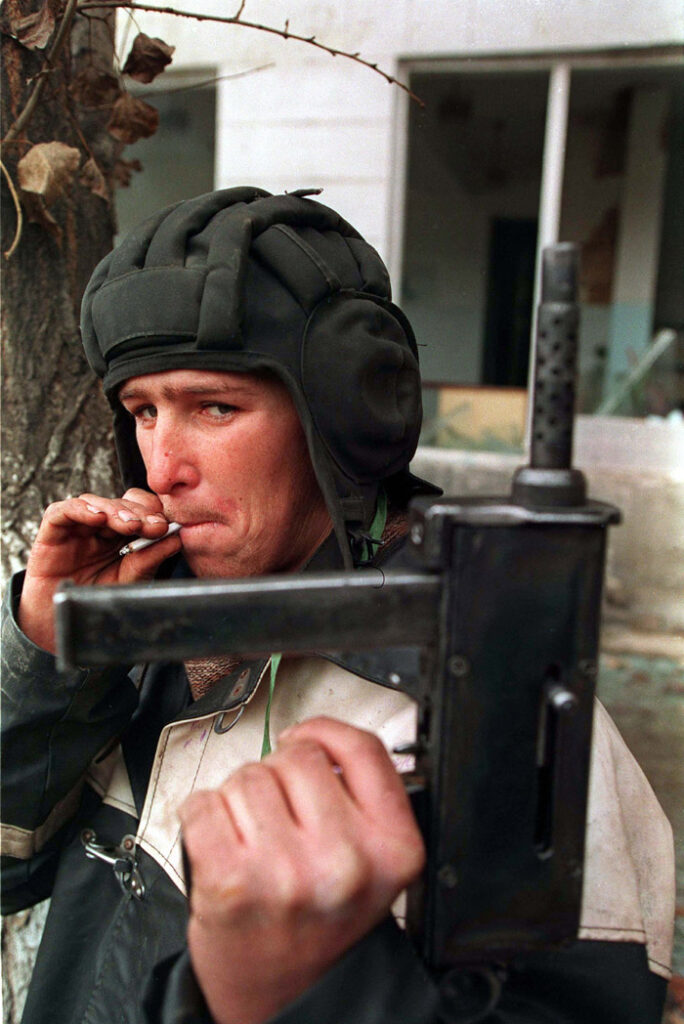
Studies of the campaign point to problems in command and control, coordination between infantry and armor and the lack of training for combined arms operations in dense urban terrain. The result was high casualties, lost vehicles and the gradual realization that city fighting would not resemble maneuver warfare on open ground.
Adaptation, Firepower And The Second Battle
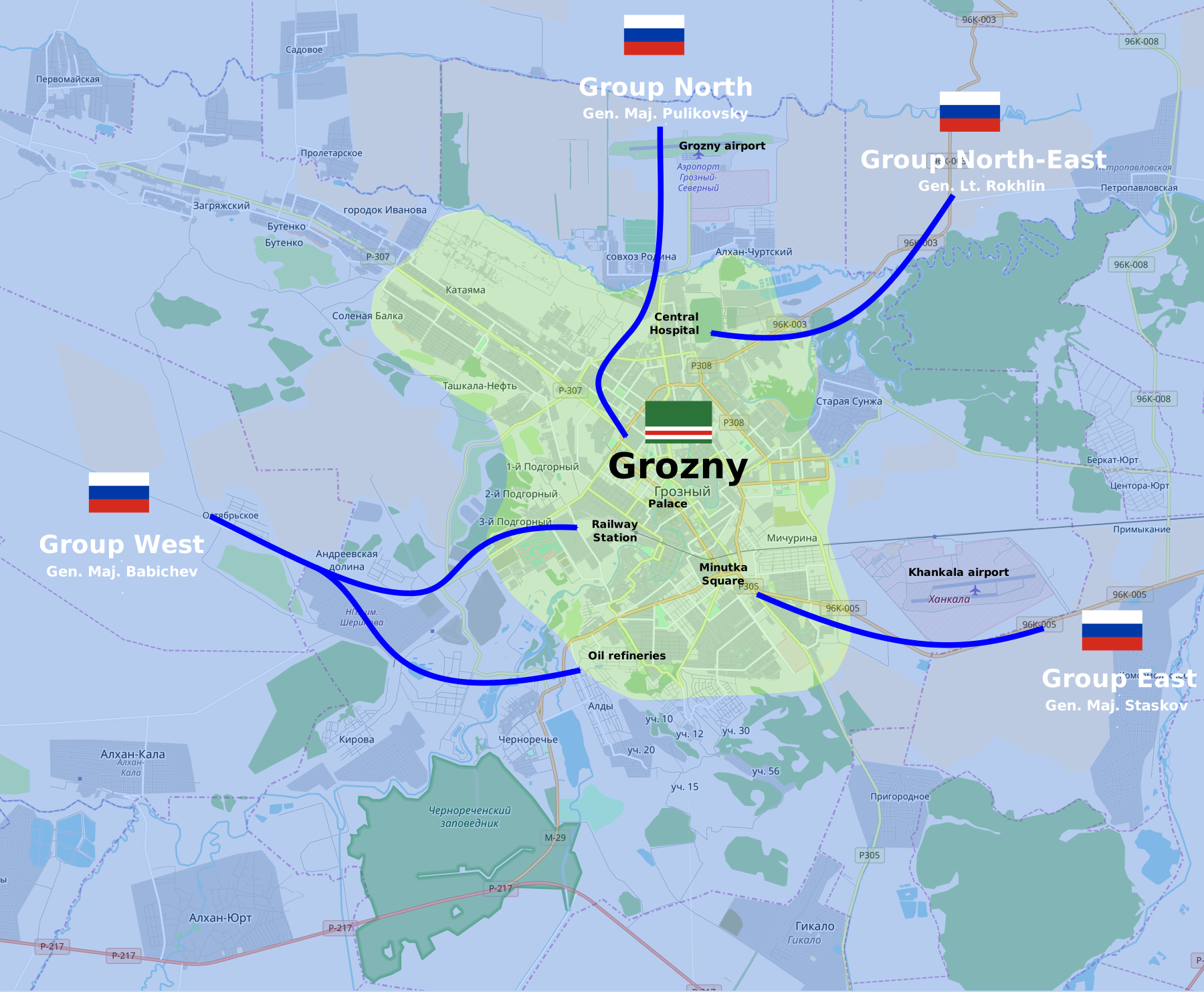
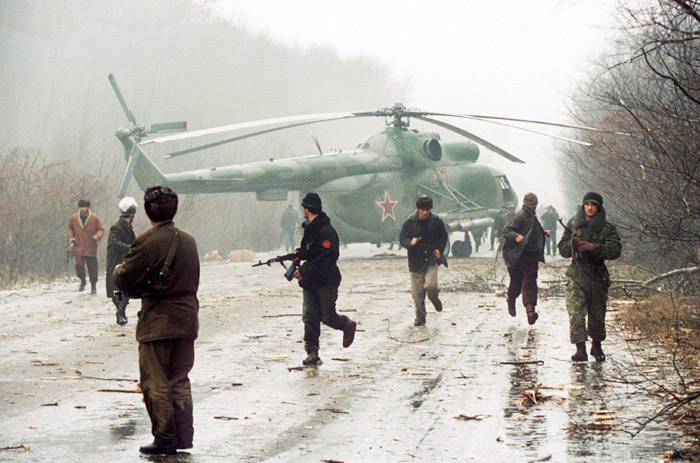
When the second Chechen war intensified at the end of 1999, the Russian approach to Grozny had changed. Instead of driving large armored units directly into the city center, operations started with encirclement, sustained long range fire and a more methodical advance through districts. Tactically, this reduced some of the earlier exposure of armor to close range ambushes. Strategically, however, it increased the dependence on heavy explosive force in populated areas.
Estimates for the 1999 to 2000 siege suggest that between 5,000 and 8,000 civilians were killed in that phase of the war alone. The city eventually fell, but at a cost that continues to frame discussions about proportionality, necessity and the trade off between force protection and civilian protection in urban campaigns.
Explosive Weapons In Cities And The Civilian Ratio
Grozny is also frequently cited in broader debates about the use of explosive weapons in populated areas. Analyses of conflicts with similar patterns of bombardment indicate that such weapons tend to kill civilians far more often than combatants, with some research pointing to a ratio of around nine civilians for every one fighter in dense urban contexts.
The exact ratio in Grozny will likely never be known with certainty, yet the outcome on the ground fits this wider pattern. When artillery, multiple rocket launch systems and air delivered munitions are used extensively in a city, damage spreads horizontally and vertically, cutting across tactical targets and civilian life in ways that are very hard to separate.
The Long Shadow: Institutions, Law And Impunity
Even after the large scale fighting ended, Grozny and the wider region remained associated with enforced disappearances, allegations of torture and limited accountability for serious abuses. Human rights organizations have repeatedly pointed to a persistent culture of impunity in the North Caucasus, where many cases of extrajudicial killing and disappearance remain unresolved.
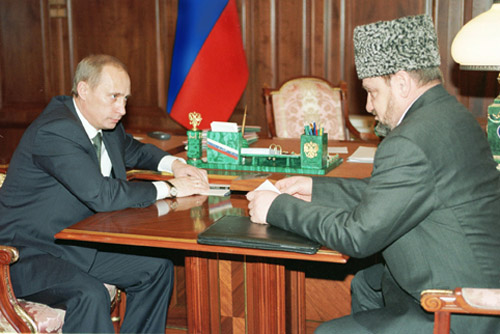
For a security analysis platform, this is not just a human rights footnote. It affects long term stability, the relationship between security forces and the population and the credibility of any governance structure that emerges after a war. In other words, how a city is retaken and controlled is just as important as the fact that it is retaken at all.
What Grozny Still Tells Today’s Planners
When we look at Grozny from today’s vantage point, we see several overlapping layers that remain relevant for current and future conflicts. First, urban operations cannot treat the city as an empty grid. Grozny showed that local knowledge, small unit initiative and adaptive tactics can offset major disadvantages in equipment and numbers, at least for a time.
Second, heavy firepower can solve short term tactical problems in a city, yet it does so by creating strategic and political challenges that last for generations. Destroyed infrastructure, high civilian casualties and unresolved abuses become part of the security environment that any future force will have to operate in.
Third, the legal and ethical dimension is not an external constraint. It is integrated into how modern armed forces are perceived, how alliances function and how legitimacy is built or eroded. Grozny sits at the intersection of these questions, which is precisely why it remains a reference point in discussions about urban warfare in Europe, the Middle East and beyond.
Grozny As A Reference, Not A Template
For a platform like Drill and Defense, Grozny is not a template to copy. It is a warning sign on the map of modern warfare. The city shows what can happen when a state confronts an entrenched opponent in its own capital with predominantly kinetic tools and when the protection of civilians becomes a secondary rather than primary planning factor.
If we want to understand where urban conflict is heading, it is not enough to look only at the latest drone footage or the newest precision system. We also need to go back to the ruins of Grozny, to the casualty figures that remain disputed but undeniably high and to the operational reports that detail how units moved, adapted and sometimes failed inside that city. Grozny does not answer every question about urban warfare, but it forces us to ask better ones.
Sources
Human Rights Watch, Chechnya: Report to the 1996 OSCE Review Conference, 1996.
Human Rights Watch, Russia Chechnya, 1997.
RAND Corporation, Olga Oliker, Russia’s Chechen Wars 1994 to 2000 Lessons from Urban Combat, 2001.
International Committee of the Red Cross, reports on Chechnya and the Northern Caucasus, mid 1990s.
Second Chechen War, general background and casualty estimates.
Lawfare, To Bomb One’s People, analysis of explosive weapons in populated areas, 2024.