
Drill & Defense
Advertisement
  • Defense
    • Industry News
    • Weapon & Gear Reviews
    • Defense Technologies
    • Military Market Reports
  • Energy
    • Oil & Gas News
    • Energy Technologies
    • Market Trends & Analysis
  • Cross-Sector Insights
    • Defense & Energy Strategy
    • Global Security & Trade Analysis
    • Tech & Innovation Crossover
  • History & Legacy
    • Turning Points in Conflict
    • Legacy Systems & Structures
    • Resource Wars & Strategy
  • Knowledge Base
    • Defense Know-How
    • Energy Insight
  • About
  • Contact
  • Login
  • Register
No Result
View All Result
  • Defense
    • Industry News
    • Weapon & Gear Reviews
    • Defense Technologies
    • Military Market Reports
  • Energy
    • Oil & Gas News
    • Energy Technologies
    • Market Trends & Analysis
  • Cross-Sector Insights
    • Defense & Energy Strategy
    • Global Security & Trade Analysis
    • Tech & Innovation Crossover
  • History & Legacy
    • Turning Points in Conflict
    • Legacy Systems & Structures
    • Resource Wars & Strategy
  • Knowledge Base
    • Defense Know-How
    • Energy Insight
  • About
  • Contact
  • Login
  • Register
No Result
View All Result
Drill & Defense
No Result
View All Result
Home Knowledge Base

Galil vs AK: When Reliability Meets Standardization

January 14, 2026
in Knowledge Base, Defense Know-How
Galil vs AK: When Reliability Meets Standardization

IDF female soldiers instructing male recruits, some of them immigrants from Ethiopia, in IDF Base Bahad 4. Photo shows: IDF girl-soldiers instructing male recruits, some ethiopian immigrants in IDF Base Bahad 4. Dan Hadani collection / National Library of Israel / The Pritzker Family National Photography Collection, CC BY 4.0 , via Wikimedia Commons

Share on LinkedInShare on Twitter

If you run a defense focused platform long enough, you’ll notice a pattern in how readers talk about rifles. People often treat designs like they appeared overnight, as if a weapon is simply “invented” and then adopted because it is impressive on paper.

But rifles that become symbols usually emerge from a far less romantic place: dust, training realities, procurement constraints, alliance politics, industrial capacity, and the quiet pressure of maintaining readiness when the next crisis may arrive without notice.

That is where the Galil story sits. And it is also why the Galil keeps getting compared to the AK. Not because the two are identical in purpose or doctrine, but because the Galil is best understood as a decision to take a proven operating idea and reframe it inside a different ecosystem.

The problem Israel was actually trying to solve

The most useful way to approach the Galil is to forget the simplistic “copy” narrative and focus on the operational and organizational question Israel faced in the late 1960s: what should a general issue rifle be when your environment is harsh, your manpower system is largely conscript based, and you cannot afford a weapon that punishes imperfect maintenance?

Israel had adopted the FN FAL in the late 1950s. On paper, it was a modern 7.62×51 battle rifle from a highly respected European design lineage. In practice, the FAL’s performance in arid and dusty conditions became a recurring complaint, especially when maintenance discipline varied across units and circumstances. Length and handling also mattered. A full sized battle rifle is not automatically wrong, but it imposes tradeoffs in mobility and close handling that become increasingly visible in fast moving and vehicle heavy environments. The post 1967 period made these issues hard to ignore.
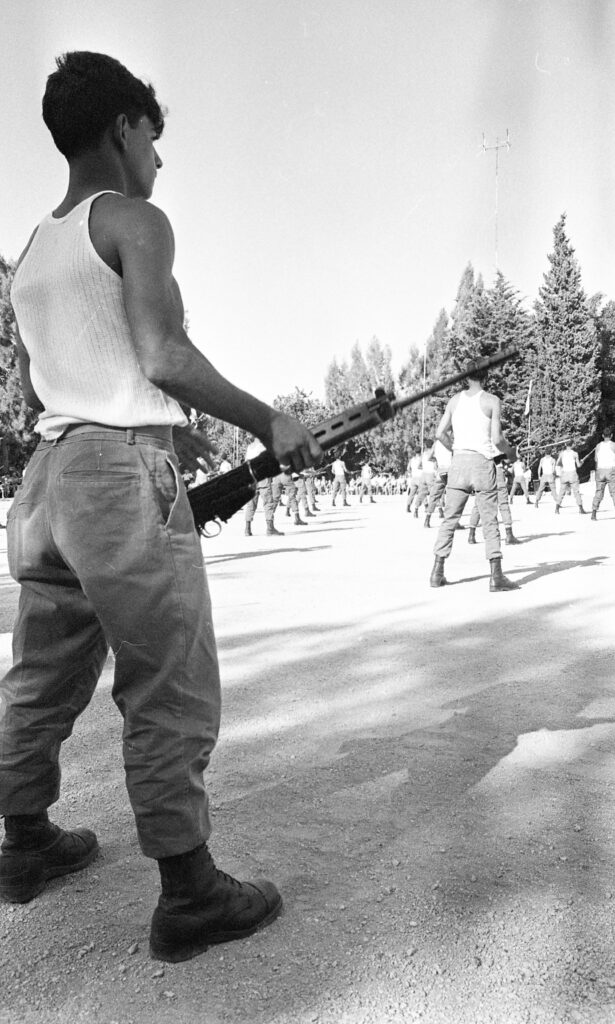
A new police officer training course ended with an impressive display at Shfar’am police camp.
עברית: קורס לשוטרים חדשים הסתיים במפגן מרשים במחנה המשטרה בשפרעם. Photographer: Israel Press and Photo Agency (I.P.P.A.) / Dan Hadani collection, National Library of Israel / CC BY 4.0, CC BY 4.0 https://creativecommons.org/licenses/by/4.0

So the driver was not a single dramatic insight. It was a collection of practical frictions: reliability under dust exposure, handling, training burden, and the broader desire to field something that remained dependable under the imperfect conditions of real operations.
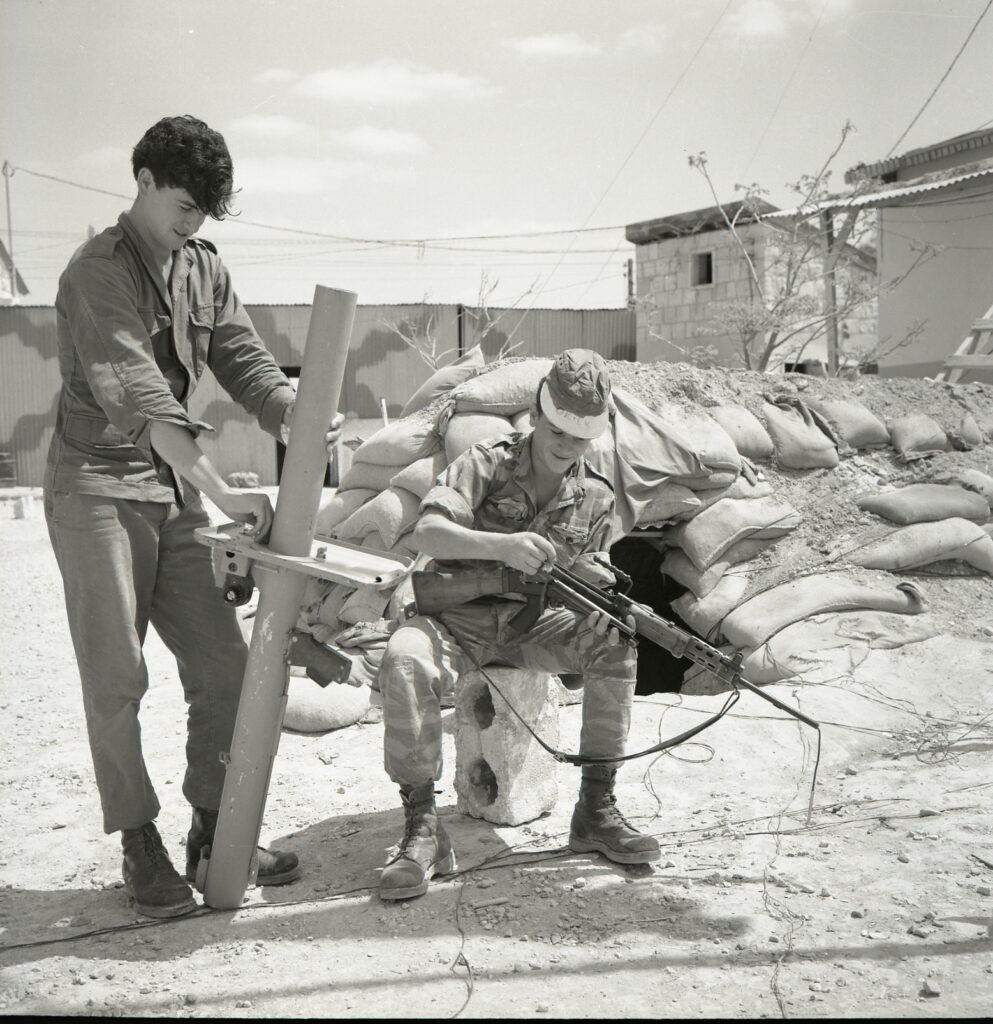
Soldiers on operational duty in the Jordan Valley area. Jordan Rift Valley (Israel and Jordan) Photographs. Boris Carmi /Meitar Collection / National Library of Israel / The Pritzker Family National Photography Collection, CC BY 4.0 https://creativecommons.org/licenses/by/4.0

The AK factor: captured rifles and a blunt lesson

After 1967, Israel captured large numbers of AK pattern rifles. And regardless of how one feels about the AK culturally or politically, it is hard to dismiss what it represented in that context: a system with a reputation for functioning with minimal fuss, even when the user does not treat maintenance as a ritual.

This matters because the AK is not only a rifle, it is a philosophy embedded in steel and springs. It assumes the world is messy. It assumes grit will enter the action. It assumes the user may not have time, tools, or patience. And it tries to keep firing anyway.

For an army thinking about standardization across broad manpower pools and varied training cycles, that reliability logic is not an aesthetic preference. It is a force multiplier.

Why the Galil does not equal the AK, even if it starts there

Mechanically, the Galil is built around the Kalashnikov pattern: long stroke piston, rotating bolt, and the general architecture associated with the AK family. That is not controversial. What often gets missed is the layer built on top of it: design choices aimed at better user interface and better integration with a Western style logistics and training environment.

A key piece here is the Finnish Valmet RK 62 influence. The RK 62 was itself an AK derived rifle, but it represented a refinement path: improved sights, robust build standards, and a different approach to finishing and ergonomics. Multiple sources note the Galil’s direct relationship to the RK 62, including the use of RK 62 receivers in early production and the broader design lineage.
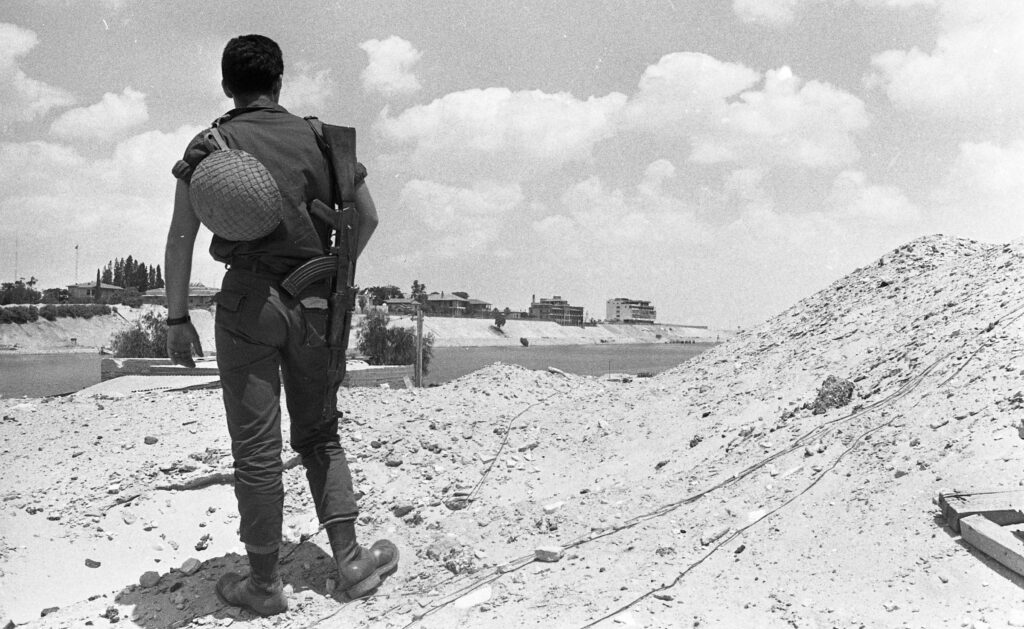
Red Cross officials on the eastern Israeli side of the Suez Canal arriving at the spot where the body of the Israeli soldier who was kidnapped and killed by the Egyptian Commando unit will be returned.
עברית: פקידים רשמיים של הצלב האדום בגדה המזרחית, הישראלית, של תעלת סואץ, מגיעים לנקודה שבו תוחזר גופתו של החייל הישראלי שנחטף ונהרג בידי חיילי יחידת הקומנדו המצרי. Photographer: Israel Press and Photo Agency (I.P.P.A.) / Dan Hadani collection, National Library of Israel / CC BY 4.0, CC BY 4.0 https://creativecommons.org/licenses/by/4.0

So the Galil can be framed as an attempt to keep the core “keep running in bad conditions” operating concept while improving the parts that matter for a modern conscript army: sighting system, controls, and overall handling characteristics.

Actor/singer Yehoram Gaon in the role of Yoni Netanyahu in Menahem Golan’s “Mivtsa Yonatan” film. Government Press Office (Israel), CC BY-SA 3.0 https://creativecommons.org/licenses/by-sa/3.0

The quiet center of gravity: logistics and standardization

Now we come to the part that often gets distorted into “ammo shortage.” It is more accurate, and more useful, to talk about supply alignment and standardization rather than a simple lack of ammunition.

During the late 1960s and early 1970s, Israel’s primary strategic partnership and weapons supply orientation increasingly pointed toward the United States. That reality matters because alliances are not only diplomatic. They shape what calibers, spare parts, magazines, training packages, and long term sustainment pipelines become easiest to maintain at scale.

The Galil was developed in 5.56×45 and 7.62×51 variants, and the IDF adopted the 5.56 versions in the early 1970s. Later, large numbers of U.S. supplied M16A1 rifles also entered Israeli service, influencing the overall small arms balance and making cost and procurement logic part of the story.

This is where the “ammo” conversation should be kept disciplined. It is less about a dramatic shortage and more about risk management: ensuring that a service rifle can live comfortably inside the ammunition and sustainment ecosystem that an alliance relationship makes most available over time. NATO’s standardization of 5.56×45 under STANAG 4172 in 1980 is a broader signal of where Western small arms logistics were heading, even if national adoption timelines differed.

In other words, the Galil sits at the intersection of battlefield lessons and institutional reality. It is a rifle that tries to translate reliability into a system that also cares about standardization, procurement pathways, and long term sustainment.

A fair comparison: what the AK does better, what the Galil tries to improve

If you are reading this as an AK admirer, it is reasonable to say the AK family succeeded brilliantly at what it was designed to do: deliver rugged performance with simple manual of arms and broad tolerance for neglect.

The Galil’s goal was not to “beat the AK at being the AK.” It was to take that reliability baseline and bring it into a package with improvements that matter in a different doctrine: aperture style sights, refined controls, and features aimed at practical soldier use.
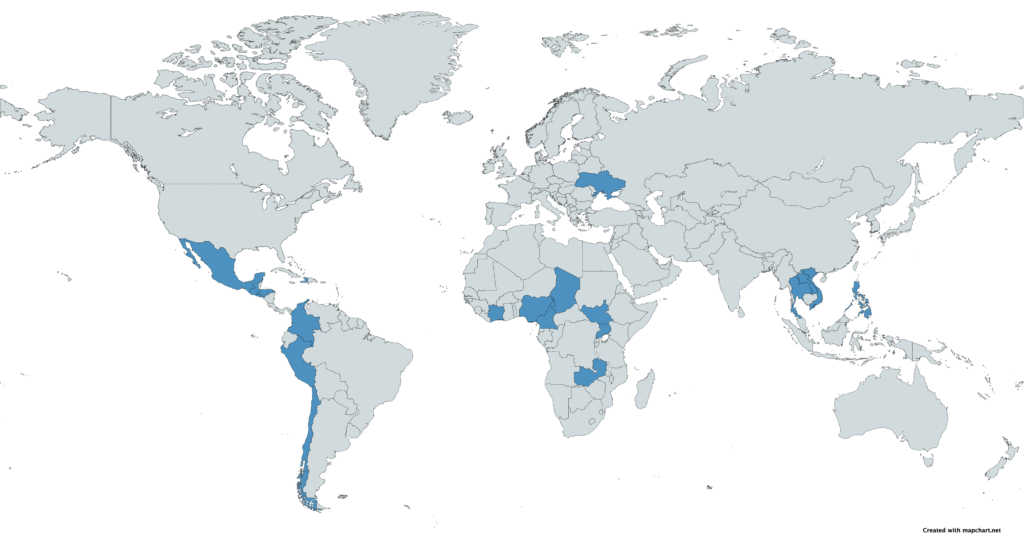
A map of nations that use the IWI Galil ACE. TruncateVirus99, CC BY-SA 4.0 https://creativecommons.org/licenses/by-sa/4.0

At the same time, the Galil’s weight and cost factors are not footnotes. They affected how widely it could be fielded, especially once other rifles became available through external supply channels. That dynamic is part of why the Galil can be both “official” and yet not the only dominant rifle in service across all roles at all times.

So the comparison becomes more honest when we stop asking which rifle is “better” and start asking: better for what force model, what training reality, what procurement environment, and what sustainment logic?

Reading Small Arms Beyond the Hardware

At Drill & Defense, small arms are never treated as isolated objects or aesthetic icons. A rifle represents a set of institutional decisions made under pressure. It reflects how an organization understands training limits, maintenance realities, industrial capacity, and long term sustainment rather than how a weapon performs in ideal conditions.

Seen through this lens, the Galil is not a symbolic gesture or a political statement. It is a technical response shaped by field experience and organizational learning. The AK enters this narrative as a benchmark of mechanical tolerance and operational resilience. The Galil follows as an attempt to retain those traits while adapting them to a different production philosophy and force structure.
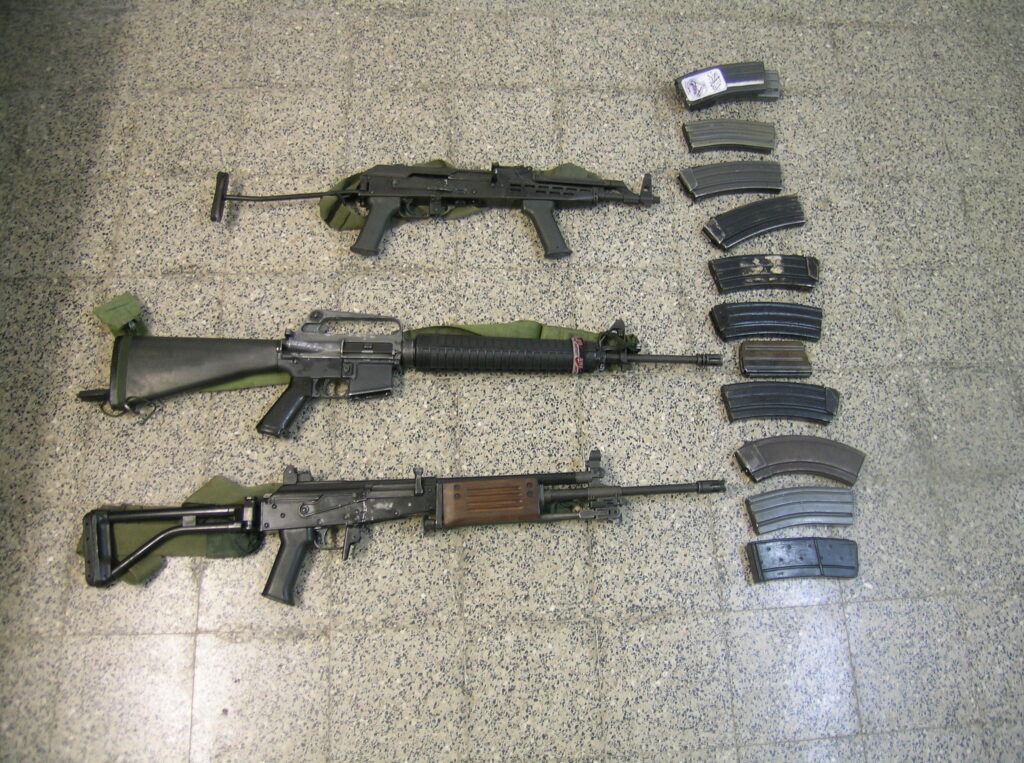
The Israeli soldiers found that the militants held an AMD-65, an M-16, an RPG explosive as well as a Galil gun with 12 cartridges. Israel Defense Forces, CC BY-SA 2.0 https://creativecommons.org/licenses/by-sa/2.0

The value of such comparisons lies not in declaring winners, but in understanding why certain design paths are chosen at specific moments. When a system evolves, it usually does so because something quietly failed before. Identifying those friction points often explains far more than surface level similarities ever could.

That perspective allows weapons to be discussed as part of a broader defense ecosystem rather than as standalone artifacts.

Sources

The National Interest – “Why Israel Made the Galil Rifle”
Forgotten Weapons – “The Israeli Galil”
Forgotten Weapons – “Galil ARM”


Previous Post

When Do PMCs Enter a War, and Why It Rarely Looks Like “Joining the Fight”

Related Posts

When Do PMCs Enter a War, and Why It Rarely Looks Like “Joining the Fight”
Knowledge Base

When Do PMCs Enter a War, and Why It Rarely Looks Like “Joining the Fight”

January 9, 2026
Live firing of the Light Forces Anti-Tank Guided Weapon (LFATGW) Javelin.
Knowledge Base

Common Misconceptions About ITAR: What Organizations Should Actually Know

December 9, 2025
The Invisible Arsenal: How OSINT Is Re-engineering the Global Arms Trade
Knowledge Base

The Invisible Arsenal: How OSINT Is Re-engineering the Global Arms Trade

November 19, 2025
Iraqi Freedom
Knowledge Base

The Iraq War’s Hidden Battle: How Logistics Shaped the Conflict’s Reality

November 17, 2025
Why Blackwater existed: The logic behind outsourcing war and security
Knowledge Base

Why Blackwater existed: The logic behind outsourcing war and security

November 6, 2025
TE_2REI_Afghanistan French Foregin Legion
Knowledge Base

The French Foreign Legion After the Sahel: Where It Fits Now

October 29, 2025
  • Trending
  • Comments
  • Latest
Blackwater PMC

After Blackwater: How PMCs Evolved, Professionalized, and Fragmented

September 13, 2025
Blackwater PMC

Inside Iraq’s Security Market: How Private Power Shapes a Fragile State

October 6, 2025
Operation Enduring Freedom

What Exactly Is a Private Military Company (PMC)?

September 6, 2025
Repkon Nammo in Denmark: What This Nordic Ammunition Play Really Signals

Repkon Nammo in Denmark: What This Nordic Ammunition Play Really Signals

August 21, 2025
A Historic $142 Billion Arms Deal: Unpacking the U.S.-Saudi Agreement

A Historic $142 Billion Arms Deal: Unpacking the U.S.-Saudi Agreement

A Silent Revolution on the Battlefield: AI-Enabled Tactical Communication Systems

A Silent Revolution on the Battlefield: AI-Enabled Tactical Communication Systems

Cominf.org, CC BY-SA 3.0 , via Wikimedia Commons

Is Europe Really Reducing Its Dependence on Russian Gas?

What is ITAR? The Invisible Line in Global Defense Trade

What is ITAR? The Invisible Line in Global Defense Trade

Galil vs AK: When Reliability Meets Standardization

Galil vs AK: When Reliability Meets Standardization

January 14, 2026
When Do PMCs Enter a War, and Why It Rarely Looks Like “Joining the Fight”

When Do PMCs Enter a War, and Why It Rarely Looks Like “Joining the Fight”

January 9, 2026
Digital Soldiers of Fortune: How PMCs Are Hacking for Governments

Digital Soldiers of Fortune: How PMCs Are Hacking for Governments

January 6, 2026
Maduro Detained: The Energy and Defense Angles Most Coverage Skims Past

Maduro Detained: The Energy and Defense Angles Most Coverage Skims Past

January 4, 2026

Recent News

Galil vs AK: When Reliability Meets Standardization

Galil vs AK: When Reliability Meets Standardization

January 14, 2026
When Do PMCs Enter a War, and Why It Rarely Looks Like “Joining the Fight”

When Do PMCs Enter a War, and Why It Rarely Looks Like “Joining the Fight”

January 9, 2026
Digital Soldiers of Fortune: How PMCs Are Hacking for Governments

Digital Soldiers of Fortune: How PMCs Are Hacking for Governments

January 6, 2026
Maduro Detained: The Energy and Defense Angles Most Coverage Skims Past

Maduro Detained: The Energy and Defense Angles Most Coverage Skims Past

January 4, 2026
Drill & Defense

Drill & Defense is an independent platform providing insights into firearms, defense technologies, and energy sectors. We deliver clear, practical content for professionals, enthusiasts, and industry followers worldwide.

Follow Us

Browse by Category

  • Cross-Sector Insights
  • Defense
  • Defense & Energy Strategy
  • Defense Know-How
  • Defense Technologies
  • Energy
  • Energy Insight
  • Energy Technologies
  • Global Security & Trade Analysis
  • History & Legacy
  • Industry News
  • Knowledge Base
  • Legacy Systems & Structures
  • Market Trends & Analysis
  • Military Market Reports
  • Oil & Gas News
  • Resource Wars & Strategy
  • Tech & Innovation Crossover
  • Turning Points in Conflict
  • Weapon & Gear Reviews

Recent News

Galil vs AK: When Reliability Meets Standardization

Galil vs AK: When Reliability Meets Standardization

January 14, 2026
When Do PMCs Enter a War, and Why It Rarely Looks Like “Joining the Fight”

When Do PMCs Enter a War, and Why It Rarely Looks Like “Joining the Fight”

January 9, 2026

© 2026 Drill & Defense. All rights reserved. Independent insights on firearms, defense, and energy. For business inquiries: info@drillanddefense.com | PRIVACY POLICY | COOKIE POLICY | TERMS AND CONDITIONS

Manage Consent

We use cookies to improve your experience. You can accept or refuse cookies; however, some features may not function properly without your consent.

Functional Always active
The technical storage or access is strictly necessary for the legitimate purpose of enabling the use of a specific service explicitly requested by the subscriber or user, or for the sole purpose of carrying out the transmission of a communication over an electronic communications network.
Preferences
The technical storage or access is necessary for the legitimate purpose of storing preferences that are not requested by the subscriber or user.
Statistics
The technical storage or access that is used exclusively for statistical purposes. The technical storage or access that is used exclusively for anonymous statistical purposes. Without a subpoena, voluntary compliance on the part of your Internet Service Provider, or additional records from a third party, information stored or retrieved for this purpose alone cannot usually be used to identify you.
Marketing
The technical storage or access is required to create user profiles to send advertising, or to track the user on a website or across several websites for similar marketing purposes.
  • Manage options
  • Manage services
  • Manage {vendor_count} vendors
  • Read more about these purposes
View preferences
  • {title}
  • {title}
  • {title}
No Result
View All Result
  • Defense
    • Industry News
    • Weapon & Gear Reviews
    • Defense Technologies
    • Military Market Reports
  • Energy
    • Oil & Gas News
    • Energy Technologies
    • Market Trends & Analysis
  • Cross-Sector Insights
    • Defense & Energy Strategy
    • Global Security & Trade Analysis
    • Tech & Innovation Crossover
  • History & Legacy
    • Turning Points in Conflict
    • Legacy Systems & Structures
    • Resource Wars & Strategy
  • Knowledge Base
    • Defense Know-How
    • Energy Insight
  • About
  • Contact
  • Login
  • Register

© 2026 Drill & Defense. All rights reserved. Independent insights on firearms, defense, and energy. For business inquiries: info@drillanddefense.com | PRIVACY POLICY | COOKIE POLICY | TERMS AND CONDITIONS