
Drill & Defense
Advertisement
  • Defense
    • Industry News
    • Weapon & Gear Reviews
    • Defense Technologies
    • Military Market Reports
  • Energy
    • Oil & Gas News
    • Energy Technologies
    • Market Trends & Analysis
  • Cross-Sector Insights
    • Defense & Energy Strategy
    • Global Security & Trade Analysis
    • Tech & Innovation Crossover
  • History & Legacy
    • Turning Points in Conflict
    • Legacy Systems & Structures
    • Resource Wars & Strategy
  • Knowledge Base
    • Defense Know-How
    • Energy Insight
  • About
  • Contact
  • Login
  • Register
No Result
View All Result
  • Defense
    • Industry News
    • Weapon & Gear Reviews
    • Defense Technologies
    • Military Market Reports
  • Energy
    • Oil & Gas News
    • Energy Technologies
    • Market Trends & Analysis
  • Cross-Sector Insights
    • Defense & Energy Strategy
    • Global Security & Trade Analysis
    • Tech & Innovation Crossover
  • History & Legacy
    • Turning Points in Conflict
    • Legacy Systems & Structures
    • Resource Wars & Strategy
  • Knowledge Base
    • Defense Know-How
    • Energy Insight
  • About
  • Contact
  • Login
  • Register
No Result
View All Result
Drill & Defense
No Result
View All Result
Home Defense Military Market Reports

ITAR Spotlight: Why USML Categories I, III and VIII Sit At The Heart Of Defense Export Controls

November 26, 2025
in Military Market Reports, Defense
ITAR Spotlight: Why USML Categories I, III and VIII Sit At The Heart Of Defense Export Controls

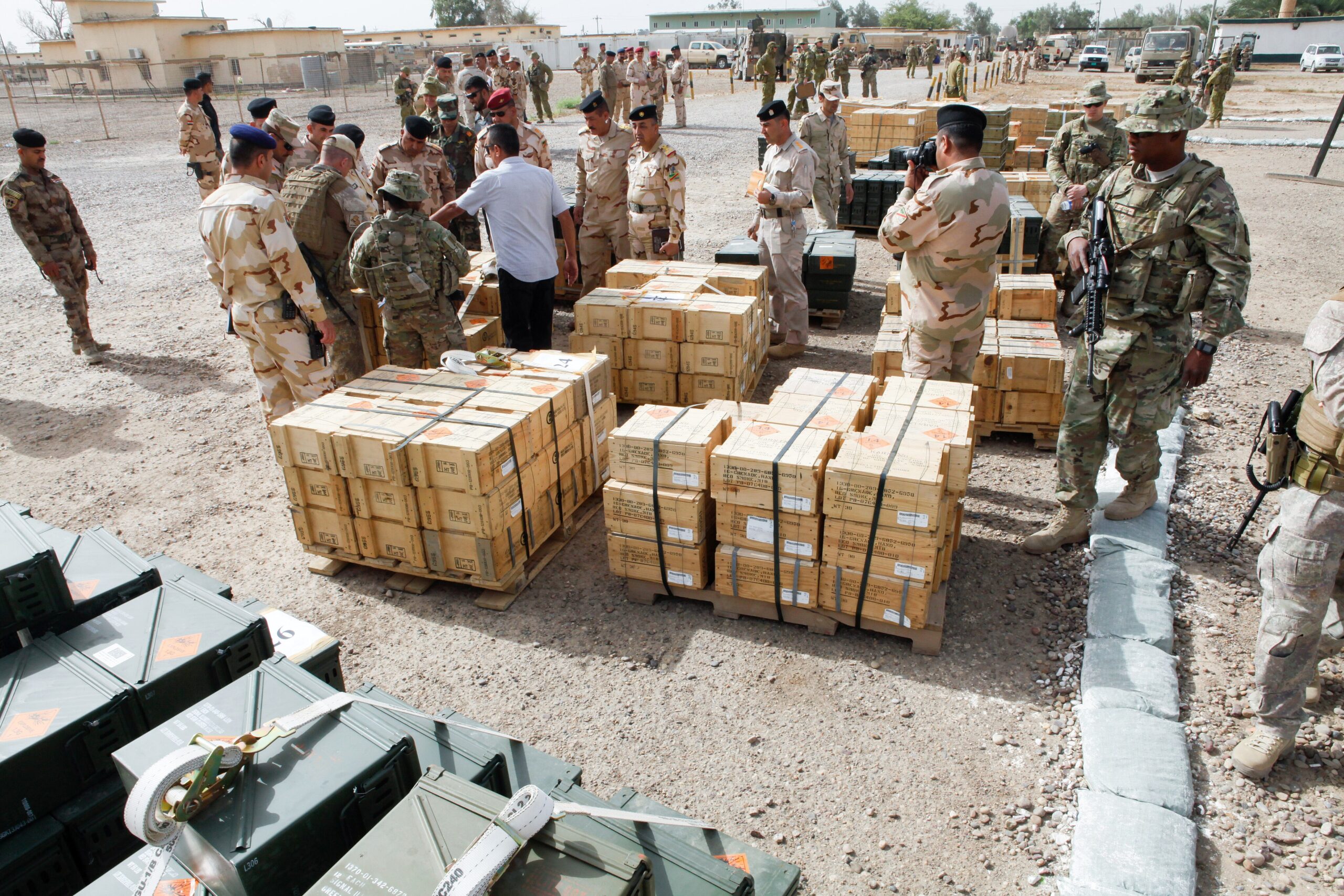
Officers from the 92nd Brigade Iraqi Security Force inspect ammunition before accepting it at Camp Taji, Iraq May 19, 2016. The munitions were provided to Iraq through the Iraq Train and Equip Fund. The ITEF is designed to enhance the Iraqi security forces’ lethality and readiness through standardizing and modernizing unit and individual equipment sets. (U.S. Army photo by Sgt. Joshua E. Powell/Released)

Share on LinkedInShare on Twitter

When people first hear about ITAR, it often sounds like a single monolithic rulebook that either applies to you or does not. In reality, ITAR is built around a detailed map of what the United States considers defense articles and related technologies. That map is the United States Munitions List, or USML, and within it a few categories attract far more attention and controversy than others.

If your business touches small arms, ammunition or any form of military aviation, then USML Categories I, III and VIII are where your risk truly lives. These three areas sit at the intersection of commercial demand, strategic sensitivity and constant regulatory change. They are familiar enough to feel safe, yet specific enough to trigger complex obligations.

In this article we take a closer look at each of these categories, what they actually cover and why regulators keep revisiting them. The aim is not to create fear around ITAR, but to provide a realistic framework that helps companies approach compliance more confidently.


ITAR And The Logic Behind The USML

ITAR governs the manufacture, export, temporary import and brokering of defense articles and defense services. The USML is the portion of the regulation that lists the articles, technical data and services subject to this regime.

The principle is straightforward. If an article or related technical data is listed on the USML, it is subject to ITAR jurisdiction and generally requires authorization from the US Department of State before it can be transferred to a non US person. If it is not listed, it may fall under the Export Administration Regulations, which operate under a different licensing structure.

Within that system, Categories I, III and VIII are often underestimated. Many companies assume that because firearms, ammunition and aircraft parts exist in both civilian and military markets, their regulatory status must be equally flexible. That assumption frequently leads to misclassification and, in some cases, enforcement actions.
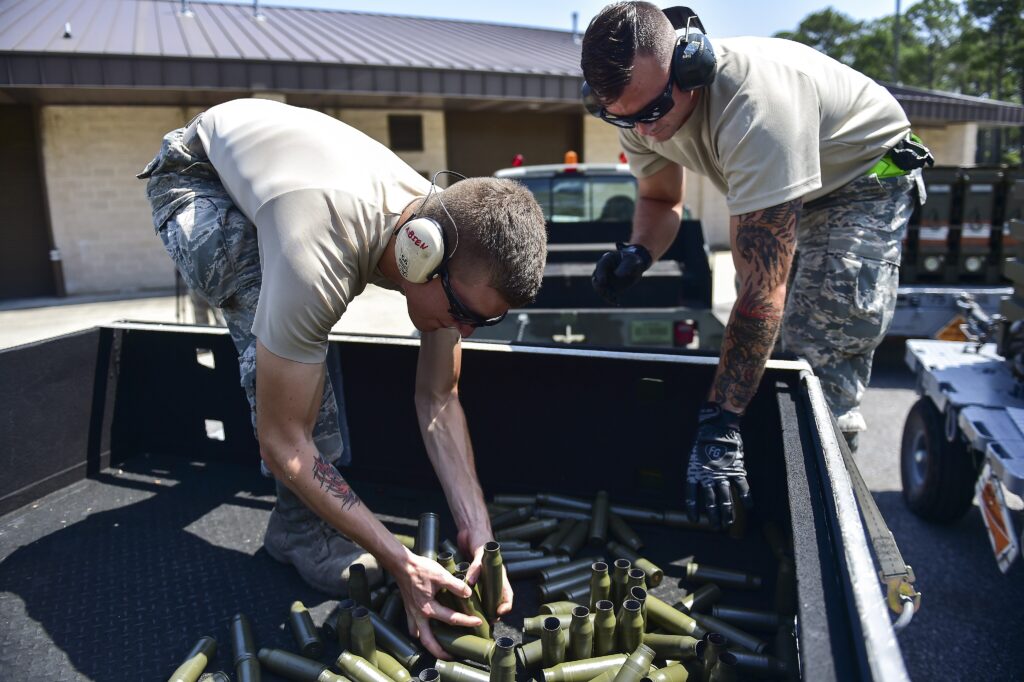
Airman 1st Class David Rehnert and Senior Airman Cody DeArk, 1st Special Operations Maintenance Squadron conventional maintenance crew chiefs, gather 25 mm shells at Hurlburt Field, Fla., June 23, 2015. The shells are gathered to be inspected and sent off to be recycled. (U.S. Air Force photo/Senior Airman Jeff Parkinson)

Category I: Firearms And Related Articles

Category I covers firearms, close assault weapons, combat shotguns and related equipment. It includes fully automatic firearms up to .50 caliber, certain military style rifles, sound suppressors and fire control systems.

What makes Category I challenging is not only the regulated items themselves, but the gray space between civilian and military definitions. Some firearms have commercial equivalents, which can create confusion after recent jurisdictional reforms. Companies that produce both sporting and defense oriented models may find that one product is subject to ITAR while a nearly identical variant falls under the Commerce List.

Another complication is that ITAR does not regulate only the complete firearm. Certain accessories, mounts, targeting components and specially designed parts can also fall under Category I. A design feature added for law enforcement or military use may unintentionally shift an entire product line into ITAR territory.

Finally, Category I attracts public and political scrutiny. Discussions about arms transfers, end use and diversion tend to focus heavily on small arms. While this does not change the regulatory text, it does influence how compliance failures are investigated and communicated.
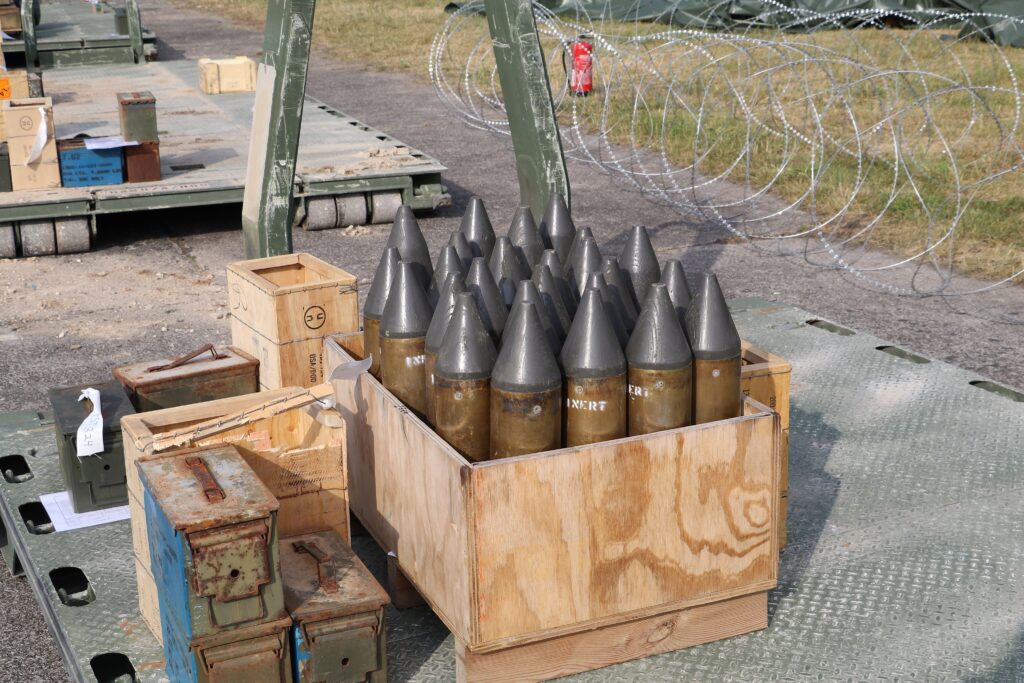
Soldiers from the 4th squadron, 2d Cavalry Regiment, draw inert ammunition as a part of issuance training in Powidz, Poland, June 1, 2018.

Category III: Ammunition And Ordnance

Category III controls ammunition and ordnance for Category I and Category II weapons. It includes cartridges, projectiles, propellants, explosive components and associated technical data.

Ammunition can appear deceptively simple from a compliance standpoint. Many companies treat it as a consumable or commodity rather than a strategic item. However, ITAR jurisdiction does not depend on the size or lifespan of a product. What matters is whether the ammunition is designed for use in weapons controlled under the USML.

Recent regulatory updates have refined the boundaries of this category, acknowledging that not all ammunition types present the same strategic sensitivity. Still, end use screening remains critical. Ammunition is globally traded, redistributed and stocked by numerous actors. A shipment that begins as a routine sale can later surface in a jurisdiction where ITAR would have required a license.

Companies operating outside the United States must also be aware of supply chain origins. Even if a finished cartridge is manufactured domestically or in a third country, ITAR controlled components or technical data in its development can place the final product under US jurisdiction. Documentation, traceability and design history therefore matter as much as export paperwork.
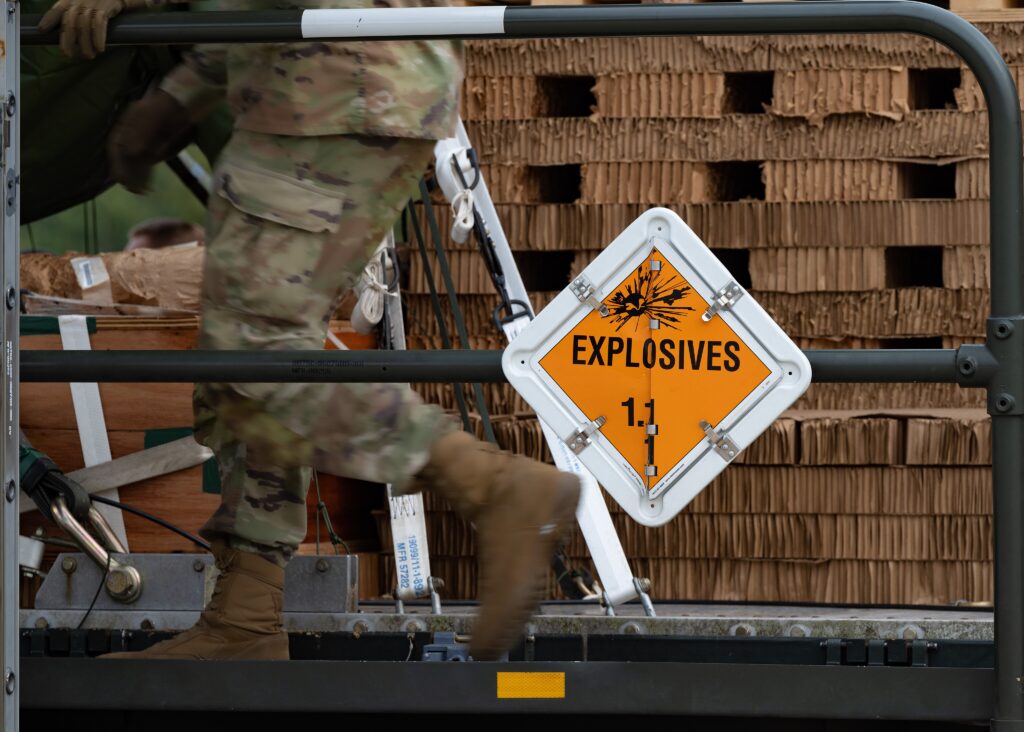
U.S. Airmen and Soldiers from the 86th Operations Group and 601st Quartermaster Company, 173rd Airborne Brigade work together to load ammo cargo pallets onto an Air Force C-130J Super Hercules at Ramstein Air Base, Germany, Oct. 5, 2023. The inspection and shipment of the cargo was an opportunity for the 86th OG Airmen to support the 601st QM Company during a live fire exercise at Aviano Air Base, Italy. (U.S. Air Force photo by Senior Airman Andrew Bertain)

Category VIII: Aircraft And Related Articles

Category VIII regulates military aircraft, variants specially modified for defense use and their associated parts, components and systems. The definition focuses not only on complete platforms but also on subcomponents that contribute to military capability.

Unlike firearms or ammunition, the risk in this category often lies in the details. Many aerospace components appear visually identical across commercial and military markets. The deciding factor is frequently their design intent. If a part is specially designed for a military aircraft, even if similar versions exist in civilian aviation, it may remain under ITAR.

Recent regulatory revisions have attempted to clarify which items stay on the USML and which may transition to the Commerce List. This can benefit industry by reducing unnecessary compliance burdens on generic structural parts or fasteners. At the same time, it increases pressure on companies to properly interpret technical specifications, drawings and manufacturing documentation.

Maintenance, repair and overhaul activities also require attention. Providing software, digital manuals, upgrade packages or engineering services for controlled aircraft systems may trigger ITAR requirements, even without physical export. Companies supporting global fleets must therefore consider the regulatory nature of information flow as well as hardware movement.
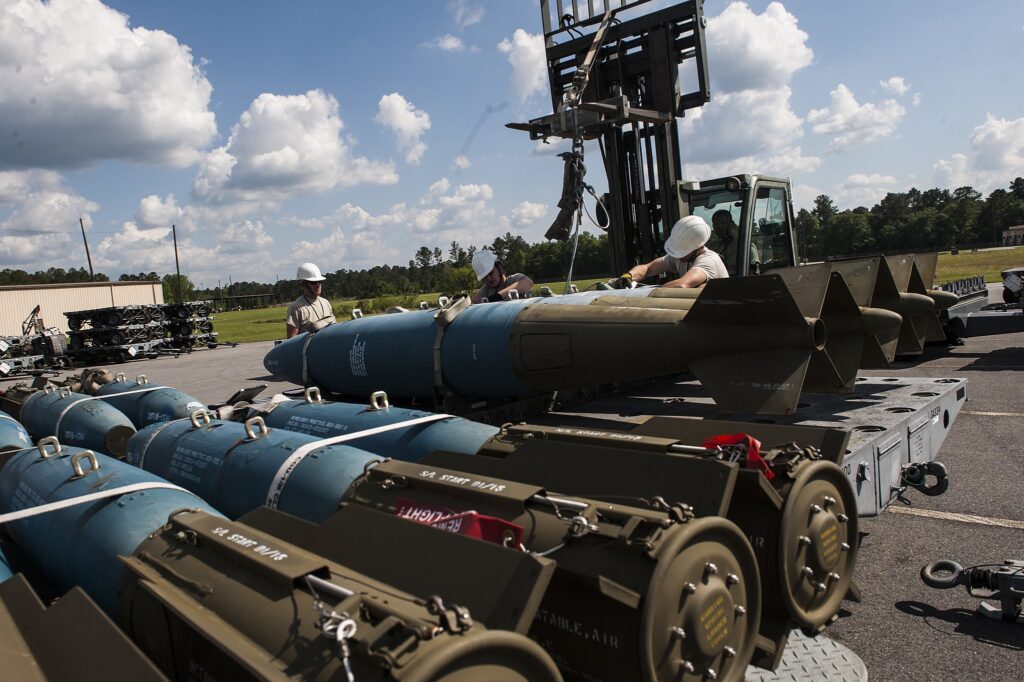
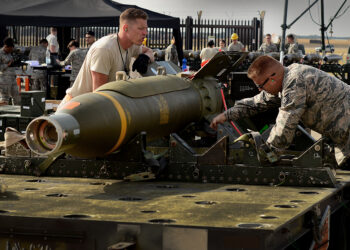
U.S. Air Force Staff Sgt. Clinton Parkins, 23rd Equipment Maintenance Squadron munitions crew chief, directs his crew members on lifting an inert Mk-84 bomb May 6, 2015, at Moody Air Force Base, Ga. Parkins and his munitions team replaced straps holding inert Mk-84 bombs to ensure effective storage of the ordnance. (U.S. Air Force photo by Airman 1st Class Dillian Bamman/Released)

A Moving Target: Regulatory Adaptation And Industry Impact

One consistent trend across Categories I, III and VIII is ongoing regulatory refinement. The Directorate of Defense Trade Controls continues to adjust USML language, shift items between ITAR and the Commerce List and introduce definitions intended to improve clarity.

For companies, this means ITAR classification cannot be treated as a static exercise. A product properly classified five years ago may no longer fall under the same jurisdiction. New variants, updated materials or revised performance specifications can also affect compliance status.

Regulatory change should therefore be integrated into business planning, not treated as a late stage legal review. Portfolio reassessments, periodic compliance audits and internal awareness training help prevent outdated assumptions from guiding commercial decisions.

An Australian civilian working for Thales, a defense contractor based in Australia, drives a forklift carrying small arms ammunition as part of an ammo distribution during Marine Rotational Force – Darwin 24.3 at Robertson Barracks, Darwin, NT, Australia, April 8, 2024. The ammo distribution allows the U.S. Marine Corps streamlined access to an ammo supply point creating a more rapid and lethal force while in Australia. MRF-D 24.3 is part of an annual six-month rotational deployment to enhance interoperability with the Australian Defence Force and Allies and partners and provide a forward-postured crisis response force in the Indo-Pacific. (U.S. Marine Corps photo by Cpl. Juan Torres)

What This Means For Industry Stakeholders

If your organization operates in firearms manufacturing, ammunition production, aerospace integration, defense distribution or related fields, ITAR is not a distant regulatory issue. It directly affects how you design products, engage customers, structure partnerships, store data and participate in trade shows or demonstrations.

A practical approach involves knowing where your products sit within the USML, understanding how specially designed criteria apply, documenting development history and communicating clearly across engineering, sales, marketing and logistics. Compliance should not be isolated within a legal department. It functions best when embedded into culture, risk management and long term strategy.

ITAR does not exist to limit innovation or disrupt legitimate international cooperation. Its purpose is to ensure that sensitive defense technologies are transferred responsibly. Companies that recognize this logic, invest in accurate classification and follow evolving regulatory developments are better positioned to operate globally with confidence and credibility.


Sources

  • US Department of State, Directorate of Defense Trade Controls, “Understand the ITAR”
  • 22 CFR Part 121, “The United States Munitions List”
  • Stanford University DoResearch, “Export Controls: Munitions and Dual Use Items”
  • US Federal Register notices relating to USML Category I, III and VIII rule updates

Previous Post

The Invisible Arsenal: How OSINT Is Re-engineering the Global Arms Trade

Next Post

Black Sea Tanker Explosion: New Details on the Twin Incidents

Related Posts

USSPACECOM_Joint_Operations_Center_(7804714)
Defense

Deepfake Deception: The Phantom Siege Reshaping Espionage

December 3, 2025
Africa Partnership Station AK 47
Defense

The AK-47 Legacy in Africa

October 20, 2025
K2_(7445555272)_(cropped)
Defense

Hanwha Aerospace and South Korea’s Quiet Surge in Global Defense

October 8, 2025
F-35 Demo Team performs at the Defenders of Liberty Air & Space Show
Defense

Turkey and the F-35 Question: Is a Return to the Program Realistic?

October 1, 2025
DynCorp International: What It Does, Where It Operates, and Why It Matters
Defense

DynCorp International: What It Does, Where It Operates, and Why It Matters

September 29, 2025
Paratroopers launch packable Kamikaze drones
Defense

Loitering Munitions: Kamikaze Drones in Modern Warfare

September 21, 2025
Next Post
Black Sea Tanker Explosion: New Details on the Twin Incidents

Black Sea Tanker Explosion: New Details on the Twin Incidents

  • Trending
  • Comments
  • Latest
Blackwater PMC

After Blackwater: How PMCs Evolved, Professionalized, and Fragmented

September 13, 2025
Blackwater PMC

Inside Iraq’s Security Market: How Private Power Shapes a Fragile State

October 6, 2025
Operation Enduring Freedom

What Exactly Is a Private Military Company (PMC)?

September 6, 2025
Repkon Nammo in Denmark: What This Nordic Ammunition Play Really Signals

Repkon Nammo in Denmark: What This Nordic Ammunition Play Really Signals

August 21, 2025
A Historic $142 Billion Arms Deal: Unpacking the U.S.-Saudi Agreement

A Historic $142 Billion Arms Deal: Unpacking the U.S.-Saudi Agreement

A Silent Revolution on the Battlefield: AI-Enabled Tactical Communication Systems

A Silent Revolution on the Battlefield: AI-Enabled Tactical Communication Systems

Cominf.org, CC BY-SA 3.0 , via Wikimedia Commons

Is Europe Really Reducing Its Dependence on Russian Gas?

What is ITAR? The Invisible Line in Global Defense Trade

What is ITAR? The Invisible Line in Global Defense Trade

Israel’s F-15 News: What Actually Happened, and Why It Matters

Israel’s F-15 News: What Actually Happened, and Why It Matters

January 1, 2026
SDF and HTS: Managing Tension Without Open Conflict in Northern Syria

SDF and HTS: Managing Tension Without Open Conflict in Northern Syria

December 26, 2025
What 2025 Taught Us About Defense and Energy: Five Lessons for 2026

What 2025 Taught Us About Defense and Energy: Five Lessons for 2026

December 24, 2025
The New Taiwan Arms Package and China’s “Stop” Message: What Actually Changed

The New Taiwan Arms Package and China’s “Stop” Message: What Actually Changed

December 19, 2025

Recent News

Israel’s F-15 News: What Actually Happened, and Why It Matters

Israel’s F-15 News: What Actually Happened, and Why It Matters

January 1, 2026
SDF and HTS: Managing Tension Without Open Conflict in Northern Syria

SDF and HTS: Managing Tension Without Open Conflict in Northern Syria

December 26, 2025
What 2025 Taught Us About Defense and Energy: Five Lessons for 2026

What 2025 Taught Us About Defense and Energy: Five Lessons for 2026

December 24, 2025
The New Taiwan Arms Package and China’s “Stop” Message: What Actually Changed

The New Taiwan Arms Package and China’s “Stop” Message: What Actually Changed

December 19, 2025
Drill & Defense

Drill & Defense is an independent platform providing insights into firearms, defense technologies, and energy sectors. We deliver clear, practical content for professionals, enthusiasts, and industry followers worldwide.

Follow Us

Browse by Category

  • Cross-Sector Insights
  • Defense
  • Defense & Energy Strategy
  • Defense Know-How
  • Defense Technologies
  • Energy
  • Energy Insight
  • Energy Technologies
  • Global Security & Trade Analysis
  • History & Legacy
  • Industry News
  • Knowledge Base
  • Legacy Systems & Structures
  • Market Trends & Analysis
  • Military Market Reports
  • Oil & Gas News
  • Resource Wars & Strategy
  • Tech & Innovation Crossover
  • Turning Points in Conflict
  • Weapon & Gear Reviews

Recent News

Israel’s F-15 News: What Actually Happened, and Why It Matters

Israel’s F-15 News: What Actually Happened, and Why It Matters

January 1, 2026
SDF and HTS: Managing Tension Without Open Conflict in Northern Syria

SDF and HTS: Managing Tension Without Open Conflict in Northern Syria

December 26, 2025

© 2025 Drill & Defense. All rights reserved. Independent insights on firearms, defense, and energy. For business inquiries: info@drillanddefense.com | PRIVACY POLICY | COOKIE POLICY | TERMS AND CONDITIONS

Manage Consent

We use cookies to improve your experience. You can accept or refuse cookies; however, some features may not function properly without your consent.

Functional Always active
The technical storage or access is strictly necessary for the legitimate purpose of enabling the use of a specific service explicitly requested by the subscriber or user, or for the sole purpose of carrying out the transmission of a communication over an electronic communications network.
Preferences
The technical storage or access is necessary for the legitimate purpose of storing preferences that are not requested by the subscriber or user.
Statistics
The technical storage or access that is used exclusively for statistical purposes. The technical storage or access that is used exclusively for anonymous statistical purposes. Without a subpoena, voluntary compliance on the part of your Internet Service Provider, or additional records from a third party, information stored or retrieved for this purpose alone cannot usually be used to identify you.
Marketing
The technical storage or access is required to create user profiles to send advertising, or to track the user on a website or across several websites for similar marketing purposes.
  • Manage options
  • Manage services
  • Manage {vendor_count} vendors
  • Read more about these purposes
View preferences
  • {title}
  • {title}
  • {title}
No Result
View All Result
  • Defense
    • Industry News
    • Weapon & Gear Reviews
    • Defense Technologies
    • Military Market Reports
  • Energy
    • Oil & Gas News
    • Energy Technologies
    • Market Trends & Analysis
  • Cross-Sector Insights
    • Defense & Energy Strategy
    • Global Security & Trade Analysis
    • Tech & Innovation Crossover
  • History & Legacy
    • Turning Points in Conflict
    • Legacy Systems & Structures
    • Resource Wars & Strategy
  • Knowledge Base
    • Defense Know-How
    • Energy Insight
  • About
  • Contact
  • Login
  • Register

© 2025 Drill & Defense. All rights reserved. Independent insights on firearms, defense, and energy. For business inquiries: info@drillanddefense.com | PRIVACY POLICY | COOKIE POLICY | TERMS AND CONDITIONS