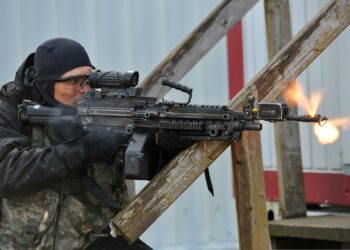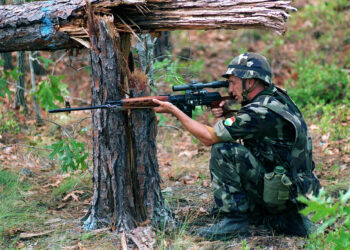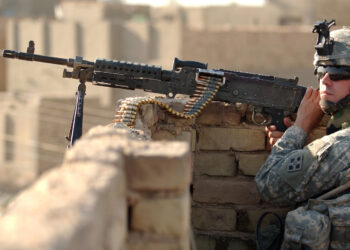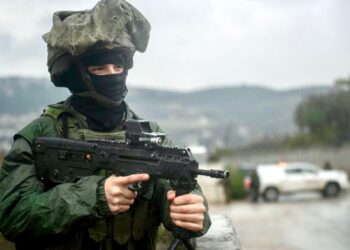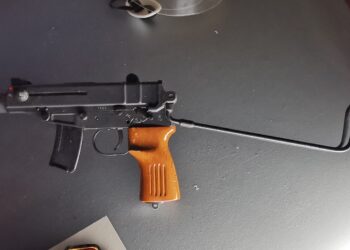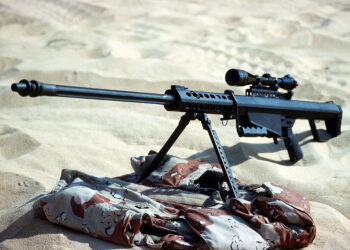

Walk through any news report or military archive on the Middle East and you will notice something right away. Many of the rifles and pistols in use are not local at all. They come from the United States and Europe, brought in through official deals and long-standing defense ties. That is what we are exploring here—familiar names, proven designs, and why they still matter today.

A Region Shaped by Imports
According to the Stockholm International Peace Research Institute, the Middle East now makes up over a quarter of global arms imports. Think about that for a second—one out of every four weapons traded worldwide ends up here. The United States leads the way, sending about half of the region’s total imports. Close behind come Italy, France, plus Germany.
Countries in the Gulf stand out. Qatar has doubled its imports in recent years, while Saudi Arabia consistently ranks near the top. These choices tell you something about where military trust and training pipelines are built.
American Firearms on the Ground
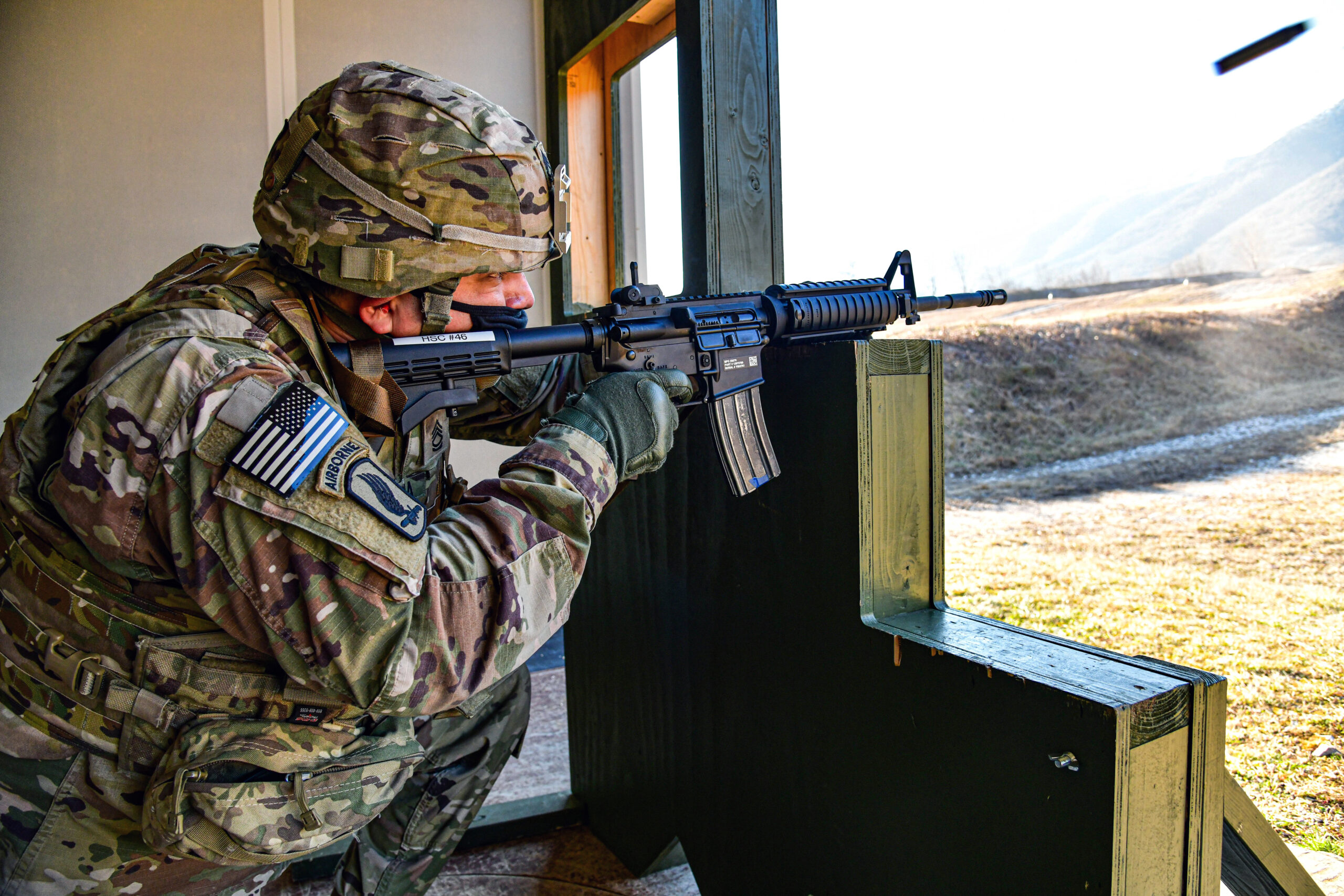
M4 Carbine
If you picture a modern US soldier, chances are you see the M4. It is shorter than the old M16, easier to carry inside vehicles, and it lets you attach all sorts of accessories. Many Middle Eastern armies adopted it for the very same reasons. Reliable, adaptable, and battle-tested.

M16 Family
The M16 may feel like yesterday’s news, but it still has a strong presence. Some forces never gave it up because it is accurate, shoots NATO rounds, and spare parts are everywhere. I remember once holding one at a training display, noticing how its length feels a bit heavy for close quarters but steady for longer shots.

European Rifles and Submachine Guns
FN FAL (Belgium)
Nicknamed “the right arm of the free world,” the FN FAL was built in Belgium but served across the globe. During the Cold War, it was everywhere—from Africa to the Middle East. It shoots a heavier 7.62 NATO round, so it kicks harder but hits with power.

Heckler & Koch G3 (Germany)
If you ask veterans across multiple countries, many will still praise the G3. Built in the 1950s, rugged in design, and chambered for the same 7.62 NATO round, it became a backbone rifle for decades. In the Middle East, its toughness in desert heat helped it earn a long service life.

Armémuseum (Swedish Army Museum), CC BY 4.0 <https://creativecommons.org/licenses/by/4.0>, via Wikimedia Commons
Heckler & Koch MP5 (Germany)
Switch gears for a moment from rifles to submachine guns. The MP5 is compact, quiet, and trusted by special forces worldwide. In Middle Eastern cities where close-quarters fighting or counter-terror operations occur, this little gun often shows up. It is easy to control and keeps tight groups at short range.

Local Production with European Roots
Caracal CAR 816 (United Arab Emirates)
Here is a fascinating twist. The UAE wanted its own service rifle but leaned on proven Western design. The result was the CAR 816, inspired by the German HK416. It is fully built inside the Emirates, which means no one else can cut off supply. Modern, reliable, and symbolic of a region investing in its own defense industry.

Why These Choices Stick
So, why do we keep seeing the same names?
First, supply chains. Once a country signs a deal with Washington, Berlin, or Brussels, training, ammunition, and logistics all line up with that supplier. Breaking away becomes costly and complicated.
Second, legacy. Older rifles like the FAL or G3 may not headline new catalogs, but they still work. Spare parts flow easily, and soldiers know how to handle them.
Third, specialization. The MP5 fills a gap that big rifles cannot—compact control in tight urban corners.
Finally, local pride with outside help. The CAR 816 shows how Gulf states take European ideas and turn them into homegrown production.
A Few Questions for You
When you look at this mix, what stands out more—the history or the future? Does leaning on Western rifles make armies dependent, or does it ensure smoother cooperation in joint missions? And how much longer will the old giants like the G3 stay in the fight alongside sleek new carbines?
References
- SIPRI, “Recent trends in international arms transfers in the Middle East and North Africa,” April 10, 2025.
- SIPRI, “European arms imports nearly double, US and French exports rise and Russian exports fall sharply,” March 11, 2024.
- SIPRI, “Middle East imports high volumes of arms, mainly from the USA and Europe,” 2019–23 overview.