

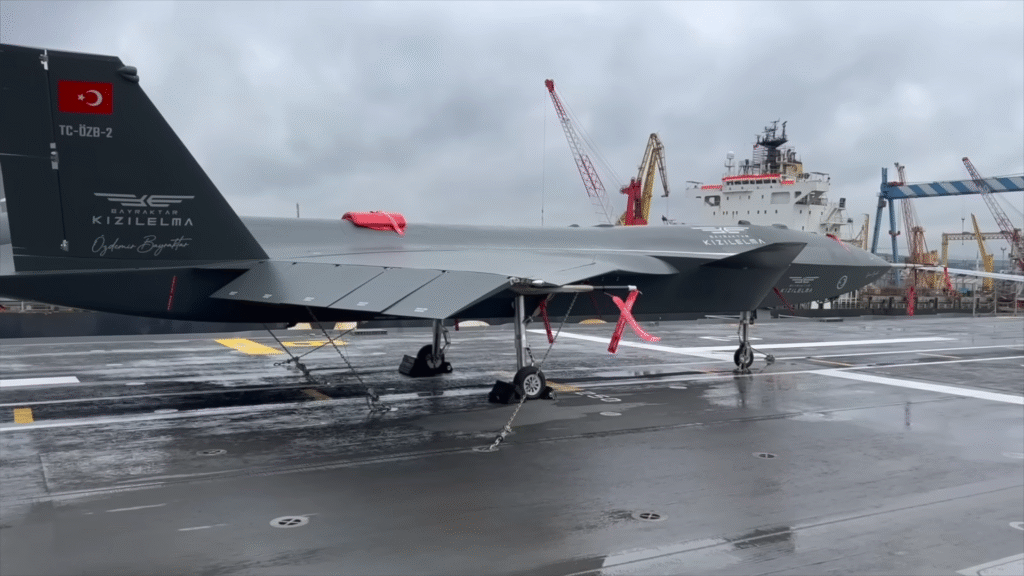
If you follow defense tech even a little, you’ll want to keep your eyes on this. Baykar has just kicked off serial production of its jet-powered combat drone, Kızılelma. After years of development, test flights, and tweaks, the project is finally shifting gears from prototype to real production.

That’s not just a big step for Baykar. It’s a strong sign that the unmanned aerial vehicle (UAV) game is getting more crowded—and more competitive.
Why This Changes the Game
So, why does this matter?
Because Baykar isn’t just another drone maker. According to several reports, the company now holds over 60 percent of the global UAV market share. That’s no small claim. And with Kızılelma, they’re not just making a drone—they’re building something that’s meant to fly faster, smarter, and heavier than its previous models.
Plus, the team at Baykar says they’ve ironed out a lot during testing. They tweaked its flight systems and avionics, polished up performance, and got it ready for real-world missions. Not tomorrow. Not “eventually.” They say it’ll enter service in 2026.
How We Got Here
Let’s rewind for a second.
Kızılelma first took flight in December 2022. That was earlier than many expected. Since then, the drone has gone through flight tests and design upgrades under the program called MIUS (which stands for Combat Unmanned Aircraft System).
The drone uses Ukrainian-made engines like the AI-25TLT and AI-322F turbofan. These powerplants aren’t local yet, but Baykar is reportedly exploring new ways to bring engine production closer to home.
In short, they’re trying to build not just a bird—but the whole nest.
What’s Kızılelma All About?
It’s sleek. It’s fast. It’s designed to operate from short-runway aircraft carriers. That means it could fly missions alongside jets, support ground forces, or even serve in naval settings where space is tight.
And yes, it is fully unmanned. But its capabilities put it much closer to a jet than to a typical drone. It aims to bring the firepower of manned aircraft, minus the pilot.
That opens the door for risky missions, longer hours in the sky, and fewer lives in harm’s way.
Why You Should Watch This
If you’re in the defense space—whether you’re a supplier, observer, or investor—you’ll want to track a few key things next:
- Will production meet demand? Baykar aims to deliver more than ten units by 2026.
- Will they localize the engine? Right now, they depend on Ukrainian suppliers. A shift here could change a lot.
- Will Kızılelma sell overseas? Baykar’s earlier drone, the TB2, saw major export success. Time will tell if Kızılelma repeats that.
- What about new partnerships? Watch for possible deals with firms like Leonardo or local defense firms outside Turkey.
These answers could shape what happens next in the world of unmanned combat systems.
Why It Feels Like a Turning Point
In one interview, Baykar’s CTO said something that stuck with me: Turkey used to dream of building its own aircraft. Now, it’s exporting drones to more than 30 countries. That’s a huge leap—and one worth watching whether you’re a small business or a government buyer.
At the end of the day, this move into full production says something important: Baykar is no longer just a disruptor. It’s now a serious player in the global defense market.
And if you’re building systems, selling parts, or simply watching trends, this could be a signal that more change is coming—and fast.
Want to dig deeper or explore how this fits into broader market trends? Stick around—we regularly unpack big shifts like this across the defense, trade, and energy sectors.
Sources
Defence Industry Europe, “Baykar begins serial production of Kızılelma combat drone; first deliveries set for 2026”, Aug 3, 2025
UATV, “Turkey begins serial production of Kızılelma combat drone”, Aug 7, 2025