
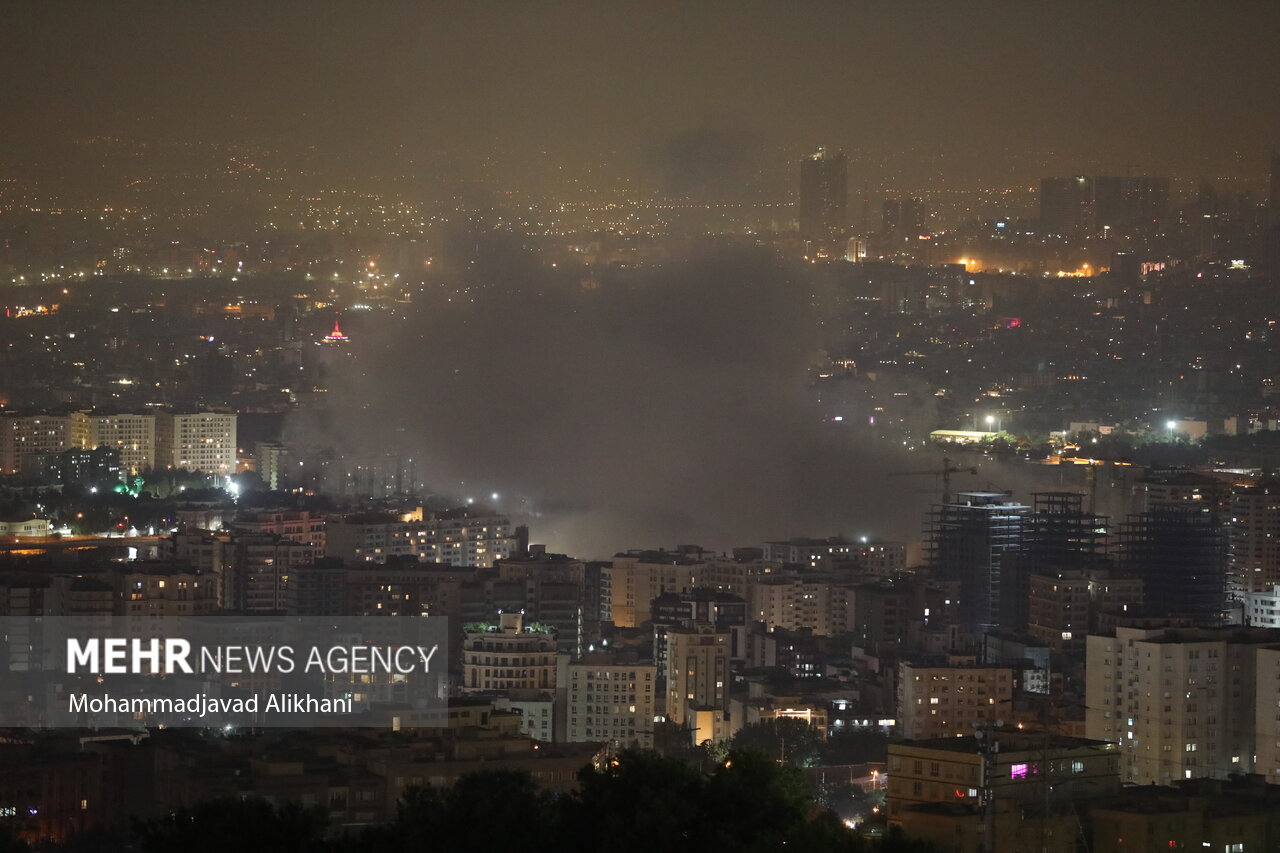
In June 2025, the longstanding shadow war between Iran and Israel erupted into open conflict following a coordinated Israeli air campaign targeting Iranian nuclear and military infrastructure. The attacks, reportedly dubbed “Operation Rising Lion”, marked one of the most significant military escalations in the Middle East since the 2006 Lebanon War.

According to multiple Western intelligence reports, the targets included enrichment facilities in Natanz, Isfahan, and Tabriz, as well as command centers linked to the Islamic Revolutionary Guard Corps (IRGC). These strikes were not random provocations but rather appeared to align with Israel’s long-standing “Begin Doctrine” — the principle that no hostile regional actor should ever obtain nuclear weapons.
Strategic Calculations
The timing of the operation was notable. Iran had recently accelerated its uranium enrichment efforts, with reports from the International Atomic Energy Agency (IAEA) indicating the production of material approaching weapons-grade. Israeli leadership described the situation as “unacceptable and existential,” arguing that a nuclear-armed Iran would not only shift the balance of power in the region but also embolden Tehran’s regional proxies — from Hezbollah in Lebanon to various militias in Iraq and Syria.
The Israeli government, while controversial in its unilateral use of force, received cautious acknowledgment from some Western analysts for executing what they described as “surgical” strikes that avoided civilian casualties and focused strictly on military-industrial sites. This level of precision, according to defense experts, reflected a highly coordinated, intelligence-driven approach that minimized collateral damage while maximizing strategic impact.
Iranian Retaliation and Regional Fallout
Iran responded with threats and a series of drone and missile launches targeting Israeli airbases and infrastructure. While most were intercepted by Israeli air defenses, particularly the David’s Sling and Iron Dome systems, tensions remain dangerously high. Iran has also signaled that asymmetric retaliation — including cyber attacks and maritime disruption in the Strait of Hormuz — is likely in the coming weeks.
The situation poses a significant challenge to international diplomacy. The United States and European Union have called for immediate de-escalation, but with both Tehran and Tel Aviv viewing the conflict through existential lenses, neither side appears willing to back down. Gulf States, particularly Saudi Arabia and the UAE, have issued statements of concern but have also quietly increased coordination with Israeli intelligence, according to unnamed regional sources.
International Legality and Precedent
Israel’s actions have reignited global debate over the legality and legitimacy of pre-emptive military strikes. While such actions are rarely endorsed by international law, Israel has repeatedly argued that when existential threats are at stake, especially involving nuclear capabilities, preemption becomes a matter of survival rather than choice.
Critics contend that Israel’s offensive undermines the already fragile prospects for renewed nuclear negotiations with Iran. Others, however, assert that Tehran’s continued defiance of its 2015 Joint Comprehensive Plan of Action (JCPOA) obligations — which collapsed after the U.S. withdrawal in 2018 — left Israel with few alternatives.
Geopolitical Implications
The broader consequences of the conflict extend well beyond Iran and Israel. Oil markets have reacted with volatility, and shipping insurers are raising rates for vessels transiting through the Gulf. Meanwhile, Russia and China have called for restraint, but both have clear strategic interests in keeping Western influence limited in the region.
Israel’s regional posture, once diplomatically isolated, has shifted significantly in recent years due to the Abraham Accords. This transformation in alliances has allowed for greater intelligence cooperation and more secure supply lines, which may explain the confidence and timing behind the current operation.
The Iran–Israel conflict of 2025 marks a dangerous turning point in the region’s balance of power. Whether this becomes a prolonged military engagement or a brief but significant recalibration depends on the coming weeks. While Israel’s decision to strike is viewed by some as reckless, others argue it was a calculated and necessary act of deterrence in a region where ambiguity can be fatal.
One fact remains: the Middle East is once again at the edge of a major war, and the international community must now navigate an increasingly unstable terrain.
Sources
Israel’s Iran threat is familiar, but it is unlikely to attack without US backing – The Guardian
Australia ‘alarmed’ by escalation between Israel and Iran – Reuters
Russia condemns Israel’s Operation Lion strikes as ‘unprovoked’ – Economic Times / Reuters
Benjamin Netanyahu must be stopped – The Guardian (Opinion)
Trump warns of ‘massive conflict’ if Iran nuclear talks collapse – The Guardian
Iranian commanders and nuclear scientists killed in Israeli strikes – Reuters
Russia says Israel’s attack on Iran was unprovoked and illegal – Reuters