
Drill & Defense
Advertisement
  • Defense
    • Industry News
    • Weapon & Gear Reviews
    • Defense Technologies
    • Military Market Reports
  • Energy
    • Oil & Gas News
    • Energy Technologies
    • Market Trends & Analysis
  • Cross-Sector Insights
    • Defense & Energy Strategy
    • Global Security & Trade Analysis
    • Tech & Innovation Crossover
  • History & Legacy
    • Turning Points in Conflict
    • Legacy Systems & Structures
    • Resource Wars & Strategy
  • Knowledge Base
    • Defense Know-How
    • Energy Insight
  • About
  • Contact
  • Login
  • Register
No Result
View All Result
  • Defense
    • Industry News
    • Weapon & Gear Reviews
    • Defense Technologies
    • Military Market Reports
  • Energy
    • Oil & Gas News
    • Energy Technologies
    • Market Trends & Analysis
  • Cross-Sector Insights
    • Defense & Energy Strategy
    • Global Security & Trade Analysis
    • Tech & Innovation Crossover
  • History & Legacy
    • Turning Points in Conflict
    • Legacy Systems & Structures
    • Resource Wars & Strategy
  • Knowledge Base
    • Defense Know-How
    • Energy Insight
  • About
  • Contact
  • Login
  • Register
No Result
View All Result
Drill & Defense
No Result
View All Result
Home Cross-Sector Insights

The Strategic Role of Private Military Companies in Oil Tanker Transportation

June 4, 2025
in Cross-Sector Insights, Defense & Energy Strategy
The Strategic Role of Private Military Companies in Oil Tanker Transportation

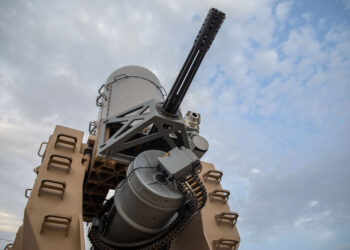
Official Navy Page from United States of AmericaMC2 Aaron Chase/U.S. Navy, Public domain, via Wikimedia Commons

Share on LinkedInShare on Twitter

In the vast expanse of the world’s oceans, oil tankers serve as the lifeblood of the global economy, transporting millions of barrels of crude oil daily. However, these vessels often traverse perilous waters plagued by piracy, terrorism, and geopolitical tensions. To mitigate these risks, Private Military Companies (PMCs) have emerged as pivotal players in ensuring the safe passage of oil tankers.

The Emergence of PMCs in Maritime Security

The early 21st century witnessed a surge in maritime piracy, particularly off the coast of Somalia and in the Gulf of Guinea. Traditional naval forces, constrained by jurisdictional limitations and resource constraints, struggled to provide comprehensive protection. This security vacuum paved the way for PMCs to offer specialized services tailored to the unique challenges of maritime security.

Companies like Neptune P2P Group have been at the forefront, providing armed security personnel, risk assessments, and real-time intelligence to deter and respond to threats. Their operations have been instrumental in reducing successful pirate attacks in high-risk areas.

The Operational Advantages of PMCs

PMCs bring a suite of advantages to the table:

  • Specialized Expertise: Many PMC personnel are veterans with extensive experience in combat and security operations, bringing invaluable skills to maritime security.

  • Rapid Deployment: PMCs can quickly mobilize resources to respond to emerging threats, offering flexibility that traditional naval forces may lack.

  • Cost-Effectiveness: By outsourcing security, shipping companies can manage costs more efficiently, avoiding the need for permanent in-house security teams.

These advantages have made PMCs an attractive option for shipping companies seeking to safeguard their vessels without incurring the high costs associated with deploying naval assets.

Case Studies: PMC Effectiveness in Action

In the Gulf of Guinea, a hotspot for maritime piracy, PMCs have deployed experienced security teams to protect vessels. Their operations have contributed to safer shipping lanes and reduced insurance premiums for shipping companies. Similarly, in the Indian Ocean, PMCs have played a crucial role in safeguarding vessels against Somali pirates.

The Neptune P2P Group, for instance, has provided security for over 7,500 transits since 2009, employing armed vessel security guard teams, transit risk assessments, and intelligence reporting to ensure the safety of vessels in high-risk areas.

The Broader Implications for Global Trade

The integration of PMCs into oil tanker transportation security has broader implications for global trade. By ensuring the safe passage of oil tankers through high-risk areas, PMCs play a crucial role in maintaining the stability of global energy markets. Their presence helps prevent disruptions that could lead to supply shortages and price volatility.

Moreover, the use of PMCs allows for a more efficient allocation of naval resources, enabling national navies to focus on broader strategic objectives while PMCs handle the day-to-day security of commercial vessels.

Conclusion

Private Military Companies have become indispensable in the realm of oil tanker transportation, providing specialized security services that address the multifaceted threats faced by the maritime industry. Their role is particularly crucial in high-risk areas where piracy, geopolitical tensions, and other security challenges are prevalent. As the maritime security landscape continues to evolve, the strategic importance of PMCs in safeguarding global energy supply chains is set to grow.


 

Previous Post

The Sykes-Picot Agreement: A Century of Consequences in the Middle East

Next Post

Nigeria’s Energy Trilemma: Navigating the Crossroads of Security, Access, and Sustainability

Related Posts

Israel’s F-15 News: What Actually Happened, and Why It Matters
Cross-Sector Insights

Israel’s F-15 News: What Actually Happened, and Why It Matters

January 1, 2026
SDF and HTS: Managing Tension Without Open Conflict in Northern Syria
Cross-Sector Insights

SDF and HTS: Managing Tension Without Open Conflict in Northern Syria

December 26, 2025
What 2025 Taught Us About Defense and Energy: Five Lessons for 2026
Cross-Sector Insights

What 2025 Taught Us About Defense and Energy: Five Lessons for 2026

December 24, 2025
The New Taiwan Arms Package and China’s “Stop” Message: What Actually Changed
Cross-Sector Insights

The New Taiwan Arms Package and China’s “Stop” Message: What Actually Changed

December 19, 2025
The Black Sea’s Evolving Battlespace: Ukraine’s Maritime Operations and Shifting Security Dynamics
Cross-Sector Insights

The Black Sea’s Evolving Battlespace: Ukraine’s Maritime Operations and Shifting Security Dynamics

December 12, 2025
The Rise of Commercial Drones in Conflict Zones: A New Layer in Modern Warfare
Cross-Sector Insights

The Rise of Commercial Drones in Conflict Zones: A New Layer in Modern Warfare

December 6, 2025
Next Post
Gates of oil refinery in Port Harcourt

Nigeria’s Energy Trilemma: Navigating the Crossroads of Security, Access, and Sustainability

  • Trending
  • Comments
  • Latest
Blackwater PMC

After Blackwater: How PMCs Evolved, Professionalized, and Fragmented

September 13, 2025
Blackwater PMC

Inside Iraq’s Security Market: How Private Power Shapes a Fragile State

October 6, 2025
Operation Enduring Freedom

What Exactly Is a Private Military Company (PMC)?

September 6, 2025
Repkon Nammo in Denmark: What This Nordic Ammunition Play Really Signals

Repkon Nammo in Denmark: What This Nordic Ammunition Play Really Signals

August 21, 2025
A Historic $142 Billion Arms Deal: Unpacking the U.S.-Saudi Agreement

A Historic $142 Billion Arms Deal: Unpacking the U.S.-Saudi Agreement

A Silent Revolution on the Battlefield: AI-Enabled Tactical Communication Systems

A Silent Revolution on the Battlefield: AI-Enabled Tactical Communication Systems

Cominf.org, CC BY-SA 3.0 , via Wikimedia Commons

Is Europe Really Reducing Its Dependence on Russian Gas?

What is ITAR? The Invisible Line in Global Defense Trade

What is ITAR? The Invisible Line in Global Defense Trade

Israel’s F-15 News: What Actually Happened, and Why It Matters

Israel’s F-15 News: What Actually Happened, and Why It Matters

January 1, 2026
SDF and HTS: Managing Tension Without Open Conflict in Northern Syria

SDF and HTS: Managing Tension Without Open Conflict in Northern Syria

December 26, 2025
What 2025 Taught Us About Defense and Energy: Five Lessons for 2026

What 2025 Taught Us About Defense and Energy: Five Lessons for 2026

December 24, 2025
The New Taiwan Arms Package and China’s “Stop” Message: What Actually Changed

The New Taiwan Arms Package and China’s “Stop” Message: What Actually Changed

December 19, 2025

Recent News

Israel’s F-15 News: What Actually Happened, and Why It Matters

Israel’s F-15 News: What Actually Happened, and Why It Matters

January 1, 2026
SDF and HTS: Managing Tension Without Open Conflict in Northern Syria

SDF and HTS: Managing Tension Without Open Conflict in Northern Syria

December 26, 2025
What 2025 Taught Us About Defense and Energy: Five Lessons for 2026

What 2025 Taught Us About Defense and Energy: Five Lessons for 2026

December 24, 2025
The New Taiwan Arms Package and China’s “Stop” Message: What Actually Changed

The New Taiwan Arms Package and China’s “Stop” Message: What Actually Changed

December 19, 2025
Drill & Defense

Drill & Defense is an independent platform providing insights into firearms, defense technologies, and energy sectors. We deliver clear, practical content for professionals, enthusiasts, and industry followers worldwide.

Follow Us

Browse by Category

  • Cross-Sector Insights
  • Defense
  • Defense & Energy Strategy
  • Defense Know-How
  • Defense Technologies
  • Energy
  • Energy Insight
  • Energy Technologies
  • Global Security & Trade Analysis
  • History & Legacy
  • Industry News
  • Knowledge Base
  • Legacy Systems & Structures
  • Market Trends & Analysis
  • Military Market Reports
  • Oil & Gas News
  • Resource Wars & Strategy
  • Tech & Innovation Crossover
  • Turning Points in Conflict
  • Weapon & Gear Reviews

Recent News

Israel’s F-15 News: What Actually Happened, and Why It Matters

Israel’s F-15 News: What Actually Happened, and Why It Matters

January 1, 2026
SDF and HTS: Managing Tension Without Open Conflict in Northern Syria

SDF and HTS: Managing Tension Without Open Conflict in Northern Syria

December 26, 2025

© 2025 Drill & Defense. All rights reserved. Independent insights on firearms, defense, and energy. For business inquiries: info@drillanddefense.com | PRIVACY POLICY | COOKIE POLICY | TERMS AND CONDITIONS

Manage Consent

We use cookies to improve your experience. You can accept or refuse cookies; however, some features may not function properly without your consent.

Functional Always active
The technical storage or access is strictly necessary for the legitimate purpose of enabling the use of a specific service explicitly requested by the subscriber or user, or for the sole purpose of carrying out the transmission of a communication over an electronic communications network.
Preferences
The technical storage or access is necessary for the legitimate purpose of storing preferences that are not requested by the subscriber or user.
Statistics
The technical storage or access that is used exclusively for statistical purposes. The technical storage or access that is used exclusively for anonymous statistical purposes. Without a subpoena, voluntary compliance on the part of your Internet Service Provider, or additional records from a third party, information stored or retrieved for this purpose alone cannot usually be used to identify you.
Marketing
The technical storage or access is required to create user profiles to send advertising, or to track the user on a website or across several websites for similar marketing purposes.
  • Manage options
  • Manage services
  • Manage {vendor_count} vendors
  • Read more about these purposes
View preferences
  • {title}
  • {title}
  • {title}
No Result
View All Result
  • Defense
    • Industry News
    • Weapon & Gear Reviews
    • Defense Technologies
    • Military Market Reports
  • Energy
    • Oil & Gas News
    • Energy Technologies
    • Market Trends & Analysis
  • Cross-Sector Insights
    • Defense & Energy Strategy
    • Global Security & Trade Analysis
    • Tech & Innovation Crossover
  • History & Legacy
    • Turning Points in Conflict
    • Legacy Systems & Structures
    • Resource Wars & Strategy
  • Knowledge Base
    • Defense Know-How
    • Energy Insight
  • About
  • Contact
  • Login
  • Register

© 2025 Drill & Defense. All rights reserved. Independent insights on firearms, defense, and energy. For business inquiries: info@drillanddefense.com | PRIVACY POLICY | COOKIE POLICY | TERMS AND CONDITIONS