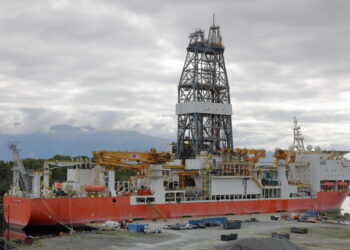

On July 7, 2025, Cyprus announced a significant milestone: ExxonMobil, in partnership with Qatar Energy, has struck gas again—this time at the Pegasus‑1 well, situated in Block 10 of Cyprus’s Exclusive Economic Zone (EEZ). While Glaucus‑1 in 2019 first brought attention to the vast potential of Cypriot offshore gas, Pegasus‑1 represents a strategic reaffirmation of the region’s resource promise.

Preliminary logs reveal a 350‑metre gas‑bearing reservoir at a depth of approximately 1.9 km under the Mediterranean seabed. Although volume estimates are still under review, the similarity in size and geology to Glaucus‑1 suggests a multi‑trillion cubic feet scale. Taken together, these findings underline Cyprus’s evolving role as a regional energy player.
Strategic Depth: Why Pegasus‑1 Matters
Diversifying Europe’s Gas Supply
From a European energy policy perspective, Pegasus‑1 is timely. EU member states continue efforts to diversify away from Russian gas, using Eastern Mediterranean prospects as leverage. Industry analysts suggest the discovery enhances energy independence and supports a shift in geopolitical strategy.
Pegasus‑1 joins a growing gas mosaic that includes Zeus, Cronos, Calypso, Aphrodite, and Glaucus‑1—collectively highlighting a strategic corridor of supply potential. The presence of international players such as Eni, Total, Shell, Chevron, and ExxonMobil strengthens development credibility across the board.

Infrastructure Synergies and Export Options
Of course, raw reserves are half the story—commercial viability depends on infrastructure. Agreements with Egypt are advancing, with pipelines from fields like Cronos and Aphrodite heading toward Egyptian liquefaction facilities. Similar routes could serve Pegasus‑1, either via Egypt’s LNG hubs or through future subsea pipelines.
Ambitious projects like the EastMed pipeline—envisioned to link the Levant, Cyprus, Crete, and mainland Greece before entering Europe—also warrant renewed consideration. While progress has stalled due to depth challenges, cost, and regional tensions, the steady stream of discoveries keeps the project on the table.
A Geopolitical Game‑Changer—With Caveats
Tensions in the Eastern Mediterranean
The region’s energy potential has always come with geopolitical complexity. Cyprus’s EEZ claims overlap with Turkey’s interests, leading to longstanding disputes. Any new drilling can rekindle political friction. Egypt, Israel, and Greece are further shifting alliances, which may bolster cooperation but also introduce diplomatic risks.
The trilateral “Energy Triangle” alliance—linking Cyprus, Israel, and Greece—is robust, underpinned by joint exploration and forum-based dialogue. But escalating events elsewhere (e.g. Israel-Lebanon tensions, Gaza crisis) could impact timelines and investment flows.
Commercial Realities Ahead
Despite optimism, experts remind us that these are still early-stage finds. Extraction, processing, export infrastructure—all require heavy investment, long lead times, and favorable economics. Past disappointments, like the Elektra‑1 well earlier in 2025, showed the unpredictable nature of deepwater exploration.
Additionally, some analysts suggest Eastern Mediterranean gas may be more suitable for regional consumption or Egyptian LNG export, rather than direct European pipeline delivery. Thus, even large discoveries may change regional dynamics more than global markets.
Corporate Commentary: How Companies Respond
Strategic Alliances and Licensing
ExxonMobil, Qatar Energy, Eni, Total, and Chevron have invested in Cyprus since 2017–2019. These majors take a cooperative, block-based licensing approach—sharing technical risk and reward. Egypt’s pipeline arrangements and the EastMed forum bolster confidence for consortium-backed development.
Regional integration is emphasized: Cypriot energy officials are reportedly encouraging joint development across adjacent blocks—Pegasus‑1 with neighboring Cronos and Glaucus‑1 zones—a smart move to optimize infrastructure.
Market Outlook for LNG vs Pipeline Transport
Corporate plans will likely weigh Egypt’s well-established LNG facilities. This avoids upfront pipeline investments, and taps existing infrastructure and clients in Europe and Asia. EastMed-pipeline advocates (and some EU policymakers) argue for long-term supply diversification, but costs remain high and political risks not fully resolved.
A hybrid model—initial LNG export via Egypt, followed by possible pipeline investment—appears the most pragmatic near-term strategy, particularly if additional field appraisals validate supply volumes.
What Lies Ahead: Key Milestones to Watch
| Milestone | Expected Timing | Implication |
|---|---|---|
| Appraisal & Volume Estimation | Next few months | Determines commercial viability |
| Cyprus‑Egypt LNG Export Deal | 2025–26 | Sets foundation for monetization |
| EastMed Pipeline Feasibility Updates | 2025–26 | Critical for long-term planning |
| Regional Diplomacy & Stability | Ongoing | Affects development timeline and investor confidence |
These milestones will shape how quickly Pegasus‑1 moves from discovery to delivery, and whether its gas ends up powering Cyprus, Egypt, Europe—or a combination.
The Pegasus‑1 discovery reinforces the Eastern Mediterranean’s emergence as a credible gas province. While still at an early stage, the find strengthens regional alliances, opens fresh infrastructure debates, and brings corporate strategy into focus—balancing LNG versus pipeline pathways, political constraints, and economic dynamics.
If you’re an energy-sector stakeholder, now is the time to watch appraisal outcomes, legislative moves in Cyprus and Egypt, and how the EU frames its diversification agenda. This discovery isn’t just geological—it’s a strategic energy inflection point.
References
- Reuters: “Exxon Mobil finds natural gas reservoir offshore Cyprus, government says”, July 7, 2025
- Associated Press: “ExxonMobil and partner Qatar Energy find new natural gas deposit off Cyprus”, July 7, 2025
- Reuters: “ExxonMobil drill off Cyprus fails to find gas in commercial amounts”, April 14, 2025
- AP: “Chevron to survey east Mediterranean seabed for pipeline linking gas field to Egypt”, April 7, 2025