
This analysis was inspired by the detailed insights shared by Ido Kalev, whose experience in intelligence, security operations and real-world decision making adds significant depth to the understanding of modern security failures. I sincerely thank him for writing the original piece and for contributing such valuable perspective to this discussion. His reflections illuminate not only the technical gaps but also the human factors that shape the outcomes of critical moments.

October Failure, Tactical Blunders and Strategic Misjudgments
The October failure is the result of many tactical blunders, most of which have already been made public. But it was born from a series of strategic blunders, both of the political, military and intelligence echelons. How did Israel’s magnificent intelligence community miss the biggest and most brutal attack on the country in the last 50 years? The “magic” of being able to see and not be seen through the ‘secret tool’, “high-level intelligence”, is sometimes wonderful and crazy, but also misleading and creates a state of de-stressing, trusting in secret technology more and more. At the same time, the importance of other sources such as “HUMINT” has been increasingly pushed aside. The information is not in the “secret tool”? The information is not important. The one who determines the outcome is human capital. This is one of the main conclusions after October 7th and the explanation for this will come in this article, in my analysis you can understand the insights after the terrible event, insights that existed, but were returned to execution on the ground and on a large scale.

Background: Hamas Preparations Before October 7th
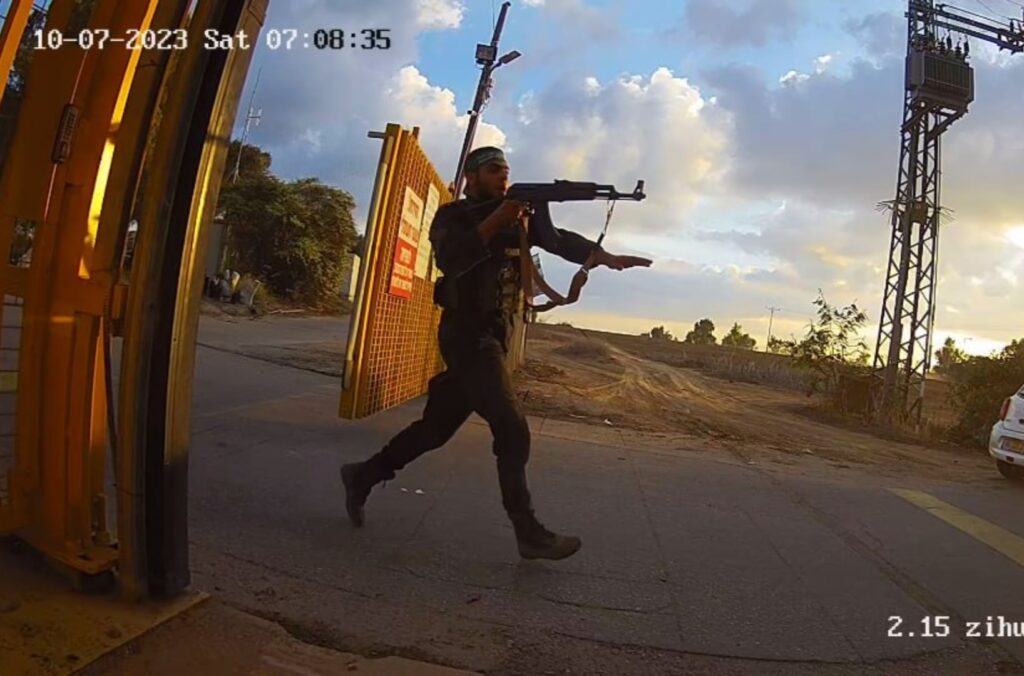
Background and a brief professional explanation of what happened with Hamas before October 7th with a professional explanation of the intelligence tools that the state has. In the first months of 2023, Hamas carried out several exercises designed to simulate the first part of the ground attack, before breaching the fence and penetrating into Israeli territory. A force of 2,200 fighters was deployed to the area several times, and since Hamas did not detect intelligence gathering or movement of IDF forces across the fence, the organization assumed that there was no high alertness on the Israeli side for a major operation of this type. They were right, there was great disdain.
In the night before the October 7th attack, the Shin Bet and 8200 did receive some telltale signs. In addition to the Israeli SIM network that was activated, there were other signals, including two emergency Hamas assets that were opened in the Gaza Strip. It can be assumed that the intelligence system rushed to check what was happening in the “secret vehicle”. There, it seemed to them, nothing special happened there; perhaps Hamas was playing a trick. On Saturday evening, while the dimensions of the disaster had not yet become clear, it was already clear that this was a huge intelligence blunder.
There are many reasons for this miss, and for everything else. But above all other reasons, the intelligence provided by the “secret vehicle” was self-confident in one central thing, that thanks to our superior technology, our creative sense of ingenuity, we undoubtedly see the enemy as he is, and nothing significant can happen to him that we do not know about.
Important Terms At The State Intelligence Level
Human Intelligence (HUMINT)
The classic source of intelligence. Agents recruited from among the enemy population, and used for ongoing reporting or obtaining specific information. The higher the agent is in the hierarchy, the higher quality intelligence he can provide, but it is also very important to recruit agents at lower levels, for example residents “in the neighborhood”, so that they can alert you to any suspicious activity. Example, dozens of Nukhba terrorists gather in a mosque at night during hours that are not usually for prayer.
Visual Intelligence (VISINT)
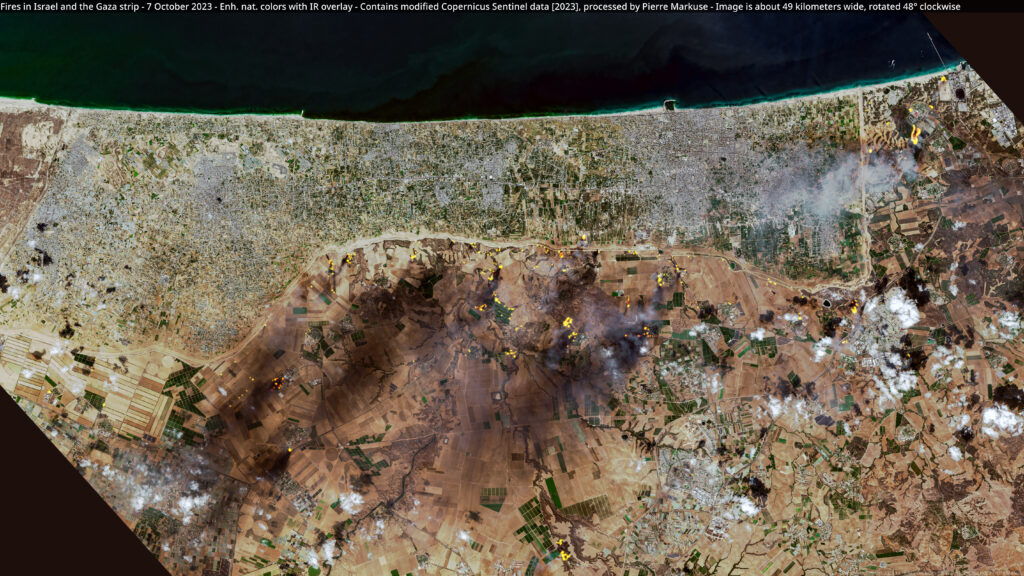
A long series of photographic and observational means, which include, among others, satellite photographs, photographic flights including drones, photographic balloons and surveillance of observation posts. The main goal is to detect a suspicious change in the enemy’s routine, for example increased movement of forces in the fence area, or activity in strategic installations, such as military installations. Example, the IDF’s observation units in the south were supposed to be part of this array, but were separated from the intelligence branch and their voice and contribution were not heard.
Open Source Intelligence (OSINT)
You can learn a great deal about an enemy by monitoring their communication channels, and in recent years, even social networks. Until not many years ago, there was an entire unit that dealt with open source intelligence, called “Hatzov”. But then it was decided to disband it, and its personnel were assimilated among the 8200 units. Only after the outbreak of the war in Gaza was it decided to re-establish “Hatzov”.
Intelligence May Initiate An Operation but It Is The Human Operator Who Determines Its Outcome
All this information brings the article to its main point. Intelligence may initiate an operation but it is the human operator who determines its outcome. Why modern security fails long before it collapses. Intelligence may initiate an operation but it is the human operator who determines its outcome.
The modern security discourse is saturated with intelligence. Data. Sensors. Early-warning systems. Algorithms. Signals. Indicators. Never in history have states, organizations, and corporations had access to so much information, and yet, never have they been so frequently surprised. This is not a contradiction. It is a misunderstanding of where security actually succeeds or fails. Intelligence is essential. But intelligence alone does not protect.
The Illusion Of Intelligence-Centric Security
Intelligence systems are designed to answer a specific question, what is happening and what may happen next. They are not designed to answer a more dangerous one, what do we do when the picture is incomplete, contradictory, or late. In multiple cases I’ve encountered, intelligence was not absent. It was present and still insufficient. Outcomes shifted only when operators changed routine, tempo, or decision logic, often without new information.
Intelligence reduces uncertainty. It never eliminates it. This is the moment most failures occur, not because intelligence was absent, but because decision-making was deferred until certainty appeared. And certainty almost never arrives on time. Modern threats rarely announce themselves clearly. They do not always manifest as mass movements, clear mobilization, or explicit intent. They emerge gradually, through behavioral shifts, through access patterns, through routine exploitation, through proximity rather than force.
Intelligence may detect pieces of this. But it does not live where execution happens. Intelligence failures are easy to label. Intelligence success is harder to measure, and often misunderstood. In most modern operations, intelligence is present, accurate, and timely. Yet outcomes still diverge dramatically. The reason is simple and uncomfortable, intelligence initiates action, but it does not execute it. Intelligence may detect pieces of this. But it does not live where execution happens.
The Critical Gap between Intelligence and Security Operations
There is a structural gap that most systems refuse to confront. Intelligence operates at the level of states, theaters, and organizations. Security operates at the level of people, spaces, and moments. Intelligence can warn that something is forming. Security must decide what to do before it fully forms.
This is why intelligence can be correct and security can still fail. Not because intelligence was wrong, but because the system waited for intelligence to finish speaking before acting. In real-world environments, airports, hotels, embassies, public venues, convoys, delegations, critical infrastructure, the threat does not arrive with a briefing attached. It arrives as an ambiguity.
Where Intelligence Ends, Responsibility Begins
Every operation reaches a point where intelligence hands over control, often silently. From that moment forward, outcomes depend on human judgment, experience under pressure, the ability to act without full clarity, and the courage to disrupt routine before permission arrives. This is not a failure of intelligence. It is its natural boundary. Operations do not succeed because intelligence existed. They succeed because someone knew when to stop waiting for it.
The Human Operator Is Not A Backup, He Is The System
Technology scales awareness. Humans create meaning. Sensors can detect movement. Only people understand context. Algorithms identify patterns. Humans recognize anomalies. Systems react. Operators decide.
This is why the most decisive moments in security rarely look dramatic in retrospect. They are quiet decisions made early, to reroute, to delay, to deny access, to change tempo, to disrupt predictability. Most prevented incidents never appear in reports, because nothing happened. That absence is not luck. It is the product of proactive human intervention.
Why “Nothing Happened” Is The Hardest Outcome To Defend
Security culture rewards visible success, arrests, interceptions, neutralizations. But the most effective security outcomes produce no evidence. No footage. No confrontation. No closure. Just abandonment.
This creates a paradox. The better proactive security performs, the harder it is to justify, especially to systems that demand proof. As a result, many organizations unintentionally retrain their personnel to wait, wait for confirmation, wait for intelligence, wait for authority, and wait until the threat becomes undeniable. By then, the window for prevention has already closed.
Why The Most Important Proof Rarely Exists
One of the deepest structural problems in modern security is the demand for proof. Organizations want evidence that a system worked. Footage. Logs. Alerts. Timelines. Reports. But the highest-performing preventive actions leave none of these behind.
When proactive security works, nothing happens. No confrontation. No escalation. No event to analyze. Only a quiet deviation that disappears. This creates a dangerous feedback loop. Systems begin to trust what can be recorded, not what can be prevented. Operators learn that acting early creates friction, while waiting creates documentation. Over time, this rewires behavior. People stop acting on early deviation and start waiting for confirmation. By the time confirmation arrives, prevention is no longer possible.
This is not a failure of discipline. It is a failure of design. Effective security systems must accept an uncomfortable truth. The absence of an incident is not a lack of performance. It is the highest form of success.
The Role Of Intuition, Misunderstood And Misused
“Gut feeling” is often dismissed as unprofessional. This is a mistake. What experienced operators refer to as intuition is not emotion, it is compressed experience. It is the brain recognizing deviation faster than language can describe it.
This does not replace procedure. It informs action before procedure becomes applicable. Systems that suppress this capability in the name of discipline do not become safer. They become slower. And in security, delay is not neutral.
Modern Threats Exploit Routine, Not Weakness
Most contemporary adversaries do not overpower systems. They study them. They observe schedules, habits, access logic, and behavioral consistency. Routine is not comfortable. Routine is intelligence. This is why proactive security focuses not on reaction, but on denial, denial of predictability, denial of timing, denial of confidence. When routine breaks, planning collapses.
Why Security Is Not A Subset Of Intelligence
This is a critical distinction often ignored. Intelligence informs strategy. Security executes reality. Intelligence belongs to the state. Security belongs to the moment.
No intelligence agency protects an individual step-by-step. No intelligence product escorts a delegation, secures a venue, or manages uncertainty on the ground. That responsibility belongs to operators, human beings required to decide under incomplete information.
The Cost Of Over-Reliance On Systems
As systems grow more advanced, expectations rise unrealistically. When failure occurs, the instinct is to ask, why didn’t intelligence detect this, why didn’t the system flag it.
The more important question is rarely asked, why did no one act when something felt wrong. Technology fails loudly. Human hesitation fails quietly.
Security Is Not a Data Problem
Security does not fail because information was missing. It fails because action was delayed. Intelligence may initiate an operation. But it is the human operator, trained, empowered, and trusted, who determines its outcome.
The most dangerous moment is not when a threat becomes visible. It is when deviation is noticed, and no one is allowed to act yet. That is where modern security must evolve. Not by adding more data, but by restoring confidence in human judgment at the exact point where systems hesitate.
Modern conflict is increasingly decided before contact, before confrontation, before violence. In that space, intelligence sets the stage, but human judgment determines whether the play collapses or survives. Intelligence does not protect systems. People do, under conditions intelligence cannot control.