
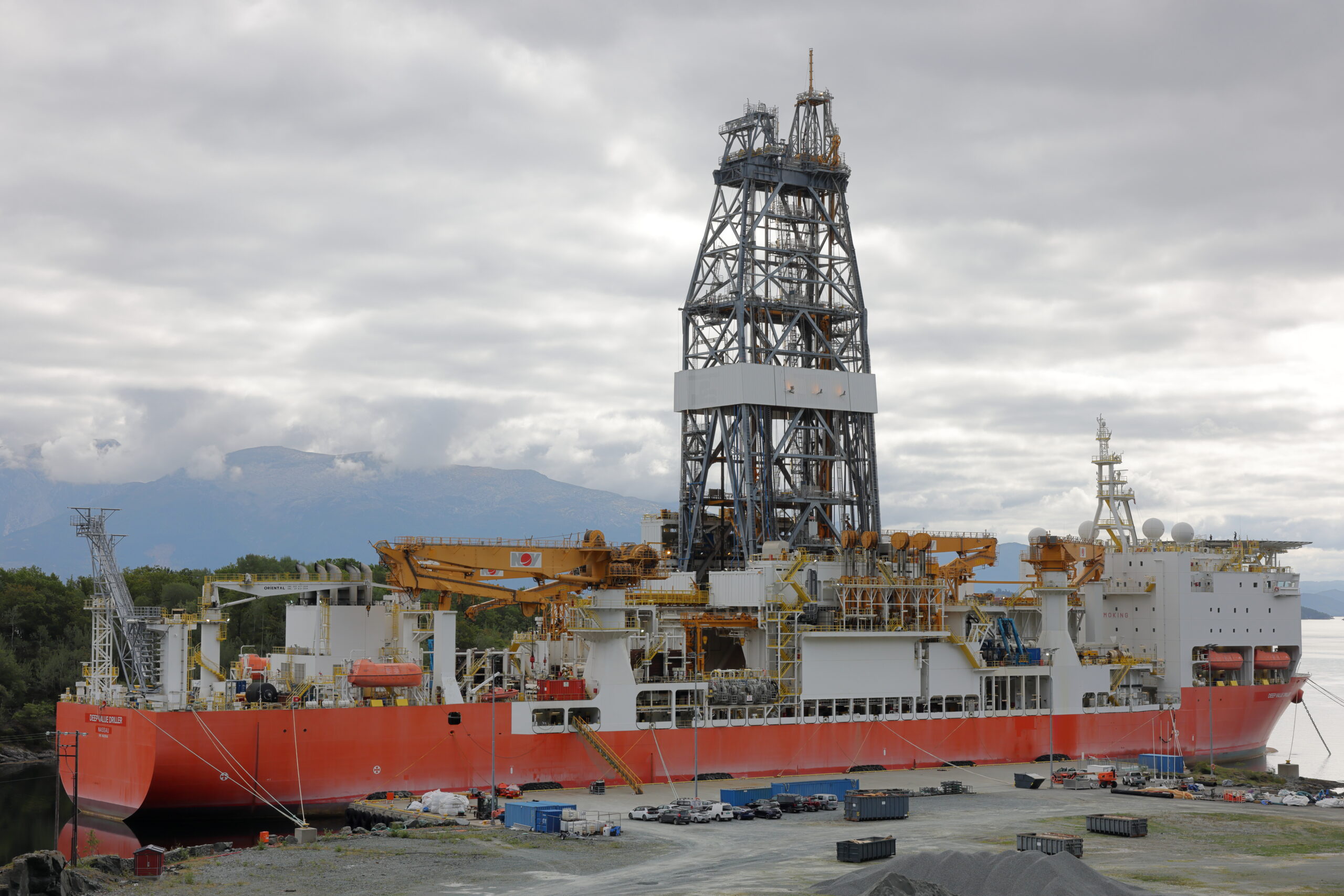
Türkiye has recently expanded its deepwater exploration capabilities with the acquisition of two seventh-generation drillships. These vessels—pioneering in modern offshore technology—are now poised to enhance the country’s capacity in the Black Sea and beyond. Let’s explore what this development truly means for the region, the global offshore market, and Türkiye’s energy independence ambitions.

Offshore Fleet Expansion: From Four to Six
In July 2025, Turkey’s Energy and Natural Resources Ministry finalized a landmark deal: two identical, seventh-generation drillships—each 228 meters long and 42 meters wide—will join the Turkish Petroleum Corporation’s (TPAO) existing fleet of four vessels. Constructed in South Korea by Eldorado Drilling (the former “West Dorado” and “West Draco”), these ships elevate Türkiye into the top four nations globally with the most advanced deep-sea energy capabilities.
Minister Alparslan Bayraktar has confirmed the first ship will arrive within two months, undergoing certification to begin operations by January 2026, with the second becoming operational in February.

What Makes 7th‑Generation Drillships Exceptional?
Seventh-generation drillships represent the pinnacle of offshore drilling technology. They are engineered to:
• Reach ultra-deepwater depths (up to ~12,000 meters)
• Drill in harsh environments with dynamic positioning and dual-rotary systems
• Host large crews (around 200 personnel) in onboard accommodations
• Support logistics with helipads and extensive support equipment
Global offshore analysts note that such vessels command premium day rates—often exceeding $500,000 and even reaching $600,000—highlighting their high market value.
Strategic Timing in the Offshore Market
The current maritime drilling landscape balances opportunity with caution. According to Rystad Energy, deepwater exploration is expected to grow at ~8% annually from 2025 to 2028. However, the recent downturn left many equivalent rigs idle, prompting operators to favor reactivation over commissioning new builds due to cost efficiency.
By acquiring already-built ships at competitive prices—reported at $245 million per vessel—Türkiye is securing top-tier assets while avoiding billions in potential new-build expenditures.
Integration with Sakarya and Göktepe Discoveries
TPAO’s current fleet—Fatih, Yavuz, Kanuni, and Abdülhamid Han—has been pivotal in unlocking the Sakarya Gas Field, a transformative Black Sea project yielding daily gas production around 9.5 million m³ and encompassing reserves estimated at 710–785 billion cubic meters.
With recent additions, Türkiye gains flexibility to not only sustain development at Sakarya but also deploy new rigs toward exploration or appraisal at Göktepe-3, a second major find boosting reserves by ~75 billion m³.
Regional and Global Impact
Elevated Regional Presence
By becoming one of the top four nations with seventh-gen drillships, Türkiye cements its position as a powerful deepwater player. These vessels enhance exploration efforts in the Mediterranean, Black Sea, and potentially off Libyan or eastern Mediterranean shores, supporting regional partnerships.
Boosting Energy Security
Relying on imports for over 90% of its energy, Türkiye has a strategic imperative for domestic gas. These drillships aid in exploiting local reserves—anchoring a path toward reduced dependency and increased supply autonomy.
Aligning with Global Energy Markets
Seventh-gen rigs are in tight supply globally, and Türkiye’s deployment strengthens its asset utilization in a market recovering from post-2014 oversupply. Operational discipline is key: reactivated vessels maximize returns with disciplined chartering.
Economic and Operational Considerations
• Cost Efficiency: Buying second-hand rigs (~$245M each) proved far cheaper than commissioning new vessels priced at $500M–$1B
• Reactivation vs. Newbuild: Market trends show reactivating rigs is quicker and more cost-effective than new builds—a strategy Türkiye employs
• Certification Cycle: Each vessel will undergo formal inspection, accreditation, and upgrades before joining the fleet early next year
Engaging with Readers
What does this mean for you? Whether you’re tracking regional energy security or assessing Türkiye’s role in global markets, these fleet additions are a clear signal: the nation is doubling down on offshore potential. The new drillships not only underscore Türkiye’s ambition—they serve as tangible assets in reshaping its energy landscape.
How will Türkiye leverage these vessels? Will the priority remain on exploration, development, or export-readiness? As these rigs come online between January and February 2026, watch for evolving strategies around partnerships, licensing, and export frameworks—especially into southeastern Europe.
The deployment of seventh-generation drillships marks more than just numerical growth—it signifies technological empowerment, financial foresight, and global competitiveness.
References
- Daily Sabah / Agencies, “Türkiye adds 2 new deep‑sea drilling vessels…,” 18 July 2025
- Türkiye Today Newsroom, “Türkiye’s new deep‑sea drilling ships to be operational by early 2026,” 18 July 2025
- Metal.com, “Türkiye Acquires Two New Seventh‑Gen Deepwater Drilling Vessels,” 18 July 2025