
Drill & Defense
Advertisement
  • Defense
    • Industry News
    • Weapon & Gear Reviews
    • Defense Technologies
    • Military Market Reports
  • Energy
    • Oil & Gas News
    • Energy Technologies
    • Market Trends & Analysis
  • Cross-Sector Insights
    • Defense & Energy Strategy
    • Global Security & Trade Analysis
    • Tech & Innovation Crossover
  • History & Legacy
    • Turning Points in Conflict
    • Legacy Systems & Structures
    • Resource Wars & Strategy
  • Knowledge Base
    • Defense Know-How
    • Energy Insight
  • About
  • Contact
  • Login
  • Register
No Result
View All Result
  • Defense
    • Industry News
    • Weapon & Gear Reviews
    • Defense Technologies
    • Military Market Reports
  • Energy
    • Oil & Gas News
    • Energy Technologies
    • Market Trends & Analysis
  • Cross-Sector Insights
    • Defense & Energy Strategy
    • Global Security & Trade Analysis
    • Tech & Innovation Crossover
  • History & Legacy
    • Turning Points in Conflict
    • Legacy Systems & Structures
    • Resource Wars & Strategy
  • Knowledge Base
    • Defense Know-How
    • Energy Insight
  • About
  • Contact
  • Login
  • Register
No Result
View All Result
Drill & Defense
No Result
View All Result
Home Cross-Sector Insights

The Rise of Commercial Drones in Conflict Zones: A New Layer in Modern Warfare

December 6, 2025
in Cross-Sector Insights, Tech & Innovation Crossover
The Rise of Commercial Drones in Conflict Zones: A New Layer in Modern Warfare

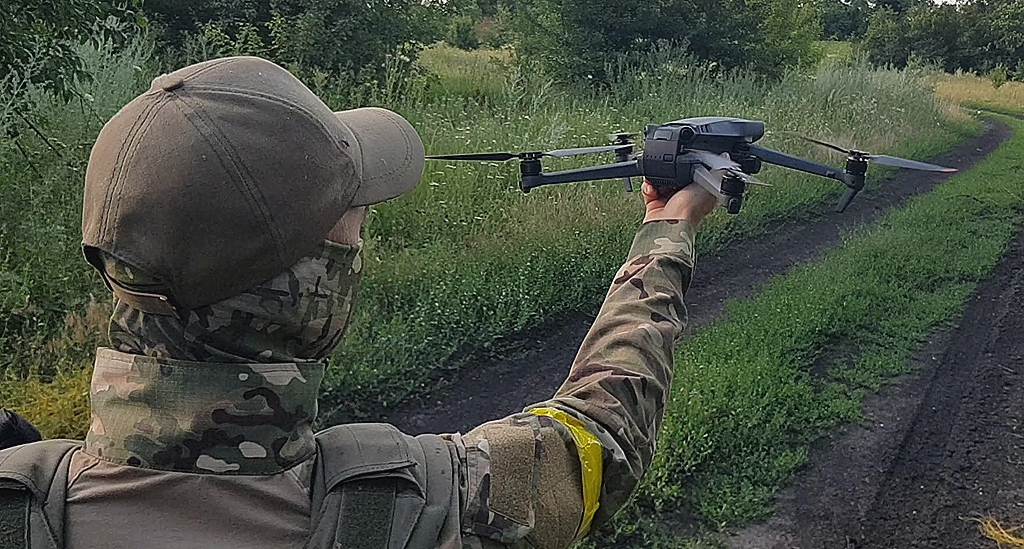
National Guard of Ukraine, CC BY 4.0 , via Wikimedia Commons. Ukrainian soldier with a DJI Mavic Air 2S quadcopter

Share on LinkedInShare on Twitter

Commercial drones were originally created for civilian needs such as photography, surveying and hobby use. Today, however, these same platforms are visible above frontlines in several regions. Their presence is no longer an irregular sight. They have become routine tools for reconnaissance, targeting and battlefield awareness. This shift has not occurred suddenly. It is the result of years of adaptation, improvisation and learning across different conflicts.

Actors on the ground now treat commercial drones as essential tools rather than supplementary ones. It is a development that is reshaping tactics, logistics and the rhythm of operations. For anyone trying to understand modern conflicts, ignoring these systems is no longer an option.


From Civilian Platforms to Battlefield Tools

The earliest use of commercial drones in conflict zones began with simple reconnaissance. Fighters wanted an alternative to exposing scouts or relying on limited optical equipment. A small quadcopter with a camera provided a new angle. It allowed units to observe a road, a trench or a cluster of buildings without risking personnel.

This trend expanded during the fighting in Ukraine after 2014. Units operating in the Donbas gradually integrated small drones into their tactics. They were used to adjust mortar fire, observe enemy movement and create basic maps of defensive positions. When the full-scale invasion began in 2022, both sides had already built a culture around using commercial drones for tactical awareness. This experience accelerated their transformation into standardized battlefield tools.

A similar pattern appeared in other conflicts. The 2020 Nagorno-Karabakh war drew attention for its use of various unmanned systems. Although most attention focused on purpose-built military UAVs, commercial devices also contributed by providing short-range observation and post-strike confirmation. Analysts later highlighted how these simple tools offered commanders a real-time view of tactical events without needing high-end systems.

Studies from multilateral research institutes point out that commercial drones have appeared in conflicts in regions such as Myanmar, Sudan and Ukraine. Non-state actors increasingly rely on them because they are easier to obtain and operate than military-grade systems.
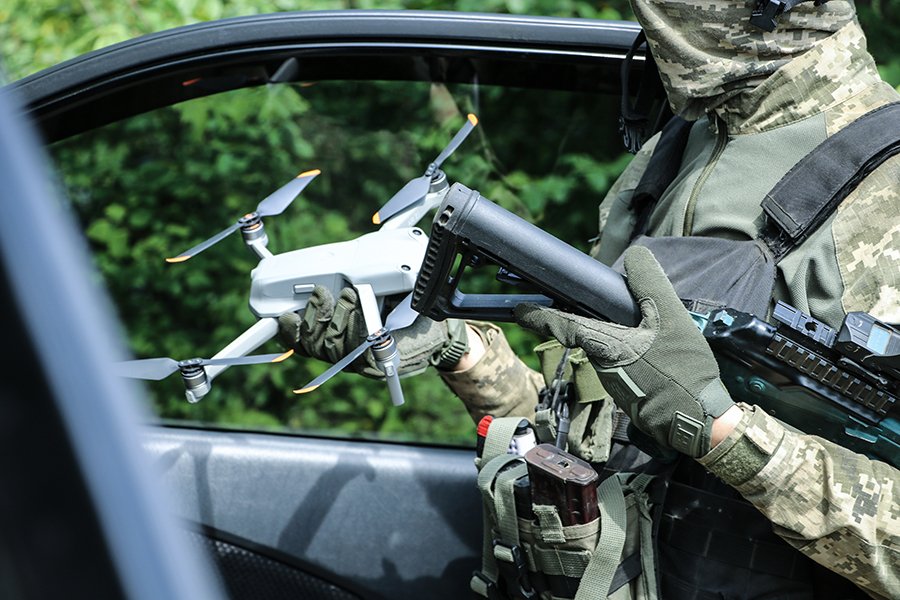
03rd brigade of Territorial Defence Forces of Ukraine soldiers training with DJI Mavic 3 quadcopter. Mil.gov.ua, CC BY 4.0 https://creativecommons.org/licenses/by/4.0, via Wikimedia Commons

Why These Platforms Are Growing in Military Use

Commercial drones owe their widespread adoption to several practical advantages.

The first is accessibility. A drone that can lift a camera and transmit live video can be purchased from global retailers without requiring specialized channels. Even when export controls apply to certain components, workarounds exist and civilian demand keeps production high.

The second advantage is training. Commercial drones are built so that users with no aviation background can operate them confidently. This short learning curve allows militaries and irregular groups to scale drone operations quickly.

The third factor is adaptability. Batteries, mounts, antennas, payload rigs and software modifications can be added with minimal tools. Volunteer groups have developed community-based technical knowledge that continuously improves range, resistance to interference and payload capability.

For these reasons, commercial drones became a low-cost entry point for acquiring an air capability. They will likely remain part of conflict environments for the foreseeable future.

Ukrainian FPV drone with fiber-optic communication channel. АрміяІнформ, CC BY 4.0 https://creativecommons.org/licenses/by/4.0, via Wikimedia Commons

A Blurring Line Between Civilian and Military Technology

Policy makers face an increasingly complex environment because the boundary separating civilian technology from military application has weakened dramatically. Many non-state armed groups obtain drones directly from commercial markets and modify them after purchase.

At the same time, states continue to invest heavily in advanced military UAVs. These platforms carry more sophisticated sensors, but they coexist with cheaper commercial models that fill a different tactical niche. The result is a layered unmanned ecosystem operating above the same terrain. Larger systems provide broad surveillance, while small commercial drones conduct close-range observation or direct attacks at short notice.

This coexistence complicates classification and regulation. A device on the battlefield might be a journalist’s tool, a reconnaissance platform or an improvised weapon. Distinguishing one from another is not always easy.
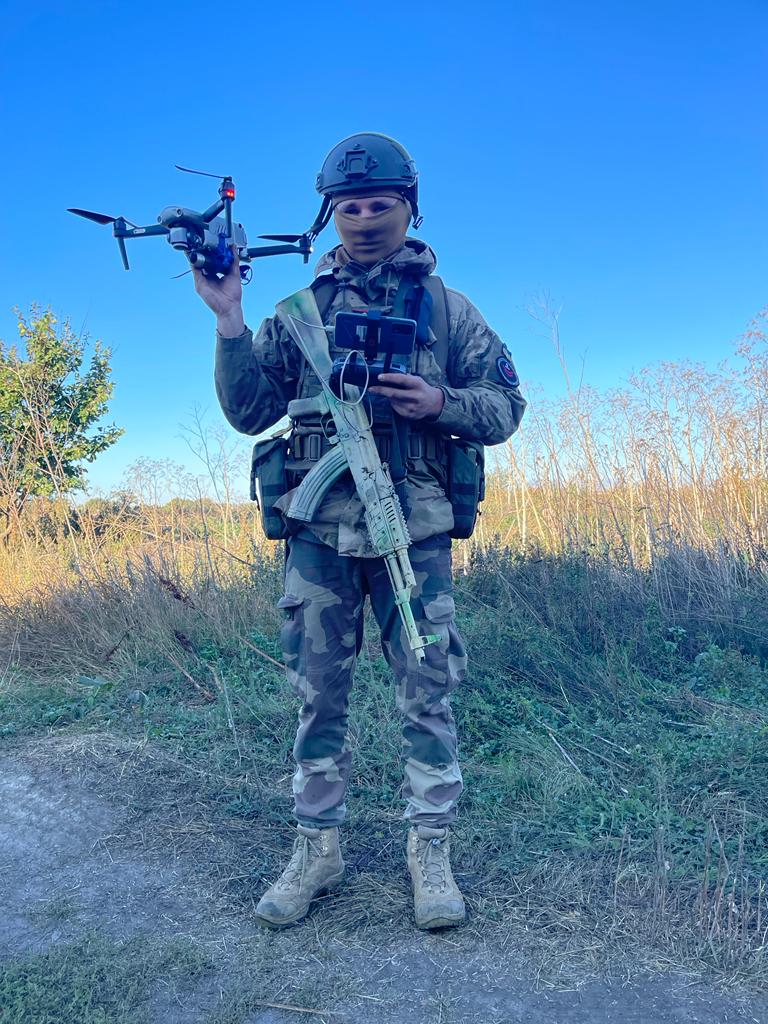
Soldier of Ukrainian 17th Kostiantyn Pestushko Tank Brigade showing a DJI Mavic 2 Pro quadcopter equipped with a VOG-17 bomb.. 17th Kostiantyn Pestushko Tank Brigade, CC BY-SA 4.0 https://creativecommons.org/licenses/by-sa/4.0, via Wikimedia Commons

Tactical Adjustments on the Ground

The presence of commercial drones continuously affects the behaviour of ground forces. Units now assume that open terrain is monitored. Movement patterns shift towards small, dispersed groups rather than concentrated columns. Halts in exposed areas are minimized. Vehicle crews camouflage their positions more consistently.

Reports analyzing the Russia–Ukraine conflict highlight how drones are used in nearly every phase of combat. They track enemy patrols, guide artillery, monitor logistics routes and observe defensive construction. Their availability has increased transparency on the battlefield, making concealment a priority again.

Smaller armed groups also benefit. They gain the ability to watch checkpoints, identify vulnerable points along roads or adjust ambush locations. These capabilities once required resources that many groups could not obtain.
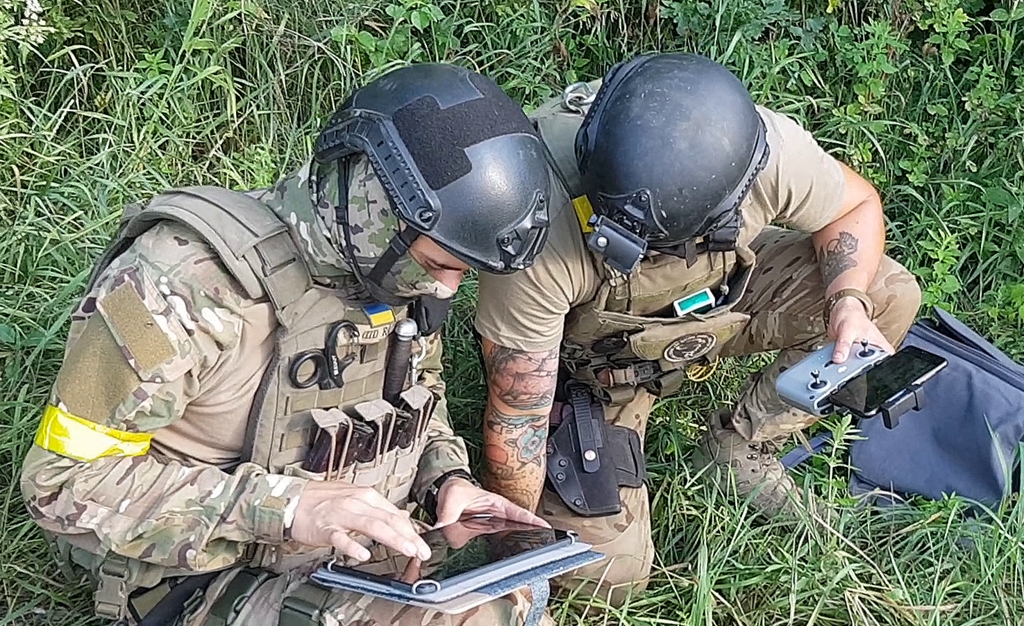
103rd brigade of Territorial Defence Forces of Ukraine soldiers training with DJI Mavic 3 quadcopter. Mil.gov.ua, CC BY 4.0 https://creativecommons.org/licenses/by/4.0, via Wikimedia Commons

Impact on Civilians and Humanitarian Operations

Commercial drones raise practical risks for civilians and humanitarian actors. The International Committee of the Red Cross emphasizes that legal obligations regarding distinction, proportionality and precautions in attack apply regardless of the technology used.

However, several complications arise in conflict zones. A drone in the sky may belong to any number of actors. Civilians, media workers and humanitarian personnel may use identical models to those operated by armed groups. Misidentification becomes easier. In addition, commercial drones can be used to target or observe infrastructure that is vital to civilian life. Electricity distribution, water systems and communication towers can be mapped or monitored without advanced equipment.

Because commercial drones circulate through civilian supply chains, monitoring their spread is difficult. Once they arrive in a region, tracking their transfer between groups becomes challenging.


Counter-Drone Measures and Their Limitations

As commercial drones have become more common, governments and militaries have increased spending on counter-UAS systems. These solutions include jamming devices, spoofing technologies, net-based interceptors and kinetic options.

Despite these efforts, eliminating commercial drones remains difficult. Electronic warfare systems may interfere with friendly equipment or prove ineffective against modified drones. Kinetic solutions risk unintended damage, especially in urban settings. Furthermore, some legal frameworks restrict interference with airborne objects regardless of their use.

Militaries are experimenting with a combination of electronic and physical defenses, but none of these methods provide complete protection. Meanwhile, commercial drones remain inexpensive and replaceable. This imbalance will likely persist.


A Continued Transformation of the Battlespace

Commercial drones represent a long-term shift rather than a temporary phase. Civilian technology evolves rapidly and consistently outpaces traditional procurement cycles. Global supply chains ensure widespread access to advanced components. Lessons learned in one conflict spread quickly to others.

These factors mean that commercial drones will continue to influence how conflicts unfold. They shape observation, decision speed and the visibility of movements. They do not determine outcomes alone, but they influence conditions on the ground in ways that commanders and analysts can no longer ignore.


References

  • CNA. Drones Over Ukraine: Commercial Technologies in Combat. 2023.
  • Hecht, E. “Drones in the Nagorno-Karabakh War: Analyzing the Data.” Military Strategy Magazine, 2022.
  • Australian Army Research Centre. Drones in Modern Warfare: Lessons Learnt from the War in Ukraine. Occasional Paper No. 29, 2024.
  • UNIDIR. “Armed and Dangerous? A Brief Overview of Uncrewed Aerial Systems – Risks, Impacts and Avenues for Action.” 2024.
  • UNIDIR. “Do Not Try This at Home! Current Trends and Developments in Improvised Weapons Production.” 2025.
  • SIPRI. I. Global Trends in Arms Transfers, 2018–22. SIPRI Yearbook 2023, Chapter 6.

Previous Post

Deepfake Deception: The Phantom Siege Reshaping Espionage

Next Post

Common Misconceptions About ITAR: What Organizations Should Actually Know

Related Posts

Israel’s F-15 News: What Actually Happened, and Why It Matters
Cross-Sector Insights

Israel’s F-15 News: What Actually Happened, and Why It Matters

January 1, 2026
SDF and HTS: Managing Tension Without Open Conflict in Northern Syria
Cross-Sector Insights

SDF and HTS: Managing Tension Without Open Conflict in Northern Syria

December 26, 2025
What 2025 Taught Us About Defense and Energy: Five Lessons for 2026
Cross-Sector Insights

What 2025 Taught Us About Defense and Energy: Five Lessons for 2026

December 24, 2025
The New Taiwan Arms Package and China’s “Stop” Message: What Actually Changed
Cross-Sector Insights

The New Taiwan Arms Package and China’s “Stop” Message: What Actually Changed

December 19, 2025
The Black Sea’s Evolving Battlespace: Ukraine’s Maritime Operations and Shifting Security Dynamics
Cross-Sector Insights

The Black Sea’s Evolving Battlespace: Ukraine’s Maritime Operations and Shifting Security Dynamics

December 12, 2025
Black Sea Tanker Explosion: New Details on the Twin Incidents
Cross-Sector Insights

Black Sea Tanker Explosion: New Details on the Twin Incidents

November 29, 2025
Next Post
Live firing of the Light Forces Anti-Tank Guided Weapon (LFATGW) Javelin.

Common Misconceptions About ITAR: What Organizations Should Actually Know

  • Trending
  • Comments
  • Latest
Blackwater PMC

After Blackwater: How PMCs Evolved, Professionalized, and Fragmented

September 13, 2025
Blackwater PMC

Inside Iraq’s Security Market: How Private Power Shapes a Fragile State

October 6, 2025
Operation Enduring Freedom

What Exactly Is a Private Military Company (PMC)?

September 6, 2025
Repkon Nammo in Denmark: What This Nordic Ammunition Play Really Signals

Repkon Nammo in Denmark: What This Nordic Ammunition Play Really Signals

August 21, 2025
A Historic $142 Billion Arms Deal: Unpacking the U.S.-Saudi Agreement

A Historic $142 Billion Arms Deal: Unpacking the U.S.-Saudi Agreement

A Silent Revolution on the Battlefield: AI-Enabled Tactical Communication Systems

A Silent Revolution on the Battlefield: AI-Enabled Tactical Communication Systems

Cominf.org, CC BY-SA 3.0 , via Wikimedia Commons

Is Europe Really Reducing Its Dependence on Russian Gas?

What is ITAR? The Invisible Line in Global Defense Trade

What is ITAR? The Invisible Line in Global Defense Trade

Israel’s F-15 News: What Actually Happened, and Why It Matters

Israel’s F-15 News: What Actually Happened, and Why It Matters

January 1, 2026
SDF and HTS: Managing Tension Without Open Conflict in Northern Syria

SDF and HTS: Managing Tension Without Open Conflict in Northern Syria

December 26, 2025
What 2025 Taught Us About Defense and Energy: Five Lessons for 2026

What 2025 Taught Us About Defense and Energy: Five Lessons for 2026

December 24, 2025
The New Taiwan Arms Package and China’s “Stop” Message: What Actually Changed

The New Taiwan Arms Package and China’s “Stop” Message: What Actually Changed

December 19, 2025

Recent News

Israel’s F-15 News: What Actually Happened, and Why It Matters

Israel’s F-15 News: What Actually Happened, and Why It Matters

January 1, 2026
SDF and HTS: Managing Tension Without Open Conflict in Northern Syria

SDF and HTS: Managing Tension Without Open Conflict in Northern Syria

December 26, 2025
What 2025 Taught Us About Defense and Energy: Five Lessons for 2026

What 2025 Taught Us About Defense and Energy: Five Lessons for 2026

December 24, 2025
The New Taiwan Arms Package and China’s “Stop” Message: What Actually Changed

The New Taiwan Arms Package and China’s “Stop” Message: What Actually Changed

December 19, 2025
Drill & Defense

Drill & Defense is an independent platform providing insights into firearms, defense technologies, and energy sectors. We deliver clear, practical content for professionals, enthusiasts, and industry followers worldwide.

Follow Us

Browse by Category

  • Cross-Sector Insights
  • Defense
  • Defense & Energy Strategy
  • Defense Know-How
  • Defense Technologies
  • Energy
  • Energy Insight
  • Energy Technologies
  • Global Security & Trade Analysis
  • History & Legacy
  • Industry News
  • Knowledge Base
  • Legacy Systems & Structures
  • Market Trends & Analysis
  • Military Market Reports
  • Oil & Gas News
  • Resource Wars & Strategy
  • Tech & Innovation Crossover
  • Turning Points in Conflict
  • Weapon & Gear Reviews

Recent News

Israel’s F-15 News: What Actually Happened, and Why It Matters

Israel’s F-15 News: What Actually Happened, and Why It Matters

January 1, 2026
SDF and HTS: Managing Tension Without Open Conflict in Northern Syria

SDF and HTS: Managing Tension Without Open Conflict in Northern Syria

December 26, 2025

© 2025 Drill & Defense. All rights reserved. Independent insights on firearms, defense, and energy. For business inquiries: info@drillanddefense.com | PRIVACY POLICY | COOKIE POLICY | TERMS AND CONDITIONS

Manage Consent

We use cookies to improve your experience. You can accept or refuse cookies; however, some features may not function properly without your consent.

Functional Always active
The technical storage or access is strictly necessary for the legitimate purpose of enabling the use of a specific service explicitly requested by the subscriber or user, or for the sole purpose of carrying out the transmission of a communication over an electronic communications network.
Preferences
The technical storage or access is necessary for the legitimate purpose of storing preferences that are not requested by the subscriber or user.
Statistics
The technical storage or access that is used exclusively for statistical purposes. The technical storage or access that is used exclusively for anonymous statistical purposes. Without a subpoena, voluntary compliance on the part of your Internet Service Provider, or additional records from a third party, information stored or retrieved for this purpose alone cannot usually be used to identify you.
Marketing
The technical storage or access is required to create user profiles to send advertising, or to track the user on a website or across several websites for similar marketing purposes.
  • Manage options
  • Manage services
  • Manage {vendor_count} vendors
  • Read more about these purposes
View preferences
  • {title}
  • {title}
  • {title}
No Result
View All Result
  • Defense
    • Industry News
    • Weapon & Gear Reviews
    • Defense Technologies
    • Military Market Reports
  • Energy
    • Oil & Gas News
    • Energy Technologies
    • Market Trends & Analysis
  • Cross-Sector Insights
    • Defense & Energy Strategy
    • Global Security & Trade Analysis
    • Tech & Innovation Crossover
  • History & Legacy
    • Turning Points in Conflict
    • Legacy Systems & Structures
    • Resource Wars & Strategy
  • Knowledge Base
    • Defense Know-How
    • Energy Insight
  • About
  • Contact
  • Login
  • Register

© 2025 Drill & Defense. All rights reserved. Independent insights on firearms, defense, and energy. For business inquiries: info@drillanddefense.com | PRIVACY POLICY | COOKIE POLICY | TERMS AND CONDITIONS