
Understanding wartime leadership often requires stepping back from the mythology that builds around great figures. Evaluating a leader like Winston Churchill is not an exercise in nostalgia. It is an analytical opportunity. Churchill worked at the intersection of military operations, intelligence, political messaging, and energy security during one of the most volatile periods in modern history. His decisions created precedents that continue to influence how states think about defense, supply lines, and national vulnerability.

This piece blends the earlier analysis of Churchill’s wartime decision making with his transformational role in shaping modern energy security. It is written for readers who approach history not as a distant narrative, but as a set of recurring strategic patterns relevant to today’s geopolitical environment.
From political uncertainty to strategic clarity
Churchill entered office at a moment when European stability was collapsing. The early months of his leadership were filled with contradictory intelligence reports, contested military assessments, and the emotional shock of battlefield setbacks. He used rhetoric not as decoration but as a tool to stabilize expectations. By framing Britain’s intent clearly, he bought time for institutions to reorganize and for military commands to develop operational plans freed from the pressure of defeatism.
His communication strategy served two simultaneous functions. It reassured the domestic audience while signaling to potential allies that Britain considered resistance a longterm commitment rather than a symbolic gesture. This dual messaging structure remains central in contemporary crisis leadership.
Intelligence integration as a habit rather than an exception
Churchill recognized that intelligence only matters when it is consumed quickly, questioned properly, and integrated with operational planning. During the Second World War, Ultra decrypts coming from Bletchley Park gave London deep visibility into German intentions. Churchill insisted on receiving intelligence briefs rapidly and demanded that strategic planners use these insights actively instead of treating them as detached observations.
Several patterns from his approach remain relevant for security professionals. He maintained direct oversight without micromanaging technical processes. He encouraged dissenting interpretation rather than rewarding sanitized consensus. He protected sources even when secrecy limited political explanations. Most importantly, he turned intelligence into action. Convoy routes changed. Air priorities shifted. Alliance decisions reflected the wider information picture.
For modern defense analysis, the lesson is not about codebreaking. It is the architecture. Intelligence was not isolated in a separate institutional compartment. It shaped the tempo of decisions and the allocation of limited resources.
Civil–military relations under prolonged operational strain
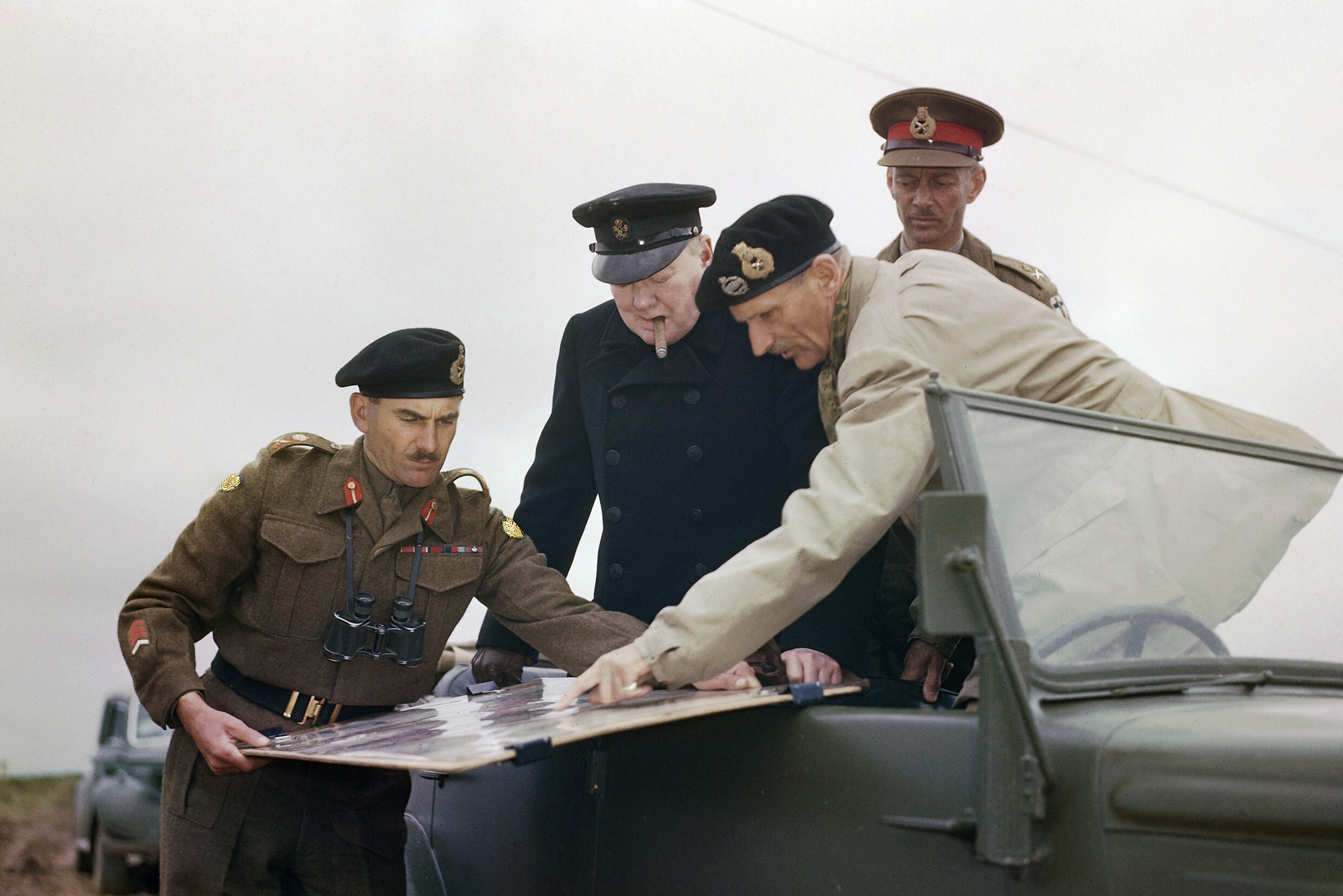
The War Cabinet and the military chiefs functioned as a continuous negotiation arena. Churchill pressed for scenarios that carried political necessity but operational uncertainty. Generals countered with logistical constraints and measured risk assessments. Out of this friction emerged a system that, despite strong personalities, prevented a single perspective from dominating.
His method was confrontational but not destructive. He challenged assumptions to force clarity. He requested alternative options rather than accepting the first proposal. He respected institutional boundaries while still asserting civilian primacy. This balance between pressure and restraint allowed Britain to maintain strategic coherence despite the magnitude of the conflict.
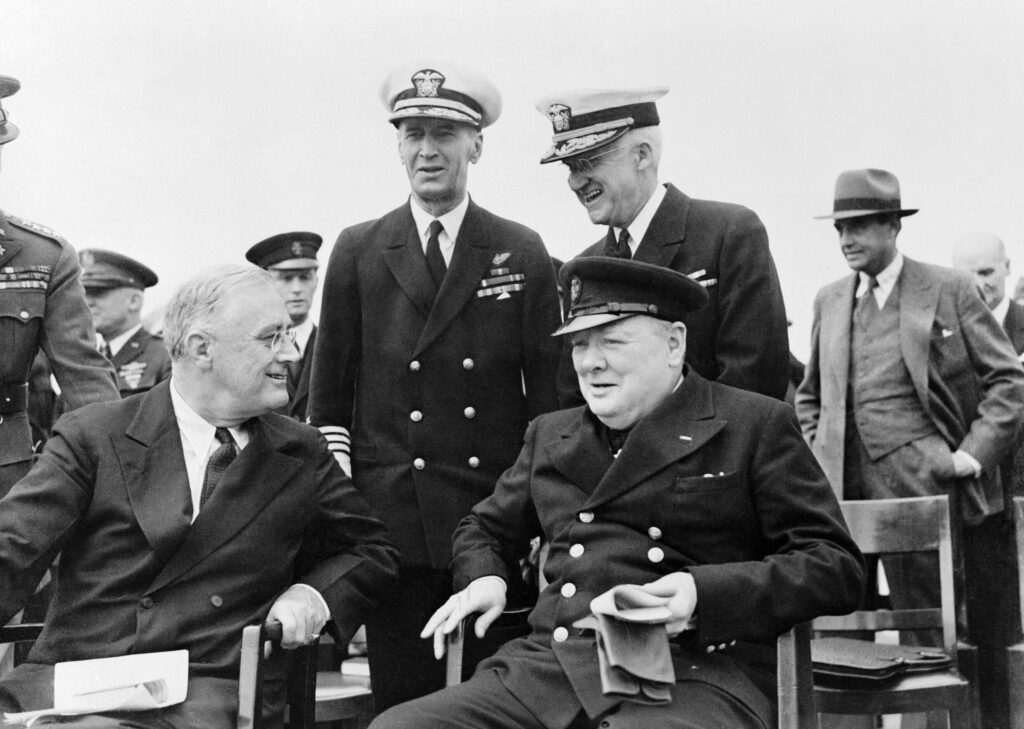
Today’s defense institutions operate under similar tensions. The challenge is not avoiding disagreement. It is creating a structure where disagreement improves decision quality rather than paralyzing it.
Public morale as a strategic variable
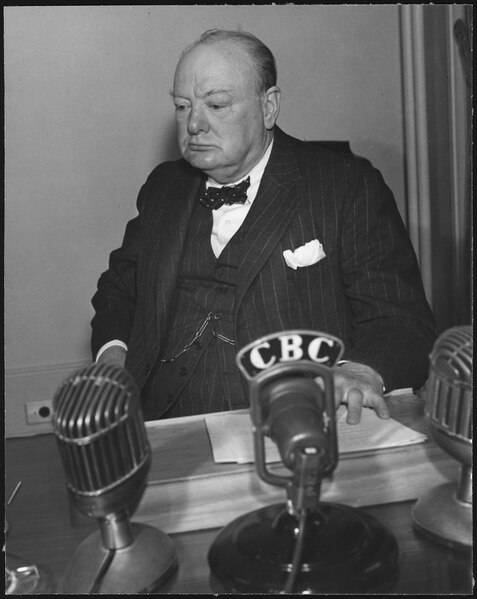
During the Blitz, communication was not a secondary activity. Churchill treated morale as a component of national resilience with direct implications for recruitment, production, and international credibility. His visits to bombed districts, his visible presence in London, and his speeches that framed hardship as part of a longer struggle all contributed to maintaining social stability.
Modern strategic communication still builds on this logic. When infrastructure is attacked or supply chains are disrupted, public confidence becomes a measurable factor in national security. Churchill demonstrated how leadership presence can stabilize public expectations even when operational outcomes remain uncertain.
Energy security as a strategic foundation
Churchill’s impact on energy security began decades before the Second World War. As First Lord of the Admiralty, he made a controversial but transformational decision: converting the Royal Navy from coal to oil. This improved speed, range, and logistical efficiency, but it created a new vulnerability. Coal was abundant within the British sphere. Oil was not.
This shift forced Britain to rethink national security through the lens of external resource dependency. Churchill concluded that energy security was not simply about fuel. It was about control, diversification, and longterm geopolitical positioning.
He pushed for a state investment in the Anglo Persian Oil Company, ensuring a reliable supply for the fleet. This model of combining state authority with commercial reach became one of the earliest examples of strategic energy governance. It established a template still seen today in national oil companies, defense linked energy contracts, and government backed supply investments.
Churchill also understood that energy vulnerability shaped diplomacy. Britain’s engagement in the Middle East became increasingly structured around protecting infrastructure, securing transit routes, and developing reliable access to extraction zones. This introduced a framework where military presence, political stability, and energy production formed an interconnected strategic equation. Much of today’s global energy architecture follows this same pattern.
Alliance management built on shared strategic dependencies
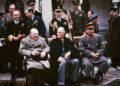
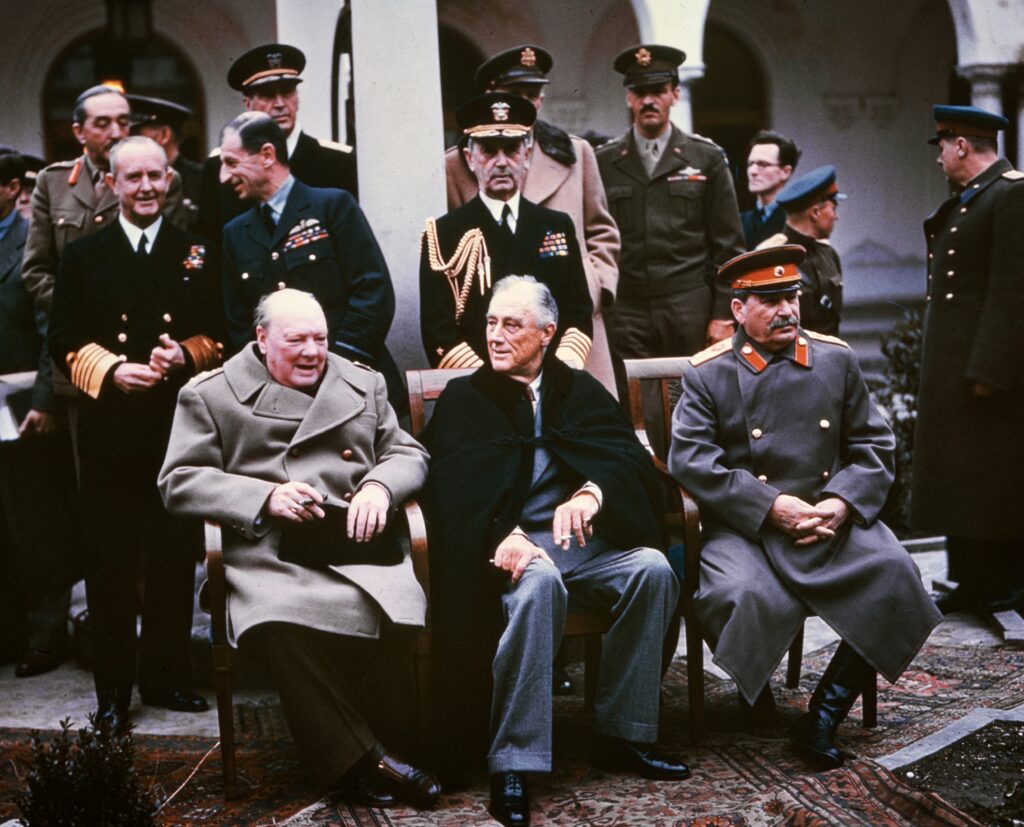
Churchill’s partnership with the United States was not only military. It was also infrastructural and economic. British energy needs and American industrial capacity complemented each other. The Combined Chiefs of Staff structure formalized cooperation not just in operations but in procurement, technology sharing, and logistical planning.
The principle behind this partnership still defines modern alliance systems. Nations rarely share risk unless they share information and industrial leverage. Churchill’s wartime leadership demonstrated that alliances function best when built around integrated supply chains and compatible strategic dependencies.
Why Churchill remains relevant for defense and energy analysts today
Churchill does not offer a list of ready made solutions. What he offers is a structure for thinking.
He treated information, logistics, public endurance, energy supply, and alliance credibility as interconnected pillars rather than isolated topics. He understood that a nation’s ability to project power depends as much on fuel reserves and industrial capacity as on battlefield courage. He recognized that intelligence is only valuable when it changes decisions. He demonstrated that leadership is a continuous balancing act between political intent and operational reality.
For readers focused on defense and energy analysis, Churchill represents one of the earliest examples of modern strategic architecture. His era produced the foundations of what we now call integrated deterrence, supply chain resilience, and comprehensive national security. Studying his approach is not about admiring the past. It is about understanding the origins of the system we still operate within.
References
- The National Archives (UK) – Churchill War Cabinet Papers
- International Churchill Society – Finest Hour Journal
- GCHQ – British Codebreaking and Ultra Program