

The Black Sea continues to demonstrate how rapidly a regional conflict can spill into maritime risk. Late on November 28, 2025, two oil tankers connected to Russia’s shadow fleet experienced separate explosions in different areas off the Turkish coast. Both incidents occurred within hours of each other, and the timing alone has raised questions among observers who have followed the evolution of maritime attacks linked to the Russia Ukraine conflict.

As with every major maritime incident in this region, clarity is not immediate. Instead, we are left with fragments from official statements, satellite updates, and the cautious language of early investigations. Yet even in this early stage, the situation already offers substantial material for analysis. If you follow maritime security, sanctions compliance, or energy logistics, this incident deserves close attention.
What We Know So Far
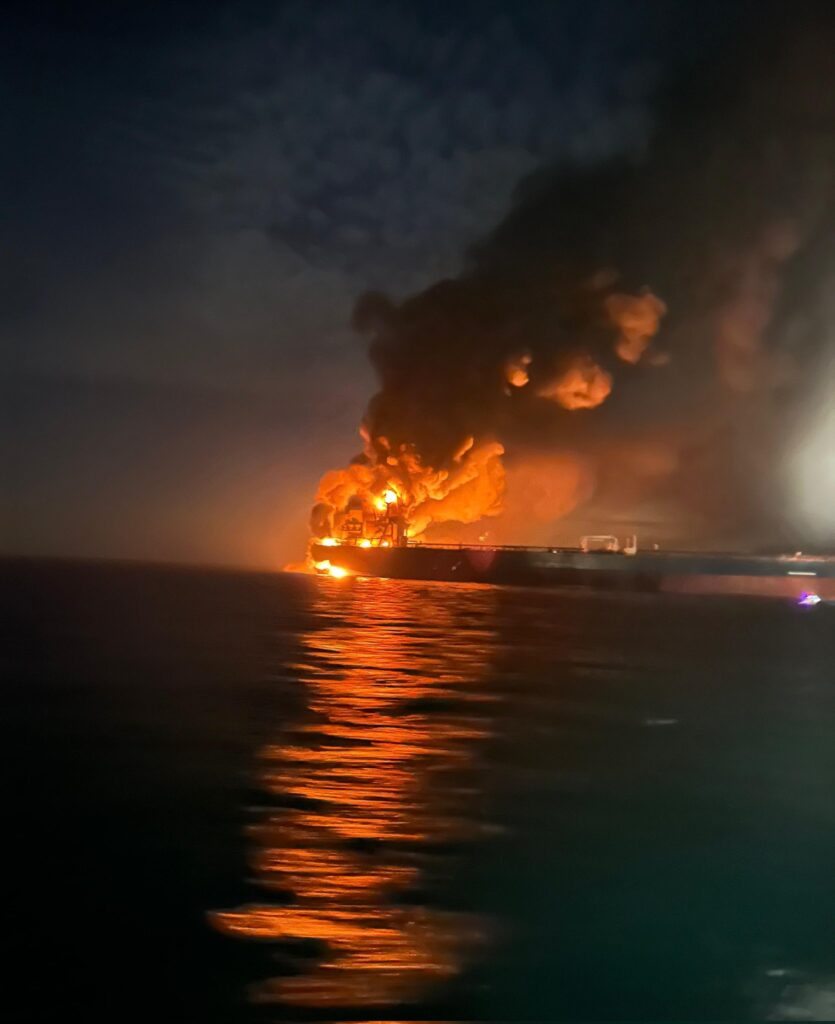
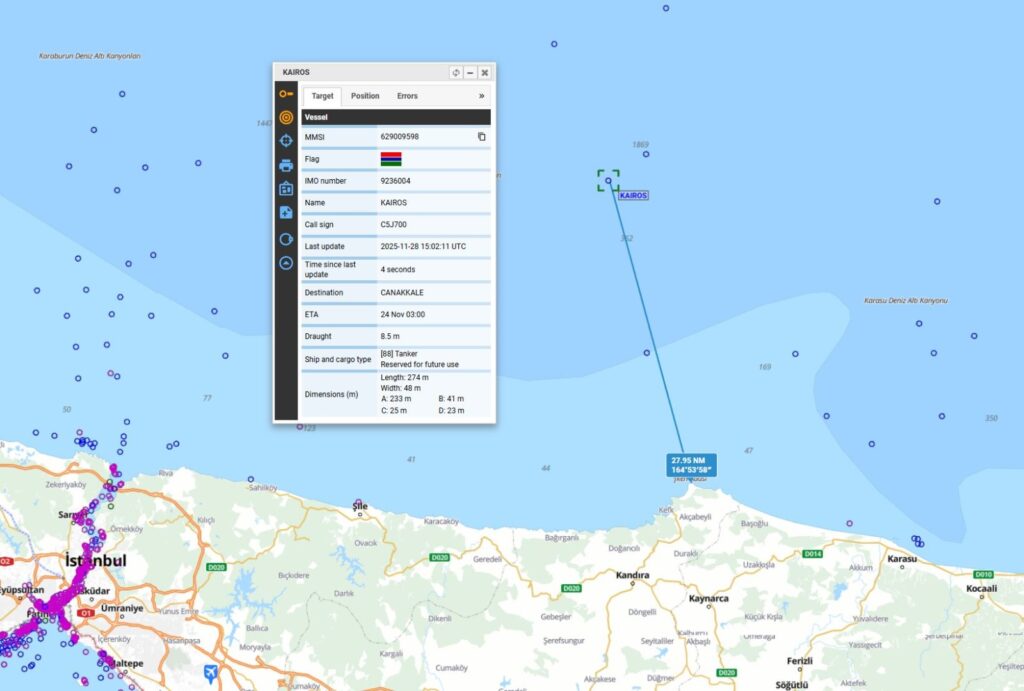
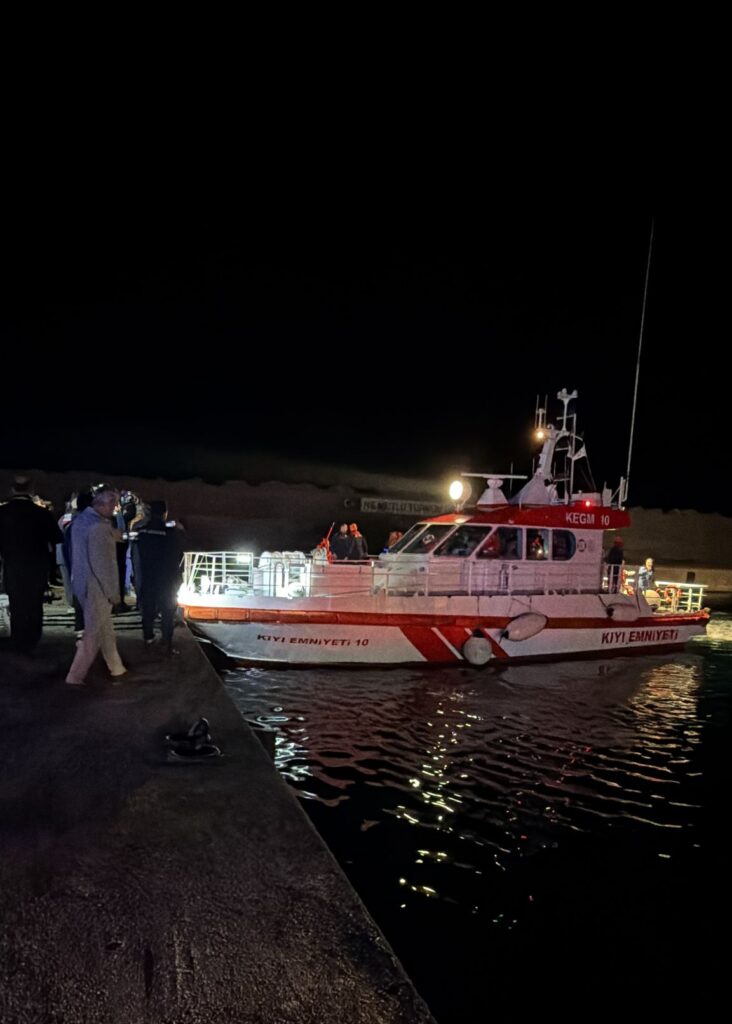
The first reported explosion involved the tanker Kairos. The vessel was empty and sailing under a Gambian flag while heading toward the Russian port of Novorossiysk. Turkish authorities confirmed that the blast was caused by an external impact. The crew of 25 was rescued without injuries and firefighting teams were dispatched to control the flames.
A second explosion followed a few hours later. This time the affected vessel was the tanker Virat, also empty at the time. It was located farther offshore when smoke was reported rising from the engine section. The crew of 20 was evacuated safely as well. The two incidents unfolded in separate zones but occurred closely enough in time to raise concern among maritime security analysts.
Both ships are already well known within sanctions monitoring circles. They have been described by foreign media as part of the so called shadow fleet, a loose network of older or re flagged tankers used to maintain Russian oil exports despite sanctions. Several of these vessels have been removed from international registries for irregular documentation, creating ongoing concerns over their safety and legal status.
This broader context matters because the explosions did not occur in a political vacuum. They hit ships that sit at the center of a contested economic system built to bypass international oversight. Whether these explosions were caused by mines, drones, or something else entirely, the implications extend far beyond the individual vessels.
Possible Causes Under Investigation
Turkish officials have avoided giving a definitive answer at this stage. The language used in the early statements was intentionally broad. Authorities noted that the explosions may have been caused by drifting mines, airborne weapons, or surface drones. Each possibility aligns with known maritime risks present in the region.
Floating mines are a persistent hazard in the Black Sea. Since the early years of the Russia Ukraine war, mines have been deployed by multiple parties. Some have broken free from their original positions and now drift unpredictably with currents. There have been several recent examples of civilian vessels encountering such mines.
Another scenario involves unmanned surface or aerial drones. Over the past two years, various actors have used remote maritime weapons to strike military infrastructure, naval targets, and occasionally commercial vessels associated with wartime logistics. Deliberate attacks on Russian linked tankers would fit this pattern but also mark a notable escalation if confirmed.
Missiles cannot be excluded either. While less common in open sea engagements, they remain within the technical capabilities of regional military actors. Still, the absence of a public claim of responsibility and the precision required for such strikes make this option less favored in early foreign analyses.
Until the investigation progresses, the picture will remain incomplete. What is clear is that the twin explosions point to a volatile environment where commercial shipping is increasingly exposed to the strategic calculations of conflict.
Why These Incidents Matter
Impact on Russia’s Shadow Fleet
The damage to two sanctioned tankers in a single day immediately affects the operational capacity of Russia’s shadow fleet. Every damaged vessel forces exporters to replace or reroute shipping, increases insurance pressure, and deepens uncertainty around long term sanctions avoidance models. Foreign observers have already noted that some shipowners and insurers have begun distancing themselves from vessels considered high risk or non transparent.
If the investigation concludes that these ships were deliberately targeted, the consequences could stretch into strategic deterrence. Disrupting oil exports is a way to undermine revenue streams. Even without clear attribution, consistent disruption can erode confidence in the viability of sanctions evasion routes.
Regional Security Concerns
Both explosions occurred near busy maritime zones used by dozens of neutral commercial vessels. Türkiye’s coastline is lined with ports, refineries, and shipyards that play a central role in regional commerce. Any incident involving fire, drifting ships, or unexploded ordnance risks spreading chaos into these vital sea corridors.
Countries like Türkiye, Romania, and Bulgaria already face the challenge of keeping their waters safe while avoiding direct entanglement in the conflict. Repeated explosions near their zones of responsibility only intensify the need for surveillance, mine clearing, and diplomatic engagement.
Energy Market Sensitivity
While both tankers were empty, the market impact should not be underestimated. Each threat to shipping lanes contributes to price volatility. Even the possibility that loaded tankers could be targeted in the future introduces uncertainty that traders and governments cannot ignore. For the global energy system, stability in the Black Sea is not a regional issue but a structural one.
What Analysts Are Watching
Several key questions will shape how this event is interpreted in the coming days and weeks.
First, who or what caused the explosions. Verification will take time but will define the political consequences. If mines were responsible, the conversation will shift toward demining operations and navigational hazard warnings. If drones were used, it may indicate an escalation in covert maritime engagements focused on economic attrition.
Second, how insurers and classification societies react. Many firms already hesitate to cover ships linked to sanctions exposure. New incidents will only accelerate that trend and may isolate smaller operators.
Third, the environmental dimension. Even empty tankers carry fuel residues and structural materials that can contaminate waters when damaged. Should future attacks involve loaded vessels, the ecological impact could be severe.
Finally, the diplomatic angle. Strikes near Turkish waters always raise questions about jurisdiction, patrol responsibilities, and regional security coordination. Türkiye’s position as a central maritime hub makes every incident politically sensitive.
Closing Perspective
The explosions on the Kairos and Virat mark a significant moment in the ongoing maritime tensions of the Black Sea. Whether they turn out to be accidents, drifting mines, or deliberate actions, the results are the same. They expose vulnerabilities in shipping tied to sanctions evasion, they raise operational risks for every vessel entering these waters, and they point to a maritime environment shaped increasingly by unconventional warfare.
For observers of defense, energy, and maritime security, this event is another indicator that the conflict continues to evolve in ways that challenge predictable boundaries. The Black Sea has become more than a transit route. It is now a contested space where economic, political, and military pressures collide, and where even commercial tankers can suddenly become part of a much larger strategic equation.
Sources
Euronews, “Two ships of Russia’s sanctioned shadow fleet caught fire in the Black Sea off Türkiye,” 28 November 2025.
Associated Press, “Turkish official says Black Sea tankers may have been hit by mines, missiles or drones,” 28 November 2025.
The Moscow Times, “Sanctioned oil tankers hit by explosions while en route to Russia,” 29 November 2025.