
Some rifles become known because they are widely exported. Some become famous because they appear in conflicts across several continents. Others become icons because their shape is almost impossible to confuse with anything else. The FAMAS belongs strongly to the third group.

For decades, the FAMAS represented a very specific French approach to infantry weapons: compact, unconventional, technically ambitious, and independent in spirit. It was not simply another 5.56 mm rifle following the same pattern as the AR-15 family. It was a bullpup rifle with a distinctive carry handle, a high rate of fire, and a silhouette that earned it the nickname “Le Clairon,” or “The Bugle.”
When we look at the FAMAS today, especially after its gradual replacement by the HK416F, it is easy to treat it as an old service rifle from another era. That would be too simple. The FAMAS was not just a weapon. It was also a statement about national industry, military doctrine, and the confidence France once had in building its own complete infantry system.
A Rifle Born from French Independence
The full name of the FAMAS is Fusil d’Assaut de la Manufacture d’Armes de Saint-Étienne. In simple terms, it means an assault rifle from the Saint-Étienne arms factory. That name matters because it connects the rifle to a long French tradition of state-backed arms production.
France has often preferred defense autonomy where possible. That applies to aircraft, missiles, armored vehicles, nuclear deterrence, and small arms as well. The FAMAS emerged from this mindset. It was not designed to imitate American or Soviet rifles. It was designed around French requirements, French production capacity, and French expectations for a modern infantry weapon.
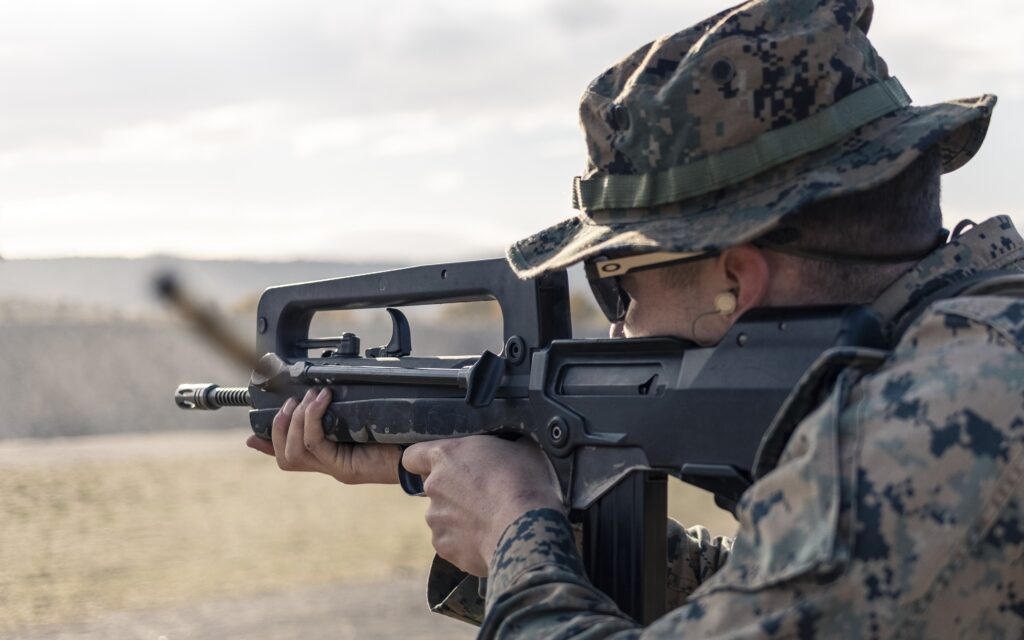
Adopted in the late 1970s, the FAMAS arrived at a time when many armed forces were moving toward intermediate cartridges and compact rifles suitable for mechanized warfare, urban environments, and fast-moving infantry operations. The idea was simple: give the soldier a rifle with a full-length barrel, but reduce the total length of the weapon. The bullpup layout made that possible.
This is where the FAMAS becomes interesting. In a conventional rifle, the magazine and action sit in front of the shooter’s shoulder and behind the trigger group. In a bullpup design, the action and magazine are moved behind the trigger. The result is a shorter overall weapon without necessarily sacrificing barrel length. For troops operating from vehicles, aircraft, confined spaces, or dense terrain, that compactness can be valuable.
Why the Bullpup Layout Mattered
The bullpup idea was not exclusive to France. The Austrian Steyr AUG, the British SA80 family, and later designs such as the Israeli Tavor also followed this general concept. But the FAMAS was among the early major bullpup service rifles adopted in significant numbers by a modern military power.
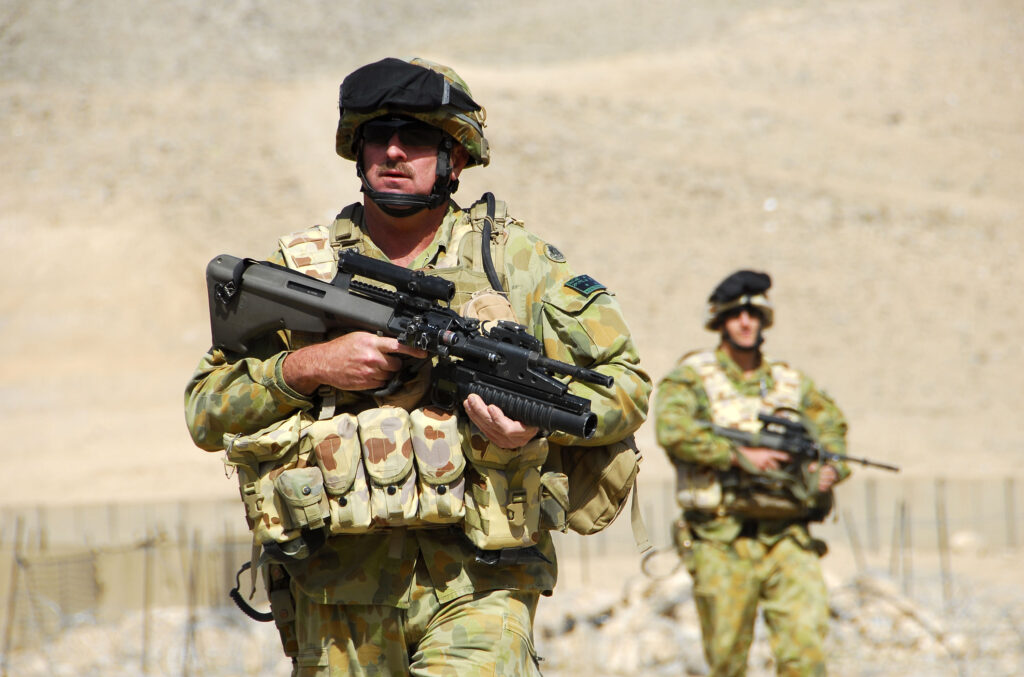
Its compact profile gave it a practical advantage. A soldier could carry a rifle that remained relatively short while still offering the ballistic benefit of a longer barrel. In theory, that meant better handling without giving up muzzle velocity. For an army thinking about mechanized movement, Cold War battlefields, and rapid deployment, this made sense. But every design choice creates trade-offs. Bullpup rifles often face criticism for trigger feel, reload ergonomics, ejection issues for left-handed shooters, and balance differences compared to conventional rifles. The FAMAS was no exception. It solved some problems and created others.
That is the key point with this rifle: it was not “good” or “bad” in a simplistic sense. It was a serious answer to a specific set of military questions. Whether that answer remained ideal decades later is a different matter.
The Technical Character of the FAMAS
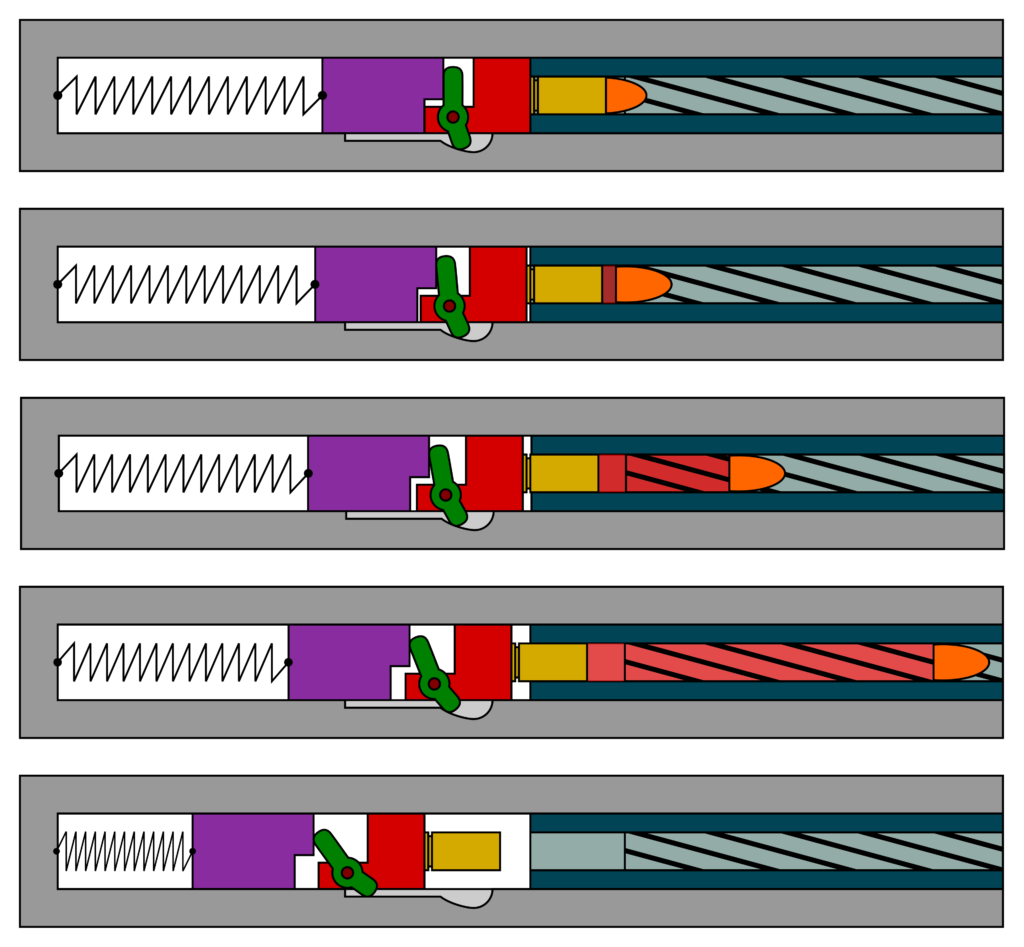
One of the most distinctive features of the FAMAS was its operating system. Unlike many 5.56 mm rifles that use gas operation, the FAMAS used a lever-delayed blowback system. That choice made it mechanically unusual among service rifles of its generation.
The rifle also became known for its high rate of fire. Depending on variant and source, the cyclic rate is commonly listed around 1,000 rounds per minute or higher. On paper, that sounds impressive. In practical terms, high cyclic rate can be a mixed advantage. It may increase short-burst density, but it can also make ammunition control and sustained automatic fire more difficult.
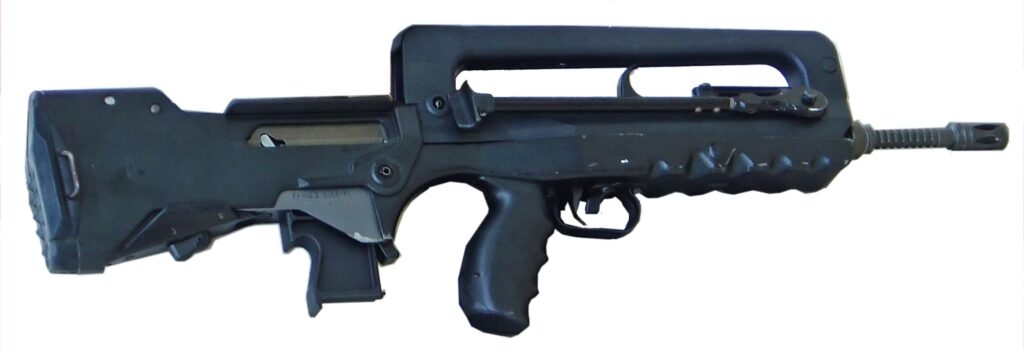
The FAMAS F1 used proprietary 25-round magazines, while later variants such as the G2 moved toward compatibility with NATO-standard 30-round magazines. That change reflects a broader issue in modern military procurement: a rifle is never just a rifle. It is part of a logistics system. Magazines, ammunition compatibility, spare parts, optics, training, and maintenance all shape whether a weapon remains practical over time. This is one reason the FAMAS story becomes more than a technical profile. A rifle may be innovative when adopted, but if the industrial base changes and the logistics ecosystem moves in another direction, even a respected weapon can become difficult to sustain.
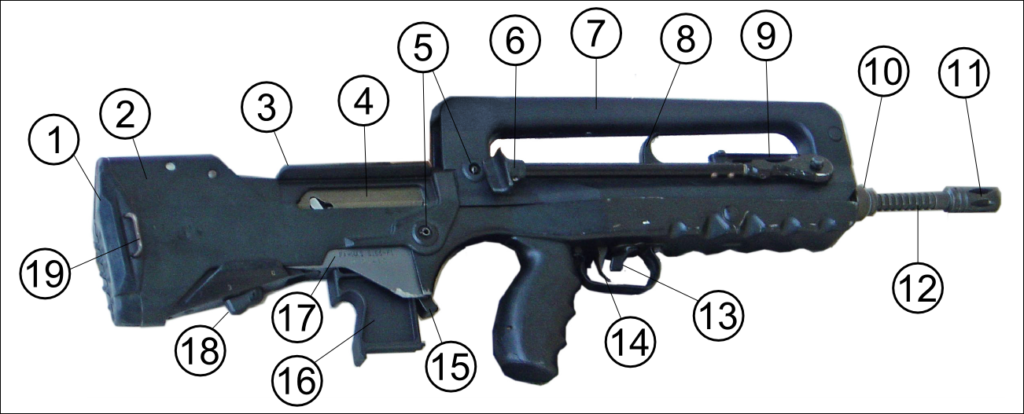
2. Removable stock
3. Cheek rest. Can be fitted for right or left-handed firers.
4 Mobile assembly and spent case ejecting trap
5. Pins
6. Bipod
7. Handguard
8. Cocking lever
9. Grenade launch sight
10. Grenade support
11. Flash Suppressor
12. Barrel
13. Firing selector: Safety, single shot, automatic
14. Trigger
15. Magazine release
16. “PCL” rifle-grenade firing magazine (PCL = “pour cartouche de lancement” = “for launching catridge”)
17. Serial number
18. 3-round burst or full automatic selector
19. Sling ring
Credit: Modified by historicair 15:48, 2 October 2007 (UTC), CC BY-SA 3.0 http://creativecommons.org/licenses/by-sa/3.0/.
Service, Identity, and the French Soldier
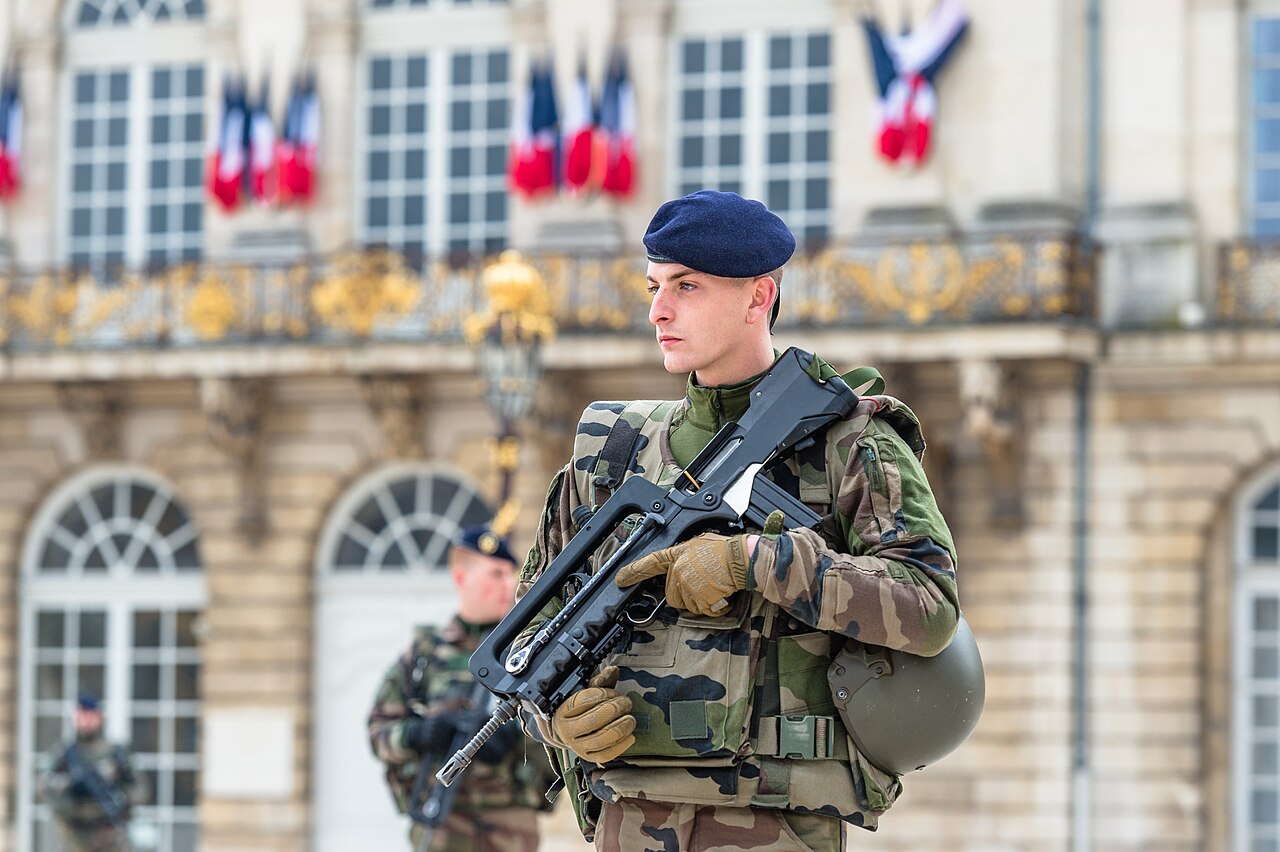
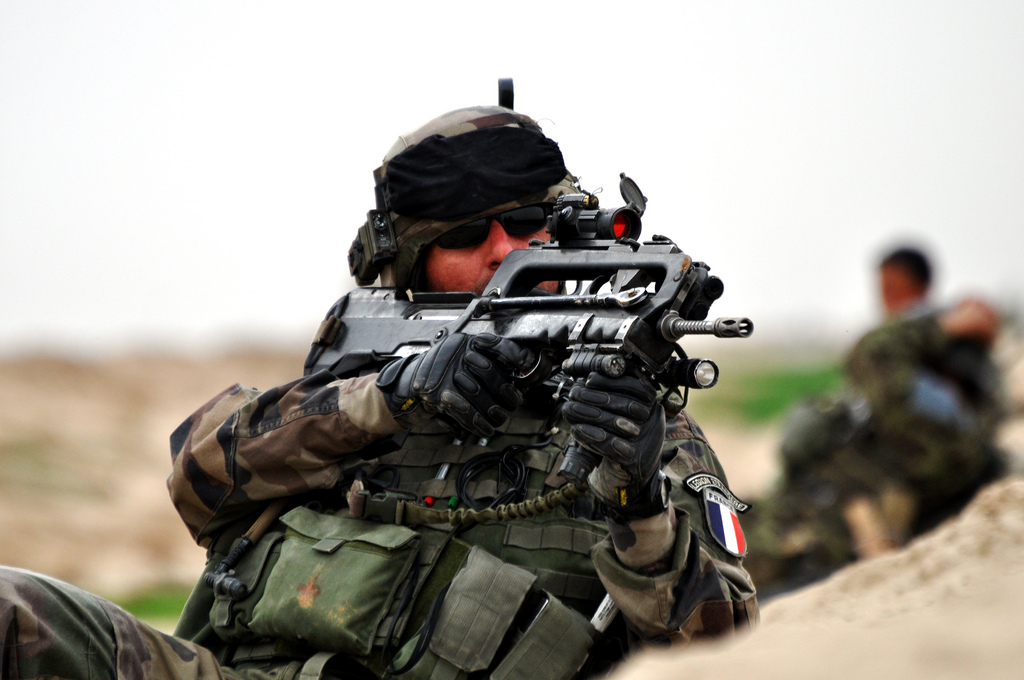
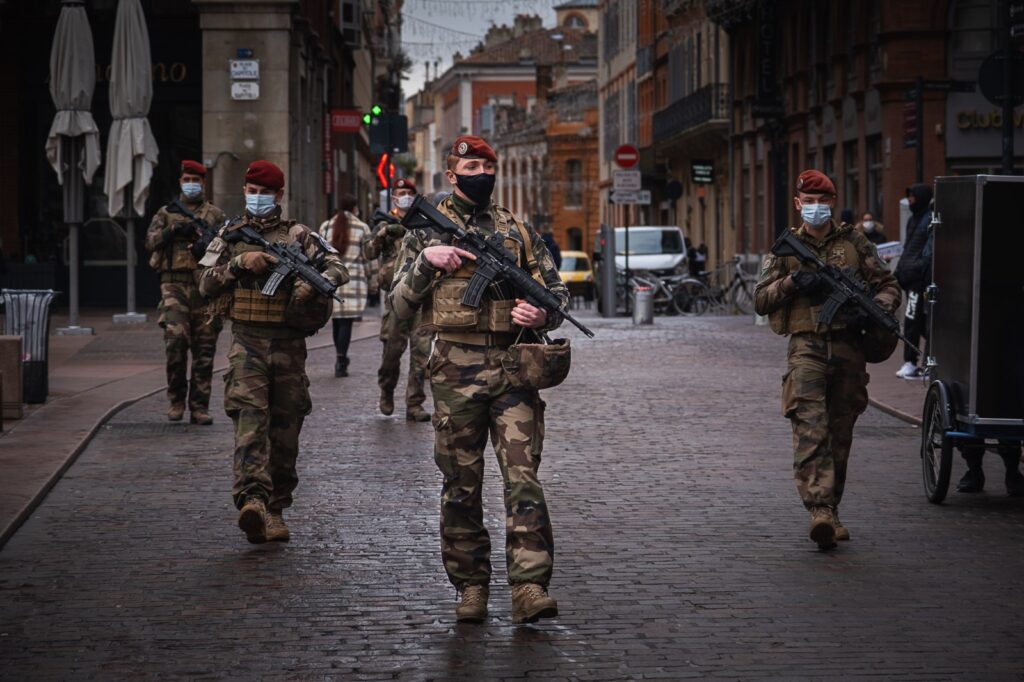
For many people, the FAMAS is visually tied to the modern French soldier. It appeared with French forces in Europe, Africa, the Middle East, and Afghanistan. It also became strongly associated with the French Foreign Legion and French expeditionary operations.
That symbolic value should not be ignored. Military equipment often carries identity. The FAMAS was not just something French troops carried; it was part of how French infantry looked to the outside world. Its profile was instantly recognizable. In an era when many rifles were becoming visually similar, the FAMAS remained unmistakably French.
There is also an important cultural point here. Some weapons become famous because they are exported everywhere. The FAMAS did not achieve that kind of global spread. Its export footprint was limited compared with rifles like the AK family, M16/M4 series, FN FAL, G3, or later HK416. Yet it still became famous because it was tied so closely to one major military identity.
That makes the FAMAS unusual. It was not a global commercial giant. It was a national service rifle that became internationally recognizable.
The FAMAS and the French Foreign Legion
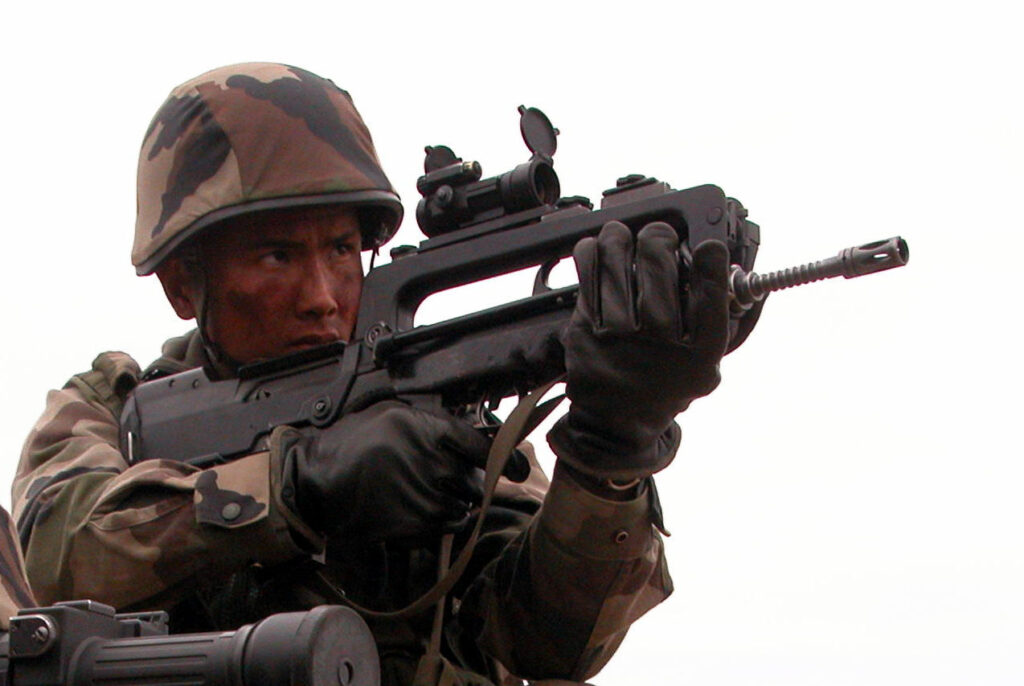
The French Foreign Legion also strengthened the rifle’s identity. For many observers, the image of Legionnaires carrying the FAMAS became part of the rifle’s wider reputation. The Legion has always carried a certain symbolic weight: discipline, endurance, foreign volunteers under the French flag, and hard expeditionary service. When the FAMAS appeared in that context, it gained more than technical visibility. It became associated with a force that already had a powerful military image. That does not make the rifle better by itself, but it does help explain why the FAMAS stayed memorable even without massive global export success. In the hands of the Legion, it looked like a national weapon carried by one of France’s most internationally recognized military formations.
Where the FAMAS Has Been Used
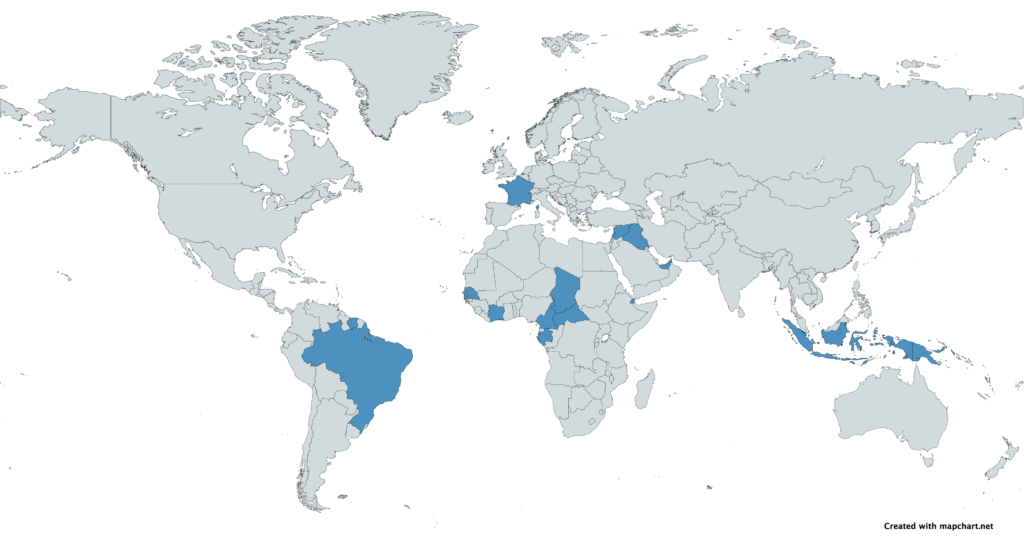
Although the FAMAS was never exported on the same scale as rifles like the AK family, the M16/M4 series, or the FN FAL, it still appeared far beyond mainland France through French military deployments. French forces carried it in operations in Africa, the Middle East, the Balkans, Afghanistan, and other expeditionary environments where France maintained military commitments. This is important because the FAMAS did not become globally visible mainly through foreign sales. It became visible through French presence abroad. In that sense, its international footprint was shaped less by the arms market and more by French military policy. Wherever French troops deployed, the rifle often appeared with them, making it familiar to observers of peacekeeping missions, counterinsurgency operations, and overseas interventions.
The Replacement Question
France began replacing the FAMAS with the HK416F from 2017 onward. The decision was not just about whether the FAMAS could still fire effectively. It was about modernization, supply, compatibility, and long-term support.
The HK416F brought France into a broader ecosystem of modern accessories, rails, optics, modular configurations, and NATO-compatible logistics. It also came from a manufacturer with active production capacity and international support. By contrast, the FAMAS belonged to an older industrial structure. Manufacture d’Armes de Saint-Étienne had closed, and supporting an aging rifle fleet becomes harder when the original production base no longer exists in the same way.
This is where emotional attachment and procurement reality separate. A rifle can be iconic and still be replaced for rational reasons. The FAMAS had served for decades. It had given France a distinctive infantry weapon. But modern armies need systems that are easier to update, integrate, repair, and supply across long service cycles.
The replacement by a German-made HK416F also says something about Europe’s defense industry. National pride remains important, but modern procurement often rewards reliability, interoperability, and existing production capacity. France choosing the HK416F did not erase the legacy of the FAMAS. It simply showed that small arms procurement had entered a different phase.
What the FAMAS Still Teaches
The FAMAS teaches a useful lesson about defense design: originality is valuable, but originality alone is not enough. A weapon must fit doctrine, production, training, logistics, and future upgrade paths. The FAMAS succeeded in many of those areas for a long period. It gave France a compact and recognizable rifle at a time when bullpup designs were still bold choices. At the same time, its later replacement shows the limits of isolated national systems. If a weapon becomes difficult to support, if its magazines or parts are less aligned with allied standards, or if its upgrade path becomes narrow, its service life will eventually face pressure.
For readers who follow firearms only through specifications, the FAMAS can look like a list of numbers: 5.56 mm, bullpup, lever-delayed blowback, high cyclic rate. But the more interesting story is behind those numbers. The FAMAS was a product of French strategic culture. It reflected confidence in domestic design, a willingness to accept unconventional solutions, and a belief that the infantry rifle could carry national character.
Today, the HK416F may be the practical answer for France’s current needs. Still, the FAMAS remains one of the most visually and mechanically distinctive service rifles of the late Cold War and post-Cold War era. It was not perfect. No rifle is. But it was original, recognizable, and deeply connected to the country that built it.
For a defense audience, that is what makes the FAMAS worth studying. It is not only a weapon from the past. It is a case study in how technology, identity, and procurement reality eventually meet on the same battlefield.
Sources:
- French Ministry for the Armed Forces, HK 416 F overview.
- French DGA, HK416F delivery and procurement updates.
- NRA National Firearms Museum, MAS FAMAS Bullpup Semi Automatic Carbine.