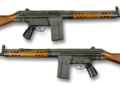

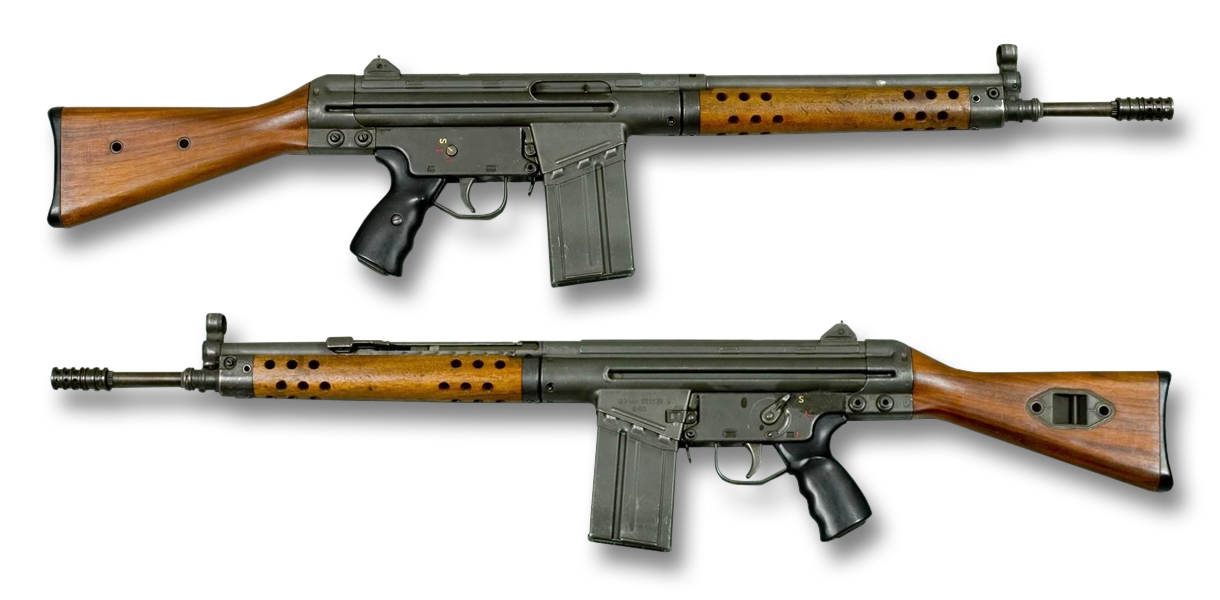
The Heckler & Koch G3 was developed for a specific moment in Cold War Europe, yet it continued to appear in service across continents long after that moment had passed. Even as newer rifle platforms replaced it in many armies, the G3 remained in circulation, adapting to different roles and environments. That persistence alone makes it worth looking at more closely.

From CETME to West Germany
The starting point of the G3 is not as straightforward as it seems. Its technical foundation comes from the CETME rifle developed in Spain, where German engineers continued their work after World War II under the umbrella of CETME. Early CETME variants were not originally configured for full-power NATO ammunition, reflecting a slightly different design direction at the time. When West Germany began rebuilding its military structure in the 1950s, it initially explored other options, including the FN FAL. That path did not materialize, and the CETME design was revisited instead.
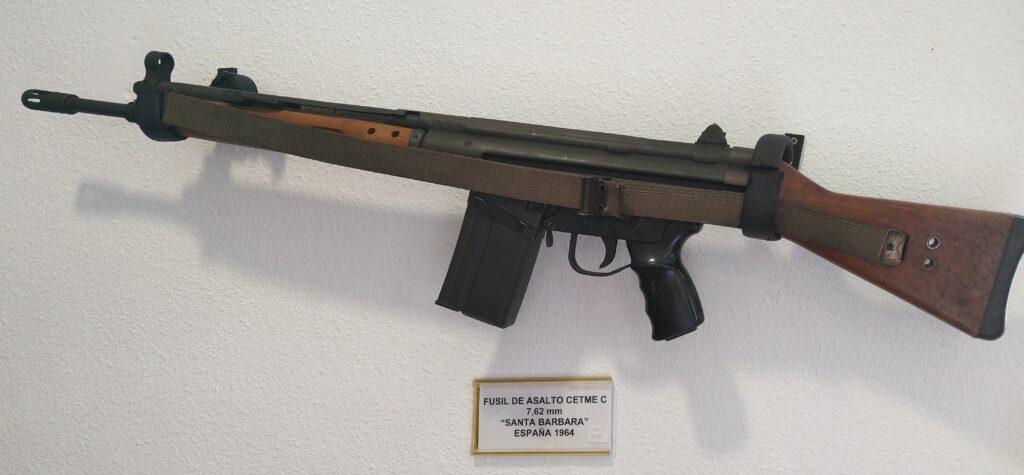
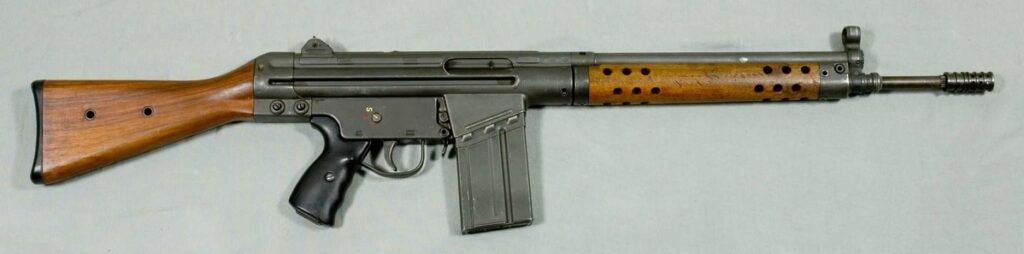
Heckler & Koch took that platform and reworked it into something more aligned with NATO standards. The process was not about reinventing the rifle, but about refining it into a form that could be produced consistently and deployed at scale. By 1959, the G3 was officially adopted by the Bundeswehr. At that point, it was less about innovation and more about reliability and standardization.
A Different Approach to Operation
One of the defining characteristics of the G3 is its roller-delayed blowback system. Unlike gas-operated rifles, which use redirected gas to cycle the action, the G3 relies on a mechanical delay built into the bolt. This approach reduces the number of components involved in the cycle and avoids many of the fouling issues typically associated with gas systems.
In practical terms, this meant fewer parts to maintain and a system that could tolerate less-than-ideal conditions. At the same time, features such as the fluted chamber contribute to reliable extraction but can result in a system that operates with visible residue during use. That does not make it superior in every context, but it does explain why the rifle performed consistently in environments where maintenance routines were irregular. The design was not aiming for refinement in the modern sense; it was aiming for predictability.
Power, Weight, and Trade-Offs
Chambered in 7.62×51mm NATO, the G3 reflects a period when infantry rifles were expected to deliver range and impact rather than controllability in sustained fire. The cartridge provides strong ballistic performance, but it also introduces recoil that makes automatic fire difficult to manage. This is one of the most commonly noted aspects of the rifle, and it is not an oversight. It is a direct result of the doctrine it was built under.
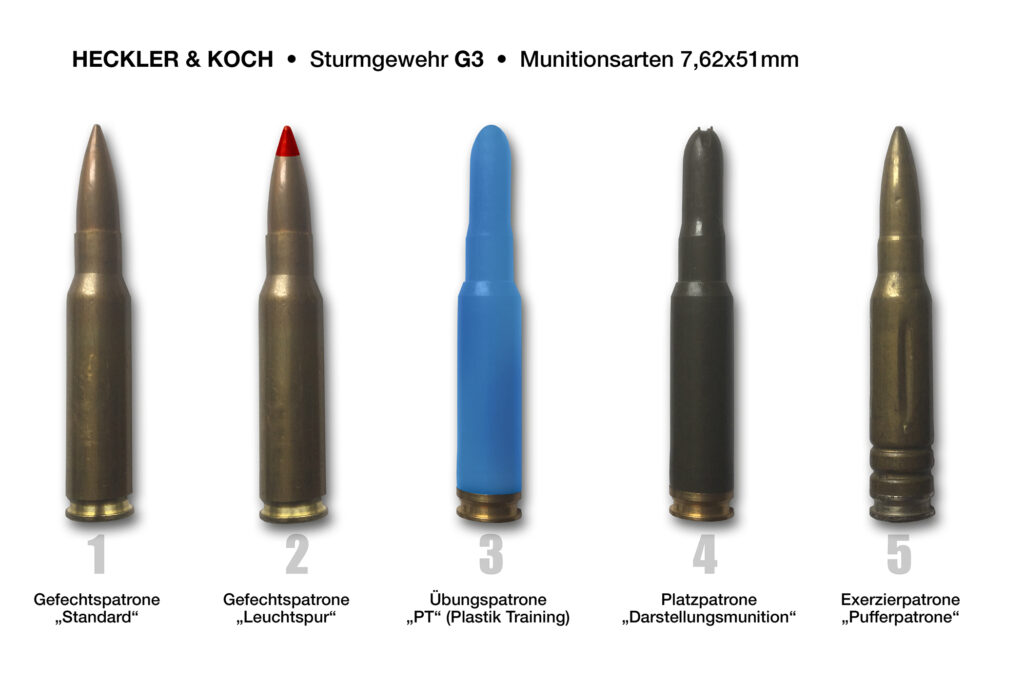
Compared to later 5.56 platforms, the G3 feels heavier both in weight and in handling. That difference highlights a shift in military thinking over time rather than a flaw in the rifle itself. What seems excessive today was considered necessary at the time.
Limitations That Became More Visible Over Time
No rifle carries its original context forever, and the G3 is no exception. While it delivered reliability and range, some of its characteristics became more limiting as infantry doctrine evolved.
The recoil associated with the 7.62×51mm cartridge, combined with the rifle’s overall weight, made sustained automatic fire largely impractical in real-world use. In many cases, full-auto capability existed more as a technical feature than a functional advantage in the field. This gradually became more apparent as lighter, intermediate-caliber rifles began to dominate modern infantry roles.
Ergonomically, the platform also reflects its era. Controls are not as intuitive or accessible as those found on more recent rifle systems, and the handling does not prioritize speed or adaptability in dynamic engagements. These factors do not prevent effective use, but they do require a level of familiarity and adjustment. There is also the matter of operational flexibility. While the G3 offers solid field-level adaptability, it does not provide the kind of modularity that later rifle platforms introduced. As optics, accessories, and mission-specific configurations became more central to infantry operations, this limitation became more noticeable.
Taken together, these aspects do not diminish the rifle’s effectiveness within its original context. However, they do explain why many armed forces gradually transitioned toward lighter, more adaptable systems as operational priorities shifted.
Production and Global Use
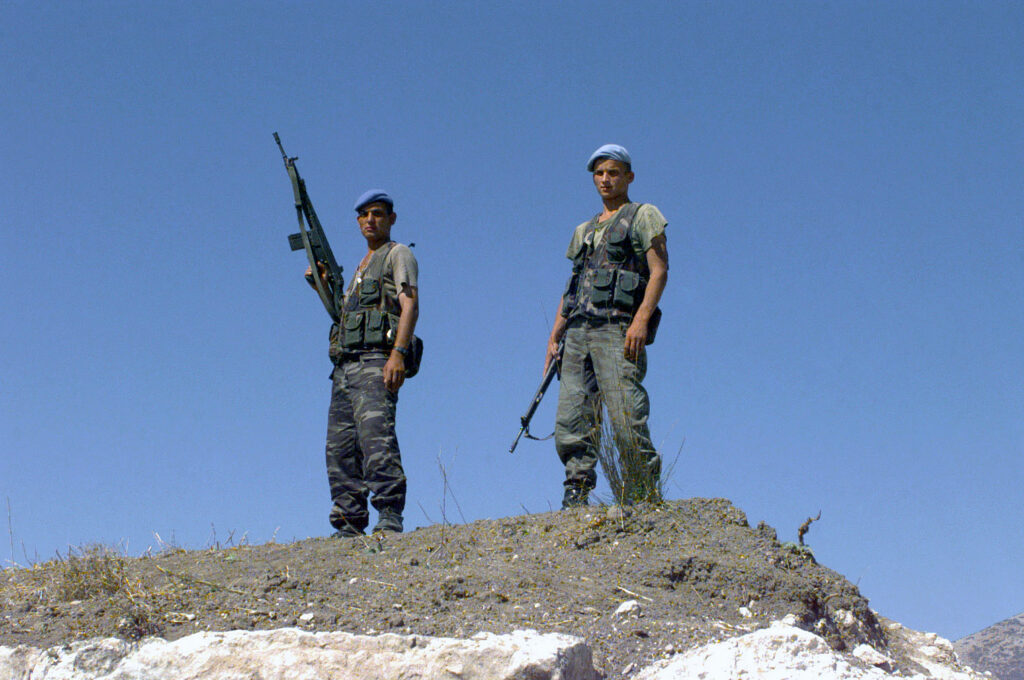
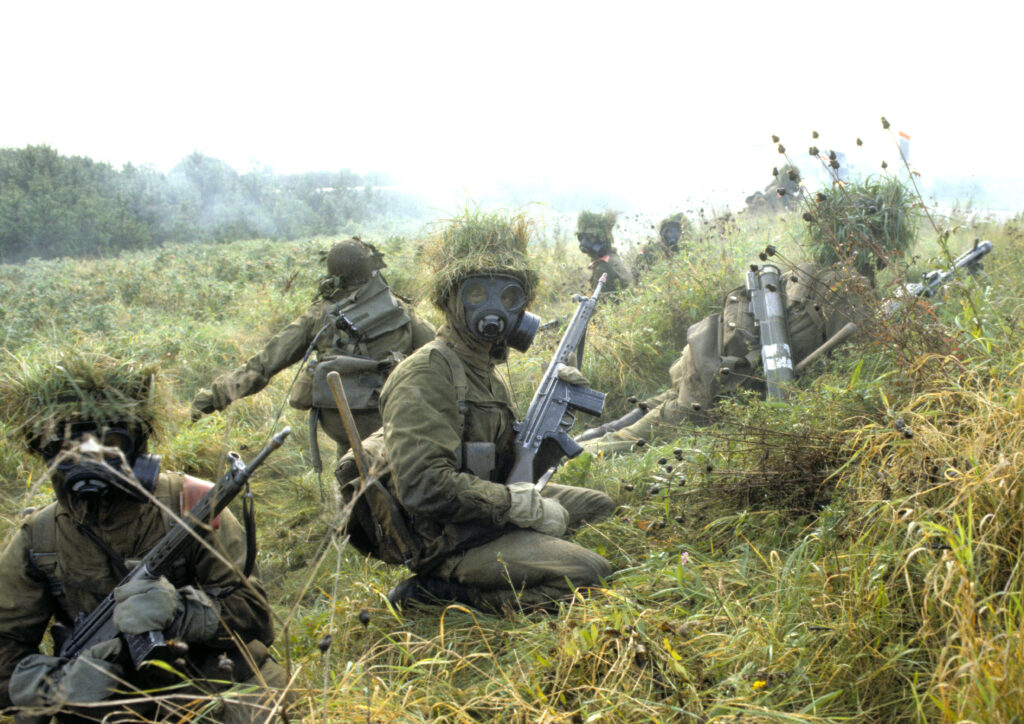
The G3 did not remain limited to German service. It became one of the most widely licensed rifles of its era, with production spreading to multiple countries including Turkey, Pakistan, Iran, and Portugal. This level of distribution was supported by a design that could be manufactured with stamped steel components, keeping production relatively efficient compared to more complex systems.
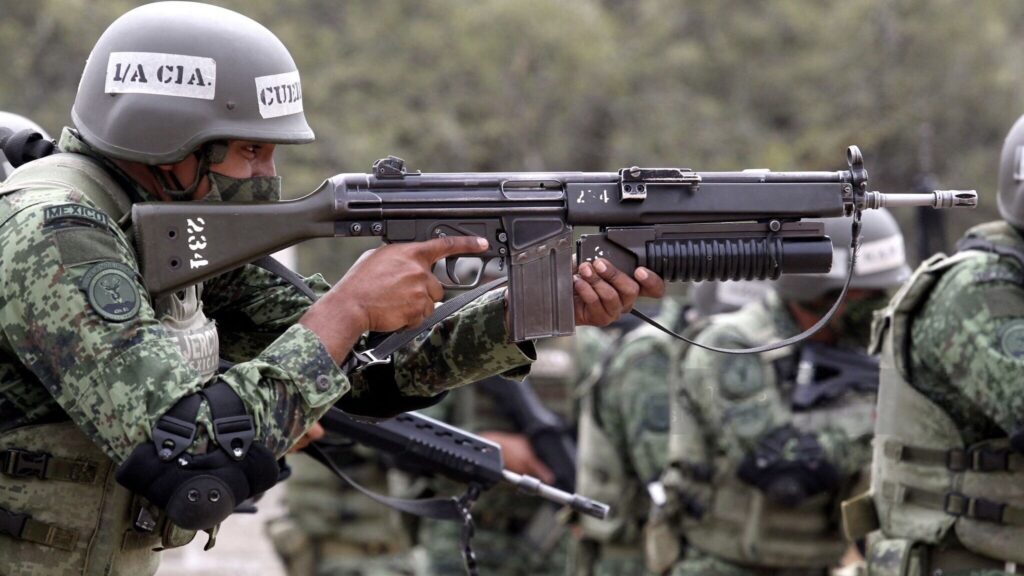
Its presence in different regions was not tied to a single conflict or doctrine. Instead, it appeared in a range of environments, from conventional military forces to paramilitary units. The common factor was not ideology or geography, but the need for a rifle that could function consistently without demanding extensive logistical support.

Practicality Over Presentation
The G3 does not present itself as a refined system in the modern sense. Its ergonomics are often described as basic, and its recoil is noticeable. At the same time, it offers a level of durability that allowed it to remain in service long after more modern designs became available.
Field maintenance is relatively straightforward, and the rifle can be disassembled without specialized tools. Components can be replaced without complex procedures, which was a significant advantage in environments where support infrastructure was limited. Rather than true modularity in the modern sense, the platform offers a level of field-level adaptability that suited the operational expectations of its time. These details do not attract attention on their own, but together they explain the rifle’s longevity.
Influence Beyond Its Own Service Life
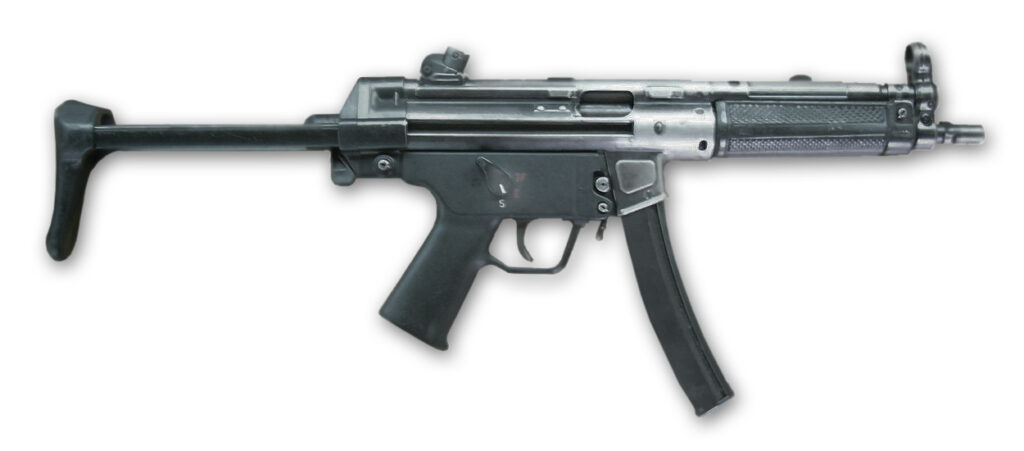
Even as the G3 began to be replaced in front-line service, its underlying design principles continued to influence later systems. The roller-delayed mechanism, in particular, was carried forward into other platforms developed by Heckler & Koch, most notably the MP5, which shares the same operating principle.
This continuity suggests that the company viewed the system not as a temporary solution, but as a reliable foundation that could be adapted to different roles. The G3 itself may no longer define modern infantry equipment, but parts of its design philosophy remain visible in later developments.
Still Present, Still Relevant
Today, the G3 can still be found in service in various parts of the world, alongside more modern rifles. Its continued presence is not based on nostalgia. It reflects a combination of existing stockpiles, local production capabilities, and the simple fact that the rifle continues to function as intended.
At the same time, its role has shifted. In some cases, it has moved from a standard infantry rifle to roles more aligned with its ballistic characteristics, including designated marksman configurations. This kind of adaptation is not unusual, but it reinforces the idea that the rifle was built with a margin of capability that extended beyond its original role.
What the G3 represents today is not a perfect system or a timeless design. It represents a set of decisions made under specific conditions, many of which still exist in different forms. That is why it continues to appear in discussions, collections, and active inventories. Not because it changed everything, but because it managed to fit into more situations than expected.
Sources
- Small Arms Survey – Heckler & Koch G3 Fact Sheet & Global Production Data
- Heckler & Koch – Company History & Rifle Development
- NATO – Standardization Agreements (STANAGs) on Infantry Weapons & Ammunition