


There are defense programs that feel ambitious, and then there are those that feel almost detached from the constraints of reality. Project Pluto belongs to the second category. It wasn’t just about building a better missile or a faster platform. It was about removing limitations entirely, even if doing so meant redefining what a weapon could be.

When you look at Cold War systems broadly, you see a clear pattern of escalation driven by fear, deterrence, and technological competition. But Pluto stands out because it didn’t simply compete within those rules. It attempted to rewrite them. And that’s where it becomes more than just a historical program. It becomes a case study in how far a system can go before strategy begins to question its own direction.
A Missile That Redefines Range
Project Pluto emerged in the late 1950s under U.S. efforts to explore alternative propulsion systems for long-range strike platforms. The idea behind the SLAM missile was not incremental improvement but total transformation. Instead of relying on conventional fuel, the system would use a nuclear-powered ramjet, effectively eliminating the traditional limits imposed by fuel capacity.
This meant the missile could theoretically remain airborne for extended durations, potentially covering intercontinental distances without the logistical constraints faced by bombers or even early ballistic systems. In strategic terms, that introduces a different type of pressure. A system that does not need to return or refuel shifts the conversation from reach to persistence. It is no longer just about hitting a target, but about maintaining a presence that cannot be easily neutralized.
At that point, range is no longer a specification. It becomes a strategic condition.
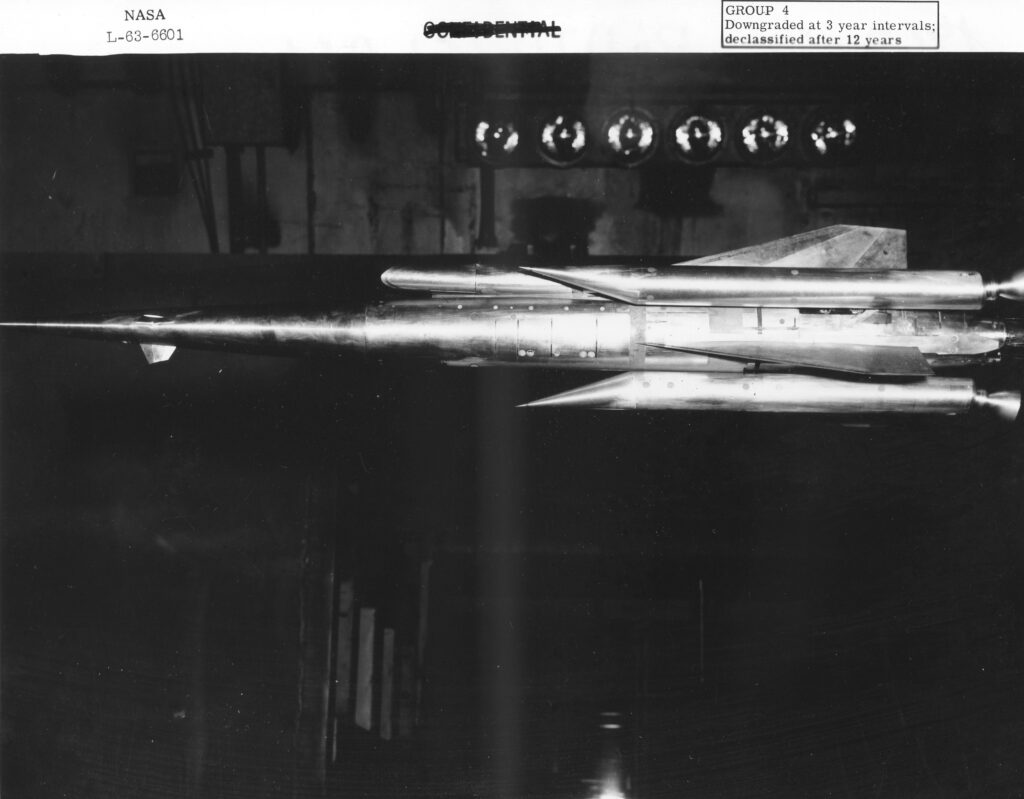
The Nuclear Ramjet: Function Over Constraint
The propulsion system at the center of Project Pluto remains one of the most unconventional designs ever tested. Air entering the missile would pass directly through an unshielded nuclear reactor, where it would be heated to extreme temperatures and expelled to generate thrust. This process removed the need for onboard fuel while maintaining continuous propulsion at high speed.
Unlike conventional jet or rocket engines, the system prioritized raw efficiency over containment. Shielding the reactor would have made the missile too heavy, so the design deliberately accepted radiation exposure as a trade-off. In practice, this meant the missile would emit radioactive particles throughout its entire flight path, not just at the moment of impact.
What makes this particularly significant is that the concept was not theoretical. Test reactors such as Tory II-C demonstrated that the engine could operate at full power. The engineering question had been answered. The system worked, at least in the controlled conditions in which it was tested.
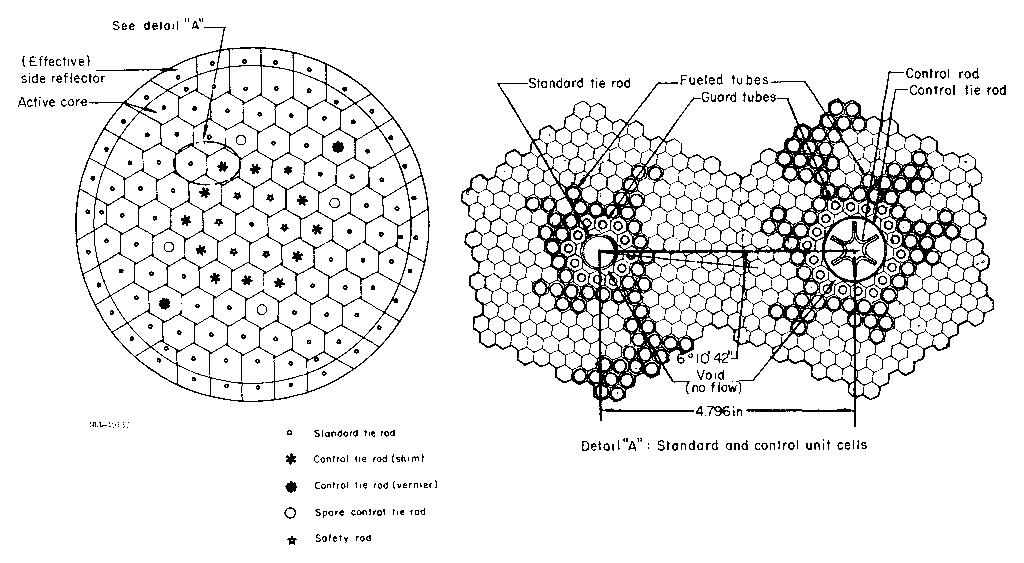
SLAM as a Strategic Platform
The missile itself was designed to operate at supersonic speeds and extremely low altitudes, allowing it to bypass radar detection and reduce reaction time for defensive systems. But the defining feature was not just speed or altitude. It was the way the system combined multiple forms of impact into a single platform.
SLAM was intended to carry several nuclear warheads, which could be deployed across multiple targets during a single mission. This alone would have made it a highly flexible strategic asset. However, the missile’s design introduced additional effects that extended beyond its payload.
At low altitude and high speed, the missile would generate intense shockwaves, capable of causing structural damage across its flight path. At the same time, the unshielded reactor would disperse radioactive material continuously. Even without deploying its warheads, the missile would already be producing measurable impact.
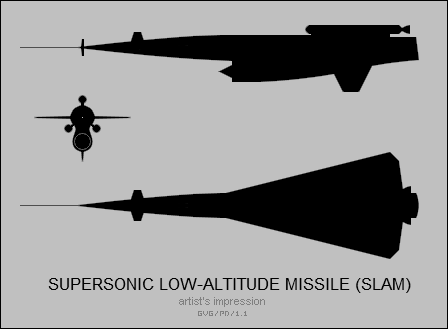
This shifts the role of the system. It is no longer a delivery mechanism. It becomes a moving zone of disruption, combining kinetic, nuclear, and environmental effects into a single operational concept. That level of integration is rare, even by Cold War standards.
Strategic Logic in a Cold War Context
To understand why Project Pluto was pursued at all, it helps to look at the limitations of the systems it was meant to complement or replace. Early intercontinental ballistic missiles were still developing, and their reliability, accuracy, and deployment flexibility were not yet fully established. Air defense systems were also evolving, creating uncertainty around the survivability of traditional bomber-based delivery methods.
Within that context, a low-altitude, high-speed missile with effectively unlimited range offered a compelling alternative. It could evade detection more effectively than high-altitude systems and maintain operational flexibility in ways that early ICBMs could not. The possibility of recalling or redirecting the missile during flight added another layer of control that ballistic systems lacked. There was also a cost dimension. Maintaining large bomber fleets or deploying complex missile infrastructures required significant investment. A system like SLAM, at least in theory, promised a more streamlined approach to strategic deterrence.
Seen from that angle, Pluto was not irrational. It was a logical extension of the priorities of its time. But logic in one domain does not always translate cleanly into another.
Where Engineering Met Its Limits
The technical success of the program did not translate into strategic viability. One of the most immediate concerns was environmental impact. A nuclear-powered missile that emits radiation throughout its flight path introduces consequences that extend far beyond the intended target area.
Testing presented an even more immediate problem. While ground-based reactor tests could be conducted under controlled conditions, full-scale flight testing would have required accepting radioactive contamination across large regions. That was not just a technical challenge. It was a political and ethical one.
At the same time, the strategic environment was shifting rapidly. By the early 1960s, intercontinental ballistic missiles had matured significantly. They offered faster delivery times, more predictable trajectories, and fewer unintended side effects. Compared to these systems, Pluto began to look less like a breakthrough and more like an outlier.
There is a point where a system becomes too complex, too controversial, or too misaligned with evolving doctrine to justify its continuation. Pluto reached that point despite its technical achievements.
Cancellation and Strategic Realignment
The program was officially canceled in 1964, not because it failed to meet its engineering objectives, but because those objectives no longer aligned with strategic needs. Advances in missile technology had reduced the relative advantage Pluto offered, while its drawbacks remained significant.
Budget priorities also played a role. Maintaining a program with such high development costs and uncertain deployment scenarios became difficult to justify when more practical alternatives were available. Strategic systems are not evaluated in isolation. They compete for relevance within a broader framework of doctrine, capability, and cost.
Pluto’s cancellation reflects a broader pattern in defense development. A system can be technically successful and still be strategically unnecessary. In some cases, success itself reveals limitations that were not fully visible at the start.
Why Pluto Still Matters
Looking back, Project Pluto is often described as extreme, even by Cold War standards. But its relevance has not disappeared. Modern discussions around long-range, persistent strike systems continue to explore similar themes, even if the technologies and constraints have evolved.
The idea of removing operational limits remains attractive from a purely strategic standpoint. A system that can operate indefinitely without refueling changes how planners think about reach, deterrence, and response time. At the same time, the challenges that affected Pluto, particularly those related to environmental impact and escalation risk, remain just as relevant today.
This is where Pluto becomes more than a historical curiosity. It becomes a reference point. It shows what happens when engineering pushes beyond conventional boundaries and forces strategy to respond. Not by rejecting innovation, but by reassessing where and how it should be applied.
Sources
- U.S. Department of Energy – Nevada National Security Site historical archives on Project Pluto
- Lawrence Livermore National Laboratory – Project Pluto and Tory reactor development materials
- Air & Space Forces Association – Articles on nuclear propulsion and Cold War weapons programs
- Stanford University – Academic studies on nuclear ramjet propulsion concepts
- The Bulletin of the Atomic Scientists – Analysis of nuclear-powered cruise missile concepts and historical context