
There are military figures who win wars, and there are those who reshape entire regions. Douglas MacArthur belongs to a smaller category, one that forces us to look beyond battlefield outcomes and into the structure of power itself. His career is not only about victories or controversies, but about a deeper tension that still exists today between military authority and political control. If you are looking at modern defense systems, command structures, or even hybrid warfare environments, you are already dealing with the same questions that defined his trajectory.

The Construction of Authority
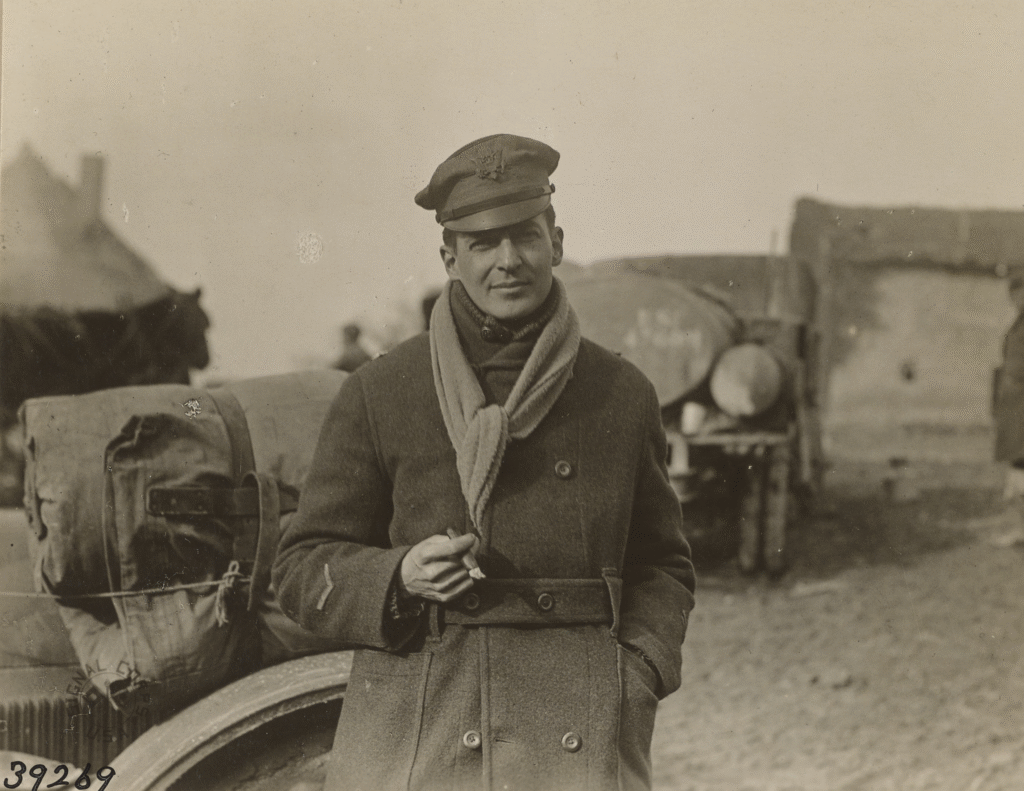
MacArthur did not simply rise through the ranks as a conventional officer. From the beginning, his background and environment positioned him within an elite military culture, but what set him apart was how he interpreted command. He did not see it as a narrow function limited to execution, but as a broader role that could influence direction, outcomes, and sometimes even policy itself.
This approach created a kind of expanded authority, one that worked effectively in certain contexts but also carried long-term risks. For modern readers, especially those following defense developments, this distinction is critical because it highlights the difference between operating within a system and gradually shaping that system from within.
War and Narrative
During the Second World War, MacArthur’s actions cannot be separated from the narratives he constructed around them. His withdrawal from the Philippines and the promise to return became more than operational decisions; they turned into strategic messaging that reinforced both morale and legitimacy.
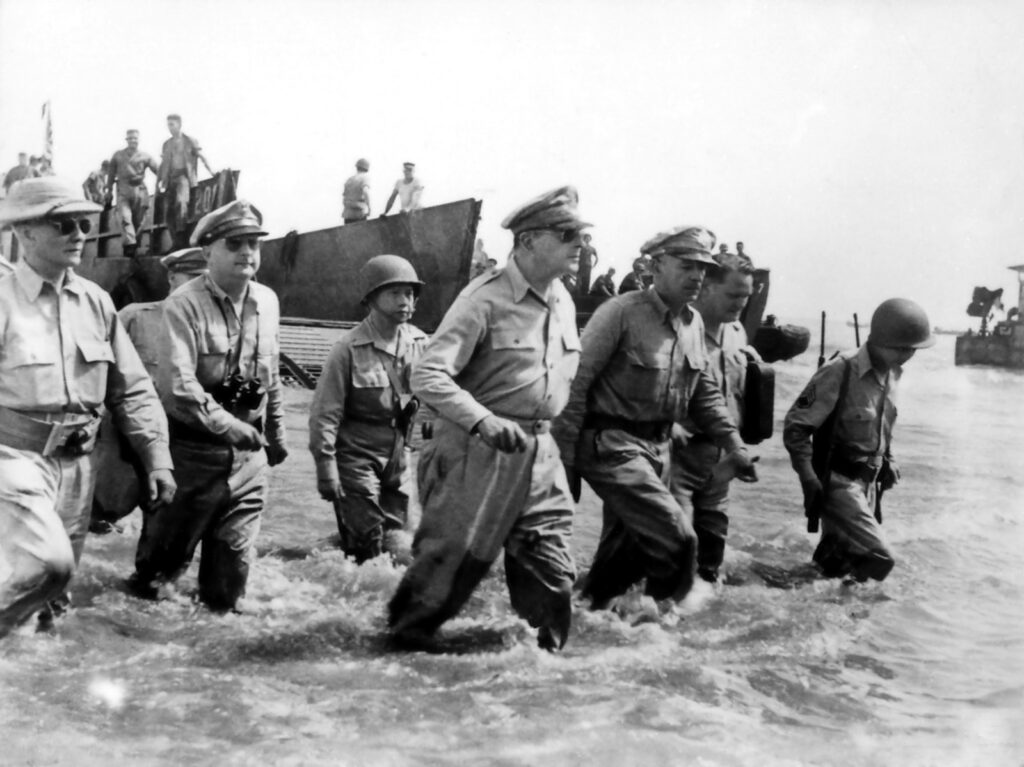
This was not accidental. It reflected an understanding that warfare was no longer confined to physical engagements but extended into perception, expectation, and communication. His campaigns in the Pacific also demonstrated a layered approach to warfare, where logistics, positioning, and long-term planning intersected with symbolic value.
Japan: Military Command Becomes Governance
After the war, MacArthur’s role in Japan marked a shift that is still difficult to fully categorize. As Supreme Commander for the Allied Powers, he moved beyond traditional military responsibilities and became the central figure in the reconstruction of a defeated state.
The occupation was not limited to maintaining order; it involved restructuring political institutions, redefining economic systems, and shaping a new national framework. The demilitarization of Japan and the introduction of a new constitutional order were carried out under his authority, reflecting a model in which military command extended directly into governance.
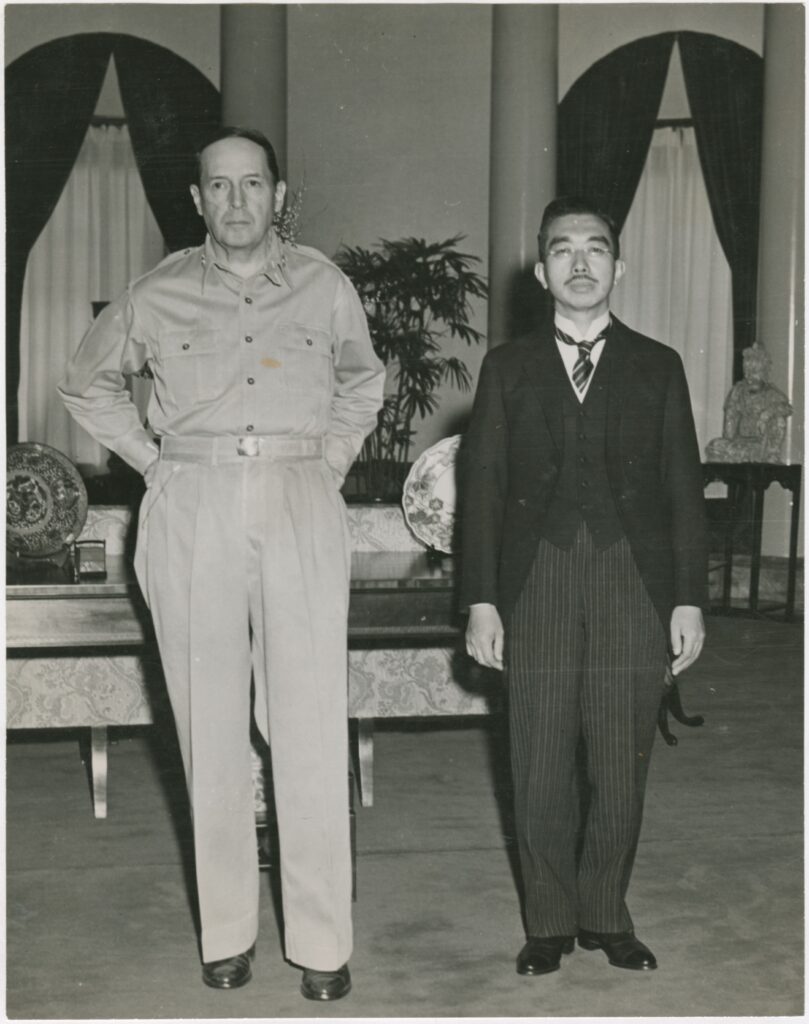
Emperor Hirohito and General Douglas MacArthur, at their first meeting, at the U.S. Embassy, Tokyo, 27 September, 1945
At the same time, his approach emphasized controlled transformation rather than rapid disruption, suggesting an awareness that stability was as important as reform. This phase of his career raises a question that continues to resonate today: when military structures are given responsibility for rebuilding states, where should the boundary between security and governance be drawn?
Korea: Expansion, Risk, and Strategic Friction
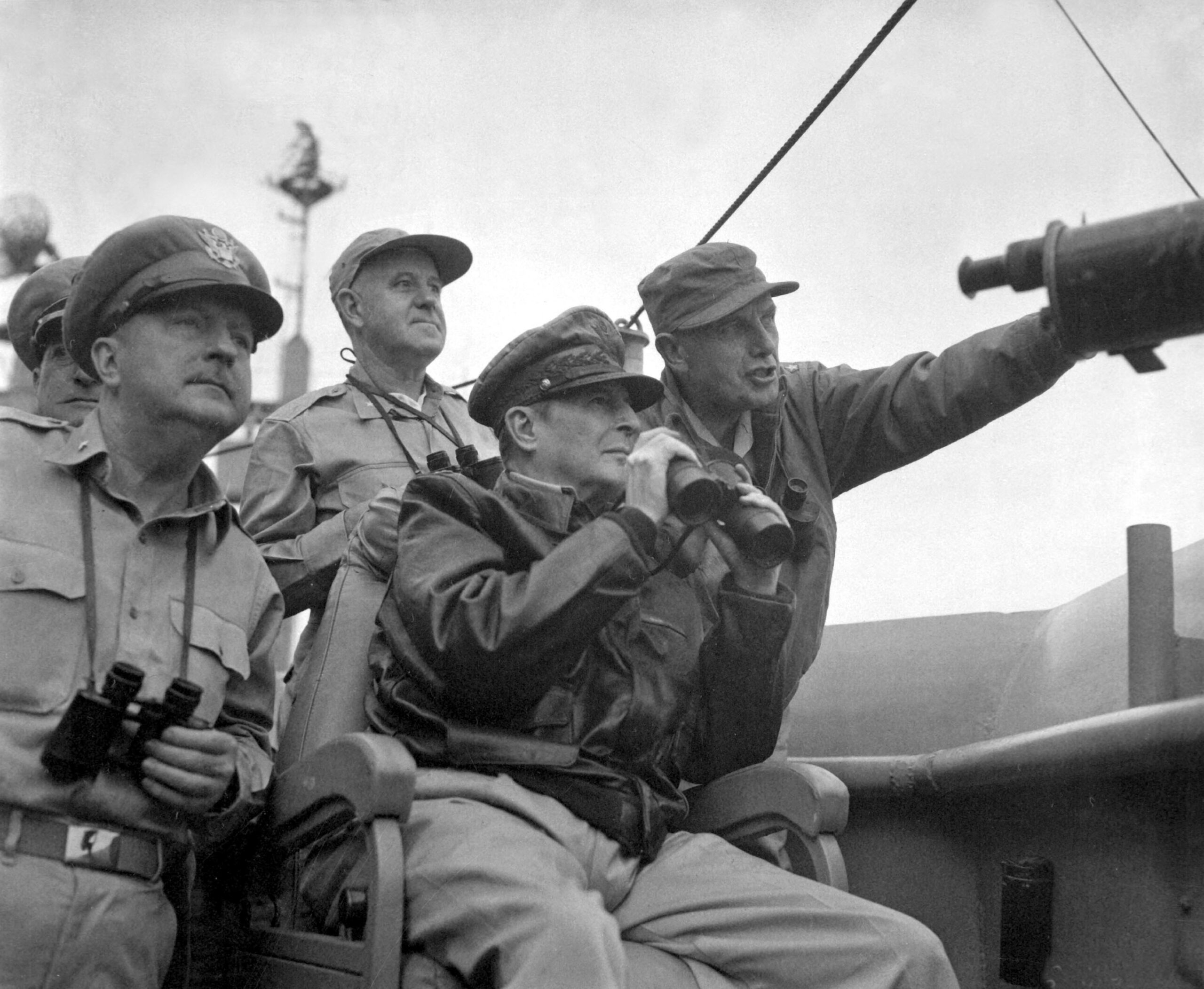
The Korean War placed MacArthur in a fundamentally different environment, one defined not by control but by uncertainty and competing global interests. His early actions, particularly the Inchon landing, demonstrated operational boldness and a capacity to reverse unfavorable conditions quickly.
However, success introduced new strategic pressures, and the shift from defensive operations to expansion changed the nature of the conflict. Advancing beyond the 38th parallel was not simply a military decision; it carried political implications that extended far beyond the battlefield.
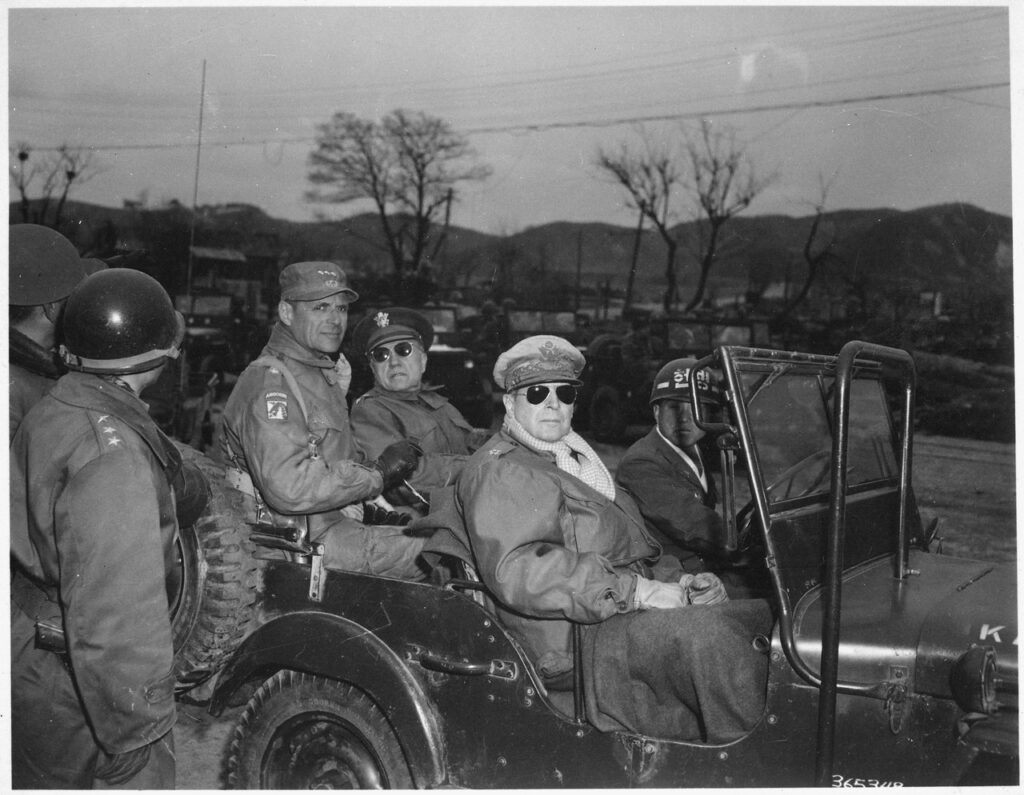
The intervention of Chinese forces transformed the situation, turning a limited war into a potential regional escalation. At this point, the tension between military initiative and political restraint became unavoidable. MacArthur’s preference for expanding the conflict clashed with the broader strategic calculations of the U.S. administration, ultimately leading to his removal from command.
The Central Tension
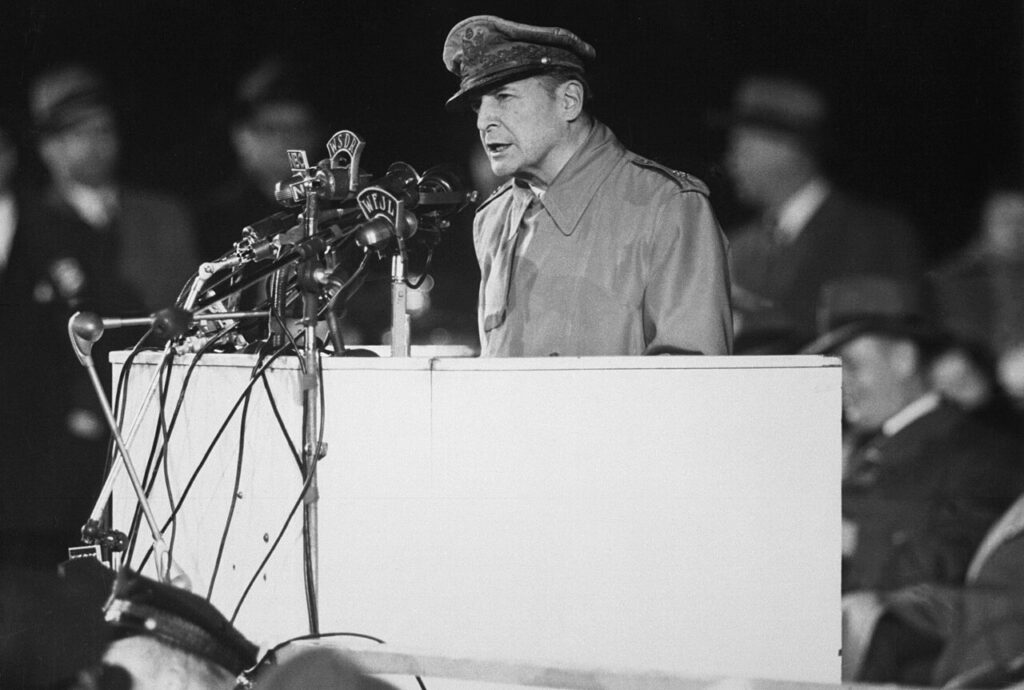
What makes MacArthur’s career particularly relevant is not just what he achieved, but the structural tension it reveals. On one side, there is the need for decisive leadership capable of adapting quickly and taking calculated risks in complex environments.
On the other, there is the necessity of maintaining political oversight, especially when military actions have far-reaching strategic consequences. MacArthur operated at the intersection of these forces, and his experiences demonstrate both the potential and the risks of expanding military authority.
Relevance to Contemporary Defense Thinking
Looking at current developments, it becomes clear that the issues reflected in MacArthur’s career have not disappeared. Modern military operations increasingly take place in environments where the distinction between military and political action is blurred, whether in stabilization missions, advisory roles, or indirect engagements.
Commanders often operate with a degree of autonomy that requires careful alignment with broader strategic objectives. At the same time, discussions around private military actors and decentralized operational models raise similar questions about control, accountability, and the limits of authority.
Between Strategy and Overreach
It is easy to try to define MacArthur in simple terms, either as a brilliant strategist or as a commander who pushed too far, but neither interpretation fully captures his significance. He represents a case where military capability, personal authority, and strategic ambition intersected in ways that both shaped outcomes and exposed vulnerabilities.
His role in Japan demonstrates the impact that centralized authority can have when applied within a controlled framework, while his experience in Korea highlights the challenges that arise when that authority extends into a more complex and contested environment. For those engaged in defense and security analysis today, the value of studying MacArthur lies not in the narrative itself, but in the structural insights it provides about power, control, and the boundaries of command.
Sources
U.S. Department of State – Office of the Historian
EBSCO Research Starters – Analysis of MacArthur’s occupation statement
National Institute for Defense Studies (Japan)