
Drill & Defense
Advertisement
  • Defense
    • Industry News
    • Weapon & Gear Reviews
    • Defense Technologies
    • Military Market Reports
  • Energy
    • Oil & Gas News
    • Energy Technologies
    • Market Trends & Analysis
  • Cross-Sector Insights
    • Defense & Energy Strategy
    • Global Security & Trade Analysis
    • Tech & Innovation Crossover
  • History & Legacy
    • Turning Points in Conflict
    • Legacy Systems & Structures
    • Resource Wars & Strategy
  • Knowledge Base
    • Defense Know-How
    • Energy Insight
  • About
  • Contact
  • Login
  • Register
No Result
View All Result
  • Defense
    • Industry News
    • Weapon & Gear Reviews
    • Defense Technologies
    • Military Market Reports
  • Energy
    • Oil & Gas News
    • Energy Technologies
    • Market Trends & Analysis
  • Cross-Sector Insights
    • Defense & Energy Strategy
    • Global Security & Trade Analysis
    • Tech & Innovation Crossover
  • History & Legacy
    • Turning Points in Conflict
    • Legacy Systems & Structures
    • Resource Wars & Strategy
  • Knowledge Base
    • Defense Know-How
    • Energy Insight
  • About
  • Contact
  • Login
  • Register
No Result
View All Result
Drill & Defense
No Result
View All Result
Home Defense

C-RAM: The Last Seconds of Defense

April 1, 2026
in Defense, Defense Technologies
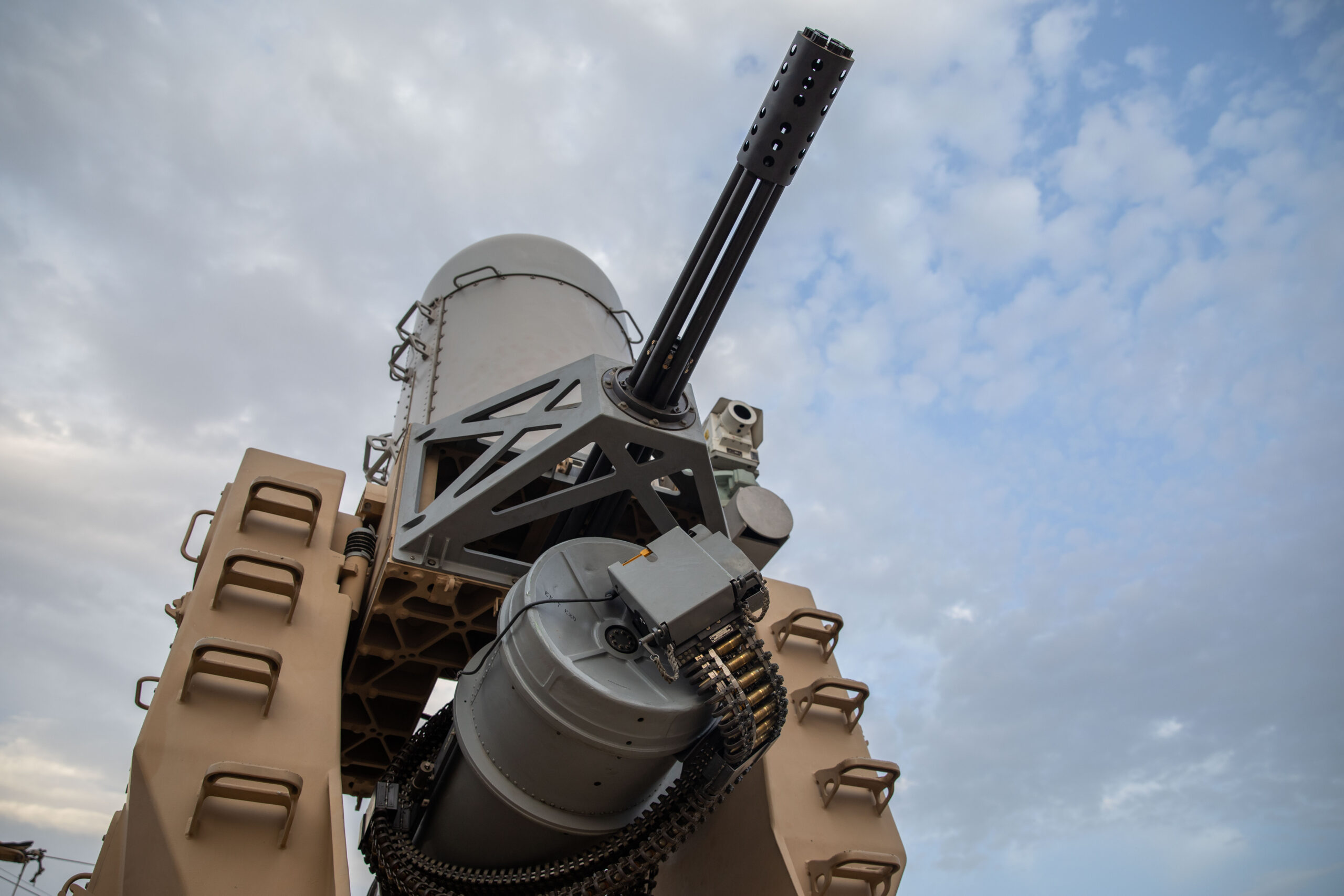
C-RAM System in Support of Coalition Defense

A U.S. Army Counter-Rocket, Artillery, and Mortar (C-RAM) system is staged at Union III, Iraq, April 4, 2025. The C-RAM is a key component of base defense operations, helping protect Coalition forces and supporting the enduring defeat of ISIS. (U.S. Army photo by Sgt. Steve Asfall)

Share on LinkedInShare on Twitter

Modern conflict rarely announces itself in advance. A rocket is launched, a mortar tube is fired, and within seconds the trajectory is already locked. At that point, the discussion is no longer about strategy or positioning. It becomes a question of reaction. Can the incoming round be stopped before impact, or does it reach its target uncontested?

This is the exact space where C-RAM systems operate. Not at the level of deterrence or long-range planning, but in the final seconds where everything has already unfolded and only immediate response remains.

What C-RAM Actually Does

C-RAM, or Counter-Rocket, Artillery, and Mortar, is designed to detect, track, and intercept short-range indirect fire threats. These include rockets, mortar rounds, and artillery shells, typically launched from relatively close distances and often with minimal warning.

Unlike traditional air defense systems that focus on aircraft or missiles, C-RAM is built for very short engagement windows. In many cases, the system has less than 20 seconds from detection to interception. That constraint defines everything about how it operates.

At a technical level, most C-RAM systems used by Western forces are based on adaptations of naval close-in weapon systems. A well-known example is the land-based version of the Phalanx system, which uses a 20mm M61A1 Vulcan cannon.

This cannon is capable of firing approximately 4,500 rounds per minute. That rate of fire is not about sustained engagement, but about creating a dense stream of projectiles in a very short period of time. The ammunition itself is typically high-explosive incendiary or self-destructing rounds, designed to reduce the risk of unexploded projectiles falling back to the ground.

Engagement range is relatively limited, usually in the range of 1 to 2 kilometers. This reinforces the idea that C-RAM is not an early interception system. It is designed for the final layer of defense, where the threat is already close.
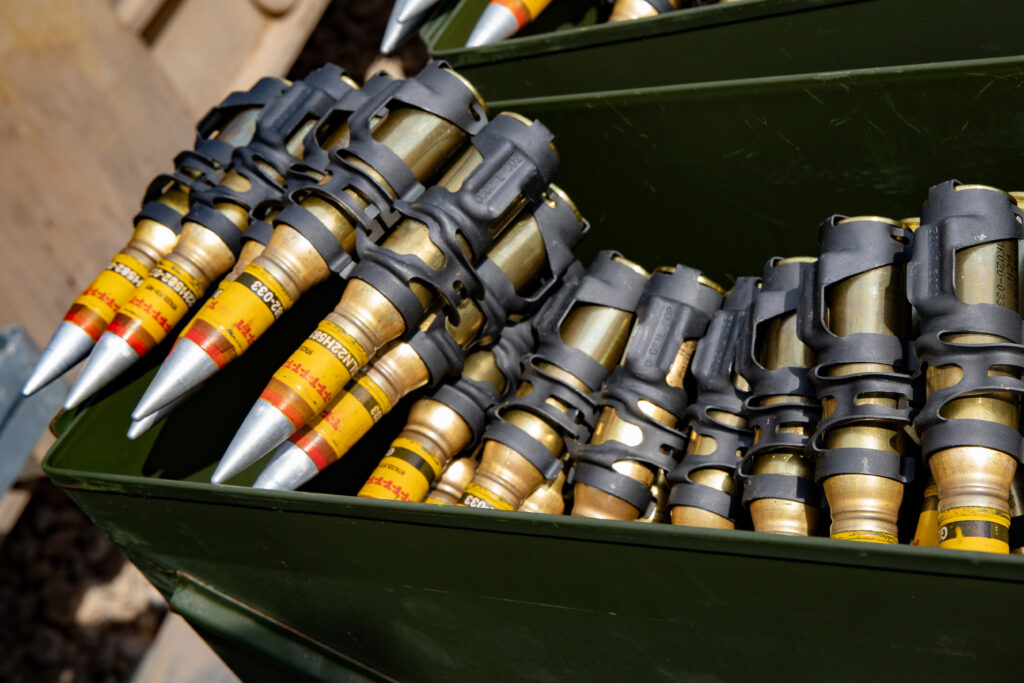
Ammunition for the Counter Rocket, Artillery and Mortar (C- RAM) air defense system is pictured in Northern Iraq, Sept. 22, 2024. Defensive systems like the C-RAM are used to ensure the safety of U.S. and Coalition forces. (U.S. Army photo by Staff Sgt. Bruce Daddis)

More Than Just the Gun

The visual identity of C-RAM is often reduced to the rotating barrel and the rapid firing. But the gun is only the final step in a larger system.

Radar units continuously scan the surrounding airspace, detecting incoming projectiles and calculating their trajectory almost instantly. The system can determine not only where the projectile is, but where it is going. This allows it to decide whether the incoming round poses a threat to a protected area.

At the same time, warning systems are triggered. In operational environments, this often includes audible alarms that alert personnel to incoming fire, sometimes providing only a few seconds to take cover.

The fire control system then directs the weapon, aligning it with the predicted path of the incoming round. Once engaged, the system fires a burst designed to intersect with the projectile’s trajectory, rather than directly targeting the object in a conventional sense.

This combination of detection, prediction, and rapid engagement is what allows C-RAM to function effectively within such a compressed timeframe.
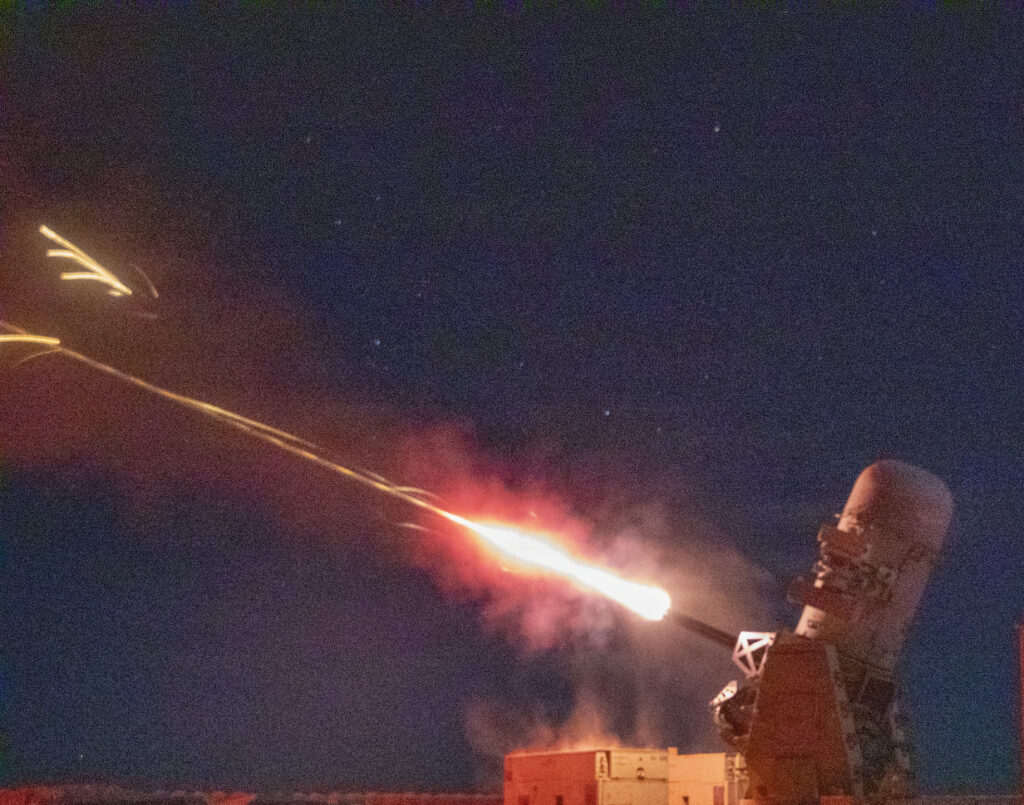
A Counter Rocket, Artillery and Mortar (C-RAM) weapons system test fires in the Central Command area of operation, Oct. 2, 2025. The C-RAM weapon system is used to counter enemy unmanned aerial systems and incoming projectiles.

Why Speed Defines Everything

If you step back and think about the physics involved, the challenge becomes clear. A mortar round follows a ballistic trajectory, descending at high speed. There is no hovering, no loitering, no second pass.

This means the system has to operate almost instantaneously. Detection delays of even a few seconds can eliminate the possibility of interception entirely.

The high rate of fire is a direct response to this limitation. By firing thousands of rounds per minute, the system increases the probability of a successful intercept within a very narrow window. It is not about a single precise shot, but about creating a controlled volume of fire that the incoming projectile cannot pass through.

Even when interception is not achieved, early detection still plays a critical role. In past operational use, particularly in Iraq and Afghanistan, the warning capability of C-RAM systems significantly reduced casualties by giving personnel time to react.
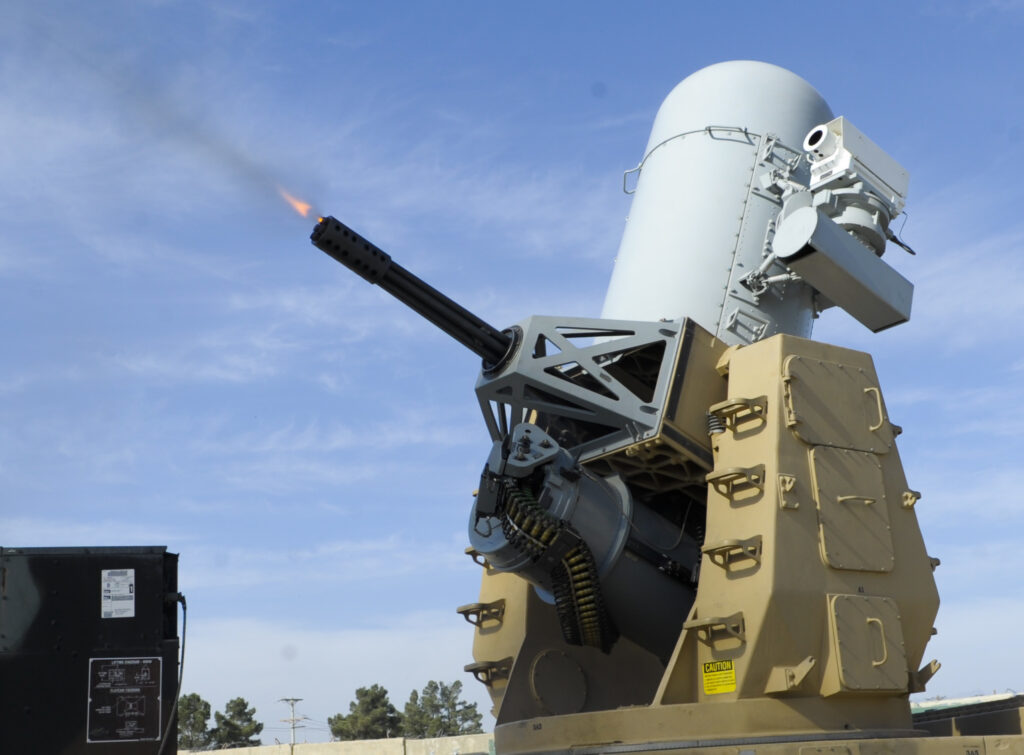
Bravo Battery, 2nd Bn, 44th Air Defense Artillery Regiment, boresights a Counter Rocket, Artillery and Mortar (C-RAM) weapon as part of their normally scheduled system check at Bagram Airfield, Afghanistan.

Why It Became Necessary

The emergence of C-RAM is closely tied to the operational realities of early 21st-century conflicts. Military bases and forward positions were frequently targeted by indirect fire. These attacks were often low-cost, improvised, and difficult to predict.

Traditional air defense systems were not designed for this type of threat. Engaging a simple mortar round with a high-cost missile is neither efficient nor practical, especially given the short reaction time.

C-RAM provided a solution tailored to this gap. It offered a way to defend fixed positions against frequent, low-tech threats without relying on complex or expensive interception methods.

Over time, it became a standard component of base defense, particularly in environments where indirect fire was a persistent risk rather than an occasional event.
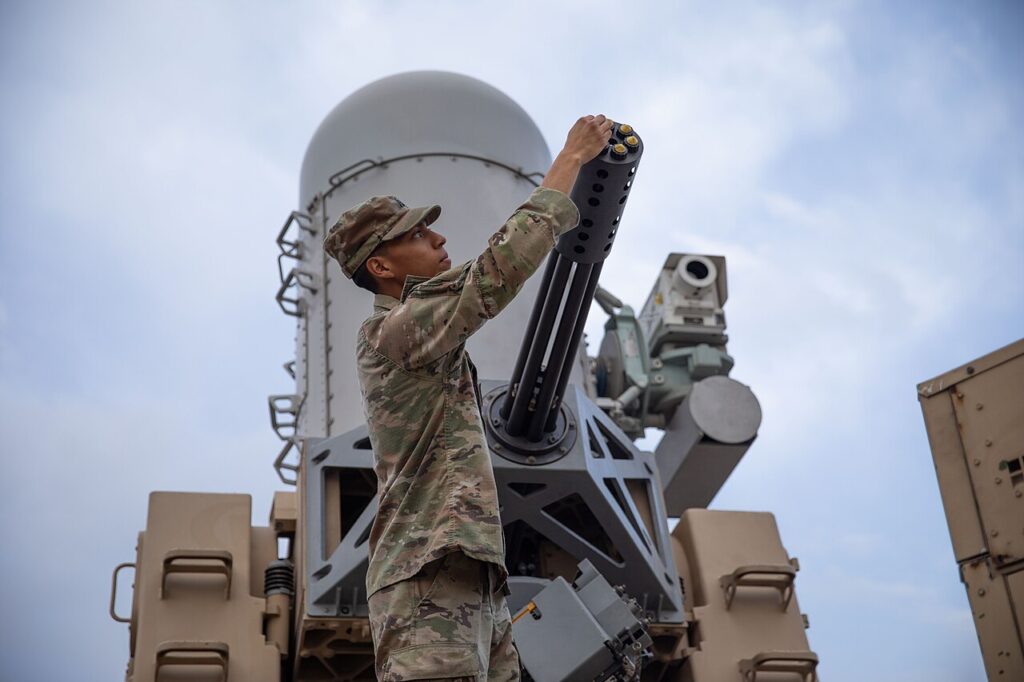
U.S. Army Sgt. Alexander Gonzalez assigned to Task Force DEFENDERS, 41st Infantry Brigade Combat Team, inspects a Counter-Rocket, Artillery, and Mortar (C-RAM) system at Union III, Iraq, April 4, 2025. The C-RAM provides critical defense for Coalition forces as part of the ongoing mission to ensure security and support the enduring defeat of ISIS. 

Operational Context Today

In more recent scenarios, C-RAM systems have continued to demonstrate their relevance, particularly in urban or semi-urban environments. Their deployment around embassies and critical infrastructure highlights a shift in how these systems are used.

They are no longer limited to forward operating bases. They are now part of a broader approach to protecting high-value locations where the consequences of a successful strike extend beyond the immediate tactical level.

What makes these deployments notable is the environment. Limited space, dense surroundings, and high stakes all reinforce the importance of rapid, localized defense.
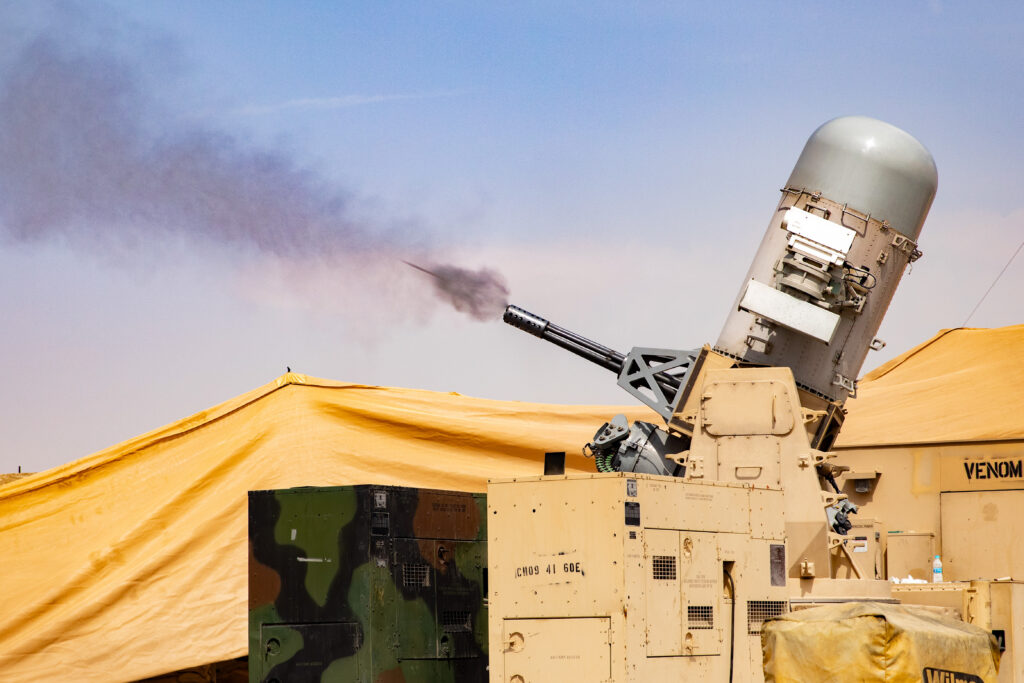
U.S. Army Soldiers from Alpha Battery, 1st Battalion, 118th Field Artillery Regiment, assigned to Combined Joint Task Force – Operation Inherent Resolve, perform a pre-aim calibration fire (PACFIRE) on a Counter Rocket, Artillery and Mortar (C-RAM) air defense system in Northern Iraq, Sept. 22, 2024. Defensive systems like the C-RAM are used to ensure the safety of U.S. and Coalition forces. (U.S. Army photo by Staff Sgt. Bruce Daddis)

The Trade-Offs Behind the System

Despite its effectiveness, C-RAM operates within clear limitations. Its short engagement range means it cannot prevent threats at their source. It reacts to what has already been launched, not what might be launched.

The high rate of fire also comes with logistical demands. Ammunition consumption is significant, and sustained operation requires consistent resupply. Additionally, even with self-destructing rounds, operating such systems in populated areas introduces inherent risks.

There is also the question of efficiency. Not every incoming projectile can be intercepted, and the system must continuously balance engagement decisions within a very limited timeframe.

These factors do not reduce its importance, but they do define its role. C-RAM is not a comprehensive solution. It is a specific answer to a specific problem.

Where It Fits in the Bigger Picture

Modern defense is increasingly structured around layered systems. Long-range defenses address strategic threats, medium-range systems handle broader aerial risks, and close-in systems like C-RAM deal with what penetrates those layers.

This structure reflects a realistic understanding of modern threats. Not all attacks are complex or technologically advanced. Some are simple, adaptable, and difficult to predict.

C-RAM exists to address that category. It does not replace other systems, but complements them by covering a gap that would otherwise remain exposed.
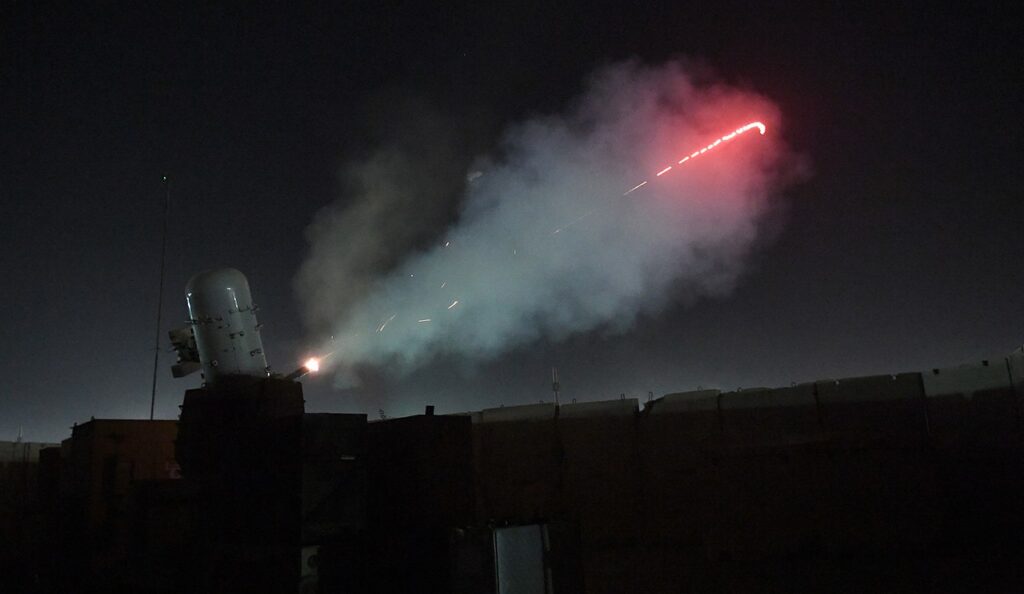
A Counter Rocket, Artillery, Mortar weapon system is test fired on Kandahar Airfield, Afghanistan, Jan. 13, 2018. The C-RAM will be used as a response to indirect fire attacks on the base. TU.S. Air Forces Central Command realigned airpower to USFOR-A Combined-Joint Area of Operations (CJOA) to support increased operations in support of the Resolute Support Mission and Operation Freedom’s Sentinel. (U.S. Air Force photo by Staff Sgt. Sean Martin)

The Direction of Development

There is growing interest in alternative technologies that could perform similar roles with different characteristics. Directed energy systems, particularly laser-based defenses, are being developed to provide rapid interception with lower cost per engagement and reduced logistical burden.

However, these technologies are still evolving. Until they reach full operational maturity, systems like C-RAM remain a critical component of defensive architecture.

Even as technology changes, the underlying requirement remains constant. There will always be a need for systems that can respond immediately to incoming threats at very short range.

Understanding Its True Value

C-RAM does not reshape the strategic balance of power. It does not determine the outcome of wars. Its significance lies in something more immediate.

It operates at the point where all other layers have already been tested, and something still gets through.

That moment is often overlooked, but it is one of the most critical in modern conflict. Because at that stage, the objective is no longer control or deterrence. It is protection.

And when time is measured in seconds, protection depends entirely on the ability to react without delay.

Sources

  • U.S. Army
  • RTX Corporation
  • Missile Defense Advocacy Alliance
  • North Atlantic Treaty Organization
Previous Post

FN FAL: The Right Arm of the Free World

Related Posts

FN FAL: The Right Arm of the Free World
Defense

FN FAL: The Right Arm of the Free World

March 31, 2026
A-10 Thunderbolt II: A Platform Built Around Purpose
Defense

A-10 Thunderbolt II: A Platform Built Around Purpose

March 24, 2026
Merkava Barak: The Evolution of Armored Warfare
Defense

Merkava Barak: The Evolution of Armored Warfare

March 17, 2026
2048px-U_S_Forces_Launch_Operation_Epic_Fury_(9542616)
Defense

Carrier Strike Power: Super Hornet, Hawkeye, JDAM and the Mechanics of Modern Air Operations

March 4, 2026
“Iron Swords” – The Continuing War Born from the Tunnels
Defense

“Iron Swords” – The Continuing War Born from the Tunnels

February 18, 2026
Stealth Technology’s Mathematics: How Low Observability Is Actually Engineered
Defense

Stealth Technology’s Mathematics: How Low Observability Is Actually Engineered

February 11, 2026
  • Trending
  • Comments
  • Latest
Blackwater PMC

After Blackwater: How PMCs Evolved, Professionalized, and Fragmented

September 13, 2025
Blackwater PMC

Inside Iraq’s Security Market: How Private Power Shapes a Fragile State

October 6, 2025
Operation Enduring Freedom

What Exactly Is a Private Military Company (PMC)?

September 6, 2025
FeisalPartyAtVersaillesCopy

T. E. Lawrence: Strategic Influence, Cultural Depth, and the Enduring Architecture of a Legacy

January 26, 2026
A Historic $142 Billion Arms Deal: Unpacking the U.S.-Saudi Agreement

A Historic $142 Billion Arms Deal: Unpacking the U.S.-Saudi Agreement

A Silent Revolution on the Battlefield: AI-Enabled Tactical Communication Systems

A Silent Revolution on the Battlefield: AI-Enabled Tactical Communication Systems

Cominf.org, CC BY-SA 3.0 , via Wikimedia Commons

Is Europe Really Reducing Its Dependence on Russian Gas?

What is ITAR? The Invisible Line in Global Defense Trade

What is ITAR? The Invisible Line in Global Defense Trade

C-RAM System in Support of Coalition Defense

C-RAM: The Last Seconds of Defense

April 1, 2026
FN FAL: The Right Arm of the Free World

FN FAL: The Right Arm of the Free World

March 31, 2026
The Evolution of War: What Changed, What Didn’t, and Why It Still Matters

The Evolution of War: What Changed, What Didn’t, and Why It Still Matters

March 30, 2026
Six-Day_War._IDF_14th_Armored_Brigade

Victory Before Exit Strategy

March 27, 2026

Recent News

C-RAM System in Support of Coalition Defense

C-RAM: The Last Seconds of Defense

April 1, 2026
FN FAL: The Right Arm of the Free World

FN FAL: The Right Arm of the Free World

March 31, 2026
The Evolution of War: What Changed, What Didn’t, and Why It Still Matters

The Evolution of War: What Changed, What Didn’t, and Why It Still Matters

March 30, 2026
Six-Day_War._IDF_14th_Armored_Brigade

Victory Before Exit Strategy

March 27, 2026
Drill & Defense

Drill & Defense is an independent platform providing insights into firearms, defense technologies, and energy sectors. We deliver clear, practical content for professionals, enthusiasts, and industry followers worldwide.

Follow Us

Browse by Category

  • Cross-Sector Insights
  • Defense
  • Defense & Energy Strategy
  • Defense Know-How
  • Defense Technologies
  • Energy
  • Energy Insight
  • Energy Technologies
  • Global Security & Trade Analysis
  • History & Legacy
  • Industry News
  • Knowledge Base
  • Legacy Systems & Structures
  • Market Trends & Analysis
  • Military Market Reports
  • Oil & Gas News
  • Resource Wars & Strategy
  • Tech & Innovation Crossover
  • Turning Points in Conflict
  • Weapon & Gear Reviews

Recent News

C-RAM System in Support of Coalition Defense

C-RAM: The Last Seconds of Defense

April 1, 2026
FN FAL: The Right Arm of the Free World

FN FAL: The Right Arm of the Free World

March 31, 2026

© 2026 Drill & Defense. All rights reserved. Independent insights on firearms, defense, and energy. For business inquiries: info@drillanddefense.com | PRIVACY POLICY | COOKIE POLICY | TERMS AND CONDITIONS

Manage Consent

We use cookies to improve your experience. You can accept or refuse cookies; however, some features may not function properly without your consent.

Functional Always active
The technical storage or access is strictly necessary for the legitimate purpose of enabling the use of a specific service explicitly requested by the subscriber or user, or for the sole purpose of carrying out the transmission of a communication over an electronic communications network.
Preferences
The technical storage or access is necessary for the legitimate purpose of storing preferences that are not requested by the subscriber or user.
Statistics
The technical storage or access that is used exclusively for statistical purposes. The technical storage or access that is used exclusively for anonymous statistical purposes. Without a subpoena, voluntary compliance on the part of your Internet Service Provider, or additional records from a third party, information stored or retrieved for this purpose alone cannot usually be used to identify you.
Marketing
The technical storage or access is required to create user profiles to send advertising, or to track the user on a website or across several websites for similar marketing purposes.
  • Manage options
  • Manage services
  • Manage {vendor_count} vendors
  • Read more about these purposes
View preferences
  • {title}
  • {title}
  • {title}
No Result
View All Result
  • Defense
    • Industry News
    • Weapon & Gear Reviews
    • Defense Technologies
    • Military Market Reports
  • Energy
    • Oil & Gas News
    • Energy Technologies
    • Market Trends & Analysis
  • Cross-Sector Insights
    • Defense & Energy Strategy
    • Global Security & Trade Analysis
    • Tech & Innovation Crossover
  • History & Legacy
    • Turning Points in Conflict
    • Legacy Systems & Structures
    • Resource Wars & Strategy
  • Knowledge Base
    • Defense Know-How
    • Energy Insight
  • About
  • Contact
  • Login
  • Register

© 2026 Drill & Defense. All rights reserved. Independent insights on firearms, defense, and energy. For business inquiries: info@drillanddefense.com | PRIVACY POLICY | COOKIE POLICY | TERMS AND CONDITIONS