


You keep hearing that Africa is “the next big thing” for energy transition metals. That is true. But it is incomplete. In Africa, critical minerals are not only an energy story; they are also a security story. When cobalt shapes battery supply chains, when lithium reshapes national industrial policy, and when platinum group metals (PGMs) influence high-reliability components, you get a three-way linkage: minerals, energy systems, defense readiness. This post frames that linkage in clear, operational terms without hype, and with a practical eye to risk. In short, Africa critical minerals are no longer just about resources, they are about strategy and security.

Why this matters now
Two dynamics collide in 2024–2025: falling spot prices for some battery minerals after a supercycle, and rising geopolitical risk around the assets that supply them. Market softness can mask structural dependence. If you are in defense, energy, or industrial policy, you do not manage for today’s price; you manage for tomorrow’s scarcity and today’s political constraints. Recent analyses show steep price declines in lithium and notable drops across several battery inputs in 2023, yet investment signals remain mixed as governments and firms reassess concentration risk and export controls.

Cobalt in the Democratic Republic of the Congo: systemic concentration
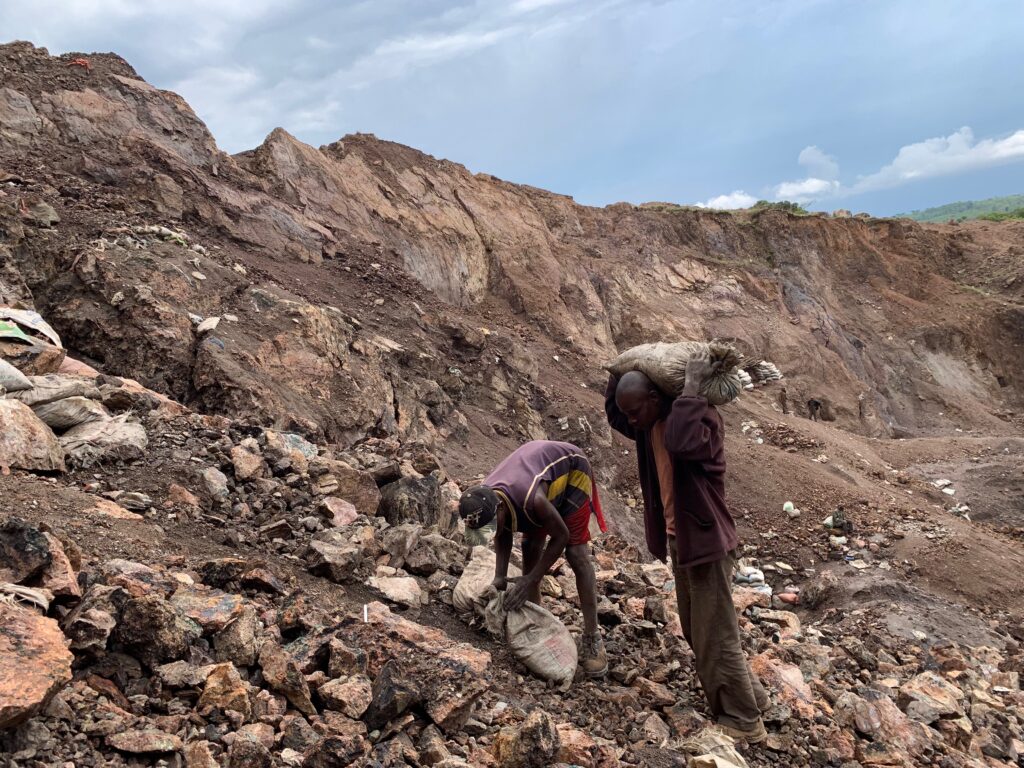
Start with cobalt. It remains a keystone for many Li-ion chemistries used across military communications, uncrewed platforms, and grid-support systems that stabilize power for bases, ports, and refineries. The Democratic Republic of the Congo (DRC) dominates mined supply well over half of global output while China leads refining, a dual concentration that turns every logistics plan into a political plan. Recent mineral summaries underscore how production growth is driven by the DRC and increasingly Indonesia while Chinese refiners process the majority of feedstock. The share of artisanal cobalt in the DRC has also fallen in recent years, changing ESG and traceability risk profiles.
From a security planner’s perspective, the lesson is simple: cobalt is less about price volatility and more about route vulnerability. Can you secure offtake amidst policy shifts? Can you certify provenance that meets allied procurement rules? Those are not “battery” questions; they are compliance and continuity questions that touch defense procurement directly.
Zimbabwean lithium: from ore to policy instrument
Lithium is where Africa’s leverage is growing fastest. Zimbabwe’s lithium output has accelerated with Chinese-backed projects and new refining capacity, while Harare experiments with export taxes and value-addition mandates to retain more margin onshore. Project updates and sector coverage in 2024–2025 point to higher concentrate volumes and investment into processing, even in a down-price environment. Officials tout capacities in the hundreds of thousands of tons per year at new plants, and operators report record quarterly production figures. The policy angle export terms, domestic processing requirements, and fiscal incentives now shapes not only revenues, but also who gets long-term supply.
If you operate in energy storage, EV logistics, or defense power systems, this is your risk register: contracts need stabilization clauses that survive tax changes; shipping needs alternatives as regional routes fluctuate; and ESG/traceability need to align with Western battery passport regimes even when capital is Eastern. In short, Zimbabwe is signaling: come for the ore, stay for the processing, but on sovereign terms.
South African PGMs: reliability metals in a reliability era
Platinum and palladium do not dominate headlines like lithium, yet they remain essential in catalytic, high-temperature, and niche electronic applications where failure is not an option. South Africa is the systemically important supplier across PGMs. Updated mineral surveys indicate South Africa’s primacy in platinum availability and significant roles in palladium trade flows. For energy operators transitioning fleets and industrial assets, PGMs still underpin emissions controls and certain hydrogen applications; for defense, they appear in components where thermal stability and corrosion resistance are non-negotiable. Supply is investable but not trivial, given labor, power-grid, and price-cycle challenges.
When minerals meet hard security: infrastructure, imports, and incidents
Arms-import data for Africa show a multi-year downtrend in major systems deliveries, but that does not mean security demand is falling. Instead, resources flow into infrastructure protection (pipelines, LNG sites, mining corridors), maritime security, and specialized enablers such as ISR and counter-UAS. The statistic to remember is that headline imports are down, while protection tasks are up especially around energy and minerals.
Case studies make this concrete. In Mozambique, LNG development in Cabo Delgado froze after jihadist attacks in 2021; in 2025, operators and service firms are moving to restart under tighter security packages, even as incidents persist. Security dynamics now sit inside the project economics themselves. Likewise, in Niger, uranium assets have become instruments of power after the 2023 coup license withdrawals, nationalization moves, and export bottlenecks have turned a fuel supply into a geopolitical lever. For energy planners and defense ministries, these are not remote events; they are direct inputs to nuclear fuel cycle planning, alliance energy security, and maritime tasking.
Oil versus lithium: the wrong question here’s the right one
You will hear, “What is more strategic for weapons: oil or lithium?” It is tempting, but it misframes the problem. Oil remains unrivaled for heavy mobility, expeditionary logistics, and petrochemical feedstocks. Lithium dominates electrochemical storage today and underwrites silent watch, swarming unmanned systems, and resilient microgrids. The right question is: which chokepoints decide my readiness timeline? For oil, chokepoints are maritime and refining; for lithium, chokepoints are processing concentration and chemistry lock-in. Market reviews warn about concentrated refining for most energy minerals and increasing export restrictions, with copper flagged as a future bottleneck for electrification backbone another military-relevant input as bases electrify and sensors proliferate.
Once you think in chokepoints, your strategy shifts: diversify refining, not just mines; design batteries to tolerate chemistry variance; pre-contract logistics capacity ahead of political cycles; and pair mineral offtake with site-security provisions from day one.
What operators and policymakers should do
If you run energy assets or write defense policy connected to Africa, consider three practical lines of effort:
- From offtake to operating picture. Treat mineral offtake agreements like a living security plan. Integrate ISR for corridors, redundant routing, and private security compliance inside offtake milestones. Do not wait for a security event to renegotiate terms; bake thresholds and triggers into the contract.
- Refining and recycling as risk hedges. Supply concentration is most acute at the refining stage. Western and allied programs are pushing investment into refining and midstream capacity, yet permitting and capex slow rollouts. Recycling cannot replace mining, but it reduces peak-stress exposure particularly for cobalt and PGMs. Plan for both, not one.
- Policy navigation as a core competency. Zimbabwe’s value-addition rules, Niger’s uranium re-nationalization moves, and Mozambique’s security gating show a pattern: resource nationalism plus security premium. You need legal, fiscal, and community strategies that travel with your engineers. Otherwise, you will build mines and plants on paper that never achieve stable throughput.
Reader checkpoint: where your portfolio is exposed
If you manage a defense-energy portfolio, ask yourself:
- How much of your storage roadmap assumes cobalt-containing chemistries and what is your cobalt-free alternative if DRC offtake or Chinese refining becomes politically constrained?
- Which lithium assets in Africa you depend on are subject to export taxes, minimum domestic processing, or sudden policy resets and are your contracts stabilized against those?
- Where do PGMs sit in your reliability stack spares, catalysts, components and what is your exposure to South African production volatility?
- Do your project NPV models for LNG, pipelines, or mining include security downtime as a variable, not a footnote? If not, your economics are optimistic.
Africa’s critical minerals are not a side plot to the energy transition; they are a main act that binds energy resilience to defense readiness. If you plan only for commodity cycles, you will be surprised by politics. If you plan only for politics, you will miss technology pivots. The portfolios that thrive will integrate both and move early, before chokepoints turn into headlines.
Sources
- U.S. Geological Survey (USGS), Mineral Commodity Summaries 2025: Cobalt.
- U.S. Geological Survey (USGS), Mineral Commodity Summaries 2025: Platinum-Group Metals.
- International Energy Agency (IEA), Global Critical Minerals Outlook 2024 – Market review and full report.
- SIPRI, Trends in International Arms Transfers, 2023 (fact sheet and database update).
- S&P Global Commodity Insights, Factbox: China set to raise African lithium output in 2024.
- African Energy / Offshore-Technology / Oilprice coverage on Mozambique LNG restart steps and security context (2025).
- Business & Human Rights Resource Centre / 360 Mozambique on TotalEnergies’ planned mid-2025 restart and security conditions.