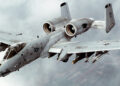

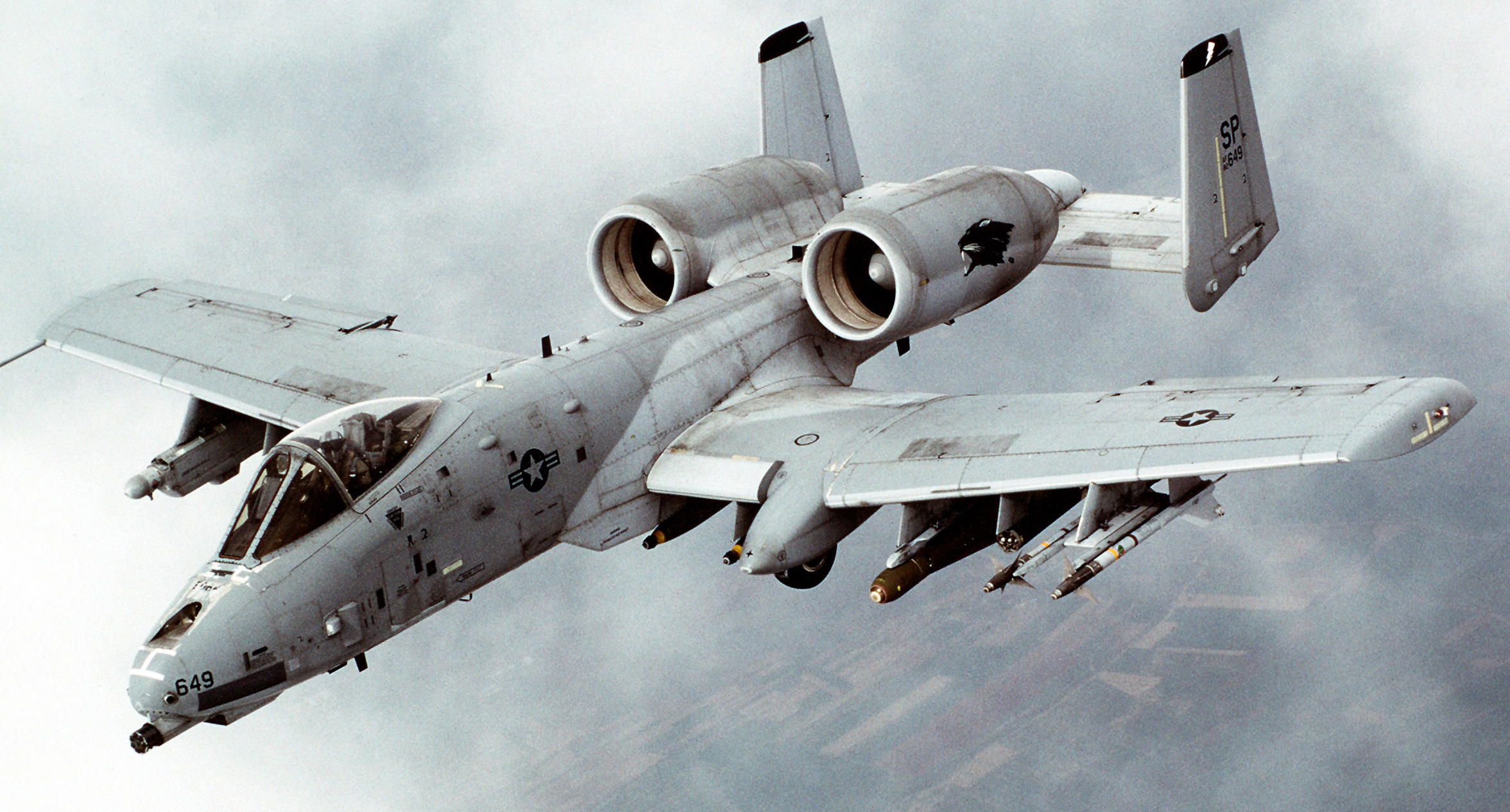
There are aircraft that represent speed. Others represent stealth. A smaller group represents technological ambition. And then there is the A-10 Thunderbolt II, a platform that was never designed to impress in any of those categories. It was designed to solve a very specific problem, and it has continued to do so with a level of consistency that few systems in modern warfare can match.

If viewed without the cultural narrative surrounding it, the A-10 does not stand out for elegance, speed, or subtlety. Those characteristics were never part of its intended role.
A System Defined by Close Air Support
The A-10 emerged from a very clear strategic requirement during the Cold War. The United States needed an aircraft capable of countering large formations of armored forces, particularly Soviet tanks advancing across Europe. The result was not a multirole compromise, but a dedicated close air support platform designed specifically to operate in direct coordination with ground forces.
This distinction matters more than it first appears. Most modern combat aircraft are built to perform multiple roles, balancing air superiority, strike capability, and survivability within a single platform. The A-10 does not attempt to balance. It commits fully to one role and accepts the trade-offs that come with that decision.
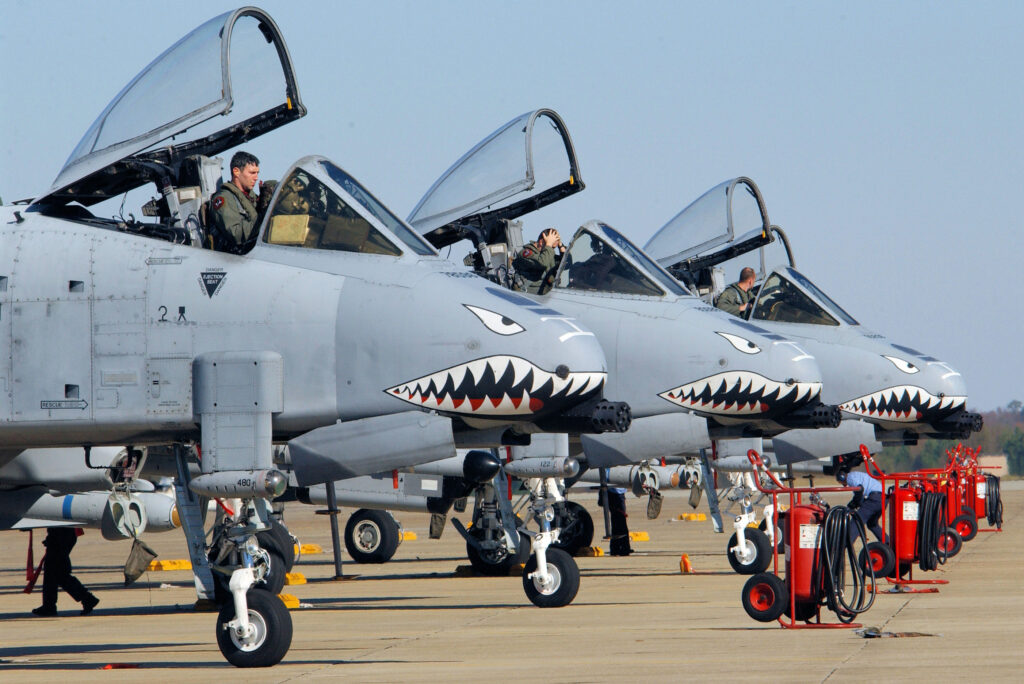
That is why it remains relevant. Close air support is not simply about delivering firepower. It is about timing, precision, communication, and persistence over the battlefield. The A-10 was built to stay in the fight longer than other aircraft, to operate at lower altitudes, and to maintain visual awareness of the ground situation. In practical terms, that means it does not just strike targets. It supports decision-making on the ground.
Built Around a Weapon, Not the Other Way Around
One of the most defining aspects of the A-10 is that it was designed around its primary weapon, the GAU-8/A Avenger cannon. This is not a typical design approach. In most aircraft, the weapon is integrated into the platform. In the A-10, the platform was built around the weapon itself.
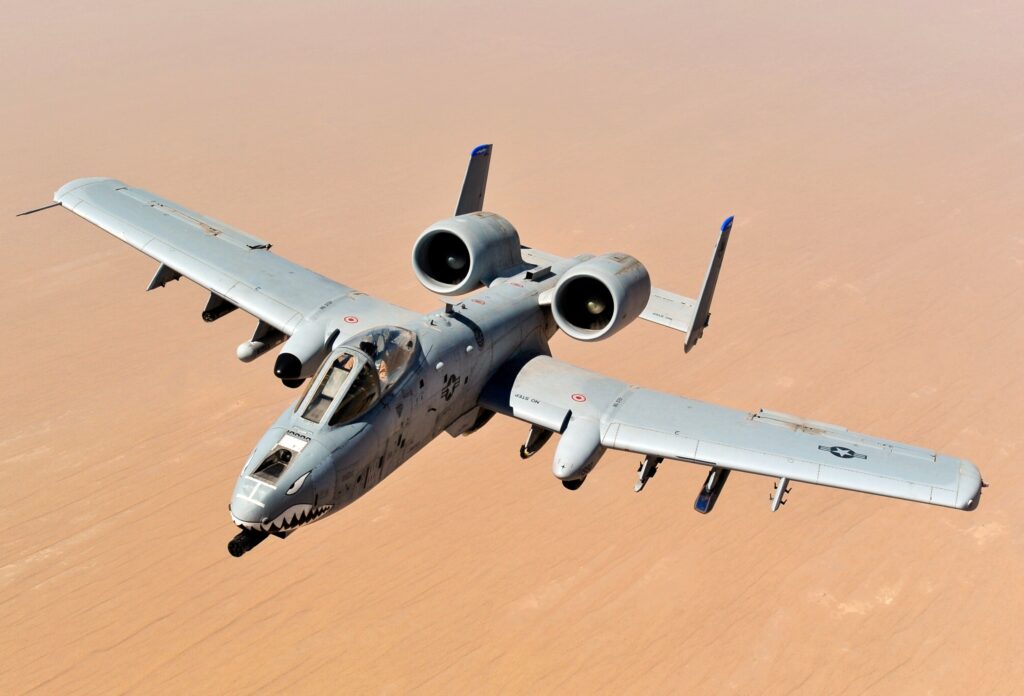
The GAU-8 is a 30 mm, seven-barrel rotary cannon capable of firing approximately 3,900 rounds per minute. It was specifically developed to defeat armored targets, including tanks, which shaped the entire architecture of the aircraft.
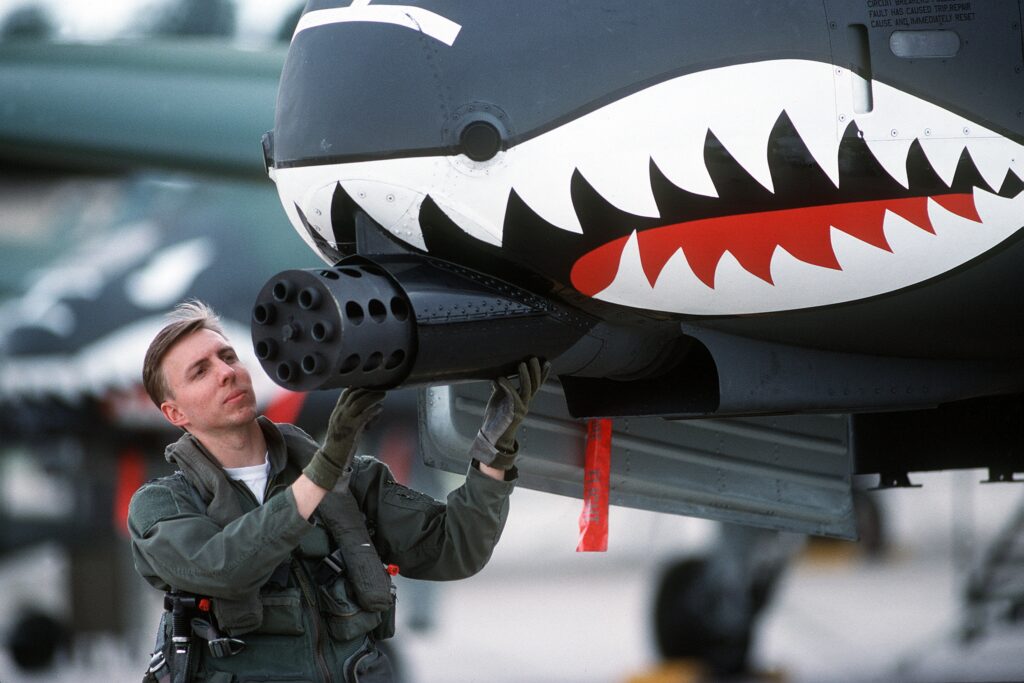
This decision has consequences. The weight of the gun system alone represents a significant portion of the aircraft’s structure. The cannon is aligned with the centerline to maintain accuracy, and even the landing gear is positioned in a way that accommodates the weapon’s placement.
From a design perspective, this is a level of specialization that modern programs often avoid. But it is also the reason why the A-10 delivers a type of firepower that cannot be easily replicated by external pods or modular systems.
Survivability Over Sophistication
Modern airpower discussions tend to focus heavily on stealth, electronic warfare, and networked capabilities. The A-10 approaches survivability differently. Instead of avoiding damage, it is built to absorb it.
The aircraft includes a titanium armored cockpit, often referred to as a “bathtub,” designed to protect the pilot from ground fire. It also features redundant flight control systems, allowing it to continue flying even after significant structural damage.
This philosophy reflects a different understanding of risk. The A-10 is expected to operate in environments where threats are not theoretical. It flies low, remains visible, and enters engagement zones where anti-aircraft fire is likely. Its survivability is not based on avoiding detection, but on enduring exposure.
That distinction separates it from most contemporary platforms.
Operational Reality: Persistence and Pressure
One of the less discussed advantages of the A-10 is not its firepower, but its presence. The aircraft is capable of loitering over a battlefield for extended periods, maintaining continuous support for ground units.
This creates a form of operational pressure that is difficult to quantify. Ground forces do not just receive occasional support. They operate under a constant umbrella of potential intervention, and the psychological effect of that presence, both for friendly forces and opposing units, is significant.
This is where the A-10’s slower speed becomes an advantage rather than a limitation. It allows the aircraft to stay engaged, observe, and respond with precision rather than simply delivering high-speed strike missions and departing the area.
Combat Record and Strategic Value
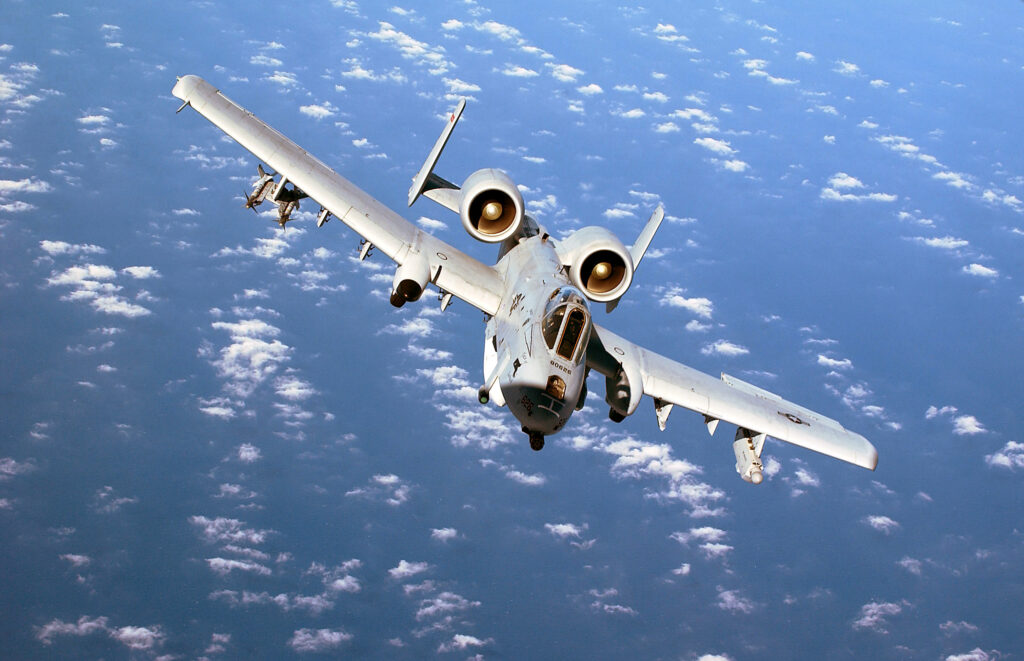
The A-10’s performance in operations such as the Gulf War demonstrated its effectiveness in large-scale conventional conflict. It achieved high mission readiness rates and was heavily used in anti-armor roles, including the destruction of tanks and artillery systems.
In later conflicts, including Afghanistan and Iraq, its role evolved. Instead of engaging massed armored formations, it was used in more complex environments involving dispersed targets, urban settings, and irregular warfare. The aircraft adapted, not through fundamental redesign, but through upgrades in targeting systems and munitions.
This adaptability is often overlooked. The A-10 is frequently described as a legacy platform, but its continued use across different types of conflicts suggests a level of operational flexibility that goes beyond its original design.
The Debate Around Replacement
There has been an ongoing discussion about whether the A-10 should be replaced by more modern multirole aircraft, particularly platforms that emphasize stealth and advanced sensors. From a purely technological perspective, newer systems offer clear advantages.
But the question is not whether other aircraft are more advanced. The question is whether they can replicate the specific role that the A-10 performs. Close air support at low altitude, with sustained presence, high survivability, and direct coordination with ground forces, is not easily transferable to platforms optimized for different mission profiles.
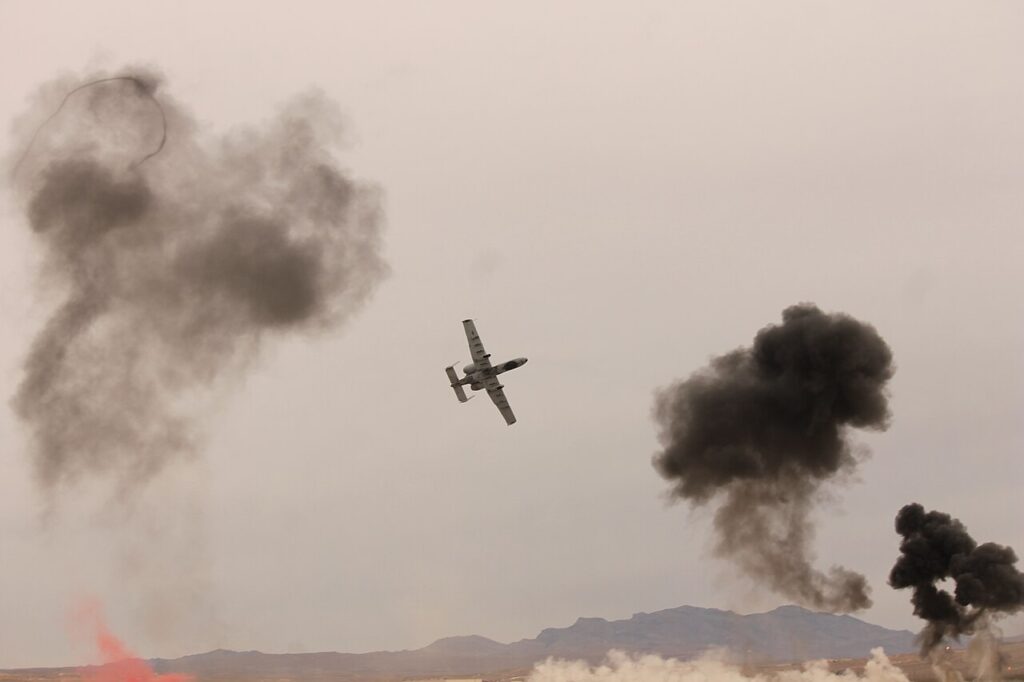
This is where the debate becomes less about technology and more about doctrine. If the nature of warfare shifts away from environments where close air support is critical, the A-10 becomes less relevant. If those environments persist, its value remains.
A Platform That Reflects a Different Design Philosophy
What makes the A-10 worth analyzing is not just its performance, but what it represents. It reflects a design philosophy that prioritizes clarity of purpose over versatility.
It accepts limitations in speed and technological sophistication in exchange for reliability, survivability, and mission effectiveness. It is not optimized for every scenario. It is optimized for one scenario, and it performs that role with consistency.
In a defense environment increasingly focused on multi-domain integration and high-end conflict, that level of specialization stands out. Not because it is outdated, but because it is deliberate. And that is why the A-10 continues to generate discussion, not just as an aircraft, but as a concept.
Sources
- U.S. Air Force
A-10C Thunderbolt II Fact Sheet - Whiteman Air Force Base
A-10 Thunderbolt II Overview - Airforce-Technology
A-10 Thunderbolt (Warthog) Project Overview