
For a long time, Greenland sat on the mental map as a white patch at the top of the world, associated mostly with glaciers and remote communities. Today, it is quietly moving toward the center of several strategic debates at once: critical minerals, ballistic missile defense, and the opening of new Arctic sea lanes.

From a distance, these look like separate files. If you follow energy security, defense planning, or technology supply chains, Greenland is now one of the few places where all three intersect.
From Ice Sheet to Strategic Crossroads
Geography is Greenland’s first strategic asset. It sits between North America and Europe, directly under the shortest great circle routes that connect the United States with Russia and the wider Eurasian landmass. During the Cold War, this made the island a natural site for radar and early warning stations. That logic has not disappeared. It has been updated for a world of hypersonic glide vehicles, Arctic shipping and rare earth supply chains.
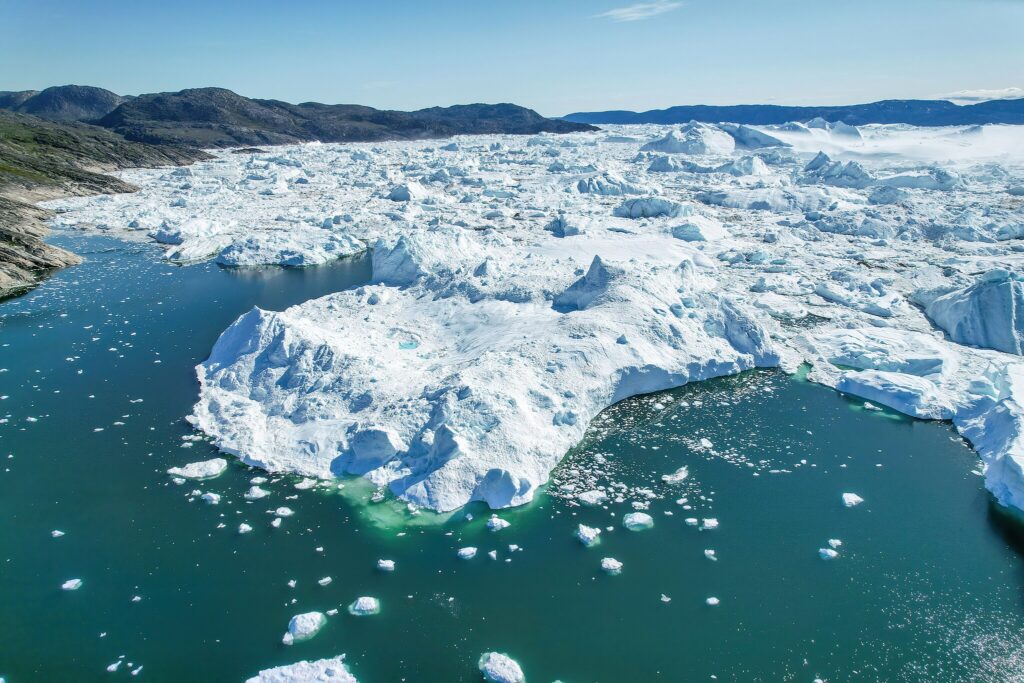
Climate data show that Arctic sea ice has shrunk dramatically in recent decades. In 2023, the September average sea ice extent was significantly lower than in 1979, a change that has transformed how often and how easily vessels can operate in northern waters. Studies on future navigability suggest that as ice retreats, seasonal windows for commercial shipping along trans Arctic routes will expand, including for ships without heavy icebreaking capability.
For Greenland, this means surrounding waters are moving from the periphery of global trade toward a position where they may complement or in specific cases partially substitute traditional choke points such as the Suez Canal. This evolution reshapes how states think about ports, search and rescue capacity, and maritime domain awareness around the island.
Critical Minerals and the Technology Race
The second layer of Greenland’s new relevance lies beneath its surface. The island hosts significant deposits of rare earth elements and other critical minerals that support advanced manufacturing, energy transition technologies, and defense systems.
Global production and especially processing of rare earths is currently dominated by China, which accounts for the majority of mining and an even larger share of processing capacity. This concentration has become a strategic concern for both the United States and the European Union. Their industrial and defense strategies now include goals to diversify supply and reduce single supplier risk.

Greenland has emerged in these discussions as one of the few high potential, politically aligned sources outside East Asia. The Kvanefjeld (Kuannersuit) deposit in southern Greenland, held by Energy Transition Minerals, is often described as one of the world’s largest undeveloped rare earth resources combined with uranium and zinc. At the same time, the project illustrates how strategic potential and domestic politics can collide. Following a ban on uranium mining, Kvanefjeld has been locked in legal and regulatory disputes since 2022 and progress has stalled.
The European Union has formalized its interest. In 2023, Brussels and Nuuk signed a strategic partnership on raw materials framed as a way to build critical raw material value chains that link Greenland directly to European industrial ecosystems. European policy documents acknowledge that the bloc is heavily dependent on imports for several rare earths, with limited domestic deposits and long permitting timelines.
For Greenlandic authorities, this creates a complex balancing act. There is clear demand from large markets seeking reliable supplies of critical minerals. Environmental, social and sovereignty concerns around large scale mining in sensitive Arctic ecosystems also remain strong.
Thule Air Base and the Northern Security Architecture
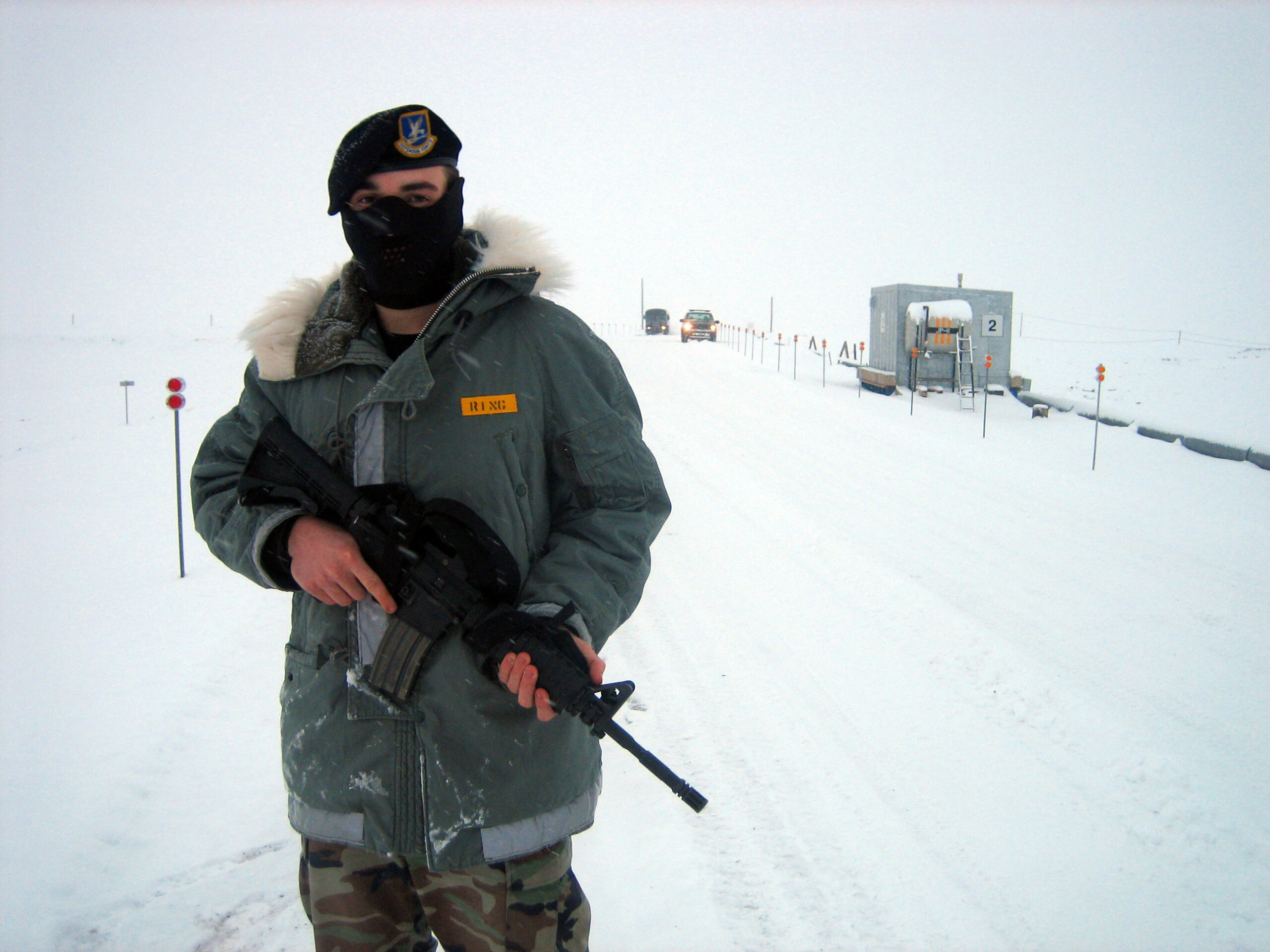
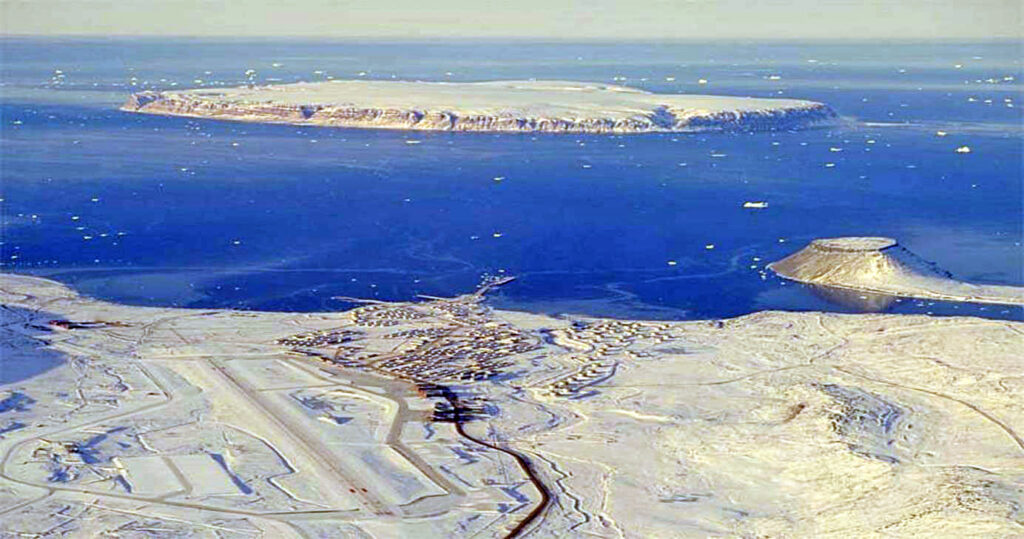
In security terms, Greenland is already embedded in Western defense structures. Thule Air Base in the island’s northwest is a key node in the United States ballistic missile early warning network. Established under a 1951 defense agreement between the United States and Denmark, the facility contributed to the Distant Early Warning Line and now forms part of a modern system that tracks potential missile launches across vast areas of the Arctic and Eurasia.
Open source assessments suggest that Thule provides essential warning time for classes of intercontinental ballistic missiles aimed at North America. In a crisis, those minutes translate into critical decision space for political leaders and military planners. As debates evolve around next generation missile defense, hypersonic threats and the modernization of nuclear forces, Greenland will remain part of that early warning architecture.
From a NATO perspective, the island forms one element of a northern arc that stretches from Alaska through Canada, Greenland, Iceland, the United Kingdom and into Scandinavia. Discussions about air and missile defense, maritime patrol, undersea infrastructure and space assets increasingly consider how activities in the Arctic connect to operations in the North Atlantic and North Sea.
Between Washington, Brussels and Beijing
Because minerals, logistics and defense converge here, Greenland naturally attracts the attention of major powers. The United States views the island as both a security asset and a potential anchor for diversifying critical mineral supply. The European Union highlights Greenland as part of its Critical Raw Materials Act implementation and broader efforts to secure low carbon industrial inputs.
China has signaled interest in Greenlandic infrastructure and mining projects, including stakes in rare earth developments. Several high profile bids for airports, ports and mining assets have been blocked or reconsidered amid Danish and American security concerns. China has announced ambitions for a Polar Silk Road and achieved Arctic shipping milestones. Its practical presence in Greenland remains limited compared with its broader Arctic activity.

European commentary suggests that the continent’s critical material future may be tied closely to Greenland. This framing reflects concerns about how energy and material dependence can shape broader geopolitical bargaining.
For policymakers and firms, the key question is how Greenland itself, within the Kingdom of Denmark, will shape the terms on which external interest becomes concrete action.
New Arctic Sea Lanes and Energy Logistics
The maritime dimension reinforces these dynamics. As sea ice thins, the potential for Arctic routes to shorten transit times between northern Europe and East Asia becomes more credible. Estimates suggest that the Northern Sea Route can reduce the distance between some European and Asian ports compared with the traditional Suez route.
Greenland does not control these routes. Its location along the North Atlantic approaches means that increased Arctic shipping would have clear spillover effects. More traffic implies greater demand for hydrographic data, ice and weather services, port reception facilities and emergency response capacity. It also elevates the strategic value of nearby airfields and radar sites that monitor both civilian and military movement.
Shipping expansion also brings environmental risks such as potential oil spills in sensitive waters, black carbon emissions that accelerate ice melt and disturbances to marine ecosystems. Any long term strategy that integrates Greenland into Arctic logistics will need to address these risks directly rather than treating them as secondary concerns.
Strategic Questions for the Coming Decade
For an audience focused on energy security and defense, Greenland’s trajectory raises practical questions rather than simple narratives.
What pace and scope will Greenlandic authorities pursue as they translate political agreements with external partners into mining and processing projects, and under what environmental conditions. Will the legal and social controversies surrounding Kvanefjeld remain isolated or will they become a common pattern for resource development.
In the security domain, how will Thule evolve as missile warning architectures are modernized, space based sensors increase and Arctic operations become more routine. Will the existing United States Denmark Greenland framework continue to adapt smoothly or will technological change require more explicit updates to responsibilities and benefits.
As Arctic sea lanes become more accessible, will Greenland remain primarily a monitored corridor or will it invest in becoming a logistics node for selected sectors such as energy cargoes or seasonal bulk commodities.
These questions do not yet have definitive answers. What is clear is that Greenland is moving from an abstract white shape on the map to an emerging intersection point where technology supply chains, alliance defense planning and climate driven changes in maritime geography meet. For anyone working at the crossroads of energy, security and geopolitics, this file will be increasingly important.
Sources
• Center for Strategic and International Studies, “Greenland, Rare Earths, and Arctic Security,” 2025–2026.
• European Commission, “EU–Greenland Partnership on Sustainable Raw Materials and Batteries,” Official Press Release, 2023.
• NOAA National Centers for Environmental Information, “Arctic Sea Ice Monitoring and Historical Trends,” updated 2023.
• U.S. Geological Survey, “Mineral Commodity Summaries: Rare Earth Elements,” 2024 Edition.
• U.S. Air Force Historical Office, “Thule Air Base and North Warning System Development,” Archival Overview, 2025.
• European Raw Materials Alliance (ERMA), “Critical Raw Materials Demand Outlook for EU Industries,” 2025.
• Geological Survey of Denmark and Greenland (GEUS), “Mineral Resources of Greenland,” Technical Reports, 2024–2025.