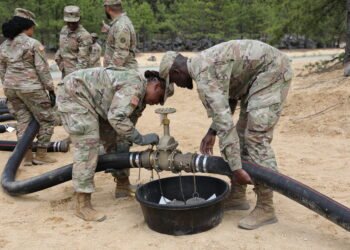



In today’s shifting geopolitical landscape, energy is no longer just a civilian concern—it lies at the heart of military readiness and national security. As policymakers, defense planners, and energy experts convene to shape robust strategies, we see energy and defense merging into one critical nexus. Let’s explore how this convergence defines the future of global security and why your organization should care.
The Strategic Imperative of Energy Security
Operational continuity is the lifeline of any modern military. Whether supporting incursion in remote regions or ensuring naval fleets remain mission-capable, energy reliability is essential. According to a RAND Corporation analysis, U.S. Department of Defense (DoD) installations draw nearly all their electricity from civilian grids susceptible to disruptions highlighting the urgent need for resilient, redundant systems (rand.org).
Moreover, fuel convoys in hostile areas have proven dangerously vulnerable. One U.S. Army study estimated that for every 24 fuel convoys in Afghanistan and Iraq, a soldier or civilian was killed underlining the grave human cost tied to energy logistics (americansecurityproject.org).

Green Technologies Strengthening Defense Capacity
To reduce risk and costs, military organizations are increasingly turning toward renewables and biofuels. The U.S. Navy’s Great Green Fleet initiative, launched in 2009 and demonstrated in exercises like RIMPAC, combined conventional diesel and biofuels with a 50/50 blend. The effort aimed to reduce petroleum dependency and signal strategic freedom from foreign oil sources (en.wikipedia.org).
Critics note that economic and political pressures especially biofuel costs and congressional resistance temper expectations (wired.com). Still, the program played a critical role in enhancing fuel management techniques and validating bio-based fuel viability.
On a broader scale, the Department of Defense has adopted an “energy conservation roadmap” that targets demand reduction, diversified fuel sources, and embedded energy considerations throughout military planning (wired.com, dvidshub.net).

Microgrids and Distributed Resilience
Forward operating bases often rely on local electricity grids or expensive fuel supplies. To address this vulnerability, research advocates deploying renewable-powered microgrids that can operate independently of host-nation infrastructure. These systems enhance resilience, reduce convoy risks, bolster operational independence, and are becoming a strategic priority for overseas bases (airuniversity.af.edu).
Cyber Threats: Beyond Physical Vulnerability
It’s not just physical attacks that are concerning; cyber vulnerabilities also loom large. Recent cyberattacks on the Colonial Pipeline and Ukraine’s power grid demonstrate that hostile actors can disrupt civilian and military energy supplies with devastating effect (arxiv.org). A New Atlantic Council analysis emphasizes the need for “cyber-informed engineering” to protect energy and fuel systems from digital threats (atlanticcouncil.org).
Mineral Security at the Confluence of Green and Defense
The green energy transition depends heavily on critical minerals like rare-earth elements also vital for advanced defense technologies such as fighter jets and missile systems. A Wall Street Journal article highlights that defense equities tied to rare-earth supply chains now attract sustainability investors (wsj.com). This shift signals a recognition that energy transition efforts and defense readiness are intertwined through industrial supply chains.
European and NATO Perspectives on Energy Dependencies
In Europe, defense planners must confront their own regional energy dependencies. Infrastructure like liquid fuel refineries and pipelines often located far from conflict zones is increasingly considered a target (iss.europa.eu). A NATO report analyzing the energy crisis concludes that energy, climate, economic, and national security policies are “highly interrelated,” demanding integrated approaches (nato-pa.int).
A Milestone Moment: Industrial and Energy Security Policy
In July 2025, U.S. think tanks released a joint energy-and-industry framework aimed at countering China’s rising influence. This blueprint recommends bolstering defense materials with greater domestic production of industrial and clean-energy technologies reinforcing the link between energy autonomy and national security (axios.com).
The Green Transition and Military Effectiveness
While long-term climate objectives drive many energy initiatives, there is inherent tension between decarbonization and military effectiveness. The Foreign Policy journal cautions against expecting full renewables adoption on the battlefield, noting that fossil fuels remain the dominant energy source but stresses that defense organizations can still lead in clean-tech R&D (foreignpolicy.com).
Similarly, research published on arXiv warns that militarization often results in emissions increases and slower clean-tech deployment. Nonetheless, advances in dual-use technologies are closing the gap between green goals and military utility (arxiv.org, arxiv.org).
Engaging with Stakeholders Through an Energy-Security Prism
For stakeholders in governments, defense industries, or sustainability sectors, energy-security convergence signals a policy shift: climate, minerals, cybersecurity, renewables, and energy infrastructure must now be evaluated through a strategic lens. Planning for resilient energy systems is not an optional add-on—it is core to defense readiness.
Call to Action: Integrated Planning for Defense Resilience
As energy transitions accelerate, defense organizations must adopt:
- Scenario-based energy risk assessments covering spontaneous outages, cyber threats, or supply-chain breakdowns
- Diversified energy portfolios combining fossil fuels, alternative fuels, renewables, and microgrids
- Close collaboration with civilian energy sectors utility operators, grid developers, critical-mineral firms to ensure shared resilience
- Cross-functional oversight within defense procurement and planning to align industrial, technological, and environmental strategies
By operating at this intersection, defense planners can optimize mission outcomes, reduce costs, and reinforce strategic autonomy.
References
- RAND Corporation, Capabilities-Based Planning for Energy Security at Department of Defense Installations (rand.org)
- American Security Project, Defense Energy Report (americansecurityproject.org)
- U.S. Navy, Great Green Fleet initiative details (en.wikipedia.org)
- Wired, “How the Navy’s Incompetence Sank the Green Fleet” (wired.com)
- Department of Defense, “Energy Conservation Roadmap” (dvidshub.net)
- Air University, Microgrids for overseas bases (airuniversity.af.edu)